

Dorymyrmex grandulus
- Scientific Name
- Dorymyrmex grandulus
- Tribe
- Leptomyrmecini
- Subfamily
- Dolichoderinae
- Author
- Forel, 1922
- Common Name
- Mousy Pyramid Ant
- Distribution
- Found in 3 countries
Dorymyrmex grandulus Overview
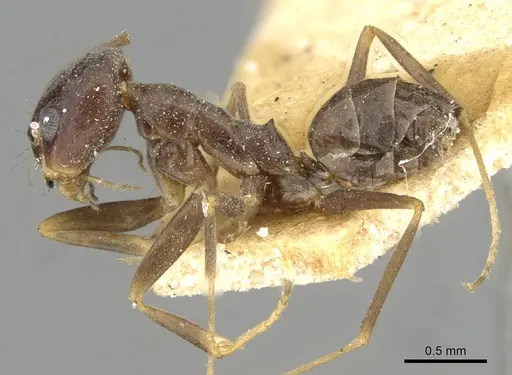
Dorymyrmex grandulus (commonly known as the Mousy Pyramid Ant) is an ant species of the genus Dorymyrmex. It is primarily documented in 3 countries , including Canada, Mexico, United States of America. Detailed taxonomic data and occurrence records can be further explored via authoritative databases such as AntWeb or the Global Biodiversity Information Facility (GBIF).
Dorymyrmex grandulus - "Mousy Pyramid Ant"
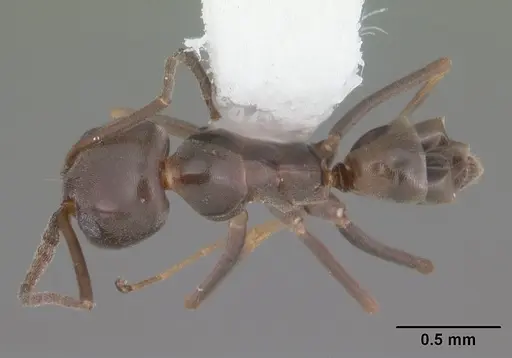
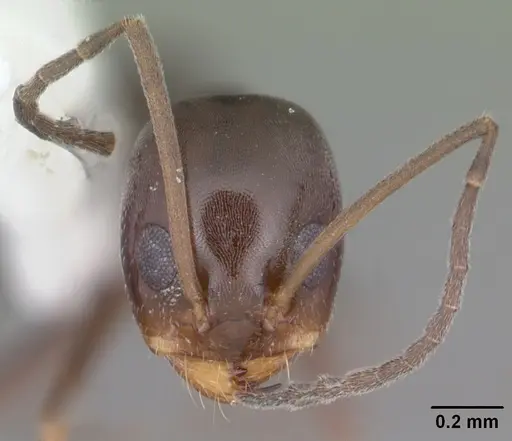
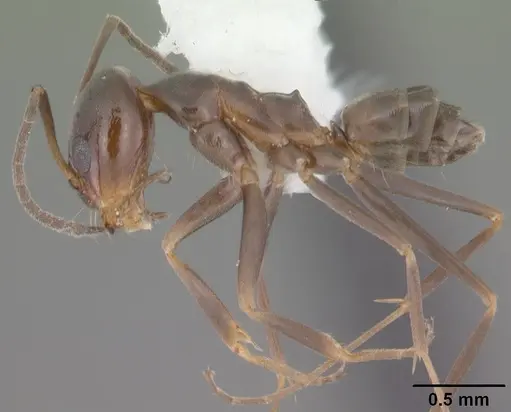
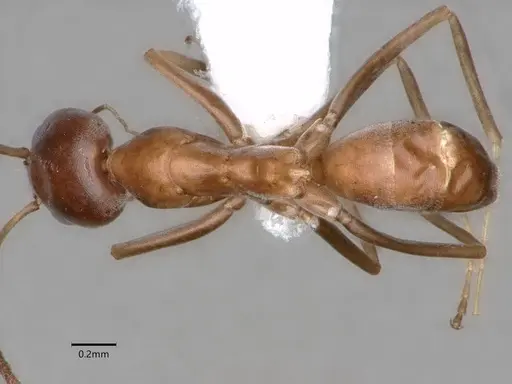
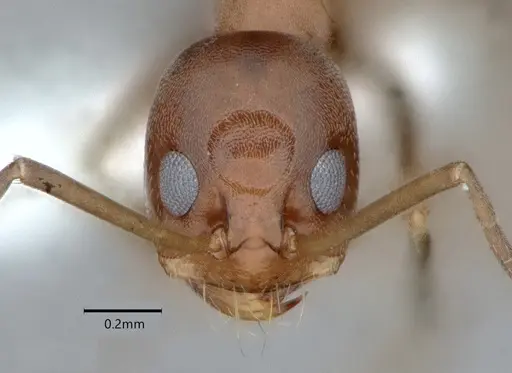
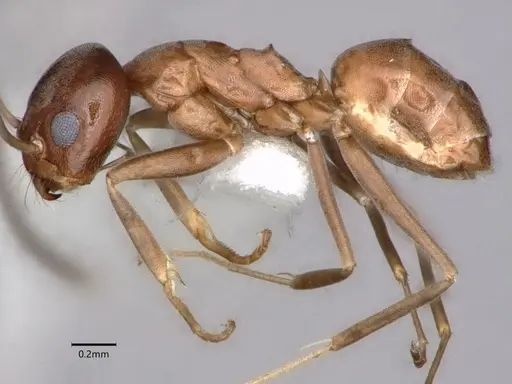
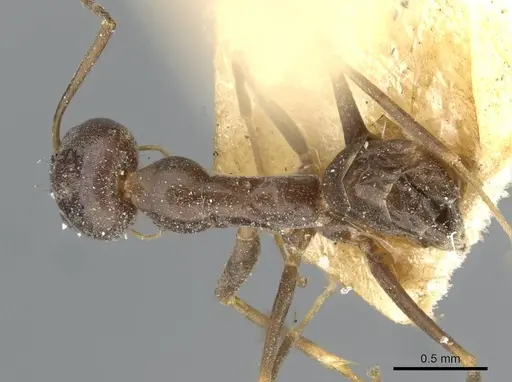
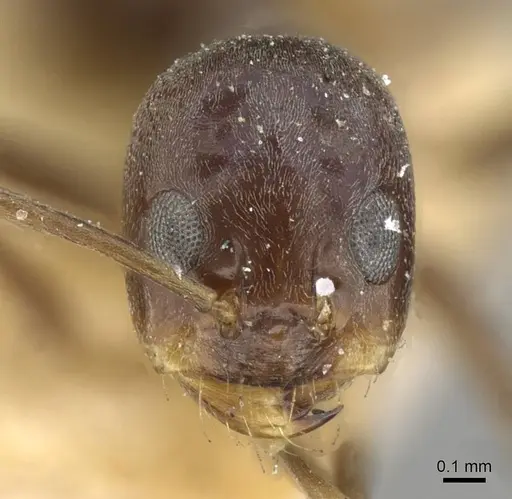
Dorymyrmex grandulus is a small ant species native to the eastern United States, ranging from New Jersey south to Florida and Alabama, with populations extending west to Michigan and Ohio [1][2]. Workers measure 2.5-3.0mm in total length and display a distinctive dusky yellowish brown to dark brown coloration, often appearing somewhat 'mousy' due to longer grayish pubescence that gives the cuticle a whitish sheen [1][2]. The species is distinguished by its sharp propodeal cone with a narrow base and a head that is usually widest across the eyes [3].
This species thrives in hot, dry, sandy habitats including sand dunes, woodland openings, and areas with sparse vegetation [4][5]. Workers are highly heat-tolerant, actively foraging even when ground temperatures reach 103°F, making them one of the more heat-adapted ants in their range [4]. They build small soil mound nests with distinctive crater-like entrances and are known for their predaceous hunting behavior alongside honeydew collection.
Quick Summary
- Difficulty: Easy
- Origin & Habitat: Eastern United States, from New Jersey south to Florida and Alabama, west to Michigan and Ohio. Found in sandy habitats including sand dunes, pine-oak woodlands on clay, and open areas with sparse vegetation [1][5][2].
- Colony Type: Single-queen colonies (monogyne). Small colony size with colonies typically consisting of fewer than a few hundred workers [4].
- Colony: Monogyne
- Founding: Claustral
- Size & Growth:
- Queen: Queens measure 1.20-1.25mm head length [3]
- Worker: Workers are 2.5-3.0mm total length [2][1]
- Colony: Small colonies, likely under 500 workers based on related Dorymyrmex species [4]
- Growth: Moderate, development likely completes within summer months given nuptial flight timing [4]
- Development: Estimated 6-8 weeks based on genus patterns and summer nuptial flight timing [4] (Nuptial flights occur late June through July, suggesting rapid summer development [4])
- Antkeeping:
- Temperature: Keep nest area at 24-30°C. This species is highly heat-tolerant and naturally occurs in hot, sunny habitats, a heating cable on one side of the nest creates the gradient they prefer [4].
- Humidity: Low to moderate. These ants naturally nest in dry, sandy soils. Keep substrate moderately dry with a small water reservoir, avoiding excessive moisture that can cause mold in their dry-native habitat [1][5].
- Diapause: Yes, requires winter hibernation. Based on temperate range and nuptial flight timing in summer, colonies should be cooled to 10-15°C for 3-4 months during winter [1][4].
- Nesting: Y-tong (AAC) or plaster nests work well. This species naturally nests in soil with chambers extending up to 25 inches deep, so they need vertical space for tunneling. Provide a dry, sandy substrate if using a naturalistic setup [4][1].
- Behavior: Active and heat-loving ants that forage during the hottest parts of the day. Workers are predaceous and will hunt small insects, plus they collect honeydew from aphids [1]. They are not aggressive and rarely sting. Escape risk is moderate, use standard barrier methods but they are not particularly adept at climbing smooth surfaces. Workers are known for carrying prey items directly back to the nest rather than recruiting via tandem running [4].
- Common Issues: colonies are small and slow to grow, which can frustrate beginners expecting rapid development, overheating is less of a concern than with most ants, they actually prefer heat, but avoid desiccation, wild-caught colonies may be difficult to locate as they are rarely collected and patchily distributed, hibernation failure is a common killer, ensure proper cooling period in winter, dry habitat needs mean overwatering can quickly lead to mold problems
Nest Preferences and Housing
Dorymyrmex grandulus naturally nests in sandy soils, building small conical sand mounds with a distinctive entrance hole around 0.5cm in diameter [1][6]. Their nests consist of chambers scattered from just beneath the surface down to as deep as 25 inches, so they appreciate vertical space in captivity [4]. For antkeeping, Y-tong (AAC) nests or plaster formicariums work well because they can handle the dry conditions this species prefers. If using a naturalistic setup, provide a sandy substrate that drains well, these ants do not do well in constantly moist environments. A small water reservoir connected to the nest area allows them to access moisture without creating the damp conditions that cause mold in their nests. The key is keeping the nesting area relatively dry while ensuring they can drink.
Feeding and Diet
This species is predaceous, meaning they hunt and eat small insects in addition to collecting honeydew from aphids and scale insects [1]. In captivity, offer small protein sources like fruit flies, pinhead crickets, and mealworm pieces. Since they are small ants (2.5-3mm), prey items should be appropriately sized, tiny insects work better than large ones. They also readily accept sugar water or honey as an energy source, which mimics the honeydew they collect in the wild. Feed protein prey 2-3 times per week, and keep a constant supply of sugar water available. Remove any uneaten prey after 24-48 hours to prevent mold issues in their dry nest environment.
Temperature and Seasonal Care
Dorymyrmex grandulus is one of the more heat-tolerant ant species in the eastern United States. Workers are adapted to forage at ground temperatures reaching 103°F (39°C), so they handle warm conditions better than most ants [4]. Keep the nest area at 24-30°C, with a heating cable on one side to create a temperature gradient. They will naturally position themselves in areas that suit their needs. During summer months, they are highly active, with nuptial flights occurring from late June through July when temperatures reach 81-84°F for optimal flight conditions [4]. For winter care, provide a 3-4 month hibernation period at 10-15°C. This species is well-adapted to temperate seasonal cycles and requires the cold period for proper colony development. Do not skip hibernation as it can weaken the colony and prevent spring activity.
Behavior and Colony Dynamics
These are active, diurnal ants that prefer to forage during the hottest parts of the day, a behavior that sets them apart from many other ant species that avoid extreme heat [4]. Workers are not particularly aggressive and rarely sting humans, making them easy to handle. Colonies remain relatively small compared to many common ant species, typically containing only a few hundred workers even at maturity [4]. One interesting behavior is that workers carry food items directly back to the nest rather than using tandem-running recruitment, they are efficient foragers that work independently [4]. The species is rarely collected and has a patchy distribution across its range, which means finding a wild colony can be challenging [7][2]. If you do obtain a colony, expect slow but steady growth rather than the rapid expansion seen in species like Lasius or Camponotus.
Finding and Acquiring Colonies
Dorymyrmex grandulus is considered a rare species across much of its range [2][6]. In Indiana, it has been recorded from only four counties [2]. In Ohio, it is known only from the Oak Openings area in Lucas County [1]. The species appears to be restricted to sandy habitats, particularly sand dunes and areas with sparse vegetation [5][1]. The best time to find colonies is during summer months when workers are most active. Look for small conical sand mounds with a central entrance hole, these can be found in areas with full sun and sandy soil. Nuptial flights occur from late June through July, so this is also when you might catch a newly mated queen starting a colony [4]. Due to their rarity and specific habitat requirements, finding established colonies in the wild can be challenging, and purchasing from a reputable ant keeper may be the most reliable way to acquire this species.
Frequently Asked Questions
How long does it take for Dorymyrmex grandulus to produce first workers?
Based on summer nuptial flight timing in July and typical Dorymyrmex development, expect first workers (nanitics) approximately 6-8 weeks after the queen lays eggs. The exact timeline depends on temperature, with warmer conditions speeding development.
What temperature do Dorymyrmex grandulus need?
Keep them warm at 24-30°C. This species is highly heat-tolerant and naturally forages in temperatures exceeding 100°F. A heating cable on one side of the nest creates the gradient they prefer.
Can I keep multiple Dorymyrmex grandulus queens together?
This species is monogyne, single queen colonies. Do not combine unrelated queens as they will fight. Each colony should have only one founding queen.
What do Dorymyrmex grandulus eat?
They are predaceous and eat small insects like fruit flies and pinhead crickets. They also collect honeydew from aphids and readily accept sugar water or honey. Feed protein 2-3 times per week with constant sugar water available.
Do Dorymyrmex grandulus need hibernation?
Yes, they require a winter dormancy period. Cool the colony to 10-15°C for 3-4 months during winter. This matches their natural temperate cycle and is essential for colony health.
Are Dorymyrmex grandulus good for beginners?
They are rated easy difficulty but are rarely available in the antkeeping hobby due to their limited distribution and small colony sizes. They are heat-tolerant and not aggressive, making them straightforward to care for once acquired.
How big do Dorymyrmex grandulus colonies get?
Colonies remain relatively small, likely under 500 workers even at maturity. This is smaller than many common ant species, so expect a modest colony size.
What type of nest is best for Dorymyrmex grandulus?
Y-tong (AAC) or plaster nests work well. They prefer dry conditions and naturally nest in sandy soil. Provide a naturalistic setup with sandy substrate if possible, with chambers extending vertically.
Where does Dorymyrmex grandulus live in the wild?
They are found in the eastern United States from New Jersey to Florida and Alabama, west to Michigan and Ohio. They inhabit sandy areas like sand dunes, pine-oak woodlands, and open areas with sparse vegetation.
References

This caresheet is licensed under CC BY-SA 4.0 .
Literature
Loading...Loading products...