

Dorymyrmex goetschi
- Scientific Name
- Dorymyrmex goetschi
- Tribe
- Leptomyrmecini
- Subfamily
- Dolichoderinae
- Author
- Goetsch, 1933
- Distribution
- Found in 1 countries
Dorymyrmex goetschi Overview
Dorymyrmex goetschi is an ant species of the genus Dorymyrmex. It is primarily documented in 1 countries , including Chile. Detailed taxonomic data and occurrence records can be further explored via authoritative databases such as AntWeb or the Global Biodiversity Information Facility (GBIF).
Dorymyrmex goetschi
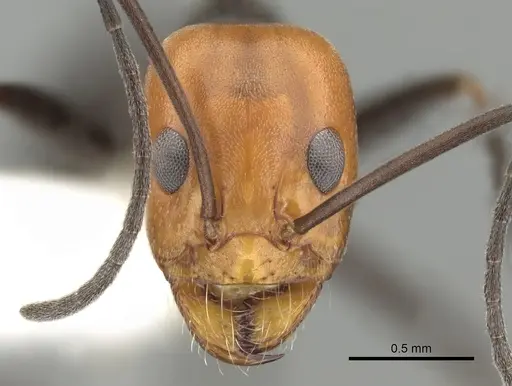
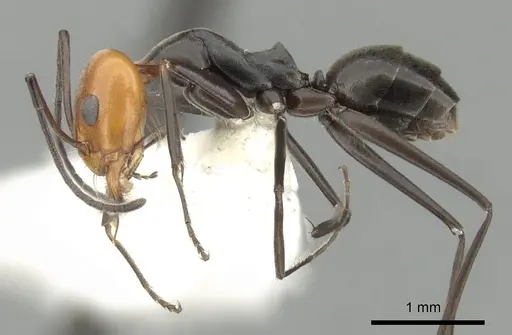
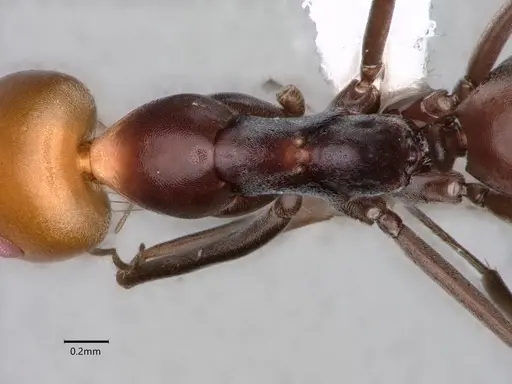
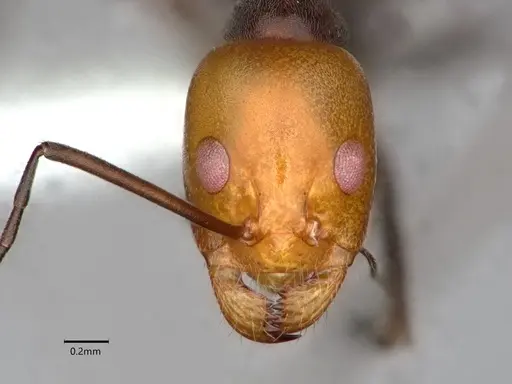
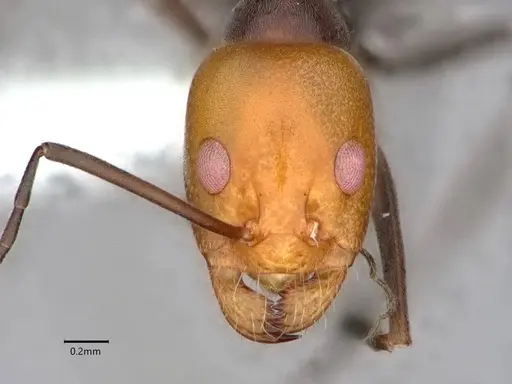
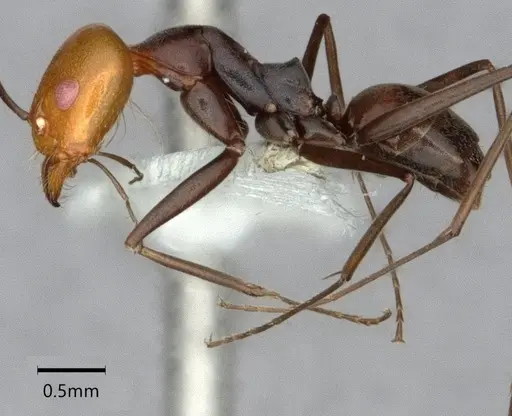
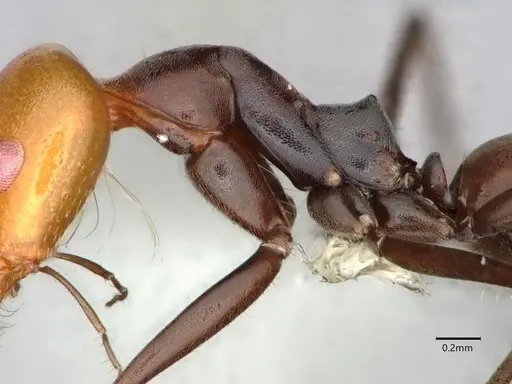
Dorymyrmex goetschi is a Chilean harvester ant known for its distinctive red head and thorax contrasting with a black abdomen. Workers are monomorphic (all the same size) and weigh approximately 1.6 mg. This species is strictly found in Chile, ranging from Antofagasta in the north to Volcán Villarrica in the south. They build characteristic crater nests in open, sunny areas with sandy soils, creating small earth hillocks around their nest entrances. Colonies contain a few hundred workers and are polydomous, meaning they maintain multiple connected nest entrances. These ants are active foragers that collect seeds, small prey, and dead insects, with a foraging range of about 2 meters from the nest entrance.
Quick Summary
- Difficulty: Easy
- Origin & Habitat: Chile, from Antofagasta to Volcán Villarrica, in arid and desert regions with high solar incidence and sandy soils [1][2]
- Colony Type: Polydomous colonies with a few hundred workers, queens found in multiple colonies suggesting multi-queen structure is possible [3][4]
- Colony: Polygyne
- Size & Growth:
- Queen: Unknown, not directly measured in available research
- Worker: Monomorphic workers, larger in northern populations (Copiapó ~30°S) and smaller further south [5]
- Colony: A few hundred workers [3][4]
- Growth: Moderate, estimated based on related Dolichoderines
- Development: 6-10 weeks, estimated from related species in Dolichoderinae (Development timeline not directly studied for this species, estimate based on genus-level data)
- Antkeeping:
- Temperature: Keep between 20-30°C. They are active from 16.4°C to 39.0°C, with optimal foraging around 28°C when they reach speeds of 2.28 cm/s [6]. Provide a temperature gradient allowing them to thermoregulate.
- Humidity: Low to moderate, these are desert/arid zone ants that tolerate dry conditions. Provide a dry outworld with a moist nesting area for brood development.
- Diapause: Likely, as a Chilean species from temperate latitudes, they probably require a winter rest period. Further research needed.
- Nesting: Best kept in naturalistic setups with sandy substrate or Y-tong nests. They nest 30-50cm deep in the wild and prefer open, sunny areas [3]. Provide deep substrate for nesting chambers.
- Behavior: Generally calm and non-aggressive. Workers forage solitarily or in short-term trails, collecting seeds and small insects. They close their nest entrance when soil temperature reaches 45°C, showing adaptation to hot conditions [3]. Workers can carry items up to 3.5 times their body weight [2]. Escape risk is moderate, use standard barrier methods.
- Common Issues: colonies may be polygynous meaning multiple queens, if introducing a new queen to an existing colony, monitor for aggression, polydomous nesting means they may establish multiple nest entrances, provide adequate space, desert species sensitive to excess moisture, avoid damp conditions that cause mold, workers close nest in extreme heat, ensure stable temperatures below 40°C, slow colony growth compared to tropical species may frustrate beginners
Housing and Nest Setup
Dorymyrmex goetschi is a desert-dwelling species that prefers dry, warm conditions with access to sunny areas. In the wild, they nest 30-50 cm underground in sandy soils and construct characteristic crater mounds around their entrances. For captivity, a naturalistic setup with deep sandy substrate works well, or a Y-tong/plaster nest with chambers scaled to their small size. They are polydomous, meaning they may maintain multiple entrances, provide enough space for this behavior. A test tube setup can work for founding colonies, but transfer to a more spacious formicarium as the colony grows. Ensure the nest area remains dry while providing a water source in the outworld. [3][5][2]
Feeding and Diet
These are harvester ants that collect seeds, small prey, and dead insects in the wild [3][4]. Workers can carry items up to 3.5 times their body weight, making them efficient foragers [2]. In captivity, offer a varied diet including small seeds (grass seeds work well), protein sources like mealworms or crickets, and occasional sugar water or honey. They are omnivorous but lean toward seed-harvesting. Feed protein 2-3 times weekly and keep sugar water available. Remove uneaten food promptly to prevent mold.
Temperature and Heating
Dorymyrmex goetschi is adapted to extreme temperature conditions in the Chilean desert. Workers remain active from 16.4°C to 39.0°C, with peak foraging activity around 28°C when they move at 2.28 cm/s [6]. In captivity, maintain temperatures between 20-30°C, providing a gradient so ants can choose their preferred zone. They close their nest entrance when soil temperature reaches 45°C, avoid temperatures above 40°C to prevent stress or mortality. Room temperature within this range is suitable, a heating cable on one side of the nest can create the needed gradient.
Foraging Behavior
Workers forage solitarily or form short-term trails to food patches up to 2 meters from the nest [3]. They discover food patches approximately 19 minutes after leaving the nest, and successful prey removal begins around 46 minutes [3]. Their foraging success improves with experience, initial phase capture rates are 5-7 times lower than in later phases as workers learn patch locations [3]. They communicate through antennal contacts, with more contacts correlating to higher prey capture success [3]. This learning behavior means consistent feeding locations help colony efficiency.
Colony Structure
Colonies consist of a few hundred workers and contain multiple queens, queens were found in 4 out of 7 colonies studied [3]. This suggests a polygynous (multi-queen) colony structure, which is common in Dorymyrmex species. They are polydomous, meaning they maintain multiple connected nest entrances in the wild [4]. Queen size has not been directly measured in available research. When keeping this species, you may encounter multiple queens in established colonies, this is normal behavior for the species.
Frequently Asked Questions
How long does it take for Dorymyrmex goetschi to produce first workers?
The exact egg-to-worker timeline has not been directly studied for this species. Based on related Dolichoderinae ants, expect approximately 6-10 weeks from egg to first worker at optimal temperatures around 25-28°C.
Can I keep multiple queens together in one colony?
Yes, this species appears to be polygynous, multiple queens have been found in the same colonies in the wild. Unlike many ant species where queens fight, Dorymyrmex goetschi colonies seem to tolerate multiple egg-laying queens.
What do Dorymyrmex goetschi eat?
They are harvester ants that collect seeds, small insects, and dead arthropods. In captivity, offer grass seeds, small crickets or mealworms, and sugar water or honey as supplements.
Do they need hibernation?
As a Chilean species from temperate latitudes, they likely require a winter rest period. Reduce temperatures to around 10-15°C for 2-3 months during winter, mimicking their natural seasonal cycle.
Are Dorymyrmex goetschi good for beginners?
Yes, they are considered an easy species to keep. They are calm, non-aggressive, and tolerate a range of conditions. Their main requirements are warm, dry housing and a seed-based diet with occasional protein.
How big do colonies get?
Colonies reach a few hundred workers in the wild. In captivity, expect similar sizes, typically 200-500 workers for established colonies.
When should I move them to a formicarium?
Move from test tube to a formicarium when the colony reaches 30-50 workers or shows signs of needing more space. They prefer deep nesting chambers and sandy substrate.
References

This caresheet is licensed under CC BY-SA 4.0 .
CASENT0249682
View on AntWeb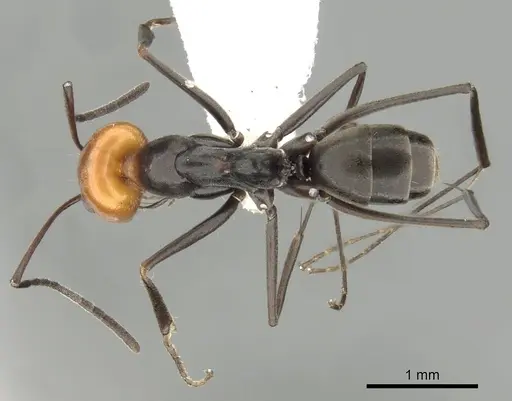
CASENT0841497
View on AntWeb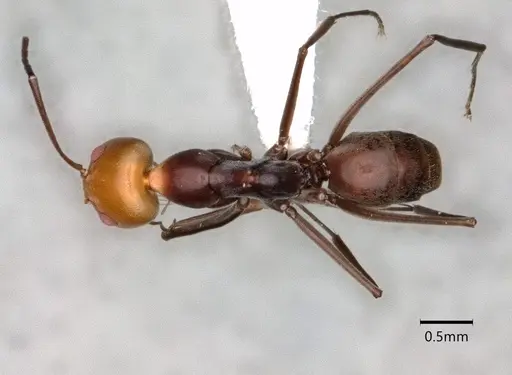
Literature
Loading...Loading products...