

Dorymyrmex amazonicus
- Scientific Name
- Dorymyrmex amazonicus
- Tribe
- Leptomyrmecini
- Subfamily
- Dolichoderinae
- Author
- Cuezzo & Guerrero, 2012
- Distribution
- Found in 1 countries
Dorymyrmex amazonicus Overview
Dorymyrmex amazonicus is an ant species of the genus Dorymyrmex. It is primarily documented in 1 countries , including Colombia. Detailed taxonomic data and occurrence records can be further explored via authoritative databases such as AntWeb or the Global Biodiversity Information Facility (GBIF).
Dorymyrmex amazonicus
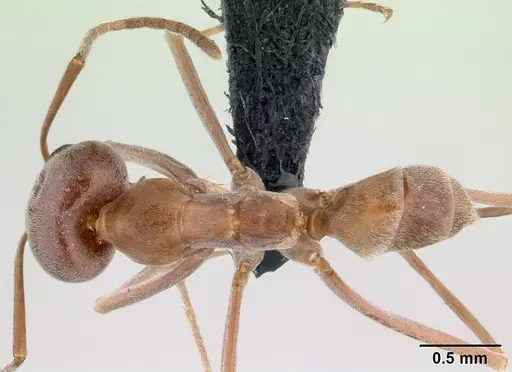
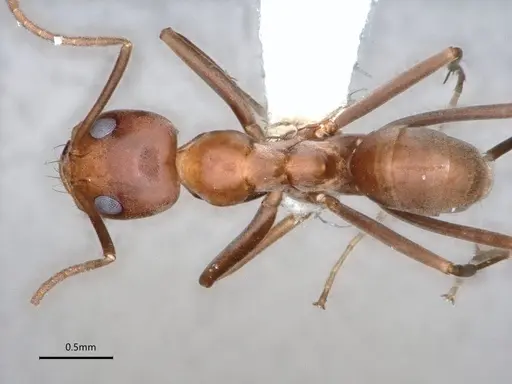
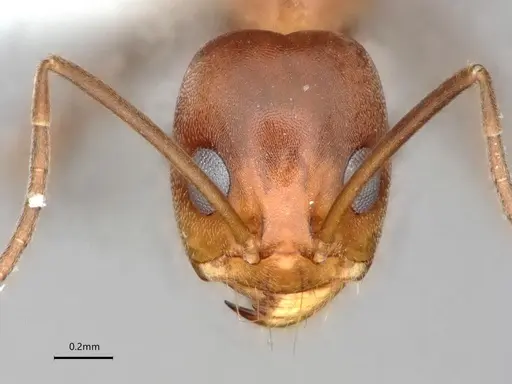
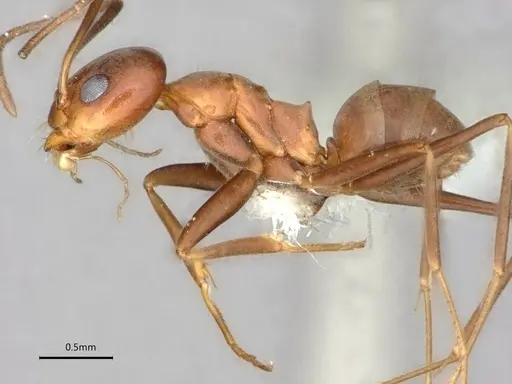
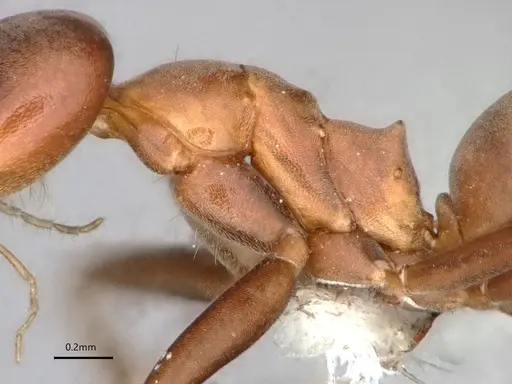
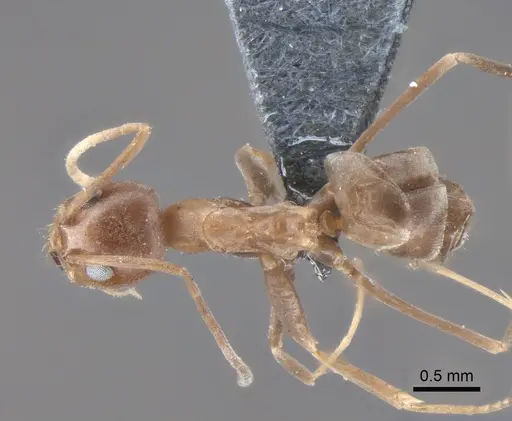
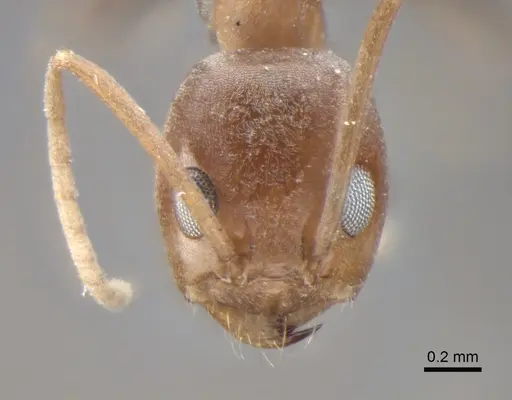
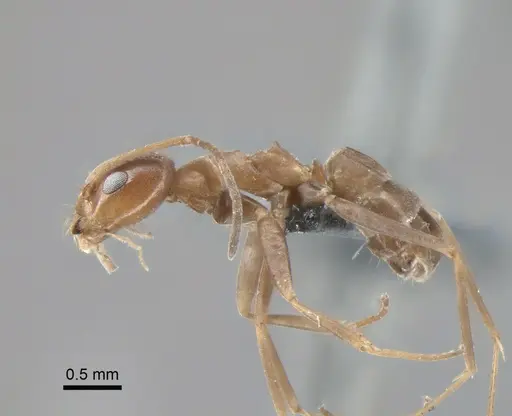
Dorymyrmex amazonicus is a large, reddish-brown to yellowish-brown ant native to the Colombian Amazon region near Leticia. Workers measure approximately 1.0mm in head length and 1.32-1.40mm in mesosoma length, making them a medium-sized species within the genus. The species is characterized by a continuous mesosomal profile, short scapes that don't extend far beyond the head, and a distinctive pyramid-shaped propodeum that gives the genus its common name. A whitish pubescence covers the entire body. This species was only recently described in 2011 and is known from just three worker specimens collected in the 1970s, making it one of the rarest and least-studied ants in the hobby [1].
What makes D. amazonicus particularly interesting is its unusual distribution, it's found in the Amazon rainforest region but shows a preference for highly disturbed, anthropic (human-modified) environments rather than primary forest. This suggests it may be more adaptable to habitat change than many rainforest specialists. The species forms a phylogenetic clade with D. pyramicus guyanensis, suggesting some shared evolutionary history with other pyramid ants [2]. However, with only three known specimens, virtually everything about its biology in captivity remains speculative.
Quick Summary
- Difficulty: Unknown, Insufficient Data
- Origin & Habitat: Amazonas, Colombia, specifically near Leticia in the Colombian Amazon. The type specimens were collected in the vicinity of an Amazonian forest relict in open, deforested habitat. This suggests a preference for disturbed or edge environments rather than dense primary forest [1][3][4].
- Colony Type: Unknown, Only worker caste has been described. Colony structure (single queen vs. multiple queens) has not been documented.
- Size & Growth:
- Queen: Unknown, queen has not been described or collected
- Worker: HL 1.00-1.04mm, HW 0.92-0.96mm, WL 1.32-1.40mm [1]
- Colony: Unknown, only three workers known from type series
- Growth: Unknown, no colony development data exists
- Development: Unknown, no development data exists. Based on related Dorymyrmex species and typical Dolichoderinae development, estimate 4-8 weeks at optimal temperature, but this is a rough guess. (Development timeline is completely unstudied. Related species in the genus suggest moderate development speed, but this is highly uncertain.)
- Antkeeping:
- Temperature: Likely 24-28°C based on Amazonian origin. Start in the mid-range (around 26°C) and observe colony activity. Provide a gentle temperature gradient allowing workers to self-regulate.
- Humidity: Likely 60-80% based on Amazonian rainforest origin. Keep substrate consistently moist but not waterlogged. Provide a water tube for drinking access.
- Diapause: Unknown, no seasonal data exists for this species. As an Amazonian species, it may not require a true diapause but may show reduced activity during drier/cooler periods.
- Nesting: No specific nesting data exists. Based on the genus, they likely nest in soil or under stones in disturbed areas. In captivity, a standard test tube setup or acrylic nest with moist substrate would be appropriate starting points.
- Behavior: Not studied in captivity. Based on genus-level observations of related Dorymyrmex species, they are likely active foragers that hunt individually rather than forming massive raiding columns. Workers are moderately sized and should be manageable in terms of escape prevention, though standard barriers are still recommended. Temperament is unknown but Dolichoderinae ants typically lack a functional sting and rely on chemical defenses (alarm pheromones, formic acid).
- Common Issues: This species has never been kept in captivity, there are no established care protocols or documented successes, Queen biology is completely unknown, founding behavior and colony structure are unstudied, No captive diet information exists, what to feed is entirely speculative, Development timeline is unknown, keepers may face extended waiting periods with no reference points, Only three wild specimens have ever been collected, availability in the antkeeping hobby is extremely limited
Species Discovery and Rarity
Dorymyrmex amazonicus represents one of the rarest ant species in the antkeeping hobby, having been described only in 2011 from three worker specimens collected in 1976 near Leticia, Colombia. The species name 'amazonicus' refers to its unusual distribution in the Amazon rainforest, an environment not typically associated with the Dorymyrmex genus, which more commonly inhabits arid and open habitats across the Americas. This species bridges an ecological gap in our understanding of Dorymyrmex evolution and distribution. The fact that it was found in a disturbed, deforested area rather than primary forest suggests some flexibility in habitat preferences that could prove useful in captive care [1].
Identification and Distinguishing Features
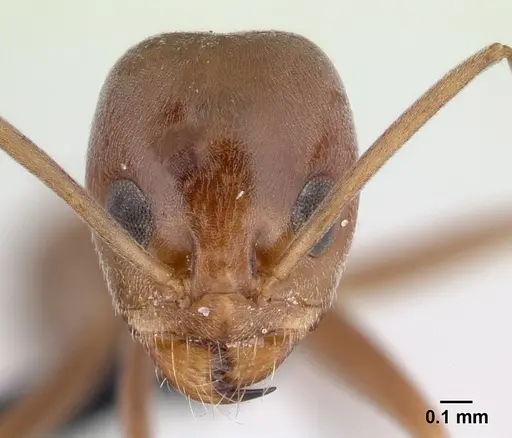
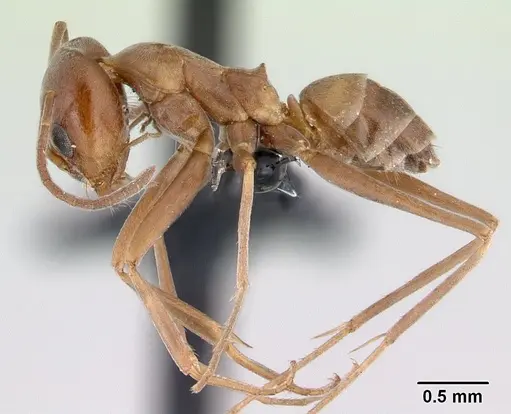
Identifying D. amazonicus requires attention to several key morphological features. The head is slightly longer than wide with strongly convex lateral margins and a concave posterior margin. The compound eyes are placed far inside the head capsule, which is unusual among related species. The scapes are notably short, they do not extend beyond the posterior margin of the head by more than three times their apical width. The mesosomal profile is continuous (not interrupted) between the pronotum and mesonotum. The propodeum forms a distinctive pyramid shape with an acute, upward-directed cone. The body is covered in whitish, short, appressed pubescence giving a somewhat dusty appearance. Color ranges from reddish-brown to yellowish-brown. It can be confused with D. brunneus but is distinguished by its greater TLI (132-135), shorter scapes, deeper-set eyes, and continuous mesosomal profile [1].
Phylogenetic Relationships
Recent genetic analysis using ultraconserved elements (UCE) has placed Dorymyrmex amazonicus in a clade with D. pyramicus guyanensis and other Dorymyrmex specimens (br_mg03/br_ce01) [2]. This genetic relationship suggests D. amazonicus shares some evolutionary history with the more widespread and studied D. pyramicus species. The genus Dorymyrmex as a whole is known for the distinctive pyramid-shaped propodeum that gives them the common name 'pyramid ants.' Understanding these relationships may help keepers make informed guesses about care requirements based on better-studied related species.
Housing and Setup Recommendations
Since no captive care records exist for this species, recommendations must be based on genus-level patterns and the species' apparent habitat preferences. Given its Amazonian origin near Leticia, Colombia, provide warm and humid conditions. A standard test tube setup works well for founding colonies, the queen (once acquired) can be housed in a test tube with a water reservoir. For established colonies, an acrylic nest or naturalistic setup with moist substrate would be appropriate. Temperature should be maintained in the 24-28°C range, with a slight gradient if possible. Humidity should be moderate to high (60-80%), reflecting the rainforest origin. Escape prevention should be standard, while not tiny, all ants can slip through surprisingly small gaps. Use Fluon or other barriers as needed. Since nothing is known about their diet, keepers should experiment cautiously with protein sources (small insects) and sugar sources (honey, sugar water) while monitoring for acceptance.
Feeding and Diet - Speculative Recommendations
The diet of D. amazonicus has not been studied in any capacity. As a Dolichoderine ant, they likely have typical ant dietary preferences: protein from small invertebrates and carbohydrates from honeydew or nectar. Based on the genus and their likely foraging behavior (individual hunting rather than mass raiding), offer small live prey items such as fruit flies, pinhead crickets, or mealworm pieces. Sugar water or honey can be offered as a carbohydrate source, though acceptance should be monitored. Start with small amounts and remove uneaten food after 24-48 hours to prevent mold. Since this species comes from a disturbed habitat, it may be more adaptable than strict forest specialists, but this is entirely speculative. Keepers should document their feeding observations to build the first captive care knowledge base for this species.
Availability and Acquisition
This species is extraordinarily rare in the antkeeping hobby. It has never been commercially available and likely exists only in scientific collections. The three type specimens collected in 1976 remain essentially the entirety of known specimens. There are no documented captive colonies anywhere. Any keeper hoping to acquire this species would need to either locate a scientific colony or potentially collect from the wild near Leticia, Colombia, which presents significant legal and practical challenges. For most antkeepers, this species remains a 'holy grail' that exists more in literature than in practice. Related species like D. pyramicus or D. brunneus are far more accessible and would provide a similar (though not identical) keeping experience while we learn more about D. amazonicus biology. [1]
Frequently Asked Questions
Is Dorymyrmex amazonicus available in the antkeeping hobby?
No. This species is one of the rarest ants in existence with only three known specimens, all collected in 1976. It has never been documented in the antkeeping hobby and is not available from any commercial source.
What does Dorymyrmex amazonicus look like?
Workers are medium-sized (around 1.0mm head length) with a reddish-brown to yellowish-brown body. They have a distinctive pyramid-shaped propodeum, short scapes that don't extend far past the head, and are covered in whitish pubescence. The eyes are set deep within the head capsule, and the mesosomal profile is continuous (not interrupted).
Where does Dorymyrmex amazonicus live in the wild?
It is known only from the vicinity of Leticia in Amazonas, Colombia, the Colombian Amazon region. Specimens were collected in open, disturbed, deforested areas near an Amazonian forest relict, suggesting tolerance for human-modified environments.
How do I care for Dorymyrmex amazonicus?
No captive care protocol exists. Based on its Amazonian origin, provide warm temperatures (24-28°C), moderate to high humidity (60-80%), and a moist substrate. Start with a test tube setup for founding colonies. Diet should include small protein sources (insects) and carbohydrates (sugar water). This is entirely speculative, there are no documented successful captive colonies.
How big do Dorymyrmex amazonicus colonies get?
Unknown. Only three workers have ever been collected. Related Dorymyrmex species can form colonies of several hundred to a few thousand workers, but this is speculative for D. amazonicus.
What is the egg-to-worker development time for Dorymyrmex amazonicus?
Unknown, completely unstudied. Based on related Dolichoderinae species, a rough estimate would be 4-8 weeks at optimal temperature, but this has no direct documentation.
Is Dorymyrmex amazonicus a difficult species to keep?
Difficulty cannot be assessed, this species has never been kept in captivity. There are no established protocols, no documented successes, and virtually no biological information to guide keepers. It would be an experimental species for extremely advanced antkeepers with research interests.
Does Dorymyrmex amazonicus need hibernation or diapause?
Unknown. As an Amazonian species from near the equator, it likely does not require a true diapause. However, seasonal activity patterns are completely unstudied.
Can I keep multiple queens of Dorymyrmex amazonicus together?
Unknown. Colony structure (monogyne vs. polygyne) has never been documented. Without any data on colony founding or structure, combining queens would be entirely experimental and unadvised.
References

This caresheet is licensed under CC BY-SA 4.0 .
Literature
Loading...Loading products...