

Dorylus politus
- Scientific Name
- Dorylus politus
- Subfamily
- Dorylinae
- Author
- Emery, 1901
- Distribution
- Found in 0 countries
Dorylus politus Overview
Dorylus politus is an ant species of the genus Dorylus. It is primarily documented in 0 countries . Detailed taxonomic data and occurrence records can be further explored via authoritative databases such as AntWeb or the Global Biodiversity Information Facility (GBIF).
Dorylus politus
Dorylus politus is a Central African army ant species native to the Democratic Republic of Congo (BC and MN provinces) [1]. Workers are polymorphic, meaning they come in different sizes, from small minor workers to large major workers with powerful mandibles. The genus Dorylus is famous for its nomadic lifestyle and massive swarm raids, where thousands of workers coordinate to hunt prey across the forest floor. Colonies can contain millions of individuals and constantly relocate, following prey populations. Queens are permanently wingless (ergatoid) after mating and can live for years, producing thousands of eggs daily. This species represents the army ant adaptive strategy: highly mobile colonies that don't settle in one location but instead march through their territory in search of food.
Quick Summary
- Difficulty: Expert
- Origin & Habitat: Democratic Republic of Congo (BC and MN provinces), found in tropical forest habitats [1]
- Colony Type: Single-queen colonies with ergatoid (wingless) queen. Colony size can reach millions of workers.
- Size & Growth:
- Queen:{.size-link} ~15-25mm, estimated based on Dorylus genus patterns
- Worker:{.size-link} ~2-15mm polymorphic [AntWiki]
- Colony: Up to several million workers (typical for Dorylus) [AntWiki]
- Growth: Fast
- Development: ~2-4 weeks, estimated based on Dorylus genus patterns for tropical army ants (Development is rapid compared to most ants, army ant larvae develop quickly to support the colony's nomadic lifestyle)
- Antkeeping:
- Temperature: Keep at 24-28°C, they thrive in warm, humid tropical conditions. A heating cable on one side creates a gradient [AntWiki]
- Humidity: High humidity is essential, aim for 70-85%. These ants are adapted to the humid understory of tropical forests. Keep the nest substrate consistently moist but not waterlogged [AntWiki]
- Diapause: No, being tropical, they do not require hibernation. Maintain warm conditions year-round [AntWiki]
- Nesting: This is the most challenging aspect. Army ants are nomadic and don't nest in permanent structures. In captivity, they need a large outworld with frequent relocations. Provide a spacious formicarium with multiple connected chambers that can be rearranged to simulate colony movement. They prefer dark, enclosed spaces for the queen chamber.
- Behavior: Extremely aggressive and active predators. Workers swarm in coordinated raids, overwhelming prey with their numbers. They have powerful mandibles and can deliver painful bites. Escape prevention is critical, they will exploit any gap and can squeeze through surprisingly small openings. Workers are photophobic and prefer dark, enclosed spaces. The colony is constantly on the move, which makes long-term captive maintenance challenging. Major workers can be quite large and intimidating.
- Common Issues: Colony death due to inability to hunt, army ants need live prey to survive and thrive, Colony stress from captivity causing queen to stop laying, they are highly sensitive to disturbance, Escapes are likely without excellent barrier prevention, they are persistent and will find weaknesses, Inability to simulate nomadic lifestyle leads to colony collapse, they need space to move, Mold problems from keeping substrate moist in a closed container, balance humidity with ventilation
Housing and Nest Setup
Housing Dorylus politus is significantly more challenging than typical ant species. These are nomadic army ants that naturally move their entire colony every few weeks. In captivity, you need a large outworld (at least 30cm x 30cm minimum, larger is better) connected to a formicarium with multiple chambers. The formicarium should allow the colony to relocate within it, consider a modular design with removable walls or multiple connected sections. Provide dark covering over the nest area since they prefer darkness. The outworld should have a deep substrate layer (at least 5cm) for them to create temporary chambers. Test tubes work for founding colonies but will quickly become too small as the colony grows. Escape prevention must be excellent, apply fluon or similar barriers to all edges and openings.
Feeding and Diet
Dorylus politus is an obligate predator, they must have live prey to survive. They will not thrive on sugar water or dead insects alone. Their hunting strategy relies on swarm raids where thousands of workers coordinate to overwhelm arthropods. Feed live insects appropriate to worker size: small workers can take fruit flies, springtails, and small crickets, while major workers can tackle larger prey like adult crickets, mealworms, and even small vertebrates. Feed prey at least 2-3 times per week, and remove uneaten prey within 24 hours to prevent mold. The colony should have constant access to a water source. Sugar sources are rarely accepted, but you can offer occasional honey or sugar water, don't rely on it as a primary food source.
Temperature and Humidity
Maintain temperatures between 24-28°C year-round. Being tropical ants, they have no tolerance for cold and will become sluggish below 20°C. Use a heating cable or mat on one side of the enclosure to create a temperature gradient, allowing the colony to self-regulate. Humidity should be high, 70-85% relative humidity. Keep the substrate consistently moist but avoid standing water. Mist the enclosure regularly and ensure the water reservoir in any test tubes is adequate. Good ventilation is essential to prevent mold while maintaining humidity, small holes covered with mesh work well. Do not let the substrate dry out completely.
Colony Behavior and Dynamics
Understanding Dorylus behavior is crucial for successful keeping. These are army ants with a completely different lifestyle than most ant species. The colony is led by a single ergatoid (permanently wingless) queen who remains in the nest chamber. Workers operate in coordinated swarms that can number in the thousands during raids. The colony is nomadic, in the wild, they relocate every few weeks following prey populations. This means your colony will constantly rearrange their nest and may seem restless. Major workers (soldiers) have large, powerful mandibles and can deliver painful bites. The colony is highly sensitive to disturbance, moving the nest too often or exposing it to light can stress the queen into stopping egg production. Allow the colony to establish their own chamber arrangement within the space you provide.
Growth and Development
Army ant colonies grow extremely fast when well-fed. The queen can lay thousands of eggs per day, and larvae develop rapidly compared to most ant species. Expect development from egg to worker to take approximately 2-4 weeks under optimal conditions (around 26°C with high humidity). First workers (nanitics) will be smaller but the colony should quickly produce larger workers as the colony grows. The key to rapid growth is consistent access to live prey, without adequate protein, the queen will reduce egg production. A healthy colony should double in size every few months during the first year. Colonies can eventually reach millions of workers, but this takes several years.
Frequently Asked Questions
Can I keep Dorylus politus in a test tube?
Only for a newly mated queen (founding colony). Once she has workers, you need to move them to a larger setup quickly. A test tube is too small for more than a few dozen workers, these ants need space to form their characteristic swarms.
How long does it take for Dorylus politus to produce first workers?
Approximately 2-4 weeks from egg to worker at optimal temperature (around 26°C). Army ants develop faster than most ant species, which supports their nomadic lifestyle.
Are Dorylus politus good for beginners?
No, this species is recommended for expert antkeepers only. They require live prey, high humidity, warm temperatures, large enclosures, and the ability to simulate their nomadic lifestyle. They are far more demanding than typical ant species.
Can I keep multiple Dorylus queens together?
No, Dorylus colonies are monogyne (single queen). Unlike some ant species, they do not tolerate multiple queens. Introducing a second queen will result in fighting.
What do Dorylus politus eat?
Live prey only. They are obligate predators that require arthropods to survive. Feed a variety of live insects: fruit flies, springtails, small crickets, mealworms, and other appropriately-sized invertebrates. Remove uneaten prey within 24 hours.
Do Dorylus politus need hibernation?
No, they are tropical ants and do not require hibernation. Keep them warm year-round at 24-28°C. Cold temperatures can slow their metabolism and cause colony decline.
Why is my Dorylus colony dying?
The most common causes are: lack of live prey (they cannot survive on dead food or sugar alone), cold temperatures below 20°C, low humidity causing desiccation, excessive disturbance stressing the queen, or escapes due to inadequate barriers. Review each of these factors.
How big do Dorylus politus colonies get?
In the wild, Dorylus colonies can reach several million workers. In captivity, well-established colonies can grow to hundreds of thousands of workers over several years with proper care.
When should I move Dorylus to a formicarium?
Move them once the test tube colony reaches 50-100 workers. They need more space to exhibit natural behavior. Provide a spacious formicarium with multiple chambers and a large outworld for foraging.
How often should I feed Dorylus politus?
Feed live prey 2-3 times per week for established colonies. Founding colonies may need more frequent feedings. Always ensure prey is available and remove uneaten insects within 24 hours to prevent mold.

This caresheet is licensed under CC BY-SA 4.0 .
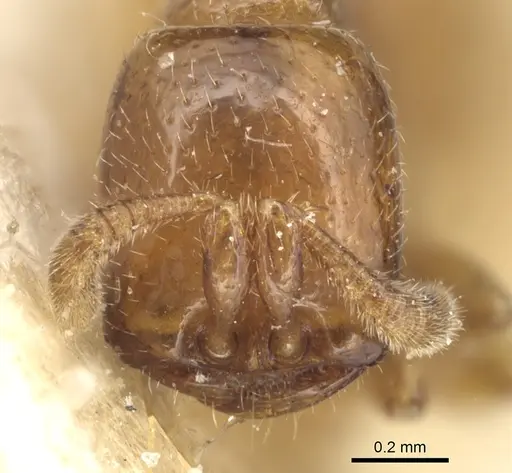
CASENT0903698
View on AntWeb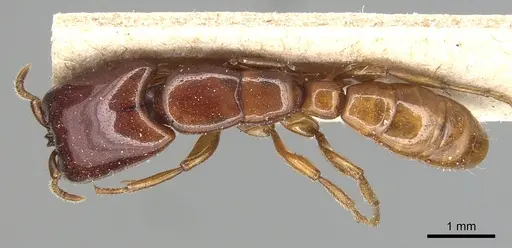
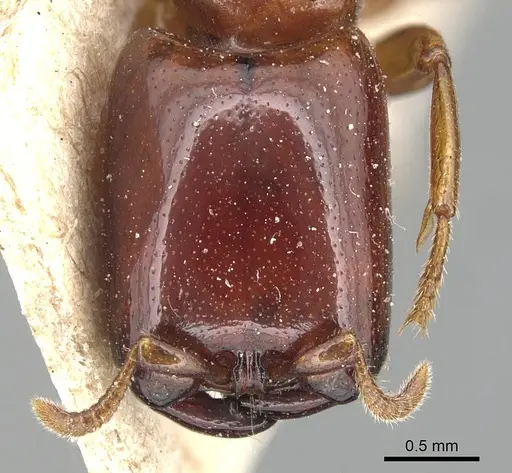
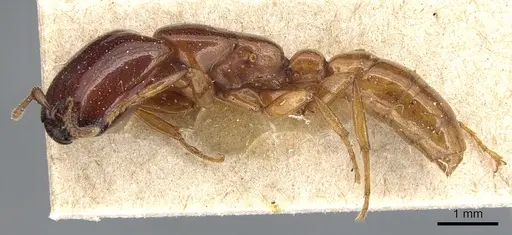
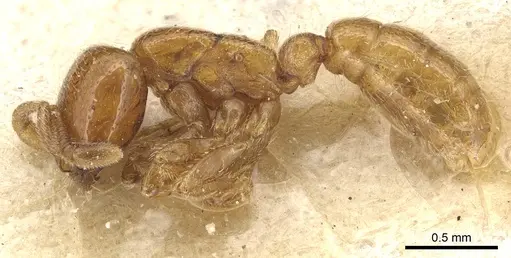
CASENT0903699
View on AntWeb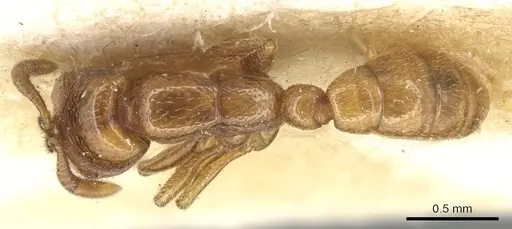
Literature
Loading...Loading products...