

Dolioponera fustigera
- Scientific Name
- Dolioponera fustigera
- Tribe
- Ponerini
- Subfamily
- Ponerinae
- Author
- Brown, 1974
- Distribution
- Found in 3 countries
Dolioponera fustigera Overview
Dolioponera fustigera is an ant species of the genus Dolioponera. It is primarily documented in 3 countries , including Central African Republic, Côte d'Ivoire, Equatorial Guinea. Detailed taxonomic data and occurrence records can be further explored via authoritative databases such as AntWeb or the Global Biodiversity Information Facility (GBIF).
Dolioponera fustigera
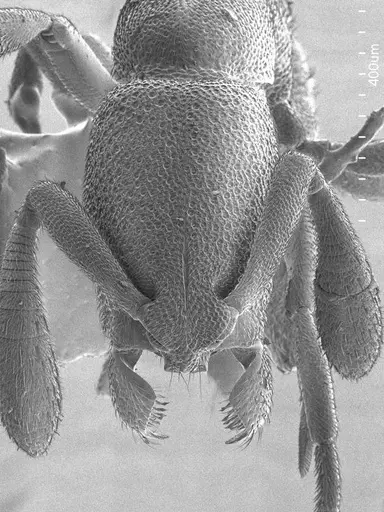
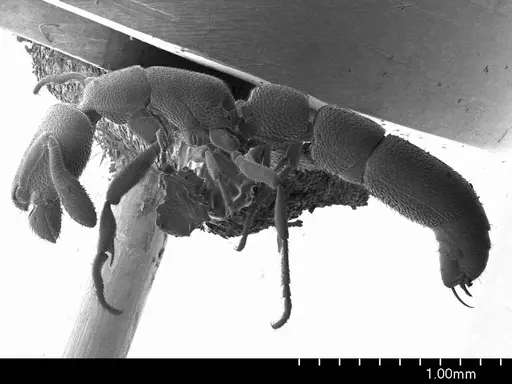
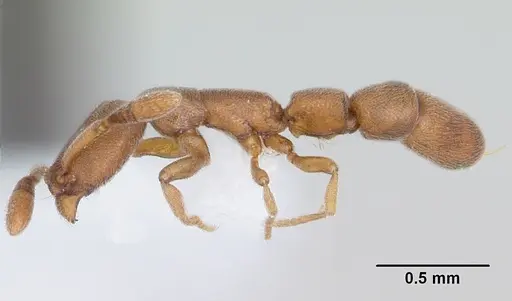
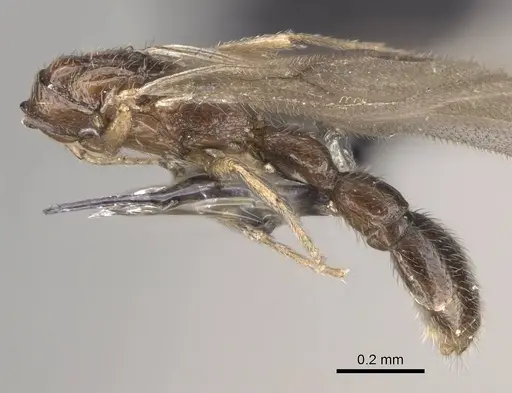
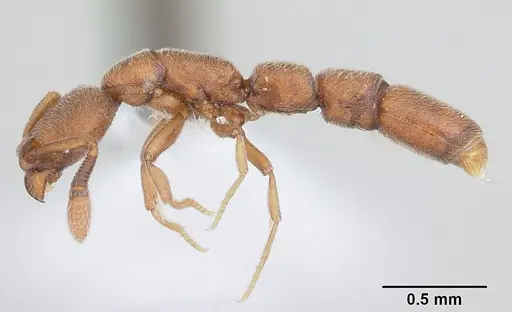
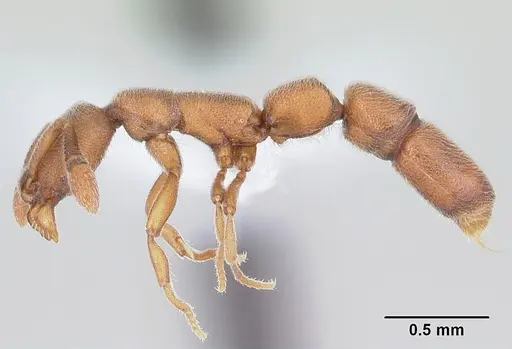
Dolioponera fustigera is an extremely rare and cryptic ponerine ant known only from a handful of specimens collected in Central African rainforests. Workers are tiny at just 2.2-2.8mm, making them among the smallest ants in the Ponerinae subfamily. They have an unmistakable long, sinuous body with unusual bristly mandibular teeth and either very small eyes or none at all. Some specimens with larger eyes may represent ergatoid (wingless) queens. This species is morphologically distinctive and appears to be related to Pachycondyla and Boloponera. Only the worker caste has been documented, and almost nothing is known about their behavior, colony structure, or captive care requirements.
Quick Summary
- Difficulty: Expert
- Origin & Habitat: Known only from three countries in Central Africa: Gabon, Cameroon, and the Central African Republic. All specimens have been collected from leaf litter in primary rainforest, specifically sifted from soil samples taken 0-5cm deep on forest floor [1][2].
- Colony Type: Unknown. Only worker specimens have been documented. Some specimens with larger eyes may represent ergatoid (wingless) replacement queens, but colony structure has never been observed [1].
- Size & Growth:
- Queen: Unconfirmed, ergatoid queens suggested at 2.7mm TL [1]
- Worker: 2.2-2.8mm TL,0.30-0.41mm HW [1]
- Colony: Unknown, only a handful of specimens have ever been collected
- Growth: Unknown
- Development: Unknown, no data available (Development timeline has not been studied. Based on related Ponerinae and their tiny size, expect relatively fast development but this is purely speculative.)
- Antkeeping:
- Temperature: Keep warm around 24-28°C, typical for Central African rainforest species. Use a heating cable on one side of the nest to create a gradient.
- Humidity: Require high humidity, they live in rainforest leaf litter and soil. Keep the nest substrate consistently moist but not waterlogged. Mist occasionally and provide a water tube.
- Diapause: No, as a tropical species from near the equator, they do not require hibernation.
- Nesting: Natural nesting is in soil and leaf litter at the forest floor. In captivity, a small test tube setup or acrylic nest with fine chambers works well given their tiny size. The nest should be kept humid and dark. Y-tong nests with narrow passages are appropriate for their small size.
- Behavior: Behavior is completely unstudied in captivity. As a Ponerine ant, they are likely predatory on small invertebrates. Their tiny size and unusual morphology (very short palps, possible reduced eyes) suggest specialized foraging. Escape prevention is critical due to their minute size, they can squeeze through the tiniest gaps. Use fine mesh barriers and tight-fitting lids. Do not keep in setups with large open spaces.
- Common Issues: escape prevention is critical, their tiny size means they can slip through gaps too small for most ants, virtually no captive care information exists, this is one of the least-studied ant species in the hobby, wild-caught colonies are essentially impossible to obtain given their rarity, slow colony growth is expected given limited data on their biology, high humidity requirements can lead to mold if ventilation is inadequate
Why This Species Is So Challenging
Dolioponera fustigera represents one of the most difficult ants to keep in captivity simply because we know almost nothing about them. This species was previously known only from a single type specimen collected in Gabon in the 1960s. Fisher (2006) only added three more specimens from Cameroon and the Central African Republic, that's the entire known population of this species in museums worldwide. No queen, no male, no colony has ever been documented. This means every aspect of their captive care, from founding behavior to diet preferences to temperature requirements, is either unknown or inferred from related species. You will essentially be a pioneer if you attempt to keep this species, and success would represent a genuine contribution to antkeeping knowledge [1].
Natural History and Distribution
This species is known only from three locations in Central Africa: Gabon (the type locality near Makokou), Cameroon (Parc National de Campo), and the Central African Republic (Dzanga-Sangha reserve). All specimens were collected from primary rainforest leaf litter using sifting methods, essentially shaking dead leaves and soil through screens to extract tiny invertebrates. The specimens were found in the top 5cm of soil on hill spurs covered with primary forest. This tells us they are cryptic leaf litter ants, living in the humid microclimate between fallen leaves and the forest floor. The elevation ranges from 290-420m, which is typical lowland tropical rainforest [1][2].
Morphology and Identification
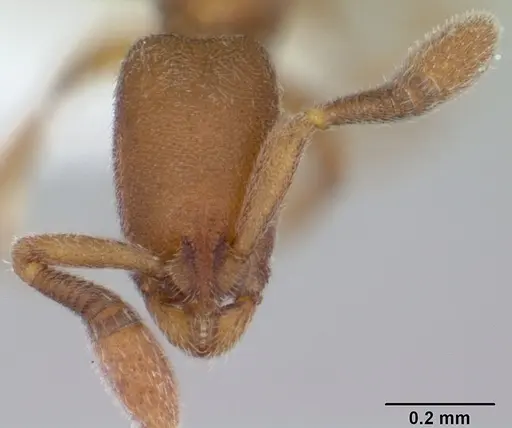
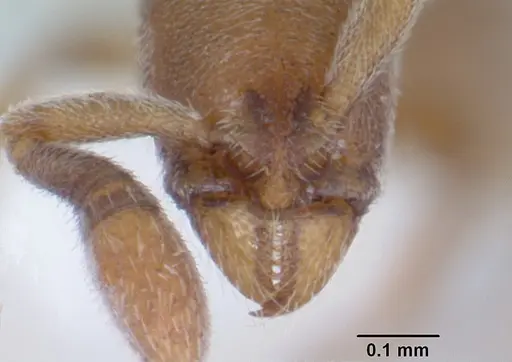
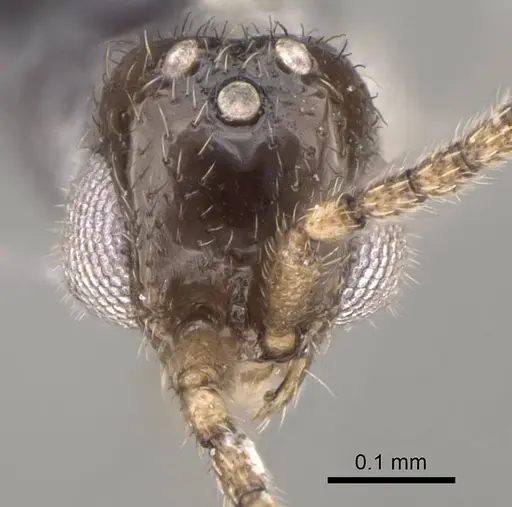
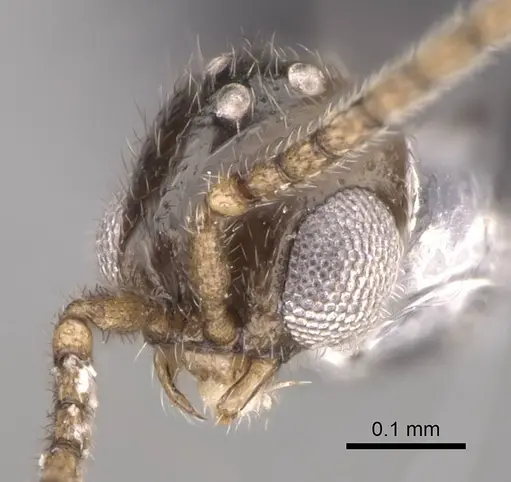
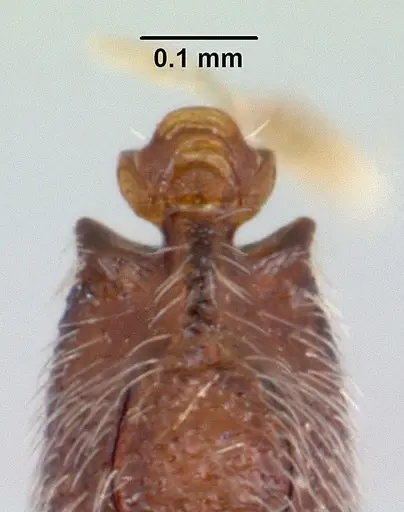
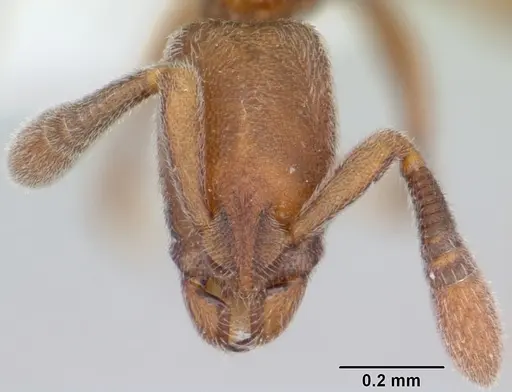
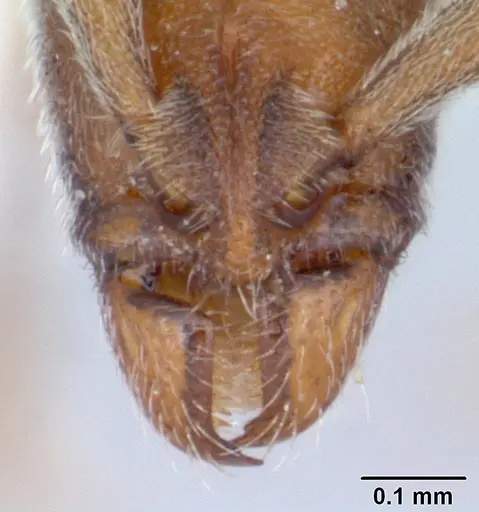
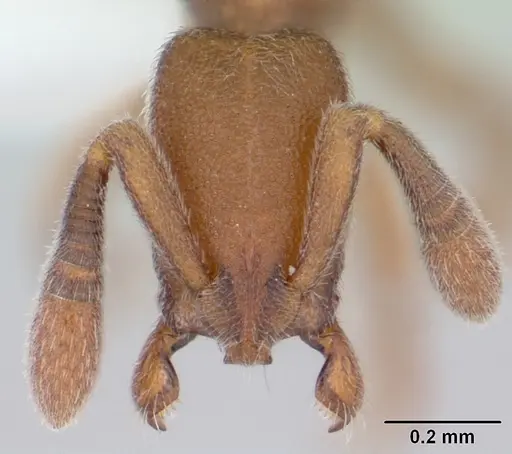
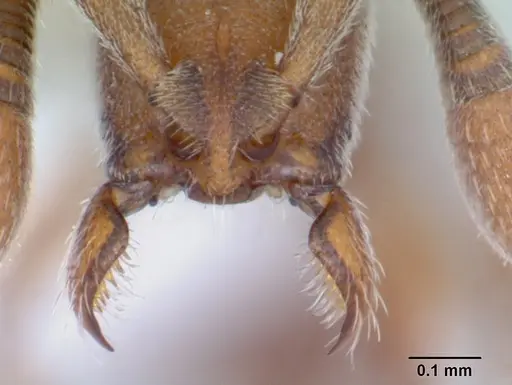
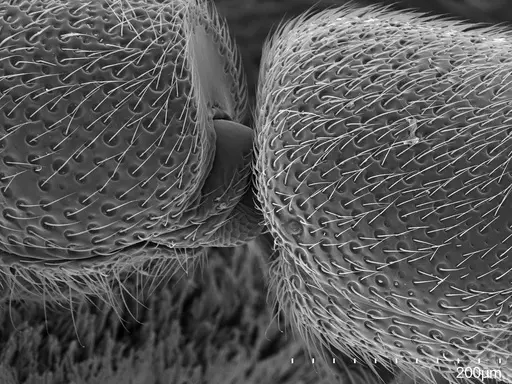
Dolioponera fustigera is among the most morphologically distinctive ponerines. Their body is unusually long and sinuous compared to other ants. The most striking feature is their setose mandibular teeth, these are bristly, hair-covered mandibles that are unique to this genus. They have a blunt projection on the front of the head (clypeus), and their antennae have a distinct club at the end. Many specimens have very tiny eyes or lack eyes entirely, one specimen from Cameroon was completely eyeless. Some specimens with larger eyes may actually be ergatoid (wingless) queens rather than workers. Workers measure just 2.2-2.8mm total length, making them absolutely tiny [1][2].
Housing and Setup
Given their tiny size and leaf litter habitat, you should create a humid, naturalistic setup. A small test tube with a water reservoir works for founding colonies, but a small acrylic nest or Y-tong with fine chambers scaled to their minute size is ideal. The nest must have excellent escape prevention, these ants are so small they can squeeze through gaps invisible to the human eye. Use fine mesh on any ventilation holes and ensure all connections are sealed. Keep the nest humid (like a damp forest floor) but provide some dry area options. A small outworld for foraging can be simple, a plastic container with moist substrate works well. Because they are so rarely kept, expect a steep learning curve and be prepared to experiment.
Feeding and Diet
As a Ponerine ant, Dolioponera fustigera is almost certainly predatory, like most ants in this subfamily. However, their tiny size means they can only tackle prey microscopic in scale, springtails, tiny mites, and other micro-arthropods that live in leaf litter. Their very short palps (only 2 segments on each of the maxillary and labial palps) suggest they may have a specialized diet, though we don't know what. Offer small live prey like springtails, and possibly minute fruit flies or other tiny insects. Sugar sources may or may not be accepted, offer occasionally but don't rely on them. This is entirely speculative based on related species. [1]
Temperature and Humidity
Being a Central African rainforest species, they need warm, humid conditions. Aim for temperatures in the 24-28°C range, room temperature may suffice if your home is warm, otherwise use a heating cable on one side of the nest to create a gradient. High humidity is essential, they come from rainforest leaf litter where the environment is constantly moist. Keep the nest substrate damp but not sitting in water. Some dry area options allow them to self-regulate. Do not let the nest dry out. Because they are from the equator, no winter dormancy or diapause is expected.
Frequently Asked Questions
Is Dolioponera fustigera available for purchase?
No. This is one of the rarest ant species in existence, only four specimens have ever been collected. No colony has ever been documented in the wild, and they are not available from any ant breeder. This species is essentially impossible to obtain for captive keeping.
How do I keep Dolioponera fustigera?
No captive care protocol exists because no one has ever kept this species. Based on their natural habitat (rainforest leaf litter), provide a small, humid nest with chambers scaled to their tiny 2-3mm size. Keep them warm (24-28°C), high humidity, and offer tiny live prey like springtails. Be prepared to experiment, you would be pioneering the captive husbandry of a completely unstudied species.
What do Dolioponera fustigera eat?
Unknown for certain, but as a Ponerine ant they are likely predatory. Their tiny size suggests they hunt micro-arthropods like springtails and tiny mites found in leaf litter. Their very short palps may indicate a specialized diet, but we have no data. Offer small live prey and observe what they accept.
How big do Dolioponera fustigera colonies get?
Unknown. Only single worker specimens have ever been collected, no colony has been documented. We don't know if they form colonies of dozens, hundreds, or just a few workers. Related Ponerinae vary widely in colony size.
Do Dolioponera fustigera queens have wings?
Likely not. Some specimens with larger eyes may represent ergatoid (wingless) queens, which are known in other Ponerinae. This would mean queens are born without wings rather than shedding them after mating. However, no queen of this species has ever been documented, so this is speculative.
Are Dolioponera fustigera ants aggressive?
Unknown. Ponerine ants often have potent stings, but this species is so rarely encountered that no one knows their temperament. Given their tiny size, any sting would likely be negligible to humans. Treat them as potentially defensive but handle with care regardless.
What is the egg to worker development time for Dolioponera fustigera?
Unknown. No brood has ever been documented for this species. Development time cannot be estimated with any confidence. Based on related tiny Ponerinae, development might be relatively fast, but this is pure speculation.
Do Dolioponera fustigera need hibernation?
No. As a species from near the equator in Central Africa, they experience no seasonal temperature drops. Keep them at warm, stable temperatures year-round (24-28°C). No diapause or winter rest is expected.
Can I keep multiple Dolioponera fustigera queens together?
We don't know. Colony structure has never been documented. Some specimens may be ergatoid queens, but whether they form single-queen or multi-queen colonies is completely unknown. Do not attempt combining unrelated queens without data, this is too rare a species to risk.
References

This caresheet is licensed under CC BY-SA 4.0 .
ANTWEB1008521
View on AntWeb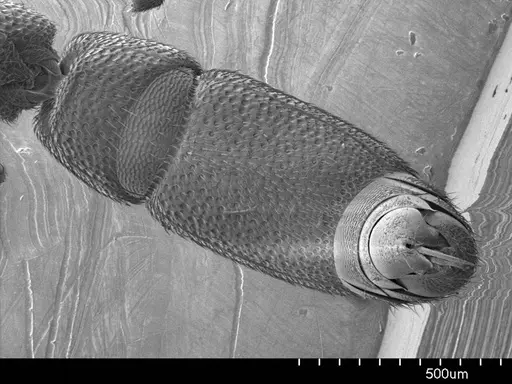
CASENT0000078
View on AntWeb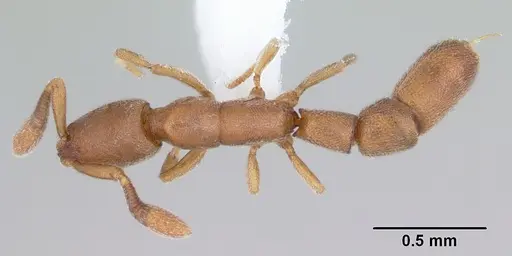
CASENT0090028
View on AntWeb
CASENT0411307
View on AntWeb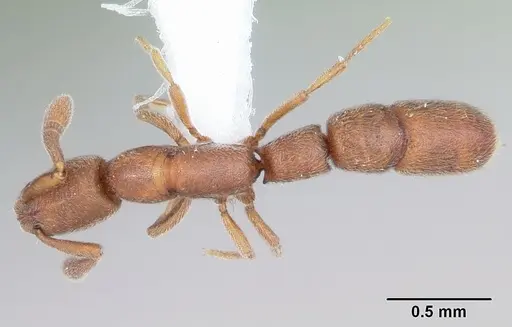
CASENT0412032
View on AntWeb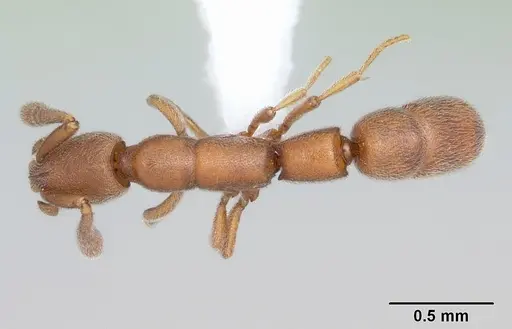
Literature
Loading...Loading products...