

Dolichoderus turneri
- Scientific Name
- Dolichoderus turneri
- Tribe
- Dolichoderini
- Subfamily
- Dolichoderinae
- Author
- Forel, 1902
- Distribution
- Found in 1 countries
Dolichoderus turneri Overview
Dolichoderus turneri is an ant species of the genus Dolichoderus. It is primarily documented in 1 countries , including Australia. Detailed taxonomic data and occurrence records can be further explored via authoritative databases such as AntWeb or the Global Biodiversity Information Facility (GBIF).
Dolichoderus turneri
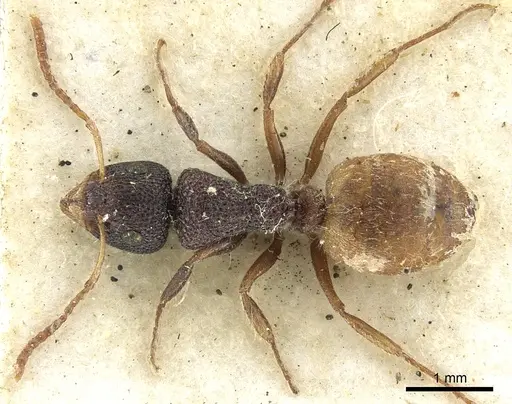
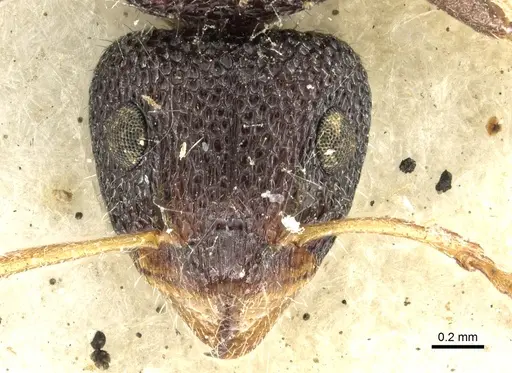
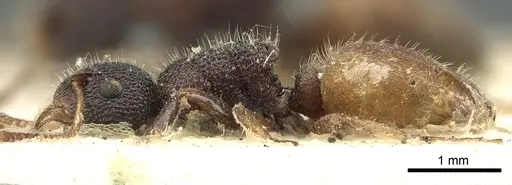
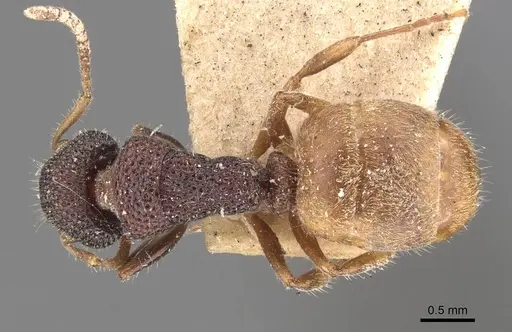
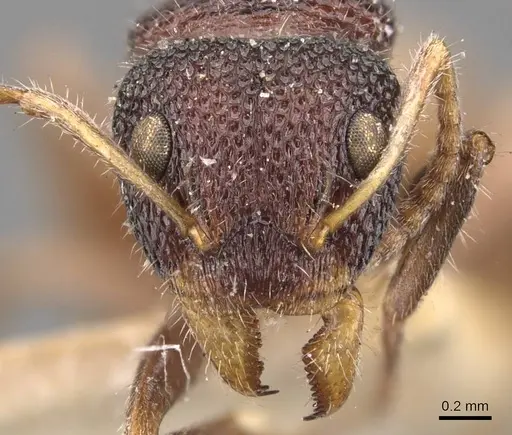
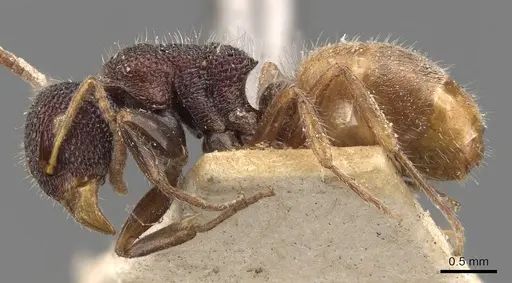
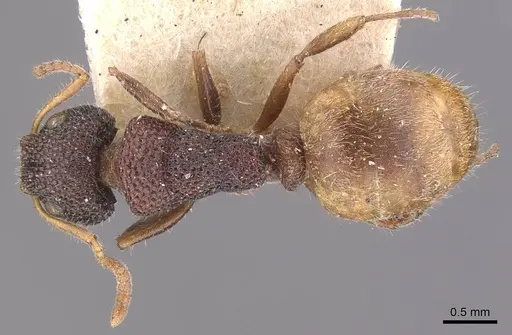
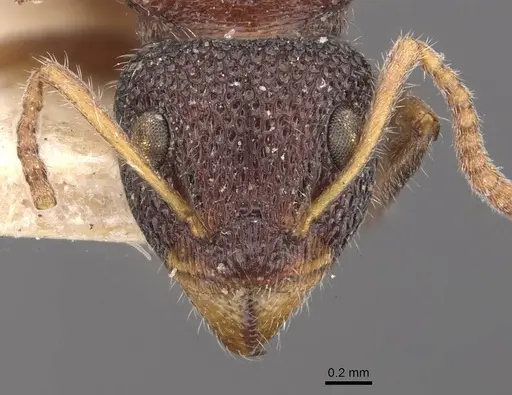
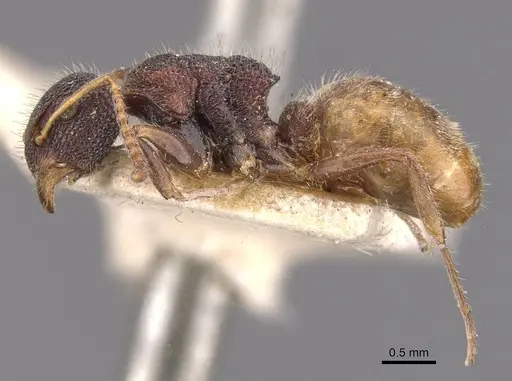
Dolichoderus turneri is a small, chunky ant native to the dry sclerophyll woodlands of coastal Queensland, Australia. Workers measure around 1mm and have a distinctive appearance: the head and thorax are dark brown to black, while the gaster (abdomen) is a striking dull yellow, making them easy to identify. They lack spines on the pronotum and propodeum, and have a deeply concave posterior face on the propodeum. This species is part of the scrobiculatus species group and is considered uncommon, with only a handful of specimens collected in the wild [1].
These ants are diurnal foragers that travel in columns along the ground or up low vegetation, searching for food. Like other Dolichoderus species, they are general scavengers but also tend aphids and other Hemiptera for honeydew. They nest in soil, typically under rocks or in rotting wood. All Australian Dolichoderus species are endemic to Australia, making this a truly unique ant for collectors outside the region [2].
Quick Summary
- Difficulty: Medium
- Origin & Habitat: Dry sclerophyll woodlands along coastal Queensland, Australia [1]. Nests are in soil generally under rocks or in rotten wood [2].
- Colony Type: Colony structure is not well documented for this uncommon species. Based on typical Dolichoderus patterns, likely monogyne (single queen) colonies.
- Colony: Monogyne
- Founding: Claustral
- Size & Growth:
- Queen: Not specifically documented, estimated based on genus patterns at 6-8mm
- Worker: 1.05-1.08mm head length,1.01-1.15mm head width [1]
- Colony: Unknown for this uncommon species, likely moderate colonies based on genus patterns
- Growth: Moderate, estimated based on related Dolichoderus species
- Development: 6-10 weeks, estimated based on typical Dolichoderus development at optimal temperature (Development timeline is not directly studied for this species. Estimates based on genus patterns.)
- Antkeeping:
- Temperature: Keep at 22-26°C. They occur in subtropical coastal Queensland, so aim for warm conditions with a gentle gradient. A heating cable on one side of the nest can help maintain warmth [2].
- Humidity: Moderate humidity. They nest in soil under rocks in dry sclerophyll woodland, so keep the substrate moist but allow some drying between waterings. Avoid waterlogging.
- Diapause: Unknown, Queensland experiences mild winters, but they may have a reduced activity period. Monitor colony behavior during cooler months.
- Nesting: Nests naturally in soil under rocks or in rotten wood. In captivity, a naturalistic setup with soil substrate and flat stones or a Y-tong/plaster nest works well. They prefer tight chambers scaled to their small size.
- Behavior: These ants are diurnal and relatively calm in temperament. They forage in columns on the ground and up low vegetation, searching for honeydew and small prey. They are not aggressive and rarely sting. Their small size means escape prevention is important, use fine mesh and tight-fitting lids. They are generalist scavengers that readily accept sugar sources and protein [2].
- Common Issues: escape prevention is critical due to their small size, they can squeeze through tiny gaps, colonies may be slow to establish given their uncommon nature in the wild, limited availability makes this species difficult to acquire, wild-caught colonies may have parasites given their rarity, overheating can be a problem, avoid temperatures above 30°C
Housing and Nest Setup
Dolichoderus turneri does well in a naturalistic setup that mimics their natural habitat. Use a container with soil substrate (a mix of sand and organic material works well) and provide flat stones or pieces of rotting wood as nesting sites. They prefer tight, snug chambers rather than open spaces. A Y-tong (acrylic) nest with narrow chambers can also work, but ensure the chambers are appropriately scaled to their tiny worker size of around 1mm. Place the nest in a quiet area away from direct sunlight and vibrations. Since they are diurnal and forage during the day, place their outworld (foraging area) in a location where you can observe them easily. [2][1]
Feeding and Diet
These ants are generalist scavengers with a sweet tooth. Offer sugar water, honey, or diluted maple syrup as a constant sugar source. They also readily accept protein in the form of small insects like fruit flies, pinhead crickets, or mealworms. Since they naturally tend aphids and other Hemiptera for honeydew in the wild, they will enthusiastically accept sweet liquids. Feed protein prey 2-3 times per week, and keep sugar water available at all times. Remove any uneaten prey after 24-48 hours to prevent mold. They forage in columns, so place food in the outworld where they can easily discover it. [2]
Temperature and Seasonal Care
Keep your colony at 22-26°C, which matches their subtropical Queensland habitat. A slight temperature gradient allows the ants to choose their preferred warmth. Use a heating cable on one side of the nest if your room temperature falls below this range. During Australian winter months (June-August), Queensland experiences mild temperatures, so your colony may show reduced activity but likely does not need full hibernation. Monitor their behavior, if workers become sluggish, slightly reduce feeding but maintain warmth. Avoid temperatures above 30°C, as this can stress or kill the colony. [2][1]
Behavior and Observation
One of the most interesting behaviors to observe is their column foraging. Workers travel in organized lines along the ground or up low vegetation, searching for food and honeydew. They are diurnal, so they are most active during daylight hours. Their temperament is calm, they are not aggressive and rarely attempt to sting. This makes them a good species for observation. They have a distinctly lighter-colored gaster (abdomen) compared to their dark body, which makes them visually distinctive. Watch for workers returning to the nest with prey or honeydew, they communicate through chemical trails and will recruit nestmates to good food sources. [2][1]
Colony Establishment
Since Dolichoderus turneri is an uncommon species with limited documented occurrences, establishing a captive breeding colony can be challenging. If you obtain a founding queen, she is likely claustral, she will seal herself in a chamber and raise her first workers alone using stored fat reserves. Provide her with a quiet, dark location and do not disturb her during the founding period. Expect 6-10 weeks for the first workers (nanitics) to emerge. Once the colony has 10-20 workers, you can begin regular feeding and gradually expand their housing. Be patient, these ants may grow more slowly than common species, and colony development can take time.
Frequently Asked Questions
How long does it take for Dolichoderus turneri to produce first workers?
Based on typical Dolichoderus development, expect 6-10 weeks from egg to first worker at optimal temperature (22-26°C). This timeline is estimated since specific development data for this uncommon species is not documented.
What do Dolichoderus turneri ants eat?
They are generalist scavengers that accept both sugar and protein. Offer sugar water, honey, or maple syrup constantly. For protein, feed small insects like fruit flies, pinhead crickets, or mealworms 2-3 times per week. They naturally tend aphids for honeydew, so sweet liquids are particularly important.
Can I keep multiple Dolichoderus turneri queens together?
Colony structure is not well documented for this species. Based on typical Dolichoderus patterns, they likely form single-queen colonies. Combining unrelated queens is not recommended as it has not been studied for this species.
What temperature do Dolichoderus turneri ants need?
Keep them at 22-26°C. This matches their subtropical coastal Queensland habitat. Use a heating cable on one side of the nest to create a gentle gradient if needed. Avoid temperatures above 30°C.
Are Dolichoderus turneri good for beginners?
This species is rated as medium difficulty. While their care requirements are straightforward (warm temperatures, sugar + protein diet), their rarity and limited availability make them challenging for beginners to acquire. Their small size also requires attention to escape prevention.
How big do Dolichoderus turneri colonies get?
Colony size is not well documented for this uncommon species. Based on related Dolichoderus species, expect moderate-sized colonies. They are not among the largest ant species.
When should I move my colony to a formicarium?
Start with a simple setup (test tube or small container with soil) for the founding queen. Once the colony reaches 20-30 workers and the test tube becomes crowded, you can move them to a larger naturalistic setup or formicarium with appropriate chamber sizes.
Do Dolichoderus turneri need hibernation?
Diapause requirements are unknown for this species. Queensland has mild winters, so they likely do not require a true hibernation period. You may notice reduced activity during cooler months, simply maintain stable temperatures and reduce feeding slightly.
Why are my Dolichoderus turneri dying?
Common causes include: temperature stress (too hot above 30°C or too cold below 20°C), escape due to small size, mold from overwatering, or poor nutrition. Ensure they have constant access to sugar, regular protein, and appropriate humidity. Their rarity in the wild may also mean wild-caught colonies have lower survival rates in captivity.
References

This caresheet is licensed under CC BY-SA 4.0 .
Literature
Loading...Loading products...