

Dolichoderus rufotibialis
- Scientific Name
- Dolichoderus rufotibialis
- Tribe
- Dolichoderini
- Subfamily
- Dolichoderinae
- Author
- Clark, 1930
- Distribution
- Found in 1 countries
Dolichoderus rufotibialis Overview
Dolichoderus rufotibialis is an ant species of the genus Dolichoderus. It is primarily documented in 1 countries , including Australia. Detailed taxonomic data and occurrence records can be further explored via authoritative databases such as AntWeb or the Global Biodiversity Information Facility (GBIF).
Dolichoderus rufotibialis
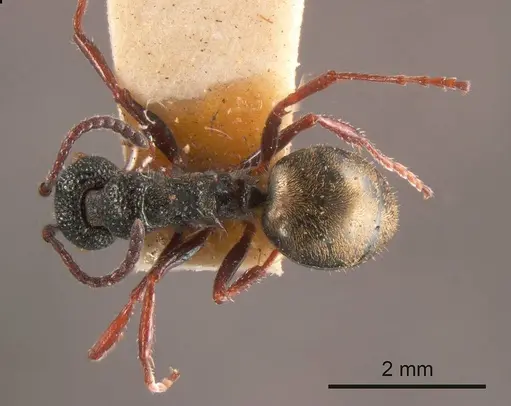
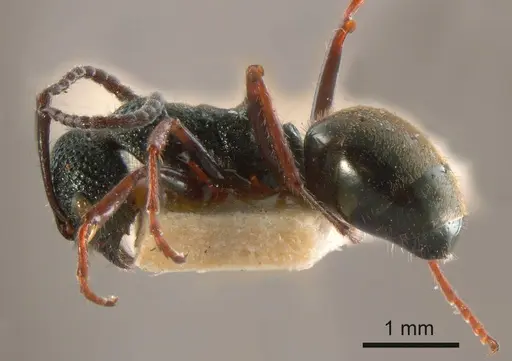
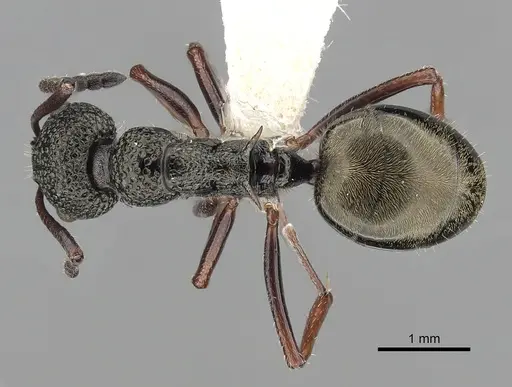
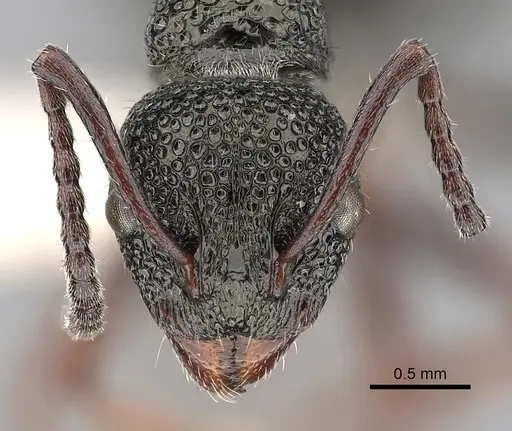
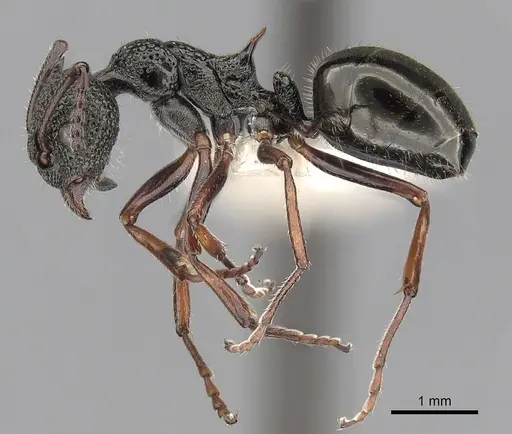
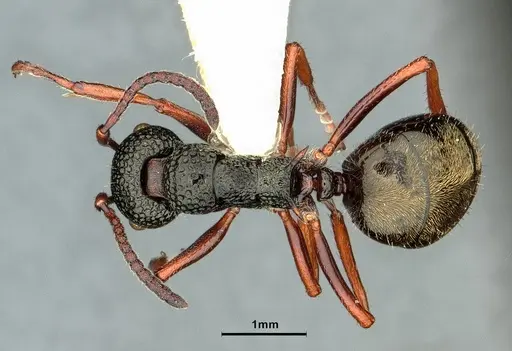
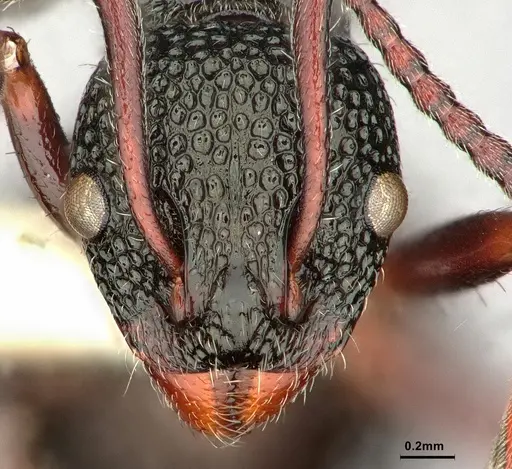
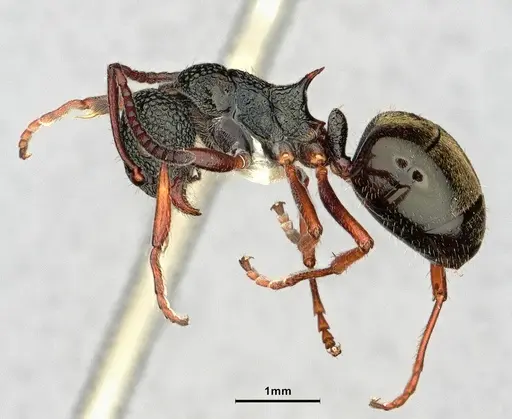
Dolichoderus rufotibialis is a medium-sized ant species endemic to the coastal south-western regions of Western Australia. Workers measure 1.10-1.23mm in head width and are distinctive for their bicolored legs, dark brown femora contrasting with lighter reddish-brown tibiae, which sets them apart from similar species like D. niger (uniformly dark legs) and D. ypsilon (uniformly orange legs). They have a rounded pronotum without spines and characteristic upward-pointing propodeal spines forming a V-shape [1]. These ants inhabit dry sandy sclerophyll forest and heathland, nesting under rocks and logs while foraging in columns on the ground and low vegetation [1][2].
What makes D. rufotibialis interesting is their dual role as both general scavengers and honeydew farmers. Workers are diurnal, actively foraging during the day to scavenge and tend aphids and other Hemiptera for honeydew, a sweet substance these insects produce [2]. This species was only recognized as a full species in 2013,previously classified as a variety of D. ypsilon [1].
Quick Summary
- Difficulty: Medium
- Origin & Habitat: Coastal south-western Western Australia, in open forested habitats such as dry sandy sclerophyll and heath [1][3]. Nests are located under rocks and logs in soil or rotten wood [2].
- Colony Type: Colony structure is unconfirmed. Most Dolichoderus species are monogyne (single-queen colonies), but this specific species has not been studied in detail.
- Size & Growth:
- Queen: Undocumented, estimated 6-8mm based on genus patterns
- Worker: 1.10-1.23mm head width,1.19-1.43mm head length [1]
- Colony: Likely moderate, several hundred workers based on related species
- Growth: Moderate, inferred from genus patterns
- Development: Estimated 6-10 weeks at optimal temperature based on related Dolichoderus species (Development time is not directly documented for this species, estimate based on genus-level data)
- Antkeeping:
- Temperature: Keep around 22-26°C. These ants come from a Mediterranean climate in southwestern Australia with warm, dry summers and mild, wet winters. A gentle temperature gradient allows them to regulate their own conditions.
- Humidity: Prefer moderate to dry conditions. Their natural habitat in sclerophyll forest and heath is relatively dry. Keep nest substrate lightly moist but allow it to dry partially between waterings. Provide a water tube but avoid excessive moisture.
- Diapause: Likely required. Based on their temperate Australian distribution, colonies probably need a winter rest period of 2-3 months at reduced temperatures (around 10-15°C).
- Nesting: Provide a naturalistic setup with soil or a plaster/acrylic nest with chambers scaled to their medium size. They naturally nest under rocks and in rotten wood, so include some soil depth and hiding spots. A Y-tong or test tube setup works well for founding colonies.
- Behavior: Workers are diurnal and relatively calm in temperament. They forage in columns on the ground and up into low vegetation, actively tending aphids for honeydew [2]. They are not particularly aggressive but may spray formic acid when threatened, a common defense in the Dolichoderinae subfamily. Escape risk is moderate, their medium size means standard barrier methods work well, but they are active and may explore for exits. They are generalist scavengers that readily accept both protein and sugar sources.
- Common Issues: limited availability, this species is rarely available in the antkeeping hobby due to its restricted range in remote Western Australia, diapause requirements are not well-documented for this specific species, observe colony behavior to determine appropriate winter care, dry habitat preference means overwatering can cause mold problems and colony stress, slow founding phase, claustral queens may take months to raise first workers without intervention, restricted range means wild-caught colonies may be difficult to obtain legally
Housing and Nest Setup
For D. rufotibialis, a naturalistic setup works best given their natural nesting habits under rocks and in rotten wood. A Y-tong or acrylic formicarium with a soil chamber provides the right conditions, they can dig and create tunnels similar to their natural soil nests. Alternatively, a test tube setup works well for founding colonies. The nest should have moderate humidity with a water tube for moisture, but ensure good ventilation to prevent mold. Include small rocks or pieces of wood in the outworld to mimic their natural foraging environment. These medium-sized ants need chambers scaled appropriately, not too tight, but with enough structure to feel secure. [1][2]
Feeding and Diet
These ants are generalist scavengers that accept a varied diet. In captivity, they readily eat protein sources like small insects (fruit flies, small mealworms, crickets) and will scavenge on dead insects. They also tend aphids and other Hemiptera in the wild, so they likely accept sugar water, honey, or sugar syrup as a honeydew substitute. Offer protein 2-3 times per week and keep a sugar source available at all times. Fresh water should always be accessible. Their diurnal foraging pattern means they are most active during daylight hours, feed them during this time for best acceptance. [2]
Temperature and Seasonal Care
D. rufotibialis comes from the Mediterranean climate of southwestern Australia, which means they experience warm, dry summers and mild, wet winters. Keep the nest at 22-26°C during the active season, with a slight temperature gradient so workers can choose their preferred zone. During winter (roughly June-August in the Southern Hemisphere), reduce temperatures to around 10-15°C for a 2-3 month diapause period. This winter rest helps synchronize their biological cycles and promotes healthy colony development. If your colony was caught in the Southern Hemisphere, adjust their seasonal cycle accordingly, they will naturally slow down during our summer months. [1][3]
Behavior and Colony Dynamics
Workers are diurnal and highly active foragers, often moving in organized columns along trails [2]. They forage both on the ground and up into low vegetation and trees, searching for food and tending hemipteran insects for honeydew. When threatened, Dolichoderus ants can spray formic acid as a defense mechanism, this is their primary way of deterring predators. The colony will likely establish a clear foraging pattern once settled, with workers following established trails to food sources. Unlike some aggressive ant species, they are relatively calm but will defend their nest vigorously if disturbed. Their medium size and active nature make them engaging to watch, especially during foraging expeditions.
Frequently Asked Questions
How long does it take for Dolichoderus rufotibialis to raise their first workers?
The exact timeline is unconfirmed for this species, but based on related Dolichoderus species, expect 6-10 weeks from egg to first worker at optimal temperature (around 24°C). Claustral queens seal themselves in and live off stored fat, so be patient, do not disturb the founding chamber during this time.
What temperature should I keep Dolichoderus rufotibialis at?
Keep them at 22-26°C during the active season. They come from a Mediterranean climate in southwestern Australia, so they prefer warmth but not extreme heat. A temperature gradient allows them to regulate their own conditions.
Can I keep multiple queens together?
This has not been documented for this specific species. Most Dolichoderus are monogyne (single-queen colonies), so it is not recommended to house multiple unrelated foundresses together as they may fight.
Do Dolichoderus rufotibialis need hibernation?
Based on their temperate Australian distribution, yes, they likely require a winter rest period of 2-3 months at reduced temperatures (10-15°C) to maintain healthy colony cycles.
What do Dolichoderus rufotibialis eat?
They are generalist scavengers that accept both protein (small insects) and sugar sources (honey, sugar water). In the wild they also tend aphids for honeydew, so sugar offerings are readily accepted.
Are Dolichoderus rufotibialis good for beginners?
This species is rated as medium difficulty. While not the hardest species, their specific temperature and seasonal requirements, combined with limited availability, make them better suited for intermediate antkeepers who are familiar with diapause requirements.
How big do Dolichoderus rufotibialis colonies get?
Colony size is not well-documented for this specific species, but based on related Dolichoderus species, colonies likely reach several hundred workers at maturity.
Where is Dolichoderus rufotibialis found in the wild?
This species is endemic to coastal south-western Western Australia, specifically in open forested habitats like dry sandy sclerophyll forest and heathland. They nest under rocks and logs and forage on the ground.
When should I move my colony to a formicarium?
Move from a test tube to a formicarium once the colony reaches around 50-100 workers and the test tube space becomes cramped. Ensure the new setup has appropriate humidity and a suitable nesting area before transferring.
References

This caresheet is licensed under CC BY-SA 4.0 .
Literature
Loading...Loading products...