

Dolichoderus pastorulus
- Scientific Name
- Dolichoderus pastorulus
- Tribe
- Dolichoderini
- Subfamily
- Dolichoderinae
- Author
- Dill, 2002
- Distribution
- Found in 1 countries
Dolichoderus pastorulus Overview
Dolichoderus pastorulus is an ant species of the genus Dolichoderus. It is primarily documented in 1 countries , including Malaysia. Detailed taxonomic data and occurrence records can be further explored via authoritative databases such as AntWeb or the Global Biodiversity Information Facility (GBIF).
Dolichoderus pastorulus
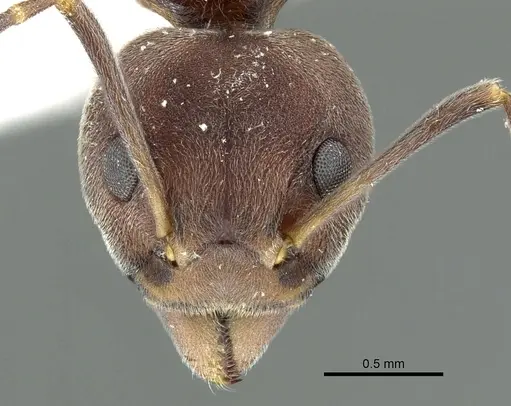
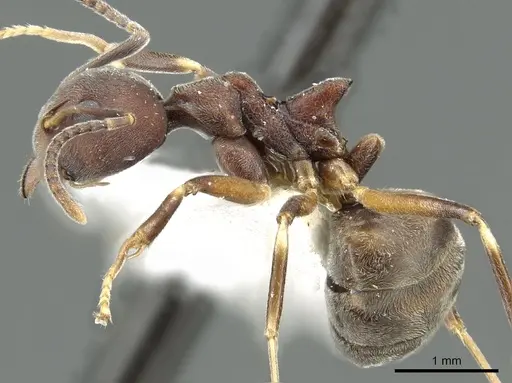
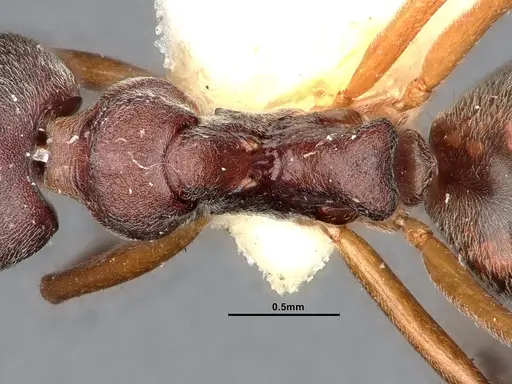
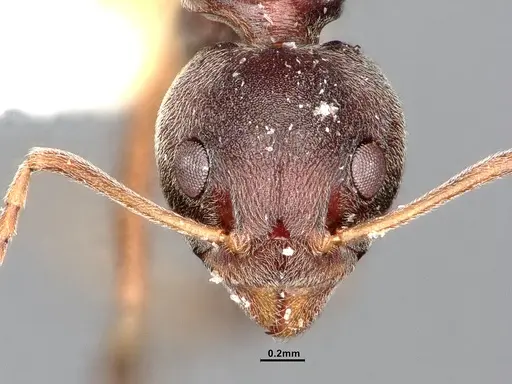
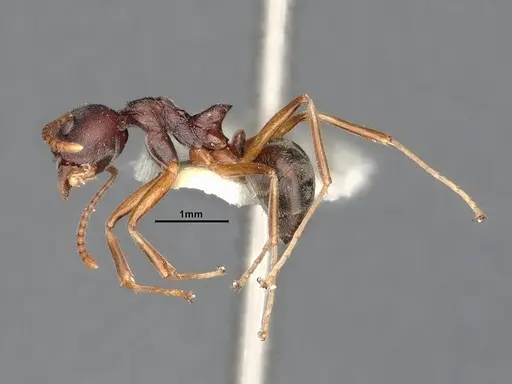
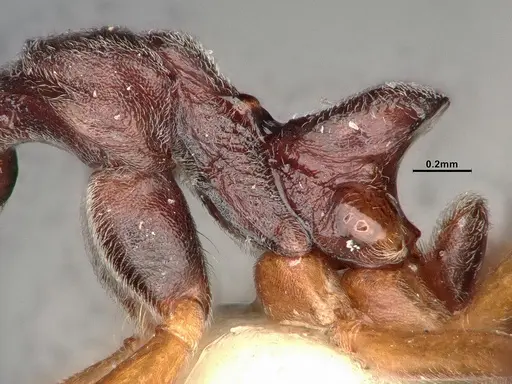
Dolichoderus pastorulus is a tiny ant species from the cuspidatus group, known as 'herdsmen ants' for their mutualistic relationship with mealybugs. Workers measure just 4-5mm, making them one of the smallest species in their group alongside D. kinabaluensis and D. pilinomas. They have a distinctive steeply ascending propodeum that rises at least as high as it is long, overtopping the mesonotum by a significant margin. Coloration ranges from yellowish-brown to dark brown and black. This species is only known from lowland rainforest in Sabah, Northeast Borneo [1].
What makes D. pastorulus unique is its partnership with the mealybug Bolbococcus sabahanus, they tend these scale insects for their honeydew, just like other herdsmen ants. However, unlike most herdsmen species that form large colonies with extensive trail systems, D. pastorulus forms very small colonies with limited foraging trails. The queens are also unusual, they are ergatoid (wingless), which is rare in the Dolichoderus genus and correlates with their small colony sizes [1].
Quick Summary
- Difficulty: Medium
- Origin & Habitat: Lowland rainforest in Sabah, Northeast Borneo [1]. This species lives in a tropical rainforest environment with high humidity and stable warm temperatures year-round.
- Colony Type: Small colonies with ergatoid (wingless) queens. Unlike most ants, the queens of this species are born without wings and serve as replacement reproductives. Colonies are notably smaller than other herdsmen Dolichoderus species, with limited trail systems [1].
- Colony: Monogyne
- Size & Growth:
- Queen: 5.43-6.14 mm [1]
- Worker: 4.18-5.08 mm [1]
- Colony: Small colonies, exact maximum unknown but significantly smaller than other herdsmen species [1]
- Growth: Moderate, small colony size suggests moderate growth rate
- Development: Estimated 6-8 weeks based on typical Dolichoderus development patterns (Development timeline is not directly studied for this species. Estimates based on genus-level data for tropical Dolichoderus species.)
- Antkeeping:
- Temperature: Keep at 24-28°C. This is a lowland tropical species from Borneo, so they need warm, stable temperatures. A heating cable on one side of the nest can create a gentle gradient if your room temperature is below this range.
- Humidity: High humidity required, aim for 70-85%. These are rainforest ants from a tropical environment. Keep the nest substrate consistently moist but not waterlogged. Mist occasionally and provide a water tube.
- Diapause: No, being a tropical lowland species from near the equator, they do not require hibernation or winter rest. Maintain warm conditions year-round.
- Nesting: In the wild, they likely nest in rotting wood or under bark in the rainforest floor, similar to other Dolichoderus species. In captivity, a Y-tong (AAC) nest or plaster nest works well. The chambers should be appropriately scaled to their small worker size. Keep nesting material moist.
- Behavior: These are gentle, non-aggressive ants that focus on farming mealybugs for honeydew rather than defending territory aggressively. Workers are small and may be prone to escaping through small gaps. They form small, organized trails when foraging. They are not known to sting and pose no danger to keepers. Escape prevention should be good despite their small size, they are not strong climbers like some Dolichoderus species.
- Common Issues: small colony size means slower population growth, don't expect rapid expansion, tropical species requires consistent warmth, cold temperatures can weaken and kill colonies, high humidity needs can lead to mold if ventilation is poor, ergatoid queen system is unusual, don't expect dealate queens like most ant species, very limited distribution data means captive breeding information is scarce, success with this species is experimental
The Herdsmen Lifestyle
Dolichoderus pastorulus belongs to a special group of ants called 'herdsmen' or 'shepherds', species that tend scale insects (mealybugs) for their honeydew secretions. Specifically, this species partners with Bolbococcus sabahanus, a type of mealybug [1]. In captivity, you can simulate this relationship by offering sugar water, honey, or diluted syrup as a substitute for honeydew. However, they still need protein sources like small insects. The name 'pastorulus' literally means 'little herdsman' in Latin, a reference to their small size and their herding lifestyle with mealybugs [2]. This trophobiosis (food-sharing relationship) is a key part of their natural history and explains why they form smaller, more focused colonies compared to generalist ant species.
Housing and Nest Setup
Because of their small size and rainforest origins, these ants need appropriately scaled housing with high humidity. A Y-tong (AAC) nest or plaster formicarium works well, both hold moisture well and provide the dark, humid environment they prefer. The chambers should be sized appropriately for workers that are only 4-5mm. Keep the nest substrate consistently moist by adding water to a reservoir or misting occasionally. Place a water tube for drinking access. Avoid letting the nest dry out completely. Since they're from lowland Borneo rainforest, they need stable warm conditions, avoid cold drafts and consider a heating cable if your room temperature drops below 24°C. Outworld space can be simple since they don't form large colonies or extensive trail systems.
Feeding Your Colony
In the wild, D. pastorulus gets most of its carbohydrates from honeydew produced by the mealybugs they tend, plus they hunt small insects for protein. In captivity, offer sugar water, honey water, or diluted maple syrup as a constant carbohydrate source. For protein, small soft-bodied insects like fruit flies, pinhead crickets, or small mealworms work well. Feed protein prey 2-3 times per week, and keep sugar water available at all times. Remove uneaten prey after 24 hours to prevent mold. The small colony size means they won't consume large quantities of food, adjust portions accordingly. Their association with mealybugs suggests they may have a more specialized gut microbiome for processing sugary secretions, so sugar sources are particularly important for this species.
Understanding Their Unique Biology
This species has several unusual features that set it apart from most ants. First, the queens are ergatoid, meaning they are born wingless, unlike typical ant queens that have wings and fly to mate. Ergatoid queens serve as replacement reproductives within the colony, which explains why D. pastorulus colonies stay small, they don't have the massive nuptial flights that bring in many new queens [1]. Second, they form very small colonies compared to other herdsmen ants, which typically maintain large worker populations and extensive foraging trails. This species appears to live in more compact, focused groups. Third, their distribution is extremely limited, they're only known from a few locations in Sabah, Borneo, making them a rare and potentially difficult species to acquire for antkeeping.
Temperature and Seasonal Care
As a lowland tropical species from near the equator in Borneo, D. pastorulus does not experience cold winters or seasonal temperature changes in the wild. This means they do not require any diapause or hibernation period, maintain warm conditions year-round. Keep the nest area between 24-28°C consistently. Temperatures below 22°C can slow their metabolism and potentially cause health problems. If your room is cooler, use a heating cable placed on top of the nest (not underneath, to avoid drying out the substrate). Monitor colony activity, if workers become sluggish or cluster together excessively, they may be too cold. High humidity is equally important, so balance heating with maintaining moisture in the nest.
Frequently Asked Questions
How long does it take for Dolichoderus pastorulus to produce first workers?
The exact development timeline is unconfirmed for this species. Based on typical Dolichoderus development patterns, expect around 6-8 weeks from egg to first worker at optimal warm temperatures (24-28°C). The small colony size and ergatoid queen system may affect this timeline.
Can I keep multiple Dolichoderus pastorulus queens together?
This is not recommended. Unlike some polygyne Dolichoderus species, D. pastorulus appears to form single-queen colonies. The ergatoid queen system is designed for replacement within an existing colony, not for multiple foundresses to cooperate. Combining unrelated queens has not been documented and would likely result in aggression.
What do Dolichoderus pastorulus ants eat?
They need a balanced diet of carbohydrates and protein. Offer sugar water, honey water, or diluted syrup as a constant carbohydrate source (simulating the honeydew they get from their mealybug partners in the wild). For protein, provide small soft-bodied insects like fruit flies, small mealworms, or pinhead crickets 2-3 times per week.
Are Dolichoderus pastorulus good for beginners?
This species is rated as Medium difficulty. While not aggressive and relatively small, they have specific requirements, high humidity, warm temperatures, and they need sugar sources (like honeydew). Their very limited distribution and unusual ergatoid queen system also mean they're harder to acquire and keep than common ant species. They are best suited for antkeepers with some experience who can maintain consistent tropical conditions.
How big do Dolichoderus pastorulus colonies get?
Colonies remain relatively small compared to other herdsmen ants. While exact maximum is unknown, they are described as having 'very small colony size' with limited trail systems [1]. Expect colonies likely under 100 workers, possibly significantly fewer. This is much smaller than typical Dolichoderus colonies which can reach thousands of workers.
Do Dolichoderus pastorulus need hibernation?
No. Being a lowland tropical species from Borneo near the equator, they do not experience seasonal temperature changes and do not require hibernation or diapause. Keep them warm (24-28°C) and humid year-round.
Why is the queen of Dolichoderus pastorulus different?
The queens are ergatoid, meaning they are born without wings. This is unusual for Dolichoderus and most ants in general. Ergatoid queens develop from regular larvae but don't grow wings, serving as replacement reproductives if the primary queen dies. This correlates with their small colony sizes, they don't have the large nuptial flights typical of most ant species [1].
What is the best nest type for Dolichoderus pastorulus?
A Y-tong (AAC) nest or plaster formicarium works best. Both hold humidity well and provide the dark, moist environment these rainforest ants need. The chambers should be appropriately sized for their small 4-5mm workers. Keep the substrate consistently moist and ensure good (but not excessive) ventilation to prevent mold.
Where is Dolichoderus pastorulus found in the wild?
This species has an extremely limited distribution, it's only known from lowland rainforest locations in Sabah, Northeast Borneo. This restricted range may be partly due to limited collecting in nearby Kalimantan, but currently it's considered endemic to Borneo [1].
References

This caresheet is licensed under CC BY-SA 4.0 .
CASENT0902966
View on AntWeb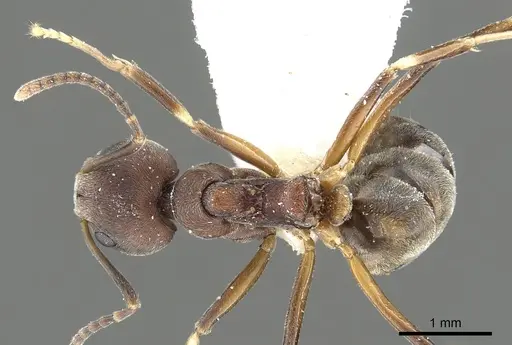
SMFHYM0008899
View on AntWeb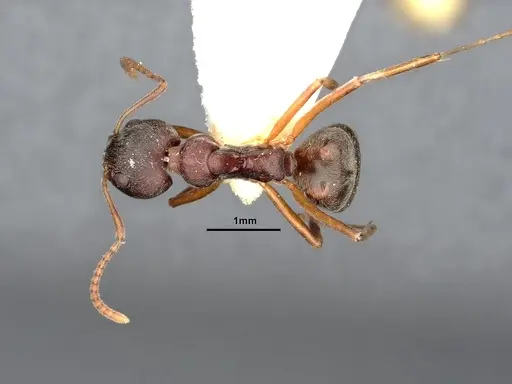
Literature
Loading...Loading products...