

Dolichoderus moggridgei
- Scientific Name
- Dolichoderus moggridgei
- Tribe
- Dolichoderini
- Subfamily
- Dolichoderinae
- Author
- Forel, 1886
- Distribution
- Found in 1 countries
Dolichoderus moggridgei Overview
Dolichoderus moggridgei is an ant species of the genus Dolichoderus. It is primarily documented in 1 countries , including Lao People's Democratic Republic. Detailed taxonomic data and occurrence records can be further explored via authoritative databases such as AntWeb or the Global Biodiversity Information Facility (GBIF).
Dolichoderus moggridgei
Dolichoderus moggridgei is a small ant species native to the Himalayan region and surrounding areas of South and Southeast Asia. Workers measure 2.3-2.5mm and have a distinctive brownish-red coloration with lighter-colored mandibles, antennae, and legs [1]. The head and abdomen are smooth and shiny while the thorax has a more textured, slightly matte appearance. This species belongs to the Dolichoderinae subfamily, which includes many ants known for their ability to produce defensive chemicals. In the wild, these ants have been observed interacting with honeydew-producing insects, suggesting they supplement their diet with sugary secretions [2]. They are found at elevations around 1000 meters above sea level in India, particularly in Assam and Sikkim, with their range extending into Afghanistan and southern China [3][4].
Quick Summary
- Difficulty: Medium
- Origin & Habitat: Himalayan region of India (Assam, Sikkim) extending into Afghanistan and southern China (Yunnan). Found at elevations around 1000 meters in forest, grassland, and human-modified habitats [3][5][4].
- Colony Type: Colony structure is unconfirmed. Based on typical Dolichoderus patterns, likely single-queen colonies, though this has not been directly documented.
- Size & Growth:
- Queen: Unconfirmed, no documented measurements
- Worker: 2.3-2.5mm [1]
- Colony: Unknown, no colony size data available
- Growth: Unknown
- Development: Unconfirmed, no development data available. Based on typical Dolichoderus patterns, expect 6-10 weeks at optimal temperature. (Development timeline is unconfirmed for this species. Estimates based on genus-level data for related Dolichoderus species.)
- Antkeeping:
- Temperature: Based on Himalayan elevation range (1000m), likely prefers cooler conditions than tropical ants. Start around 18-22°C and observe colony activity. Avoid overheating, they come from temperate mountainous regions.
- Humidity: Keep nest substrate moderately moist. They have been found in forest and grassland habitats, suggesting tolerance for varied moisture levels. Provide a water tube for drinking access.
- Diapause: Likely yes, their Himalayan distribution suggests they need a winter rest period. Provide 2-3 months of reduced temperatures (around 10-15°C) during winter.
- Nesting: In nature they likely nest in soil or under stones in forest edges. In captivity, a test tube setup works well for founding colonies. For established colonies, a Y-tong or plaster nest with moderate moisture retention is suitable.
- Behavior: Dolichoderus ants are generally non-aggressive and not known for stinging. They are foragers that tend homopteran insects for honeydew [2]. Their small size (under 3mm) means they can escape through tiny gaps, use fine mesh and excellent escape prevention. They are likely nocturnal or crepuscular foragers based on typical genus behavior.
- Common Issues: escape prevention is critical due to their tiny size, they can squeeze through standard test tube barriers, lack of documented care information means keepers must adapt based on related species, wild-caught colonies may have parasites that are difficult to detect without proper identification, overheating risk is significant given their temperate Himalayan origin, slow founding phase is common, claustral queens may take months to produce first workers
Natural History and Distribution
Dolichoderus moggridgei is found across the Himalayan region, with documented populations in India (Assam, Sikkim), Afghanistan, and southern China (Yunnan) [4]. They inhabit elevations around 1000 meters above sea level, which is relatively high for this genus [3]. This elevation suggests they are adapted to cooler, more temperate conditions than many tropical ant species. The species has been recorded in multiple habitat types including natural forests, grasslands, and human-modified areas [2][6]. In their natural habitat, they have been observed on flowering plants including Hibiscus rosa-sinensis, where they likely tend to homopteran insects for honeydew [2]. The original description dates to 1886,making this a well-established species name since the late 19th century [7]. Two subspecies have been described: Dolichoderus moggridgei bicolor and Dolichoderus moggridgei lugubris, though these are not commonly distinguished in modern antkeeping [1].
Appearance and Identification
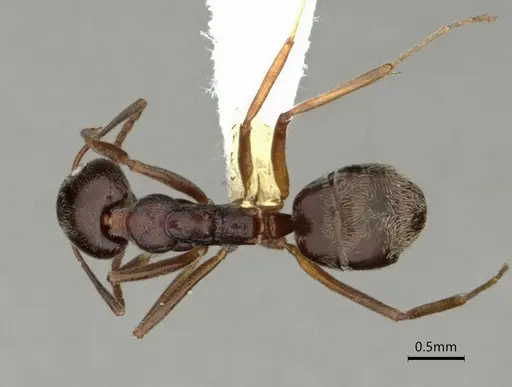
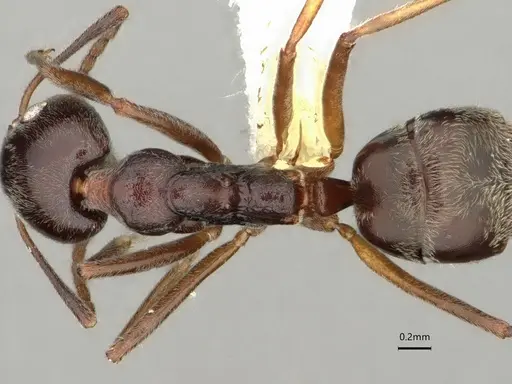
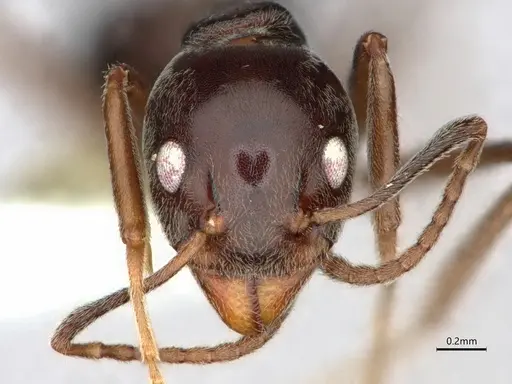
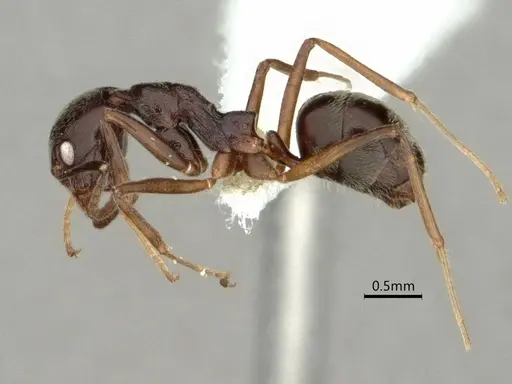
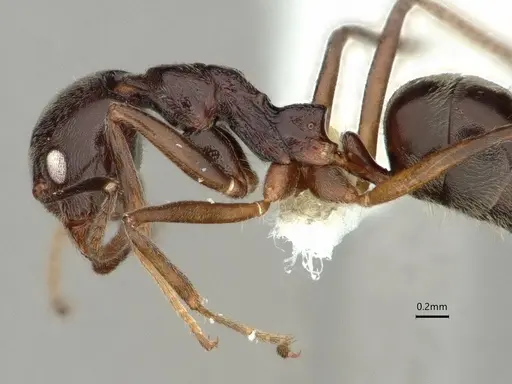
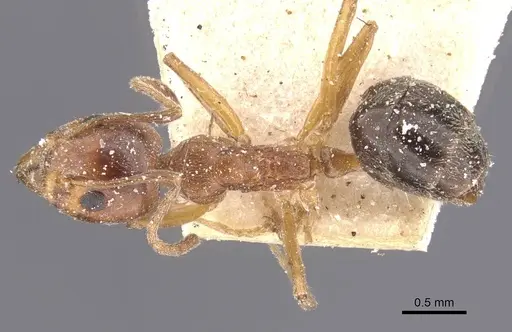
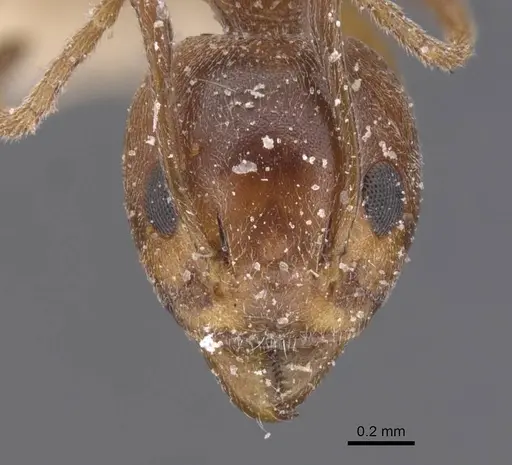
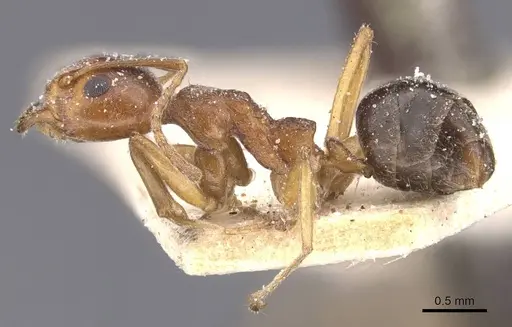
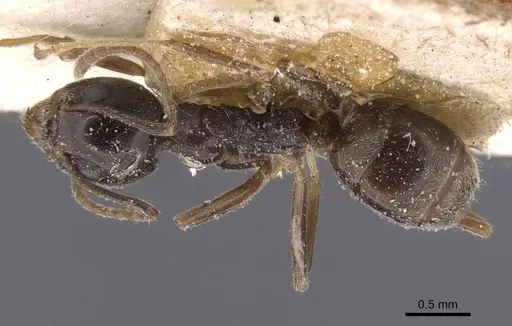
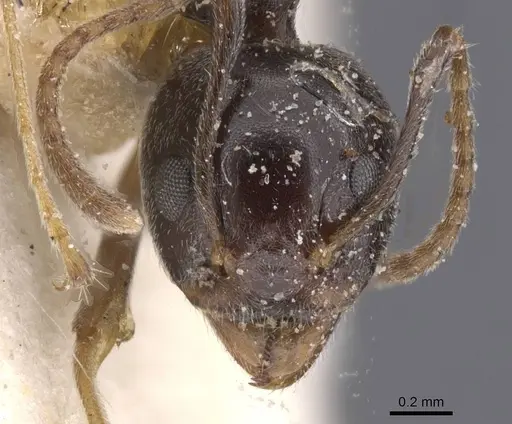
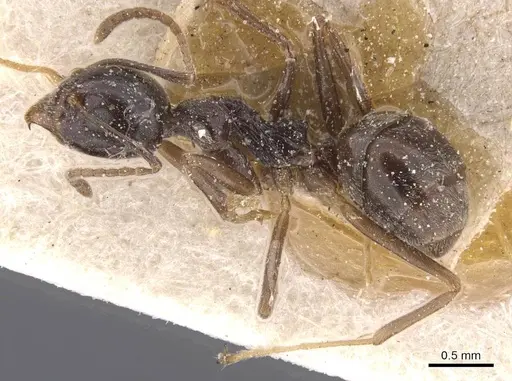
Workers of Dolichoderus moggridgei are small, measuring 2.3-2.5mm in length [1]. They have a distinctive brownish-red coloration that is fairly uniform across the body, with lighter-colored mandibles, antennae, and legs. The head and abdomen are smooth and shiny with very fine reticulate-punctate texture visible only under magnification. The thorax is more coarsely punctate and has a slightly matte (opaque) appearance compared to the shinier head and abdomen. The pronotum is flat and margined anteriorly, while the mesonotum is raised and not very distinctly longitudinally sulcate. The meso-metanotal emargination is very deeply marked. The node of the pedicel is inclined forward with a slightly convex anterior face, flat posterior face, and rounded upper margin. The abdomen is broadly oval and not very convex above. These ants are smaller than many common pet trade species and have the typical Dolichoderus body shape with a distinct petiole node.
Feeding and Diet
Based on field observations, Dolichoderus moggridgei has a mutualistic relationship with honeydew-producing homopteran insects [2]. This suggests they are attracted to sugar sources in nature. In captivity, you should offer a varied diet including sugar water or honey as a constant energy source. For protein, offer small insects such as fruit flies, small mealworms, or other appropriately-sized prey. The small size of workers (under 3mm) means prey items should be tiny, fruit flies and springtails are ideal. Based on typical Dolichoderus behavior, they likely prefer liquid or semi-liquid food that can be carried back to the colony. Offer sugar water regularly and protein roughly twice per week. Remove uneaten prey after 24-48 hours to prevent mold issues.
Temperature and Seasonal Care
Given their origin in the Himalayan region at elevations around 1000 meters, Dolichoderus moggridgei likely prefers cooler temperatures than many tropical ant species. Keep the nest area in the range of 18-22°C as a starting point, and observe your colony's behavior to fine-tune. If workers are clustered together and less active, the temperature may be too cool. If they avoid the nest area and spend more time in the outworld, it may be too warm. Avoid placing the nest near direct sunlight or heat sources that could cause overheating. During winter months, provide a diapause period of 2-3 months at reduced temperatures around 10-15°C. This mimics their natural seasonal cycle in the temperate Himalayan climate. Reduce feeding during diapause but ensure water is always available. [3]
Housing and Nest Setup
For founding colonies, a standard test tube setup works well. Use a small test tube with a water reservoir at one end, stopped with a cotton plug, providing humidity through the water tube method. The tube should be dark-wrapped to simulate a natural nest chamber. Once the colony establishes and grows (typically when you have 20+ workers), you can consider moving them to a more elaborate setup. A Y-tong (acrylic) nest or a plaster/soil nest works well for established colonies. The key requirements are: moderate humidity retention, darkness for the nest chamber, and enough space for the growing colony. Because of their very small size, escape prevention is critical, use fine mesh barriers (at least 0.5mm mesh or tighter) and ensure all connections are sealed. Standard test tube adapters may need additional barrier material to prevent escapes.
Behavior and Temperament
Dolichoderus ants are generally considered non-aggressive and are not significant stingers. They are foragers that hunt small prey and tend to homopteran insects for honeydew [2]. Workers are small (2.3-2.5mm) and active, typically foraging in the evening or nighttime hours based on typical genus behavior. The small size of these ants means they have a high surface-area-to-volume ratio, making them susceptible to drying out. Ensure their nest maintains adequate humidity and avoid placing them in dry environments. They are not known for being particularly defensive or aggressive toward keepers. However, their tiny size makes them excellent escape artists, even small gaps in tubing or lid seals can allow them to escape. Always use multiple escape prevention measures including fluon on tubing connections and fine mesh on any ventilation.
Challenges and Common Problems
The primary challenge with Dolichoderus moggridgei is the lack of documented care information specific to this species. Much of what keepers do will be based on inference from related species and general Dolichoderus husbandry. Be prepared to adapt your care based on observed colony behavior. Escape prevention is particularly important due to their tiny size, standard barriers may not be sufficient. Use fine mesh and apply fluon to any potential escape points. Overheating is a significant risk given their temperate Himalayan origin, keep them cooler than you would tropical species. Founding colonies may be slow to produce first workers, so patience is essential. Claustral founding queens may take several months to raise their first brood. Wild-caught colonies may carry parasites or diseases that can be difficult to identify without experience. Quarantine and observe new colonies before introducing them to established setups.
Frequently Asked Questions
How long does it take for Dolichoderus moggridgei to produce first workers?
The exact development timeline is unconfirmed for this species. Based on typical Dolichoderus patterns, expect 6-10 weeks from egg to first worker at optimal temperature (around 20°C). However, founding colonies can be slow, and claustral queens may take several months to produce their first workers.
What do Dolichoderus moggridgei ants eat?
Based on their mutualistic relationship with honeydew-producing insects in the wild, they accept sugar sources like honey water or sugar water. For protein, offer small live prey such as fruit flies, pinhead crickets, or tiny mealworms. Their small size means prey should be appropriately sized, fruit flies and springtails are ideal.
Do Dolichoderus moggridgei ants need hibernation?
Likely yes. Their Himalayan distribution at 1000m elevation suggests they need a winter rest period. Provide 2-3 months of reduced temperatures around 10-15°C during winter months. Reduce feeding during this period but ensure water is always available.
What temperature is best for Dolichoderus moggridgei?
Based on their temperate Himalayan origin, keep them cooler than tropical species. Aim for 18-22°C as a starting point. Avoid overheating, do not place them in direct sunlight or near heat sources. Observe colony behavior and adjust accordingly.
Are Dolichoderus moggridgei ants good for beginners?
This species is rated as Medium difficulty. While not aggressive, the lack of species-specific care documentation makes them challenging for complete beginners. They require careful attention to escape prevention due to their tiny size and benefit from keeper experience with temperature management and seasonal care.
How big do Dolichoderus moggridgei colonies get?
Colony size is unconfirmed for this species, no published data exists on maximum colony size. Based on typical Dolichoderus patterns, expect moderate-sized colonies likely in the range of several hundred workers, but this is an estimate.
Can I keep multiple Dolichoderus moggridgei queens together?
Colony structure is unconfirmed for this species. The safe approach is to keep only one queen per colony. Combining unrelated queens has not been documented and is not recommended based on typical ant behavior.
What size nest do Dolichoderus moggridgei need?
For founding colonies, a standard small test tube works well. Once established with 20+ workers, upgrade to a Y-tong or plaster nest with chambers appropriately sized for their small worker size (2.3-2.5mm). Ensure the nest provides darkness, moderate humidity, and enough space for colony growth.
Why are my Dolichoderus moggridgei escaping?
Their tiny size (2.3-2.5mm) makes them excellent escape artists. Standard test tube barriers and lid seals are often insufficient. Use fine mesh (0.5mm or tighter), apply fluon to tubing connections, and check all seals regularly. Even small gaps can allow escape.
References

This caresheet is licensed under CC BY-SA 4.0 .
Literature
Loading...Loading products...