

Dolichoderus inferus
- Scientific Name
- Dolichoderus inferus
- Tribe
- Dolichoderini
- Subfamily
- Dolichoderinae
- Author
- Shattuck & Marsden, 2013
- Distribution
- Found in 1 countries
Dolichoderus inferus Overview
Dolichoderus inferus is an ant species of the genus Dolichoderus. It is primarily documented in 1 countries , including Australia. Detailed taxonomic data and occurrence records can be further explored via authoritative databases such as AntWeb or the Global Biodiversity Information Facility (GBIF).
Dolichoderus inferus
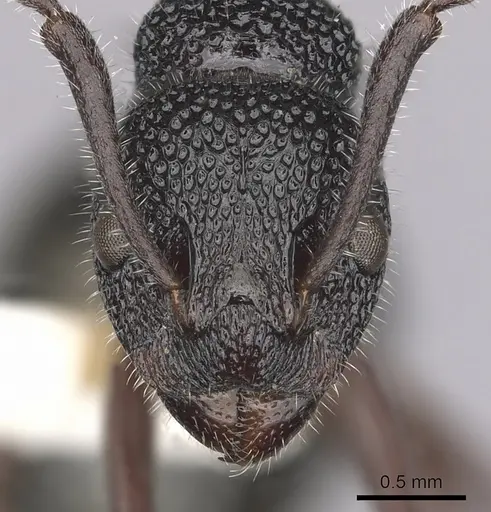
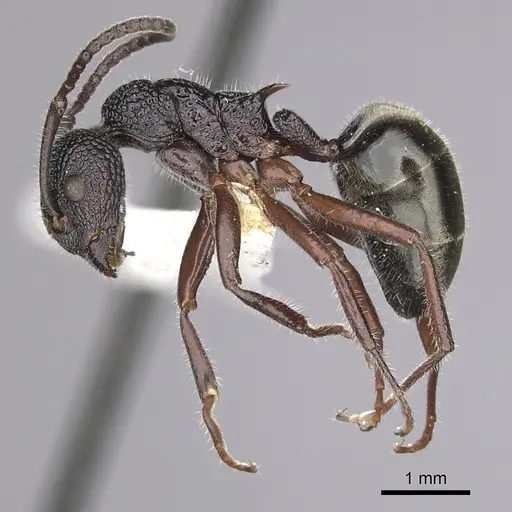
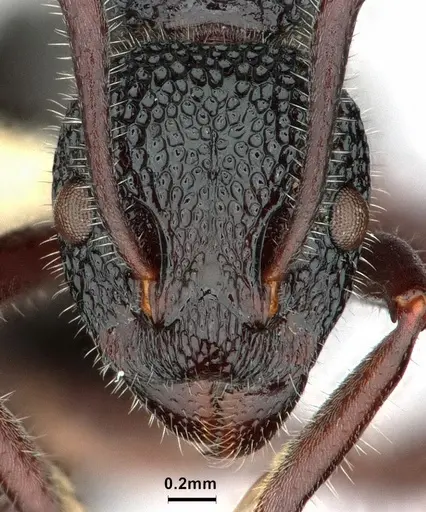
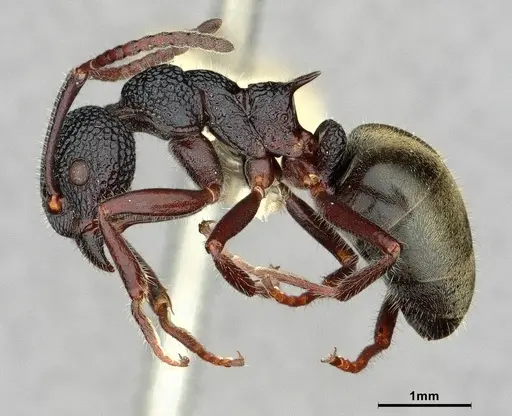
Dolichoderus inferus is a small, dark Australian ant species first described in 2013. Workers measure around 4-5mm with a distinctive appearance featuring a rounded pronotum (the first body segment behind the head), elongated propodeal spines pointing upward, and a broad petiolar node. Their legs are short and dark red-brown, distinguishing them from similar species like D. scabridus which has yellowish-red legs. These ants are native to Australia, most commonly found in the Sydney area with an outlier population in southern Victoria [1].
These ants are diurnal foragers that travel in columns along the ground and up into low vegetation and trees. They are general scavengers but also tend aphids and other Hemiptera (sap-sucking insects) for their honeydew, making them a common sight on eucalyptus trunks in dry sclerophyll forest [2]. This species nests in soil, typically under rocks or in rotten wood, with one documented nest found inside a dead branch on a sandstone ledge [2][3].
Quick Summary
- Difficulty: Medium
- Origin & Habitat: Australia, primarily the Sydney region in New South Wales, with a single recorded population in southern Victoria. They inhabit dry sclerophyll forest but can also be found in wet sclerophyll areas [1][3].
- Colony Type: Colony structure is unconfirmed. Based on typical Dolichoderus patterns, they likely form single-queen colonies, but this has not been directly studied.
- Size & Growth:
- Queen: Unconfirmed, no documented queen measurements available
- Worker: 4-5mm estimated (HL 1.44-1.54mm, HW 1.33-1.42mm) [1]
- Colony: Unconfirmed, typical Dolichoderus colonies reach several hundred workers
- Growth: Unconfirmed
- Development: Unconfirmed, likely 6-10 weeks based on typical Dolichoderus development patterns (Development time has not been directly studied for this species. Estimates based on genus-level data.)
- Antkeeping:
- Temperature: Keep at room temperature, roughly 20-26°C. Based on their Australian distribution in temperate NSW, they likely tolerate a range from cool room temperature to low-mid 20s. Provide a gentle temperature gradient if possible.
- Humidity: Moderate humidity. These ants inhabit dry sclerophyll forest, so they prefer drier conditions than many tropical ants. Keep nest substrate lightly moist but allow it to partially dry between waterings. Avoid overly damp conditions.
- Diapause: Likely, Australian temperate ants typically require a winter rest period. Reduce temperature to around 10-15°C for 2-3 months during winter months (June-August in Northern Hemisphere).
- Nesting: They naturally nest in soil under rocks or in rotten wood/dead branches. In captivity, a Y-tong (acrylic) nest or plaster nest with some dry areas works well. Provide a moisture gradient so workers can choose their preferred humidity zone. A test tube setup works for founding colonies.
- Behavior: These are diurnal, active foragers that travel in columns. They are general scavengers and will accept various protein sources and sugar water. They tend to be less aggressive than some ant species, focusing on foraging and honeydew collection rather than defending territory. Their small size (4-5mm) means they can escape through small gaps, use fine mesh and secure barriers. They are not known for stinging and pose no danger to keepers.
- Common Issues: escape prevention is critical, their small size allows them to squeeze through tiny gaps, wild-caught colonies may have parasites that can decimate the colony in captivity, overheating is a risk, avoid direct sunlight and excessive heat sources, colonies may decline if kept too humid, they prefer drier conditions than many ants, slow founding means colonies can stall if not fed appropriately during early stages
Housing and Nest Setup
For founding colonies, a simple test tube setup works well. Connect the test tube to an outworld (foraging area) once the colony reaches 10-15 workers. For established colonies, Y-tong (acrylic) nests or plaster nests work better than soil-based setups for observing colony behavior. These ants prefer drier conditions than many Australian ants, so avoid setups that stay constantly wet. Create a humidity gradient by having one side of the nest slightly moist and another dry, workers will self-select their preferred zone. The outworld can be decorated with sand or soil substrate, and include plants or branches since they naturally forage on vegetation. [2][3]
Feeding and Diet
Dolichoderus inferus is a generalist feeder. In captivity, they readily accept sugar water, honey, or diluted syrup as an energy source. For protein, offer small insects like fruit flies, small crickets, or mealworms. Since they naturally tend Hemiptera for honeydew in the wild, they will likely accept sugar sources readily. Feed protein 2-3 times per week, and keep a sugar source available at all times. Remove uneaten prey after 24-48 hours to prevent mold. They are diurnal foragers, so offer food during daylight hours for best acceptance. [2]
Temperature and Seasonal Care
Keep your colony at room temperature, ideally in the low-to-mid 20s Celsius (around 20-26°C). They are native to the Sydney region in temperate NSW, so they handle cooler temperatures better than tropical species. During winter (or a simulated winter), reduce temperatures to around 10-15°C for 2-3 months. This mimics their natural seasonal cycle and helps maintain colony health long-term. Do not cool them below 5°C or allow them to freeze. If your room temperature naturally drops in winter, this may provide natural diapause conditions. Avoid placing the nest in direct sunlight or near heating vents that could cause overheating. [1]
Behavior and Observation
These ants are active diurnal foragers that move in columns, you will often see workers traveling along specific paths between the nest and food sources. They are not particularly aggressive and will focus on foraging rather than defending against threats. Workers are relatively calm compared to some ant species, making them enjoyable to observe. They can be kept in smaller setups since they don't require the massive space that some larger species need. Their small size means they are best observed with good lighting and potentially a magnifying glass for the finest details of their morphology. Watch for them climbing on vegetation in the outworld, this reflects their natural behavior of foraging on trees and low plants. [2]
Colony Establishment
If you acquire a founding queen (claustral founding), place her in a test tube with a water reservoir. She will likely seal herself in a chamber and survive on stored fat reserves while laying eggs and raising the first workers (nanitics). Do not disturb her during this period, checking too frequently can cause her to abandon or eat her brood. Once the first workers emerge (typically after 4-8 weeks depending on temperature), you can begin offering tiny amounts of sugar water and small prey. Wait until you have 10-20 workers before connecting to an outworld. Wild-caught colonies may carry parasites, so quarantine and observe them carefully before introducing to any established ant collection.
Frequently Asked Questions
How long does it take for Dolichoderus inferus to produce first workers?
The exact timeline is unconfirmed for this species, but based on typical Dolichoderus development, expect 6-10 weeks from egg to worker at optimal temperature (around 24°C). Founding can be slow, so patience is key during the claustral phase.
What do Dolichoderus inferus ants eat?
They are generalist feeders. Offer sugar water, honey, or syrup as a constant energy source. For protein, provide small insects like fruit flies, pinhead crickets, or small mealworms. They naturally tend aphids for honeydew in the wild.
Are Dolichoderus inferus good for beginners?
They are rated as Medium difficulty. They are more forgiving of temperature fluctuations than tropical species but require attention to escape prevention due to their small size. Their relatively calm temperament makes them suitable for intermediate keepers.
Do Dolichoderus inferus need hibernation?
Yes, they likely require a winter rest period. Reduce temperatures to 10-15°C for 2-3 months during winter. This mimics their natural Australian temperate climate and supports long-term colony health.
How big do Dolichoderus inferus colonies get?
Colony size is unconfirmed for this specific species, but typical Dolichoderus colonies reach several hundred workers. They are not among the largest ant species.
What temperature should I keep Dolichoderus inferus at?
Keep them at room temperature, ideally 20-26°C. They are from temperate Australia and can tolerate the cooler end of this range. A gentle temperature gradient allows workers to self-regulate.
Can I keep multiple Dolichoderus inferus queens together?
The colony structure is unconfirmed for this species. It is not recommended to combine unrelated queens as aggression is likely. If you acquire a colony, assume single-queen structure unless you observe otherwise.
Why are my Dolichoderus inferus dying?
Common causes include: too high humidity (they prefer drier conditions), escape through small gaps, overheating from direct heat sources, parasites from wild-caught colonies, or insufficient feeding. Check that your setup provides a dry zone and that escape prevention is secure.
When should I move my colony to a formicarium?
Wait until you have at least 20-30 workers before connecting to a formicarium or outworld. For founding colonies in test tubes, only move to a larger setup once the test tube becomes crowded or the water reservoir needs frequent refilling.
Where is Dolichoderus inferus found in the wild?
They are native to Australia, primarily around Sydney, New South Wales. There is also a recorded population in southern Victoria. They inhabit dry sclerophyll forest but can be found in wet sclerophyll as well.
References

This caresheet is licensed under CC BY-SA 4.0 .
CASENT0249567
View on AntWeb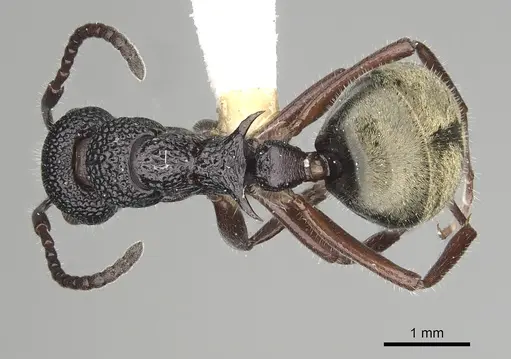
CASENT0886068
View on AntWeb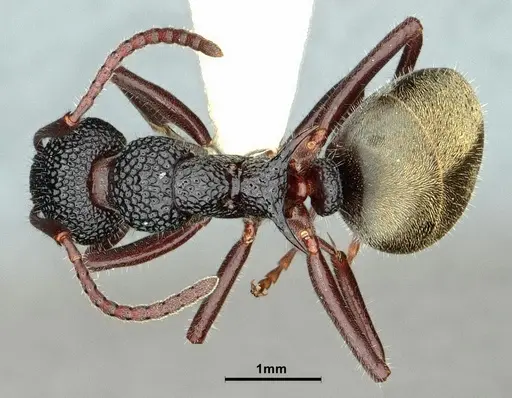
Literature
Loading...Loading products...