

Dolichoderus formosus
- Scientific Name
- Dolichoderus formosus
- Tribe
- Dolichoderini
- Subfamily
- Dolichoderinae
- Author
- Clark, 1930
- Distribution
- Found in 1 countries
Dolichoderus formosus Overview
Dolichoderus formosus is an ant species of the genus Dolichoderus. It is primarily documented in 1 countries , including Australia. Detailed taxonomic data and occurrence records can be further explored via authoritative databases such as AntWeb or the Global Biodiversity Information Facility (GBIF).
Dolichoderus formosus
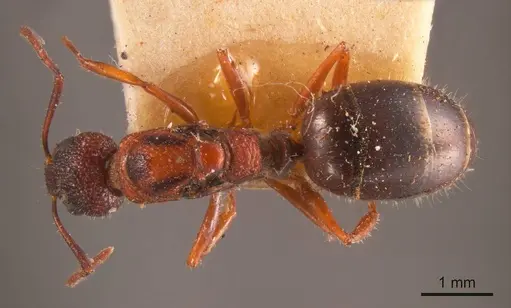
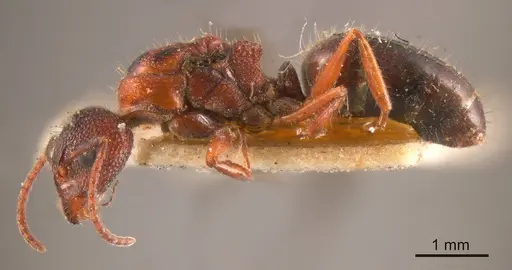
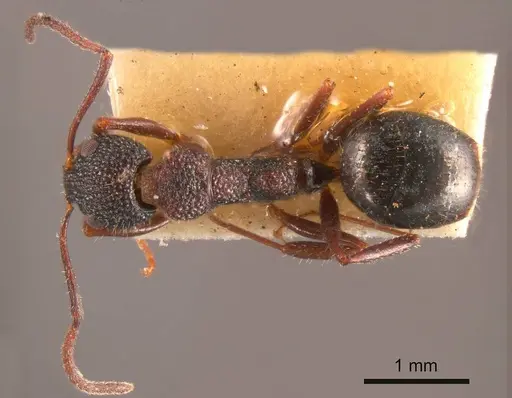
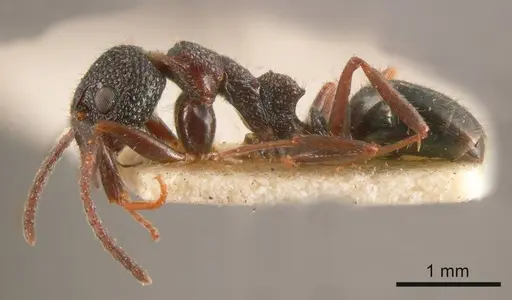
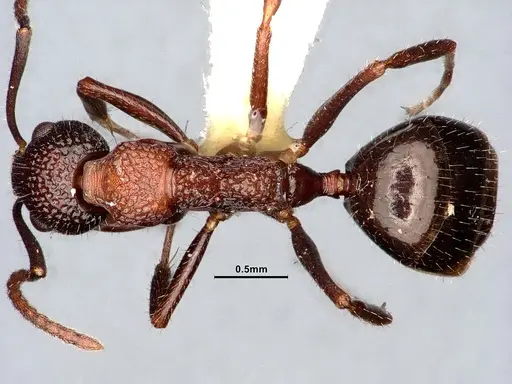
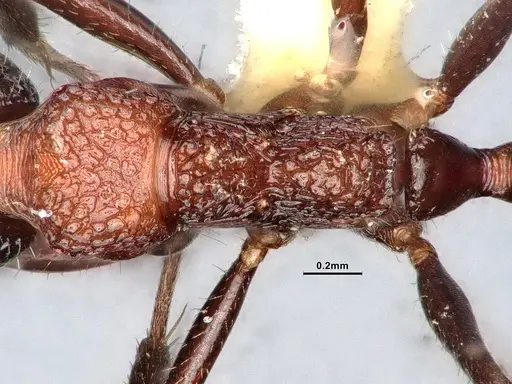
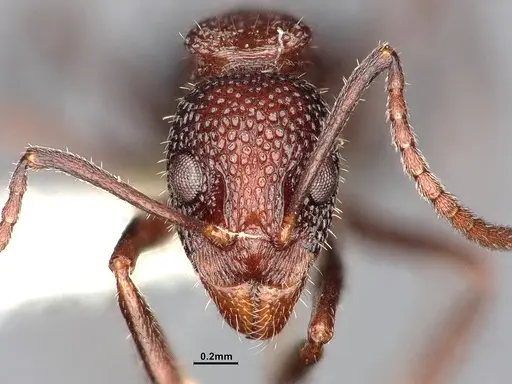
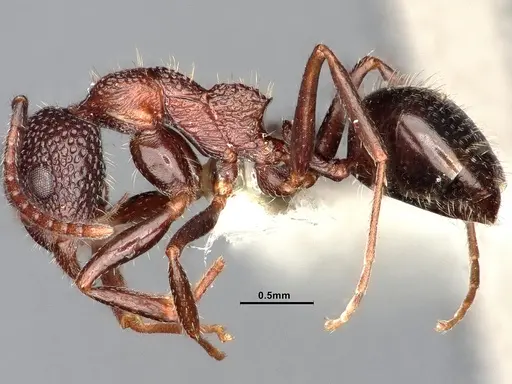
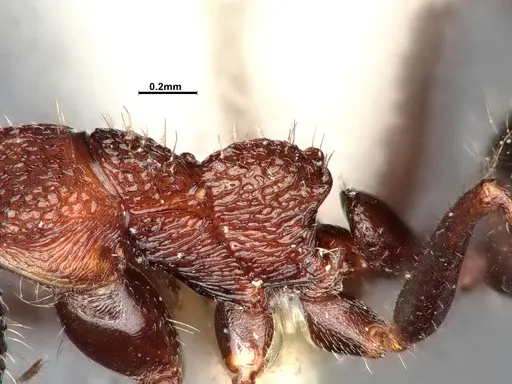
Dolichoderus formosus is a small, distinctive ant native to southern Australia. Workers measure 1.05-1.15mm in head length and feature a dark brown to black head and gaster contrasting with a reddish-brown mesosoma, though color can vary from bright orange to brownish-red in drier regions [1]. The species lacks spines on the pronotum and propodeum, and has large, shallow, closely spaced foveae (pit-like markings) on the head and pronotum that help distinguish it from similar species [1]. These ants nest under rocks in mallee and scrub habitats across two disjunct populations in south-western Western Australia and south-central coastal South Australia [1].
Quick Summary
- Difficulty: Medium
- Origin & Habitat: Southern Australia (south-western Western Australia and south-central coastal South Australia). Found in mallee and scrub habitats, nesting under rocks or in soil [1].
- Colony Type: Colony structure is unconfirmed for this species. Based on typical Dolichoderus patterns, likely single-queen (monogyne) colonies. All Australian Dolichoderus species are endemic to Australia [2].
- Size & Growth:
- Queen: Significantly larger than workers, exact measurements unconfirmed but queens are winged and much bulkier [1]
- Worker: HL 1.05-1.15mm, HW 0.84-0.95mm [1]
- Colony: Unconfirmed, likely moderate-sized colonies based on typical Dolichoderus patterns
- Growth: Moderate, inferred from typical Dolichoderus development
- Development: 6-10 weeks (estimated based on genus patterns) (Development timeline is not directly studied for this species. Estimates based on typical Dolichoderus genus patterns in temperate Australian species.)
- Antkeeping:
- Temperature: Keep at room temperature around 20-26°C. Based on southern Australian distribution (mediterranean climate), they prefer moderate temperatures. A gentle gradient allowing workers to self-regulate is ideal.
- Humidity: Moderate humidity. These ants nest under rocks in scrub habitats, suggesting they tolerate drier conditions than rainforest species. Keep nest substrate lightly moist but allow some drying between waterings.
- Diapause: Likely, southern Australian species may require a mild winter rest period (4-8 weeks at 10-15°C). This is inferred from typical temperate Australian ant behavior.
- Nesting: Nests in soil under rocks or in rotten wood in the wild [2]. In captivity, a naturalistic setup with a dirt chamber and flat stone or a Y-tong/plaster nest works well. Provide a thin layer of substrate they can tunnel through.
- Behavior: Workers are diurnal (active during the day) and are general scavengers. They also tend aphids and other Hemiptera for honeydew [2]. They often forage in columns on the ground or on low vegetation and trees [2]. Workers have erect hairs on their tibiae but little to no pubescence. They are not aggressive but may spray formic acid when threatened. Escape risk is moderate, their small size means they can slip through loose connections, but they are not strong climbers like some Dolichoderus species.
- Common Issues: small size means escape prevention must be good, check all connections and use tight-fitting lids, colonies may be slow to establish, avoid disturbing founding queens, dry conditions can cause brood death, monitor substrate moisture carefully, wild-caught colonies may have parasites, quarantine and observe new colonies, they forage in columns so need clear pathways to food sources
Housing and Nest Setup
Dolichoderus formosus can be kept in various setups. In the wild, they nest under rocks or in soil, sometimes in rotten wood [2]. For captivity, a naturalistic setup with a dirt chamber and flat stone on top works well, this mimics their natural nesting under rocks. Alternatively, a Y-tong (acrylic) nest or plaster nest with dirt fill provides good visibility. The nest chamber should be small to medium-sized since these are not large colonies. Provide an outworld connected by tubing for foraging. Use a test tube with water reservoir as a humidity source, placed near but not directly on the nest. Because workers forage in columns in the wild, ensure there are clear paths in the outworld for them to travel [2].
Feeding and Diet
These ants are general scavengers and will accept a variety of foods. In nature, they scavenge for dead insects and tend aphids and other Hemiptera for honeydew [2]. In captivity, offer protein sources like small crickets, mealworms, or other small insects twice weekly. Sugar water, honey, or diluted jam can be offered as an energy source, they may especially accept these if they are tending aphids. Since they are generalists, they are not difficult to feed. Remove uneaten food after 24-48 hours to prevent mold. Fresh water should always be available.
Temperature and Seasonal Care
Keep Dolichoderus formosus at moderate temperatures around 20-26°C. Their native range in southern Australia has a mediterranean climate with mild winters and warm summers, so they prefer temperatures on the cooler side compared to tropical species. Room temperature is often suitable. If you need to warm the nest, use a heating cable on one side of the nest (placed on top, not underneath, to avoid drying) to create a gentle gradient. During winter in temperate climates, a mild hibernation period of 4-8 weeks at 10-15°C may benefit the colony, though this is inferred from typical behavior of temperate Australian ants. Do not let temperatures drop below 5°C or rise above 30°C.
Behavior and Foraging
Workers are diurnal, meaning they are most active during daylight hours [2]. They forage in columns, this is a distinctive behavior where workers follow each other in lines rather than foraging individually [2]. They can forage both on the ground and on low vegetation and trees [2]. This column-foraging behavior means they will readily use any tubing or bridges you provide to connect nest and outworld. They are not particularly aggressive and will flee rather than fight when threatened. Like other Dolichoderus species, they can spray formic acid as a defense, though this is a minor irritant to humans. They are moderate climbers but not as adept at smooth surfaces as some related species.
Colony Establishment
When acquiring a colony, you may start with a single queen (claustral founding is likely based on genus patterns) or a small colony with workers. Queens seal themselves in during founding, this is typical for Dolichoderus species though not directly documented for D. formosus. The first workers (nanitics) will be smaller than normal workers. Colonies grow moderately fast once established. Be patient during the founding stage, do not disturb the queen's sealed chamber. Provide a small amount of food near the founding chamber once workers emerge, but do not overfeed. The colony will expand naturally over several months to a year.
Handling and Temperament
Dolichoderus formosus is not a aggressive species. Workers are quick-moving and will typically flee when the nest is disturbed. They can spray formic acid as a defense mechanism, which may cause minor skin irritation but is not dangerous to humans. When handling, move slowly and avoid sudden movements. They are not suitable for hands-on interaction but are fascinating to observe, especially their column-foraging behavior. Their small size means they can be overlooked, observe carefully to watch them tend aphids or march in formation.
Frequently Asked Questions
How long does it take for Dolichoderus formosus to produce first workers?
The exact timeline is unconfirmed for this species, but based on typical Dolichoderus patterns, expect 6-10 weeks from egg to worker at optimal temperature (around 24°C). The first workers (nanitics) will be smaller than mature workers.
What do Dolichoderus formosus ants eat?
They are general scavengers. Offer small insects (crickets, mealworms) as protein twice weekly, and sugar water, honey, or diluted jam as an energy source. They also tend aphids for honeydew in the wild [2].
Can I keep multiple Dolichoderus formosus queens together?
Colony structure is unconfirmed for this species. Based on typical Dolichoderus behavior, they are likely single-queen colonies. Combining unrelated queens is not recommended as it has not been documented.
What temperature is best for Dolichoderus formosus?
Keep them at room temperature, around 20-26°C. Their southern Australian origin means they prefer moderate temperatures. Room temperature is often ideal.
Do Dolichoderus formosus need hibernation?
A mild winter rest period (4-8 weeks at 10-15°C) may benefit them, especially in temperate climates. This is inferred from typical behavior of temperate Australian ants, as direct studies on this species are lacking.
What size colony do Dolichoderus formosus reach?
Colony size is unconfirmed for this species. Based on typical Dolichoderus patterns, expect moderate-sized colonies, likely several hundred workers at most.
What type of nest is best for Dolichoderus formosus?
A naturalistic setup with a dirt chamber and flat stone works well, mimicking their natural habit of nesting under rocks [2]. Y-tong or plaster nests with dirt fill are also suitable.
Are Dolichoderus formosus good for beginners?
They are rated as Medium difficulty. They are not the easiest species for complete beginners due to their specific temperature and humidity needs, but they are not difficult once you have kept a few easier species first.
Why do my Dolichoderus formosus ants die?
Common causes include: too dry conditions (keep substrate lightly moist), temperatures outside their 20-26°C range, disturbing founding queens, or poor escape prevention. Their small size means they can slip through tiny gaps.
Where is Dolichoderus formosus found in the wild?
They are endemic to Australia, found in two regions: south-western Western Australia and south-central coastal South Australia. They live in mallee and scrub habitats and nest under rocks [1].
How do Dolichoderus formosus forage?
They forage in columns, workers follow each other in lines on the ground or on low vegetation and trees [2]. This distinctive behavior is one of their most interesting traits to observe in captivity.
References

This caresheet is licensed under CC BY-SA 4.0 .
Literature
Loading...Loading products...