

Dolichoderus extensispinus
- Scientific Name
- Dolichoderus extensispinus
- Tribe
- Dolichoderini
- Subfamily
- Dolichoderinae
- Author
- Forel, 1915
- Distribution
- Found in 1 countries
Dolichoderus extensispinus Overview
Dolichoderus extensispinus is an ant species of the genus Dolichoderus. It is primarily documented in 1 countries , including Australia. Detailed taxonomic data and occurrence records can be further explored via authoritative databases such as AntWeb or the Global Biodiversity Information Facility (GBIF).
Dolichoderus extensispinus
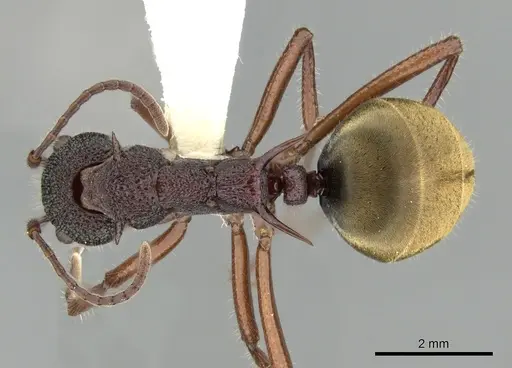
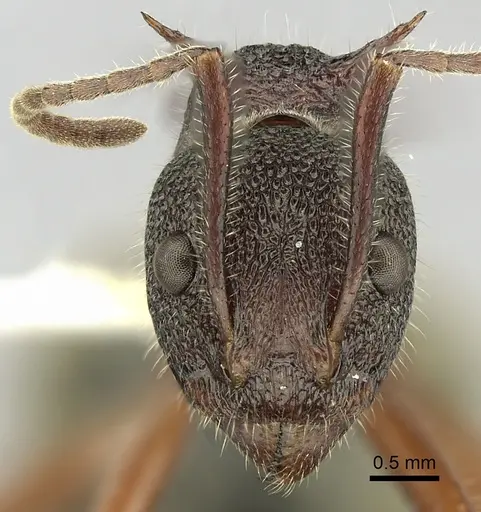
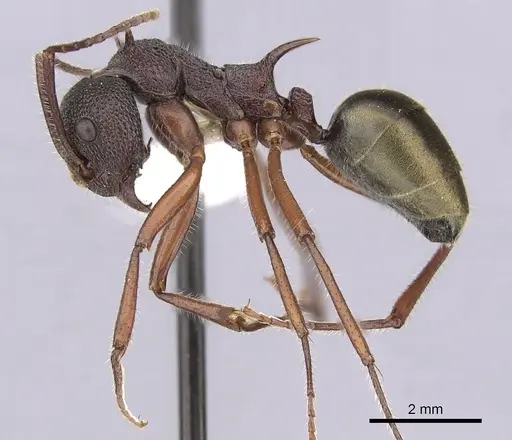
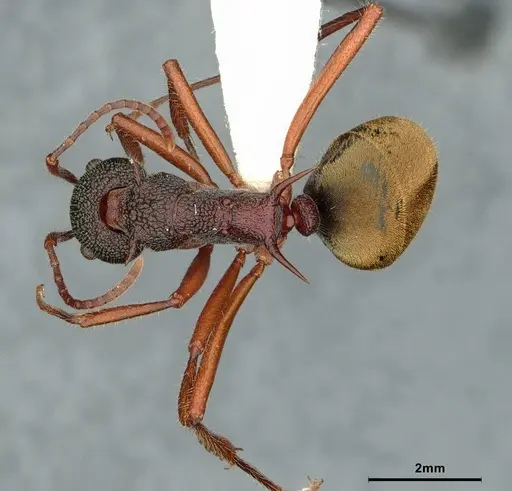
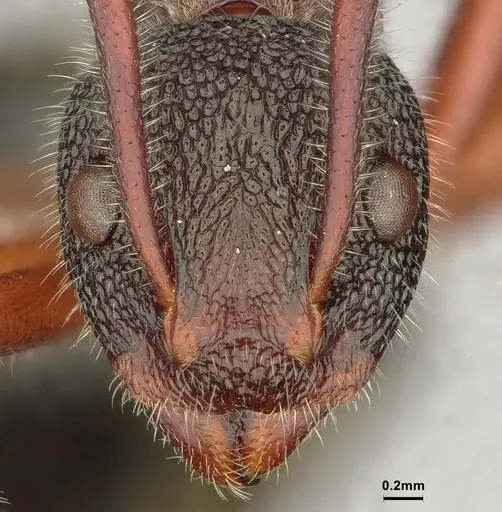
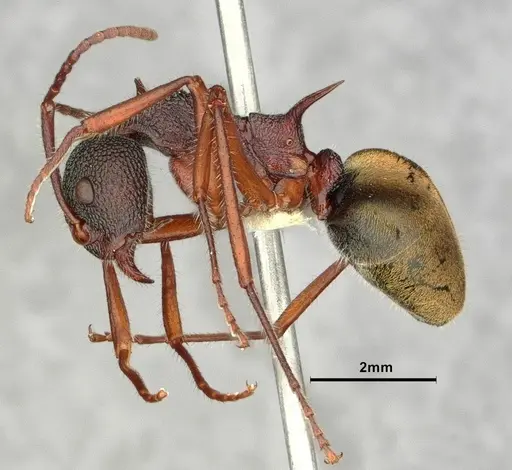
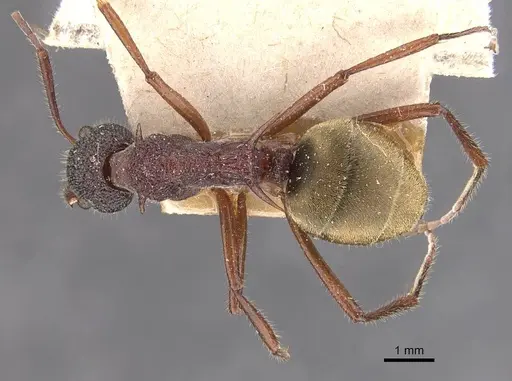
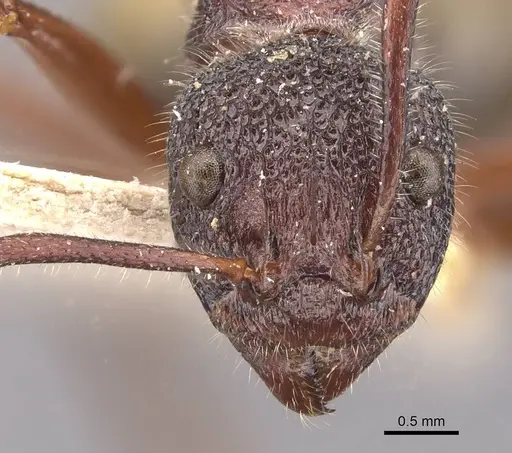
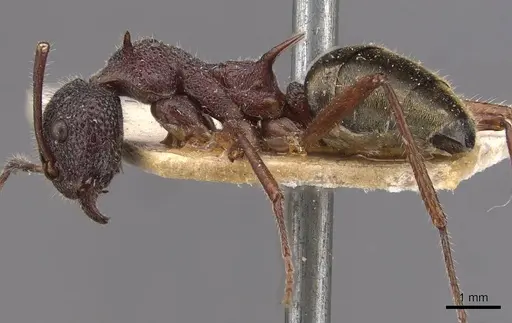
Dolichoderus extensispinus is a small to medium-sized ant native to south-eastern Queensland, Australia. Workers measure 1.84-2.06mm in head length and have a distinctive appearance thanks to their elongated spines on the pronotum and propodeum (the middle and rear body sections), these spines point sideways and upward, setting them apart from other Australian Dolichoderus species [1]. Their body is brown with reddish mandibles, antennae, and legs, and they're covered in yellow erect hairs with dense golden pubescence on the gaster [2].
These ants live in forests ranging from dry sclerophyll to rainforest, nesting under stones and foraging on both the ground and in low vegetation and trees [1][3]. They're diurnal generalists that scavenge for food and tend aphids and other Hemiptera (sap-sucking insects) for honeydew, a sweet substance these insects produce [3]. They often forage in columns, moving together along trails on the ground or climbing through plants [3]. All Australian Dolichoderus species, including this one, are endemic to Australia [3].
Quick Summary
- Difficulty: Medium
- Origin & Habitat: South-eastern Queensland, Australia. Found in forests from dry sclerophyll to rainforest. Nests under stones, forages on low vegetation and trees [1][3].
- Colony Type: Colony structure is unconfirmed. Based on typical Dolichoderus patterns, likely single-queen colonies, but this has not been directly documented for this species.
- Size & Growth:
- Queen: Not documented for this species. Based on genus patterns, likely 6-8mm.
- Worker: 1.84-2.06mm head length, total body approximately 4-5mm [1].
- Colony: Not directly documented. Based on related species, likely several hundred to a few thousand workers.
- Growth: Moderate, estimated based on typical Dolichoderus development patterns.
- Development: Estimated 6-10 weeks based on typical Dolichoderus development at warm temperatures. Not directly studied for this species. (Development time is inferred from genus patterns, subtropical Australian species typically develop faster than temperate species.)
- Antkeeping:
- Temperature: Keep at 22-28°C. Being from subtropical Queensland, they prefer warm conditions but can tolerate room temperature. A gentle heat gradient allows them to regulate their own temperature.
- Humidity: Moderate to high, they inhabit forests ranging from dry sclerophyll to rainforest. Keep nest substrate consistently moist but not waterlogged, with some drier areas available.
- Diapause: Likely a mild winter slowdown given their subtropical origin, but specific requirements are unconfirmed. Queensland experiences mild winters so they may not need true hibernation.
- Nesting: Natural nesting is under stones in soil. In captivity, a naturalistic setup with soil and flat stones or a Y-tong/plaster nest with moisture retention works well. They prefer tight, enclosed chambers.
- Behavior: These ants are diurnal and relatively calm in temperament. They're general scavengers that also tend honeydew-producing insects, so they'll accept both protein foods and sugar sources. They forage in columns, which means they're active and visible during the day. They're not particularly aggressive and don't have a painful sting, Dolichoderus species more commonly use chemical defense (producing a distinctive acetone-like odor) rather than stinging. Escape prevention should be moderate as they're medium-sized ants, but they can climb well so standard barriers are needed.
- Common Issues: limited availability, this species is rarely available in the antkeeping hobby due to its restricted range, colony founding can be slow, expect several months before first workers appear, humidity control is important, too dry and brood desiccates, too wet and mold becomes a problem, wild-caught colonies may have parasites that affect survival in captivity, foraging columns mean they may escape if barriers aren't secure, check connections between outworld and nest regularly
Housing and Nest Setup
Dolichoderus extensispinus naturally nests under stones in forest habitats, so they'll do well in a naturalistic setup with soil substrate and flat stones or pieces of bark for cover. Alternatively, a Y-tong (acrylic) nest or plaster nest with moisture chambers works well, these provide the dark, humid environment they prefer. The nest should have tight-fitting connections to the outworld since they forage in columns and will readily explore any gaps. Use a test tube setup for founding colonies, transitioning to a larger formicarium once the colony reaches 30-50 workers. Because they forages on vegetation in the wild, include some plants or vertical surfaces in the outworld for them to explore. [1][3]
Feeding and Diet
In the wild, these ants are general scavengers that also tend aphids and other Hemiptera for honeydew [3]. In captivity, offer a varied diet: protein sources like small crickets, mealworms, or other small insects 2-3 times per week, and constant access to sugar water, honey, or diluted honeydew. Since they naturally tend sap-sucking insects, they may show strong interest in sugar sources, this makes them relatively easy to feed compared to some specialized predators. Remove uneaten prey after 24-48 hours to prevent mold. Fresh water should always be available.
Temperature and Seasonal Care
Being from subtropical south-eastern Queensland, these ants prefer warm conditions in the 22-28°C range. Room temperature (around 20-24°C in most homes) is generally suitable, but a small heating cable on one side of the nest can help if your home runs cool. Queensland winters are mild, so expect only a slight slowdown in activity during winter months rather than true hibernation. They can tolerate brief temperature drops but should be kept above 15°C. Monitor colony behavior, if workers cluster near the heated area, increase temperature slightly, if they avoid it, reduce heat. [1]
Behavior and Colony Dynamics
These ants are diurnal and form foraging columns, you'll see lines of workers moving between the nest and food sources during daylight hours [3]. They're not particularly aggressive and pose minimal sting risk to humans. When threatened, Dolichoderus species often rely on chemical defense rather than stinging, producing an unpleasant odor. The colony will grow gradually over time, with the queen laying eggs that develop through larval and pupal stages into workers. The distinctive spines on workers make them easy to identify, no other Australian Dolichoderus has pronotal spines pointing both laterally and dorsally [1].
Acquiring and Establishing a Colony
This species has a restricted distribution in south-eastern Queensland and is rarely available in the antkeeping hobby. If you obtain a colony, it will likely be from a keeper who has propagated them rather than wild-caught (which would be illegal in Australia and impractical given the species' limited range). When establishing a founding colony, use a simple test tube setup with a water reservoir, the queen will seal herself into a chamber if she's claustral (though this hasn't been confirmed for this species). Keep the setup dark and undisturbed for the first few months. Once workers emerge, you can gradually introduce a small outworld. [1]
Frequently Asked Questions
How long does it take for Dolichoderus extensispinus to produce first workers?
The exact timeline hasn't been documented, but based on typical Dolichoderus development, expect 6-10 weeks from egg to first worker at warm temperatures (around 25°C). Founding colonies can take several months to establish, so patience is key.
What do Dolichoderus extensispinus ants eat?
They're generalist scavengers that accept both protein and sugar. Feed small insects like crickets or mealworms 2-3 times weekly, and provide constant access to sugar water or honey. They also tend aphids for honeydew in the wild.
What temperature do Dolichoderus extensispinus need?
Keep them warm at 22-28°C. They're from subtropical Queensland and prefer temperatures in this range. Room temperature is usually suitable, or use a small heat source on one side of the nest.
Are Dolichoderus extensispinus good for beginners?
They fall in the medium difficulty range. They're not as challenging as some species but aren't as beginner-friendly as common pets like Lasius or Camponotus. Their main challenge is that they're rarely available in the hobby.
How big do Dolichoderus extensispinus colonies get?
Colony size hasn't been directly documented, but based on related species, colonies likely reach several hundred to a few thousand workers over time.
Do Dolichoderus extensispinus need hibernation?
Their winter requirements are unconfirmed, but given their subtropical origin in Queensland, they likely only need a mild slowdown rather than true hibernation. Queensland winters are warm enough that they remain moderately active.
What makes Dolichoderus extensispinus different from other ants?
Their most distinctive feature is the elongated spines on the pronotum and propodeum that point sideways and upward, this unique combination distinguishes them from all other Australian Dolichoderus species [1].
Can I keep multiple Dolichoderus extensispinus queens together?
Colony structure hasn't been documented for this species. Based on typical Dolichoderus patterns, they're likely single-queen colonies. Combining unrelated queens is not recommended without evidence they can coexist.
References

This caresheet is licensed under CC BY-SA 4.0 .
Literature
Loading...Loading products...