

Doleromyrma rottnestensis
- Scientific Name
- Doleromyrma rottnestensis
- Tribe
- Leptomyrmecini
- Subfamily
- Dolichoderinae
- Author
- Wheeler, 1934
- Distribution
- Found in 1 countries
Doleromyrma rottnestensis Overview
Doleromyrma rottnestensis is an ant species of the genus Doleromyrma. It is primarily documented in 1 countries , including Australia. Detailed taxonomic data and occurrence records can be further explored via authoritative databases such as AntWeb or the Global Biodiversity Information Facility (GBIF).
Doleromyrma rottnestensis
Doleromyrma rottnestensis is a tiny ant species native to Western Australia, specifically Rottnest Island near Perth. Workers measure just 1-1.5mm, making them one of the smaller ants you can keep [1]. They have a distinctive reddish-brown coloration with a darker head, and unlike many similar-looking small ants, they have a notably longer, more rectangular head shape and larger eyes that set them apart from the related Tapinoma species [2]. The mandibles have 5 distinct teeth, and they feature long clypeal setae that almost reach the base of their closed mandibles [1]. This species was originally described as Doleromyrma rottnestensis in 1934 before being transferred to Doleromyrma in 2009 [1].
What makes this species interesting is its limited geographic range, it's endemic to the Rottnest Island region off the coast of Western Australia, making it a relatively rare find in the antkeeping hobby. As a Dolichoderine ant, they belong to the same subfamily as the well-known Argentine ants and ghost ants, though their behavior is quite different.
Quick Summary
- Difficulty: Easy
- Origin & Habitat: Rottnest Island and surrounding Western Australia coastal areas. They nest under stones in beach environments and sandy substrates [2].
- Colony Type: Single-queen (monogyne) colonies based on typical Dolichoderinae patterns. Each colony has one founding queen that establishes the nest alone.
- Colony: Monogyne
- Founding: Claustral
- Size & Growth:
- Queen: Estimated 4-5mm based on genus patterns (not directly measured in available literature)
- Worker: 1-1.5mm [1]
- Colony: Likely several hundred workers based on typical small Dolichoderinae colony sizes
- Growth: Moderate, typical for small ants
- Development: Estimated 6-8 weeks at optimal temperature based on related Dolichoderinae species (Development time is estimated from related species in the subfamily, specific timing for this species has not been documented)
- Antkeeping:
- Temperature: Keep at 22-26°C. Being from a coastal Australian island, they prefer warm conditions but not extreme heat. Room temperature within this range works well, with a slight gradient if possible.
- Humidity: Moderate humidity around 50-60%. Being from beach areas, they can tolerate some dryness but prefer substrate that dries out slowly. Provide a water tube as their primary moisture source.
- Diapause: Likely minimal or no true diapause. Western Australia has mild winters, so they may reduce activity but not enter full hibernation. A slight cooling period to 15-18°C for 4-6 weeks in winter may be beneficial.
- Nesting: They do well in test tubes for founding colonies. Once established, they adapt to various nest types including Y-tong, acrylic, or plaster nests. Their small size means narrow chambers work well.
- Behavior: Generally peaceful and non-aggressive. Workers are small and quick-moving, foraging actively for small prey and honeydew. They are not known to sting and pose no danger to keepers. Their escape risk is high due to their tiny 1mm size, they can squeeze through remarkably small gaps. Excellent escape prevention is essential: use tight-fitting lids, fine mesh barriers, and reliable barrier methods like fluon. They are active foragers and will readily explore their outworld.
- Common Issues: escape prevention is critical due to their tiny 1mm size, they squeeze through gaps that larger ants cannot, colonies can be slow to establish initially, patience is needed during the founding phase, test tube setups must have properly secured cotton and tight-fitting barriers, their small size makes them easy to overlook when checking on colonies, overheating is a risk, keep away from direct heat sources and strong sunlight
Housing and Setup
For founding colonies, a simple test tube setup works perfectly. Fill a test tube one-third with water, push cotton to create a water reservoir, then add the queen and seal with a tight-fitting cotton stopper. Place the tube in a dark, quiet location and leave it alone for 4-6 weeks until the first workers emerge. Once you have 10-20 workers, you can move them to a formicarium. Given their tiny 1mm size, any formicarium must have excellent escape prevention, tight-fitting lids, fine mesh on any ventilation, and barrier tape or fluon on edges. A Y-tong nest with narrow chambers or a small acrylic nest works well. They don't need large spaces, small, appropriately scaled chambers are actually better for their security. [1]
Feeding and Diet
Like most Dolichoderinae ants, Doleromyrma rottnestensis is omnivorous with a preference for sweet liquids and small protein sources. Offer sugar water, honey, or diluted maple syrup as a constant carbohydrate source. For protein, small live prey works best, fruit flies, pinhead crickets, small mealworms, or other tiny insects. Being such small ants, their prey items should be appropriately sized. They will also likely tend aphids if available, so honeydew is a natural food source. Feed protein 2-3 times per week, and keep sugar water available at all times. Remove any uneaten prey after 24 hours to prevent mold.
Temperature and Seasonal Care
Maintain temperatures between 22-26°C for optimal colony health and development. They come from a coastal island with mild temperatures, so they don't need extreme heat. A room-temperature setup is usually sufficient. In winter, a slight reduction to around 18-20°C is appropriate, but avoid cold temperatures below 15°C. They likely don't require a true hibernation period given Western Australia's mild climate, but a slight cooling during winter months may help simulate natural conditions. Watch for behavioral changes, if workers become sluggish, slightly warm one side of the nest to create a gradient.
Escape Prevention
This is the single most important aspect of keeping Doleromyrma rottnestensis. At just 1mm in length, they are exceptional escape artists. They can squeeze through gaps as small as 0.5mm, meaning standard ant keeping setups may not contain them. Use only high-quality, tight-fitting lids on all containers. Apply fluon or barrier tape to all edges and rim surfaces. If using a formicarium, ensure all connections and tube openings are sealed with cotton or plug-style barriers. Never leave the colony unattended with any opening, no matter how small it appears. When observing, work over a white surface so you can spot any escapees easily.
Colony Development
A newly mated queen will dig a small chamber and seal herself inside, this is claustral founding, typical of Dolichoderinae. She uses stored fat reserves to survive and feed her first brood. After 4-6 weeks, the first workers (called nanitics) will emerge. These initial workers are typically smaller than mature workers but will immediately begin foraging to support the colony. Growth is moderate, expect several months to reach 30-50 workers, and a year or more to reach several hundred. Colonies remain relatively small compared to species like Lasius or Camponotus. The queen is long-lived and will continue producing workers for years.
Frequently Asked Questions
How long does it take for Doleromyrma rottnestensis to produce first workers?
Expect 6-8 weeks from egg to first worker at optimal temperature (22-26°C). This is typical for small Dolichoderinae species. The exact timing depends on temperature and feeding.
Can I keep multiple Doleromyrma rottnestensis queens together?
This species is monogyne, single queen colonies. Combining unrelated queens is not recommended as they will likely fight. Only keep one queen per colony.
What should I feed my Doleromyrma rottnestensis colony?
Offer sugar water or honey constantly as a carbohydrate source. For protein, provide small live prey like fruit flies, tiny crickets, or small mealworms 2-3 times per week.
Why are my Doleromyrma rottnestensis escaping?
Their tiny 1mm size makes them exceptional escape artists. You need excellent escape prevention, apply fluon to all edges, use fine mesh, and ensure all lids fit tightly. Check for any gaps larger than 0.5mm.
Are Doleromyrma rottnestensis good for beginners?
Yes, they are beginner-friendly due to their simple care requirements and peaceful temperament. The main challenge is escape prevention due to their very small size.
Do Doleromyrma rottnestensis need hibernation?
Probably not a true hibernation. They come from Western Australia's mild climate. A slight cooling to 18-20°C in winter is sufficient, but they remain active year-round.
How big do Doleromyrma rottnestensis colonies get?
Likely several hundred workers at maturity. They remain relatively small compared to many common ant species.
When should I move my colony to a formicarium?
Wait until you have at least 10-20 workers before moving to a formicarium. They can stay in a test tube setup longer, these ants don't need large spaces.
References

This caresheet is licensed under CC BY-SA 4.0 .
ANTWEB1008633
View on AntWeb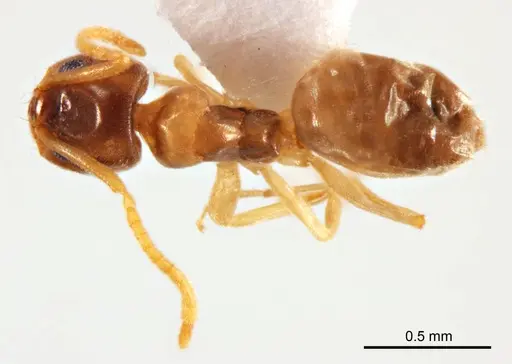
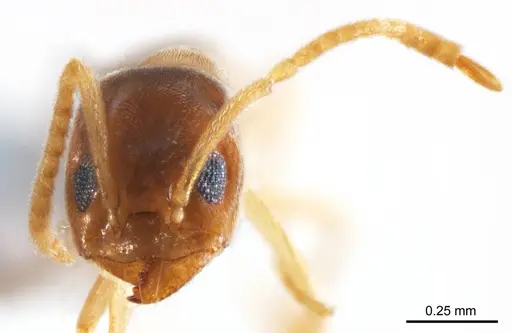
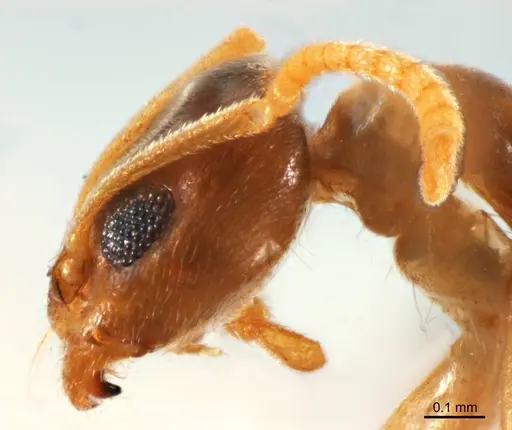
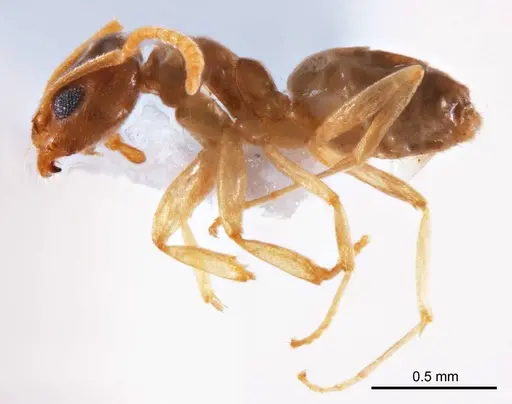
Literature
Loading...Loading products...