

Discothyrea schulzei
- Scientific Name
- Discothyrea schulzei
- Tribe
- Proceratiini
- Subfamily
- Proceratiinae
- Author
- Hita-Garcia & Lieberman, 2019
- Distribution
- Found in 2 countries
Discothyrea schulzei Overview
Discothyrea schulzei is an ant species of the genus Discothyrea. It is primarily documented in 2 countries , including Rwanda, Uganda. Detailed taxonomic data and occurrence records can be further explored via authoritative databases such as AntWeb or the Global Biodiversity Information Facility (GBIF).
Discothyrea schulzei
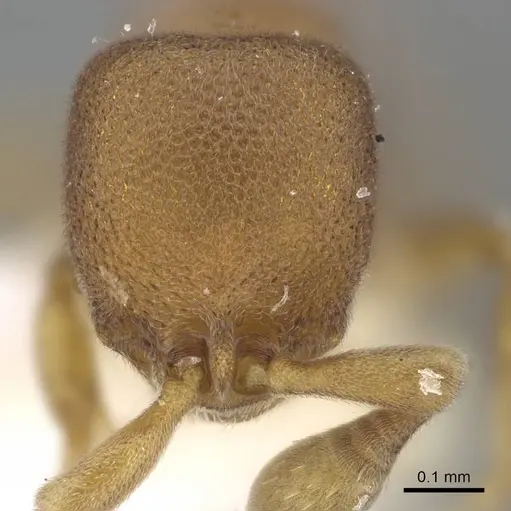
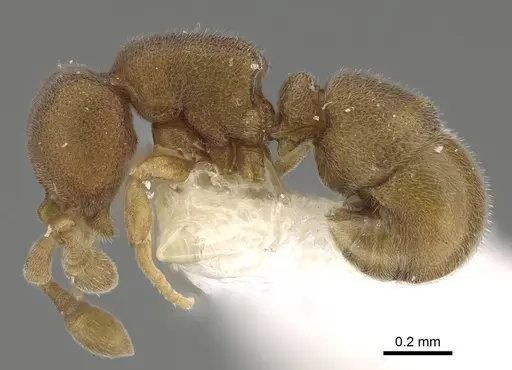
Discothyrea schulzei is an extremely tiny ant species from the rainforests of Rwanda and Uganda. Workers measure just 0.39-0.44mm in head width, making them one of the smallest ants you could keep [1]. They have no visible eyes and live entirely in leaf litter, making them hypogaeic (subterranean-dwelling) specialists. The species has a distinctive appearance with a stocky, robust body, erect white pilosity (bristly hairs), and a large basal fenestra (window-like opening) on the frontal lamella. Their coloration ranges from dull testaceous-yellow to reddish chestnut brown. This species is known only from three locations in the Afrotropical region: Rangiro in Rwanda at 1800m elevation, Kibale Forest in Uganda at 1510m, and Semliki National Park at 670-720m [1][2]. The species is likely endemic to the Albertine Rift region.
Quick Summary
- Difficulty: Expert
- Origin & Habitat: Afrotropical rainforests of Rwanda and Uganda, specifically from leaf litter in rainforest sites at elevations between 670-1800m [1]. The Kibale and Semliki sites are moist semideciduous forest with patches of swamp forest.
- Colony Type: Colony structure is unconfirmed. Based on typical Discothyrea patterns, likely single-queen colonies.
- Size & Growth:
- Queen: Undescribed, no queen caste has been documented in the type series [1]. Estimated 2-3mm based on genus patterns.
- Worker: 0.39-0.44mm head width,0.47-0.56mm Weber's length [1].
- Colony: Unknown, no colony data available.
- Growth: Unknown, no development data available.
- Development: Estimated 6-10 weeks based on related Proceratiinae genera at optimal temperature. No direct data exists for this species. (Estimate based on genus-level patterns for small leaf-litter ants. Temperature dependency is unconfirmed.)
- Antkeeping:
- Temperature: Keep around 22-26°C. This range is inferred from their montane rainforest distribution in Uganda and Rwanda, where temperatures are warm but not tropical lowland hot. A gentle gradient allows the colony to self-regulate.
- Humidity: High humidity is essential, these are leaf-litter ants from rainforest environments with swamp forest patches. Keep the nest substrate consistently moist but not waterlogged. Aim for 70-85% relative humidity with damp substrate.
- Diapause: Unknown, no seasonal data available for this species. The high-elevation Rwandan site (1800m) may experience cooler periods, but captive colonies likely do not require formal hibernation.
- Nesting: Natural nesting occurs in leaf litter. In captivity, use a naturalistic setup with very small chambers or a fine-scale formicarium. Test tubes work but require careful scaling, their tiny size means standard test tube setups may be too large and dry out quickly. A small acrylic nest with tight chambers or a soil-based naturalistic setup works best.
- Behavior: These ants are completely blind (no functional eyes) and live entirely in leaf litter, making them extremely cryptic and rarely seen. They are likely slow-moving and cryptic foragers. Temperament is unknown but based on genus patterns, they are not aggressive and likely scavenge or prey on tiny arthropods. Escape prevention is absolutely critical, their extremely tiny size means they can squeeze through gaps invisible to the naked eye. Even standard ant farm barriers may not contain them.
- Common Issues: escape prevention is critical, they are among the smallest ants and can squeeze through microscopic gaps, no established husbandry guidelines exist, this is an expert-only species with no captive breeding history, high humidity requirements can lead to mold problems if ventilation is poor, their tiny size makes feeding difficult, standard ant foods may be too large, no colony data means growth expectations are completely unknown
Housing and Escape Prevention
Housing Discothyrea schulzei presents unique challenges due to their extreme tiny size. Standard formicariums have chambers and tunnels far too large for these ants, they would be lost in spaces designed for typical ants. A naturalistic setup with fine, compact soil chambers or a custom acrylic nest with miniaturized dimensions is essential. Test tubes can work but should be scaled appropriately and monitored closely for drying. Escape prevention must be absolute, these ants can slip through gaps smaller than a millimeter. Use fine mesh barriers, fluon on tube rims, and seal every possible gap. Even standard ant keeping equipment may not be adequate. This species is truly expert-only and requires custom solutions. [1]
Temperature and Humidity
Based on their collection localities in Ugandan and Rwandan rainforests at elevations of 670-1800m, these ants prefer warm, stable conditions with high humidity. The Semliki site includes swamp forest patches, indicating they tolerate very moist conditions. Aim for temperatures in the low-to-mid 20s Celsius (22-26°C) with a gentle gradient so the colony can self-regulate. Humidity should be high, think damp forest floor. The substrate should remain consistently moist but never waterlogged. Given their leaf-litter microhabitat, they likely experience minimal temperature variation and constant humidity in the wild. A small water reservoir connected to the nest helps maintain humidity. Avoid dry conditions entirely. [1]
Feeding and Diet
Dietary requirements are not documented for this species. Based on typical Discothyrea behavior and their Proceratiinae classification, they are likely predatory or scavengers, feeding on tiny soil micro-arthropods, springtails, and other microscopic invertebrates. In captivity, you would need to provide appropriately-sized prey, standard ant foods like mealworms are far too large. Live micro-arthropods like springtails, or tiny fruit fly portions may be accepted. Sugar sources are unlikely to be relevant given their likely predatory nature. This is one of the most challenging aspects of keeping this species, even if you obtain a colony, providing appropriate nutrition at their scale is extremely difficult. [1]
Behavior and Observation
Discothyrea schulzei is completely blind, with no functional eyes (OI 0-3 in worker measurements) [1]. They live entirely in leaf litter and are never exposed to light, making them truly hypogaeic. This means they will almost never be visible outside the nest, they are cryptic, slow-moving foragers that stay hidden in their substrate. Observing them requires careful monitoring of the nest interior. They are not aggressive and pose no threat to keepers. Their small size and cryptic lifestyle make them a 'watch-only' species, you provide the conditions and wait, rarely seeing the ants themselves. This is the opposite of keeping a charismatic species like Camponotus, these are ants for those who want to maintain the habitat itself.
Frequently Asked Questions
How long does it take for Discothyrea schulzei to produce first workers?
Unknown, no captive breeding data exists for this species. Based on related Proceratiinae genera, estimate 6-10 weeks from egg to worker at optimal temperature, but this is a rough guess with low confidence.
Can I keep Discothyrea schulzei in a test tube?
Standard test tubes are likely too large and may dry out too quickly for these tiny leaf-litter ants. If using test tubes, use very small diameters and monitor humidity closely. A naturalistic setup with fine, damp soil chambers is probably more appropriate.
What do Discothyrea schulzei eat?
Their diet is unconfirmed, but based on genus patterns they likely prey on or scavenge tiny micro-arthropods like springtails. Standard ant foods are far too large. You would need to provide appropriately-sized live prey.
Are Discothyrea schulzei good for beginners?
No. This is an expert-only species with no established husbandry guidelines, extremely tiny size requiring specialized equipment, high humidity needs, and no documented captive breeding history. Do not attempt unless you have extensive experience with difficult species.
Do Discothyrea schulzei ants sting?
Unknown, their tiny size likely makes any sting imperceptible to humans, if they even have a functional stinger. They pose no danger to keepers.
How big do Discothyrea schulzei colonies get?
Unknown, no wild colony size data exists for this species. It was only described in 2019 and remains one of the most poorly known ant species in captivity.
Do I need to hibernate Discothyrea schulzei?
Unknown, no diapause or seasonal data is available. The high-elevation Rwandan site (1800m) may experience cooler periods, but captive colonies likely do not require formal hibernation. Maintain stable warm conditions.
Why can't I find this species for sale?
Discothyrea schulzei was only described in 2019 and is known only from a handful of specimens collected in Rwanda and Uganda. It has never been cultured in captivity and is not available in the ant keeping hobby. This species is for research institutions and advanced myrmecologists, not hobbyists.
Can I keep multiple queens together?
Unknown, colony structure has not been documented. Based on typical Discothyrea patterns, they likely form single-queen colonies, but this is unconfirmed.
What makes Discothyrea schulzei different from other ants?
They are among the smallest ants in the world (workers under 0.5mm), completely blind, and known from only three rainforest locations in Africa. They have a unique morphological feature called a basal fenestra, a large window-like opening on their face. They represent a completely undocumented husbandry challenge.
References

This caresheet is licensed under CC BY-SA 4.0 .
CASENT0247370
View on AntWeb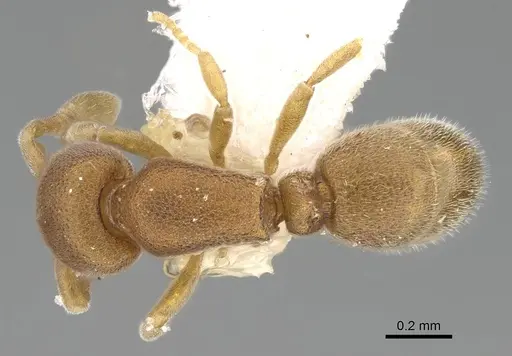
Literature
Loading...Loading products...