

Discothyrea michelae
- Scientific Name
- Discothyrea michelae
- Tribe
- Proceratiini
- Subfamily
- Proceratiinae
- Author
- Hita-Garcia & Lieberman, 2019
- Distribution
- Found in 1 countries
Discothyrea michelae Overview
Discothyrea michelae is an ant species of the genus Discothyrea. It is primarily documented in 1 countries , including Tanzania, United Republic of. Detailed taxonomic data and occurrence records can be further explored via authoritative databases such as AntWeb or the Global Biodiversity Information Facility (GBIF).
Discothyrea michelae
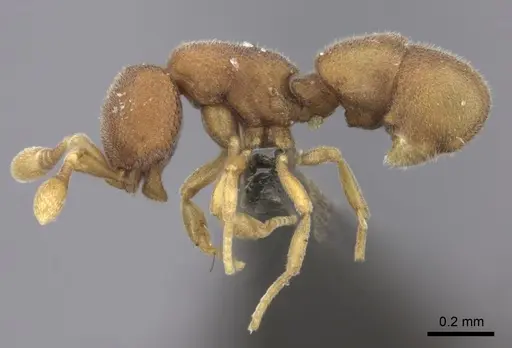
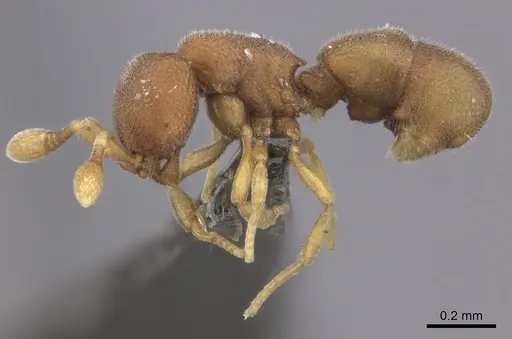
Discothyrea michelae is an exceptionally rare ant species discovered in 2019 from the Kindoroko Forest in northern Tanzania. Workers are tiny at just 0.55-0.58mm in mesosoma length, making them among the smallest ants in the genus. They have a distinctive appearance with a uniquely rectangular petiolar node featuring sharp dorsolateral peaks that give it a bilobed look when viewed from above, a feature found in no other Afrotropical Discothyrea [1]. The species is known only from a single collection in primary montane forest at 1739m elevation, where they were extracted from leaf litter. This is a highly specialized, recently described species with no established history in the antkeeping hobby, keeping it would be an experimental endeavor with no captive care precedent.
Quick Summary
- Difficulty: Expert, Experimental
- Origin & Habitat: Kindoroko Forest Reserve, Tanzania at 1739m elevation in primary montane forest, collected from leaf litter [1]
- Colony Type: Unconfirmed, likely single-queen based on typical genus patterns
- Size & Growth:
- Queen: Unknown, not described in original species description [1]
- Worker: 0.55-0.58mm mesosoma length (WL), head width 0.41-0.43mm [1]
- Colony: Unknown, genus members typically form small colonies of fewer than 100 workers
- Growth: Unknown, no captive data available
- Development: Unknown, no development data exists for this species (No captive breeding or development studies have been conducted. Related Discothyrea species typically develop from egg to worker in 4-8 weeks at warm temperatures.)
- Antkeeping:
- Temperature: Cool to moderate conditions expected, montane forest habitat at 1739m suggests preference for temperatures in the high teens to low twenties Celsius. Start around 18-22°C and monitor colony activity.
- Humidity: High humidity required, native to montane leaf litter where conditions are constantly damp. Keep nest substrate consistently moist but not waterlogged.
- Diapause: Unknown, no data on overwintering requirements. The high-elevation Tanzanian habitat may experience cooler seasonal temperatures, suggesting some form of seasonal slowdown may occur.
- Nesting: Naturalistic setup with leaf litter or very small chambers recommended. In the wild they live in decomposing wood and leaf litter in forest floors. A small acrylic nest or plaster setup with fine chambers scaled to their tiny size would work.
- Behavior: No behavioral observations have been documented in captivity. Based on genus patterns, they are likely cryptic and slow-moving, foraging in leaf litter for small prey. Their tiny size and specialized morphology suggest they may prey on arthropod eggs or very small invertebrates. Escape prevention is critical due to their minute size, they can easily slip through standard barriers.
- Common Issues: no captive care precedent exists, this species has never been kept by hobbyists, tiny size makes escape likely without fine mesh barriers, slow growth and small colony size may lead to colony failure from minor stress, wild-caught colonies may not adapt to captive conditions, no established feeding protocols, diet preferences unknown
Discovery and Rarity
Discothyrea michelae was only described in 2019 by Hita-Garcia and Lieberman, making it one of the most recently discovered ant species in the hobby. The entire known population comes from a single collection event in the Kindoroko Forest Reserve in Tanzania. This forest sits on the slopes of Mount Kilimanjaro and represents a unique montane habitat at nearly 1740 meters elevation. The species was named in honor of Michele Esposito, a data manager for AntWeb who has organized vast amounts of ant specimen data for researchers worldwide [1]. The unique rectangular petiolar node with its bilobed appearance distinguishes this species from all other Afrotropical Discothyrea, making identification straightforward for trained myrmecologists.
Natural Habitat
This species is known only from primary montane forest at 1739 meters elevation in the Kindoroko Forest Reserve, Tanzania. They were collected from leaf litter samples, indicating they are cryptic leaf-litter ants that live in the decomposing organic matter on the forest floor. The montane setting means they experience cooler temperatures and high humidity year-round. The forest type suggests consistent moisture, limited temperature fluctuation, and protection from direct sunlight. In captivity, replicating these conditions means providing a cool, consistently humid environment with minimal temperature variation. The high-elevation origin also suggests they may have different seasonal requirements than lowland tropical ants [1].
Size and Morphology
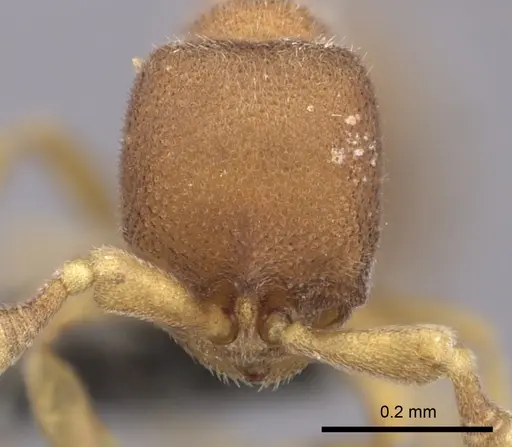
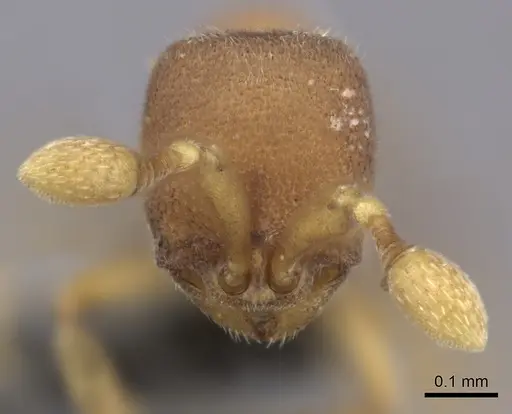
Workers are exceptionally small, with a mesosoma length of only 0.55-0.58mm and head width of 0.41-0.43mm. To put this in perspective, these ants are roughly the size of some mite species, you would need to look very carefully to spot them in their nest. The most distinctive feature is the petiolar node, which is uniquely rectangular in outline with sharp dorsolateral peaks and a deeply impressed anterior face, making it appear bilobed when viewed from an angle. The propodeum (the rear portion of the mesosoma) has small denticles or teeth, and the declivity is deeply concave. Abdominal sternite 3 has a strongly developed median ridge that surpasses the prora, appearing rectangular in profile. They also have standing hairs on the mesosoma and abdominal terga, which is unusual in the genus [1].
Housing and Nesting
Given their leaf-litter origin, a naturalistic setup works best, think decomposing leaves, small pieces of rotting wood, and very small chambers. Their tiny size means standard ant nest chambers are far too large, you would need to provide appropriately scaled housing. A small acrylic nest or plaster setup with narrow tunnels and small chambers would be more suitable than a standard formicarium. The nest material should remain consistently damp but never waterlogged. Because of their minute size, escape prevention is critical, even standard fluon barriers may not contain them. Use fine mesh on any ventilation openings. Room temperature in the high teens to low twenties Celsius should suit them, but exact preferences are unknown. Provide a foraging area with small pieces of leaf litter and decaying wood to mimic their natural environment.
Feeding and Diet
No specific feeding observations exist for this species, but Discothyrea ants are typically specialized predators that hunt small arthropods and their eggs. The genus is known for unusual dietary specializations, including predation on spider eggs and other small invertebrates found in leaf litter. For this species, you should offer very small live prey items, pinhead crickets are far too large. Instead, offer flightless fruit fly adults, booklice, springtails, and other tiny arthropods. Sugar sources are unlikely to be accepted given the genus typically does not tend aphids or seek honeydew. Protein should be the primary food source. Given how little we know about their exact dietary needs, experimental feeding with various tiny prey items is necessary.
Challenges and Experimental Keeping
This species represents a true frontier in antkeeping, there is no established captive protocol, no documented colony success, and no prior hobbyist experience to draw upon. Keeping Discothyrea michelae would be entirely experimental. The primary challenges include: their minute size makes them extremely difficult to contain and observe, we have no data on their temperature, humidity, or dietary requirements, wild-caught colonies may fail to adapt to captive conditions, and their slow growth and small colony size make them vulnerable to minor stressors. If you obtain this species, document everything meticulously. Start with conditions matching their montane forest origin, cool temperatures around 18-22°C, high humidity, and tiny prey items. Be prepared for trial and error, and do not expect rapid colony growth.
Frequently Asked Questions
Can I keep Discothyrea michelae as a beginner antkeeper?
No, this species is not recommended for beginners. It was only described in 2019 and has never been kept in captivity. There are no established care protocols, no documented successful colonies, and virtually no information about their requirements. Keeping this ant would be entirely experimental with a high probability of failure.
How long does it take for Discothyrea michelae to develop from egg to worker?
This is completely unknown. No captive breeding or development studies have been conducted on this species. Based on related Discothyrea species, development likely takes 4-8 weeks at warm temperatures, but this is purely an estimate with no direct evidence.
What do Discothyrea michelae ants eat?
Their exact diet is unconfirmed, but Discothyrea ants are typically specialized predators. Based on genus patterns, they likely hunt tiny arthropods and eggs found in leaf litter. In captivity, you should offer very small live prey like springtails, booklice, and flightless fruit flies. Sugar sources are unlikely to be accepted.
What temperature do Discothyrea michelae ants need?
Based on their montane forest origin at 1739m elevation in Tanzania, they likely prefer cool to moderate conditions. Start around 18-22°C and observe colony behavior. Avoid warm conditions typical of tropical ants, the high-elevation origin suggests they are adapted to cooler temperatures.
Do Discothyrea michelae ants need hibernation?
Unknown, no data exists on their seasonal requirements. The high-elevation Tanzanian habitat does experience seasonal temperature changes, so some form of seasonal slowdown may be beneficial. However, there is no documented evidence to guide this.
How big do Discothyrea michelae colonies get?
Unknown, the species has never been documented in captivity. Based on typical Discothyrea genus patterns, colonies likely remain small with fewer than 100 workers. The original type series only included a handful of workers.
Can I keep multiple Discothyrea michelae queens together?
Unknown, colony structure has not been documented. Most Discothyrea species form single-queen colonies, but we have no specific data for D. michelae. Combining unrelated queens is not recommended given the complete lack of information about their founding behavior.
Do Discothyrea michelae ants sting?
Given their minute size, any sting would be negligible even if present. Most Discothyrea species are completely harmless to humans due to their tiny size. However, no specific observations about their sting or defense behavior have been documented.
Where can I get Discothyrea michelae ants?
This species is extremely rare in the antkeeping hobby. It was only described in 2019 and is known only from a single collection in Tanzania. Wild collection would require permits and expertise in leaf-litter extraction. This species is essentially unavailable to hobbyists and would be a scientific curiosity rather than a practical keeping option.
Why is Discothyrea michelae so difficult to keep?
Multiple factors make this species extremely challenging: it was only described in 2019 with no subsequent research, it is known from a single collection with no biological data, its tiny size makes housing and containment difficult, there are no established care protocols, and wild colonies may simply not adapt to captive conditions. This represents a frontier species with no precedent for captive husbandry.
References

This caresheet is licensed under CC BY-SA 4.0 .
CASENT0235469
View on AntWeb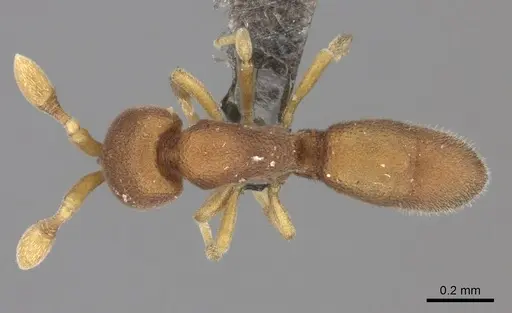
Literature
Loading...Loading products...