

Discothyrea hawkesi
- Scientific Name
- Discothyrea hawkesi
- Tribe
- Proceratiini
- Subfamily
- Proceratiinae
- Author
- Hita-Garcia & Lieberman, 2019
- Distribution
- Found in 1 countries
Discothyrea hawkesi Overview
Discothyrea hawkesi is an ant species of the genus Discothyrea. It is primarily documented in 1 countries , including Tanzania, United Republic of. Detailed taxonomic data and occurrence records can be further explored via authoritative databases such as AntWeb or the Global Biodiversity Information Facility (GBIF).
Discothyrea hawkesi
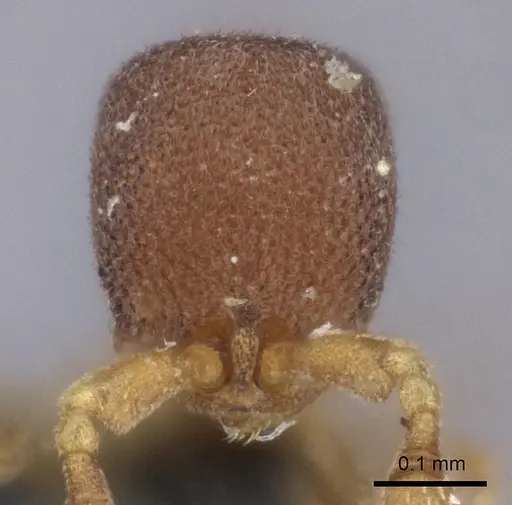
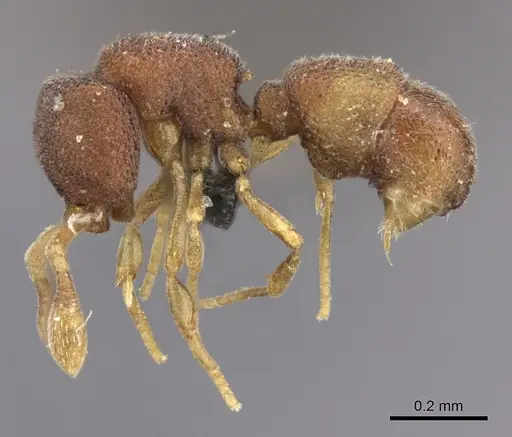
Discothyrea hawkesi is an extraordinarily tiny ant species, with workers measuring just 0.55-0.58mm in total body length [1]. They are a pale orange color and belong to a specialized group of ants that have lost their eyes entirely, they are essentially blind, living in the dark leaf litter of Tanzanian rainforests [1]. This species was only discovered recently in 2019 and is known only from a single forest in Tanzania, making it a rare and unusual species to keep. Their most distinctive features are the tiny teeth (denticles) on their rear and their completely smooth, gently curved body profile [1].
What makes D. hawkesi special is their extreme specialization, they are among the smallest ants in the world and live entirely underground in leaf litter, where they hunt tiny soil arthropods. Their blindness is not a defect but an adaptation to their hidden lifestyle. This species is part of a small group of related Discothyrea species that share unique features, but D. hawkesi can be identified by its specific body proportions and the shape of its abdominal segments [1].
Quick Summary
- Difficulty: Expert
- Origin & Habitat: Mkungwe Forest Reserve in Tanzania, East Africa. They live in primary rainforest leaf litter at 700 meters elevation [1][2]. This is a humid, tropical forest environment with consistent warmth year-round.
- Colony Type: Colony structure is unconfirmed. Based on related Discothyrea species, they likely form small colonies with a single queen.
- Size & Growth:
- Queen: Undescribed, queen has not been documented yet
- Worker: 0.55-0.58 mm total length (mesosoma 0.31-0.32mm) [1]
- Colony: Unknown, but likely small, probably under 100 workers based on related species
- Growth: Likely slow, very small ants typically develop slowly
- Development: Estimated 8-12 weeks based on typical Discothyrea patterns and their small size (This is an estimate, no specific development data exists for this species. Their tiny size suggests slower development than larger ants.)
- Antkeeping:
- Temperature: Keep warm at 24-28°C. They come from a tropical rainforest where temperatures are consistently warm year-round. A gentle heat gradient allows them to choose their preferred temperature.
- Humidity: High humidity is essential, think damp rainforest floor. Keep the nest substrate consistently moist but not waterlogged. These ants live in leaf litter where humidity stays high. Provide a water tube but ensure the nest area stays humid.
- Diapause: Unknown, they come from a tropical area where temperatures stay warm year-round. A slight reduction in temperature during winter months may be beneficial but is not required.
- Nesting: Use a naturalistic setup with moist substrate (like a mixture of soil and rotting leaves) or a Y-tong/plaster nest with high humidity chambers. Their tiny size means they need very small tunnels and chambers. Avoid test tubes, the air space dries out too quickly for these humidity-dependent ants.
- Behavior: These are completely blind, gentle ants that live entirely in the dark. They are not aggressive and have no stingers, they are harmless to humans. They are slow-moving and spend most of their time hunting tiny soil arthropods in the substrate. Because they are so small, escape prevention is absolutely critical, they can squeeze through the tiniest gaps. They are not colony founders in the traditional sense, queens have never been documented, so their founding behavior is unknown.
- Common Issues: their extreme tiny size makes escape likely without excellent barriers like fine mesh, they require consistently high humidity which can lead to mold problems if not managed, they are rarely available and we know very little about their captive care, slow growth and small colony sizes mean they may appear stagnant for months, they need tiny live prey, standard ant foods are too large for them
Housing and Setup
Keeping Discothyrea hawkesi is a real challenge because they are among the smallest ants in the world. A standard test tube setup will not work, the air gap dries out too quickly and these humidity-dependent ants will die. Instead, use a naturalistic setup with a deep layer of moist substrate (a mixture of soil, sand, and rotting leaves works well) or a small plaster/acrylic nest with very tight chambers scaled to their tiny size. The key is maintaining high humidity at all times, think of a damp sponge, not wet mud. A water tube connected to the nest helps maintain moisture. Because they are blind and live in leaf litter, they do not need light and prefer dark conditions. Cover the nest to block light and reduce stress. [1][2]
Feeding and Diet
In the wild, these tiny ants are predators that hunt microscopic soil arthropods like springtails, mites, and other micro-invertebrates living in leaf litter [1]. In captivity, you will need to culture live springtails or other tiny live prey, standard ant foods like mealworms and crickets are far too large. Offer tiny drops of honey or sugar water occasionally, but protein from live prey is essential. Feed small amounts twice a week and remove any uneaten prey after 24 hours to prevent mold. Because they are so small, even a single fruit fly is a large meal for them.
Temperature and Seasonal Care
Discothyrea hawkesi comes from tropical Tanzania where temperatures stay warm year-round. Keep your colony at 24-28°C with a gentle heat gradient so they can move to their preferred spot. Room temperature (around 22-24°C in most homes) is likely acceptable, but additional heating may be needed in colder climates. Use a low-wattage heating cable on one side of the nest, never place heat directly on the nest as it can dry them out quickly. Since they come from a tropical environment, they likely do not need a true hibernation, but you might slightly reduce temperatures during winter months to simulate seasonal changes. [1]
Understanding Their Unique Biology
What makes D. hawkesi fascinating is how specialized they are. They have completely lost their eyes, not reduced, but entirely absent, because they live in total darkness within leaf litter and soil [1]. Their bodies are incredibly smooth and gently curved, without the spines or ridges seen in many other ants. They have tiny teeth on their rear (propodeal denticles) which they use for defense or digging [1]. Their antennae are short and thickened, and they have a distinctive abdominal shape with segment 3 being longer than segment 4. All of these features are adaptations to their hidden lifestyle in the dark, humid understory of rainforest floors.
Colony Establishment and Growth
Since this species was only described in 2019,we know almost nothing about their colony founding or development in captivity. Queens have never been documented in scientific literature, which is unusual, most ant species have at least some queen descriptions. This means you are unlikely to find a mated queen for sale, and wild colonies are nearly impossible to locate given their tiny size and hidden lifestyle. If you do obtain a colony, expect extremely slow growth. Their small size means each worker takes many weeks to develop, and colony populations will remain low, likely under 100 workers even in mature colonies based on related species patterns. [1]
Frequently Asked Questions
How small are Discothyrea hawkesi workers?
They are among the smallest ants in the world, measuring only about 0.55-0.58mm in total body length, roughly the width of a human hair laid flat [1].
Can I keep Discothyrea hawkesi in a test tube?
No, test tubes dry out too quickly for these humidity-dependent ants. Use a naturalistic setup with moist substrate or a small plaster nest with high humidity chambers instead.
What do Discothyrea hawkesi eat?
They are predators that need tiny live prey like springtails, mites, and other micro-arthropods. Standard ant foods are too large. You may also offer tiny drops of honey or sugar water occasionally.
Do Discothyrea hawkesi ants sting?
No, they are completely harmless to humans. They have no stingers and are not aggressive. Their tiny size means they cannot penetrate human skin even if they tried.
Are Discothyrea hawkesi good for beginners?
No, this is an expert-level species. Their extreme tiny size, high humidity requirements, need for live micro-prey, and general rarity make them unsuitable for beginners. They are also nearly impossible to acquire.
How long does it take for eggs to become workers?
Exact timing is unknown, but based on their tiny size and typical Discothyrea patterns, expect 8-12 weeks from egg to first worker. Growth will be very slow.
Do Discothyrea hawkesi have eyes?
No, they are completely blind. They have no eyes at all, which is an adaptation to their life in dark leaf litter and soil [1].
Where does Discothyrea hawkesi live in the wild?
Only in Mkungwe Forest Reserve in Tanzania, East Africa. They live in primary rainforest leaf litter at about 700 meters elevation [1][2].
Why are they so hard to find?
Their tiny size (less than 1mm), blind nature, and hidden lifestyle in leaf litter make them nearly impossible to locate. They were only discovered in 2019 and have rarely been seen since.
References

This caresheet is licensed under CC BY-SA 4.0 .
CASENT0235470
View on AntWeb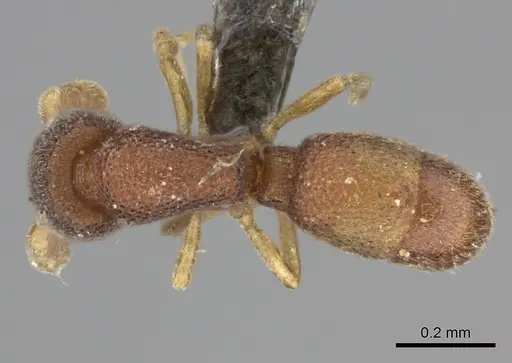
Literature
Loading...Loading products...