

Discothyrea denticulata
- Scientific Name
- Discothyrea denticulata
- Tribe
- Proceratiini
- Subfamily
- Proceratiinae
- Author
- Weber, 1939
- Distribution
- Found in 9 countries
Discothyrea denticulata Overview
Discothyrea denticulata is an ant species of the genus Discothyrea. It is primarily documented in 9 countries , including Brazil, Colombia, Costa Rica. Detailed taxonomic data and occurrence records can be further explored via authoritative databases such as AntWeb or the Global Biodiversity Information Facility (GBIF).
Discothyrea denticulata
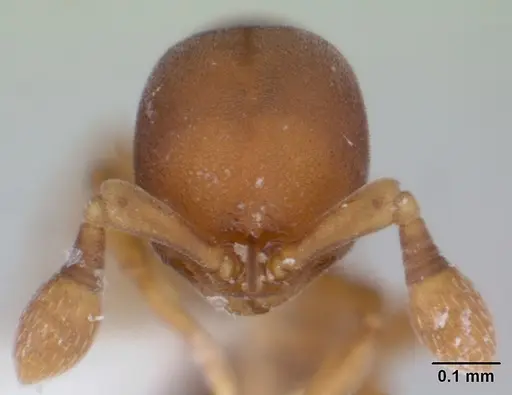
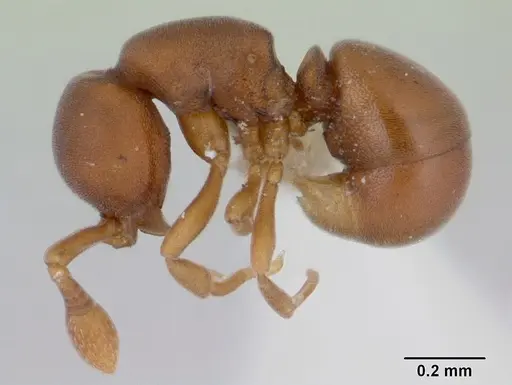
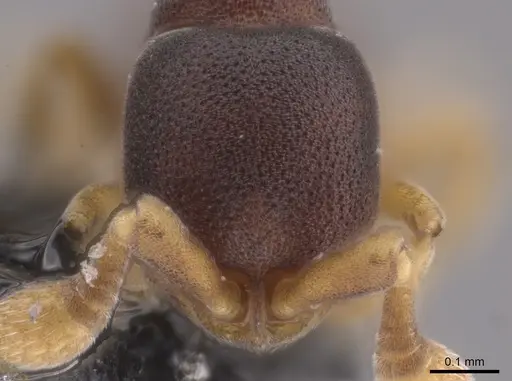
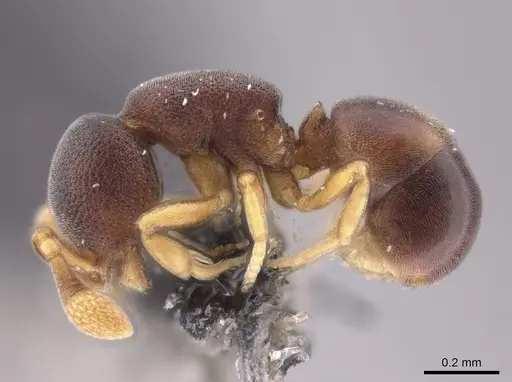
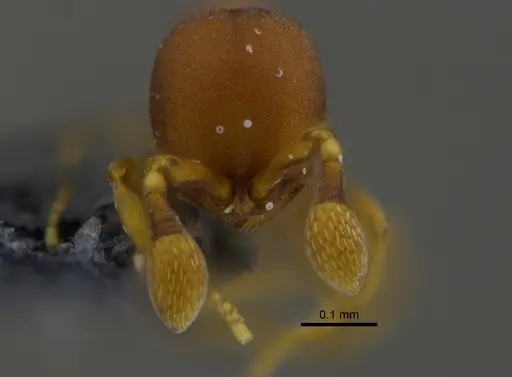
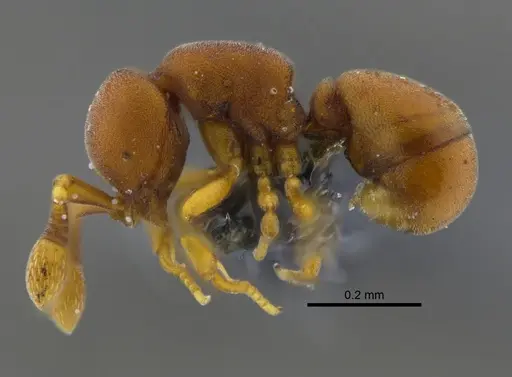
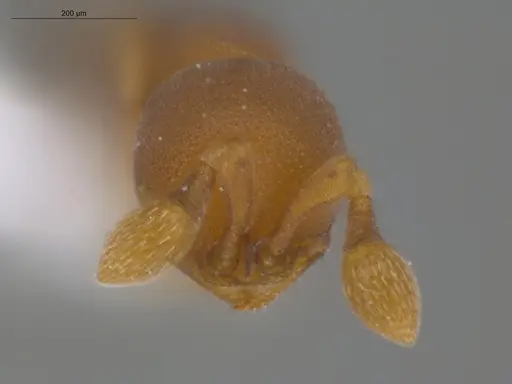
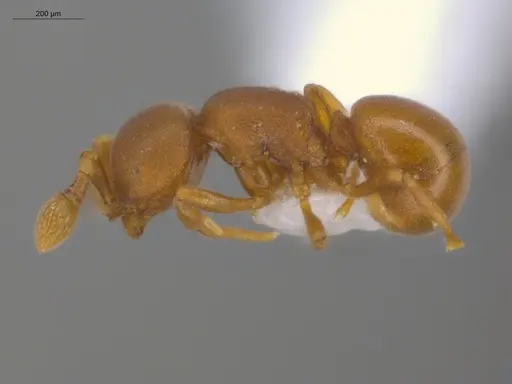
Discothyrea denticulata is an extremely tiny ant, barely visible at just a few millimeters in length. These cryptic predators belong to the Proceratiinae subfamily and are found throughout Central America and northern South America, from Mexico down through Colombia, Ecuador, French Guiana, and into Guyana and Venezuela. They make their home in the leaf litter of tropical rainforests, both wet and dry forests, typically nesting in decaying wood or among decomposing leaves on the forest floor [1][2]. The species is identified by its seven or eight antennal segments, a distinct tooth on the frontal lamella (the plate between the antennae), and a pruinose or dusty-looking body surface [3][4]. Their most distinctive feature is the fourth abdominal segment which projects forward of the body, giving them an unusual appearance [1].
What makes D. denticulata fascinating is their specialized predatory lifestyle. These ants are cryptic poneromorph predators, meaning they hunt in hidden microhabitats within the leaf litter layer. They specialize in hunting arthropod eggs, with a particular preference for spider eggs [5][1]. This specialized diet makes them unique among ant keepers' favorites, they're not your typical sugar-feeding ants. Their tiny size and secretive nature mean they're rarely seen in the wild, often requiring careful sifting of leaf litter to locate [1].
Quick Summary
- Difficulty: Hard
- Origin & Habitat: Central America and northern South America, Belize, Colombia, Costa Rica, Ecuador, French Guiana, Guatemala, Guyana, Honduras, Mexico, Suriname, Venezuela. Found in tropical wet and dry forest leaf litter, typically nesting in decaying wood [1][2][6].
- Colony Type: Colony structure is unconfirmed. Like other Discothyrea, they likely have small colonies, but the exact queen number and social structure has not been documented in scientific literature.
- Size & Growth:
- Queen: Estimated 3-4mm based on genus patterns, no direct species measurement available
- Worker: Extremely small, approximately 2-3mm [1]
- Colony: Likely small, under 100 workers based on typical Discothyrea colony sizes
- Growth: Unknown, likely slow given their cryptic lifestyle and specialized diet
- Development: Estimated 6-10 weeks based on related poneromorph ants in tropical conditions (Development timeline is not directly studied for this species. Estimates based on genus-level patterns for small tropical predators.)
- Antkeeping:
- Temperature: Keep around 24-28°C, they're a tropical species that needs warm, stable conditions. A gentle gradient allowing them to move between warmer and cooler areas is ideal.
- Humidity: High humidity is essential, these are leaf litter ants from tropical forests. Keep the nest substrate consistently moist but not waterlogged. They need damp conditions similar to a forest floor.
- Diapause: Unknown, being a tropical species, they likely do not require a true diapause but may slow down during cooler dry seasons.
- Nesting: Best kept in a naturalistic setup with moist substrate, a Y-tong or plaster nest with a soil chamber works well. They need tight chambers scaled to their tiny size. Provide decaying wood or leaf litter material in the outworld for hunting opportunities.
- Behavior: These ants are extremely cryptic and secretive. Workers are tiny and rarely venture into the open. They are specialized predators focusing on arthropod eggs, particularly spider eggs [1]. They are not aggressive and will avoid confrontation. Escape prevention is critical due to their minute size, they can squeeze through the smallest gaps. They are not suited to observation-focused keeping since they spend most of their time hidden in the substrate.
- Common Issues: their extremely small size makes escape prevention difficult, use fine mesh and tight-fitting lids, specialized diet of spider eggs is difficult to replicate in captivity, live micro-prey is essential, slow growth and secretive nature means colonies develop slowly and are hard to observe, high humidity requirements can lead to mold problems if ventilation is poor, wild-caught colonies may have parasites that are difficult to treat in such small ants
Housing and Nest Setup
Keeping Discothyrea denticulata requires thinking differently than most ant species. These are leaf litter specialists that need a naturalistic setup to thrive. A Y-tong (acrylic) nest with a soil chamber or a plaster/gypsum nest with moisture-retaining chambers works well. The chambers must be tiny and tight-fitting, these ants are only a few millimeters long. In the outworld, add some moist leaf litter, small pieces of decaying wood, or sphagnum moss to give them hunting grounds that mimic their natural environment. Because they're so small, escape prevention must be excellent. Use fine mesh on any ventilation holes and ensure all connections are tight. A small water tube for humidity is essential since they need consistently damp conditions. [1][2]
Feeding and Diet
This is the most challenging aspect of keeping D. denticulata. They are specialized predators of arthropod eggs, particularly spider eggs [1]. In captivity, you'll need to culture small live prey that can fit in their tiny mandibles. Micro springtails, booklice (psocids), and tiny fruit fly larvae are good starting points. You may need to experiment to see what they accept. Unlike many ants, they are unlikely to take sugar water or honey, their metabolism is tuned for protein-rich prey. Feed small prey items every few days, removing any uneaten prey after 24 hours to prevent mold. The key is offering prey that matches their natural diet of tiny arthropod eggs and early-instar larvae.
Temperature and Humidity
As a tropical species from Central and South America, D. denticulata needs warm, humid conditions. Aim for temperatures in the 24-28°C range, stable warmth is more important than exact numbers. A heating cable on one side of the nest can create a gradient, but be careful not to dry out the substrate. Humidity should be high, think damp forest floor. The nest substrate should feel consistently moist but never waterlogged. If you see condensation on the nest walls, that's ideal. Poor humidity will quickly stress these tiny ants. However, you also need some ventilation to prevent mold from becoming a problem. [2][3]
Behavior and Observation
Be prepared for a challenge if you want to observe your colony. Discothyrea denticulata is extremely cryptic, workers spend most of their time hidden in the substrate, hunting through leaf litter and decaying wood. You won't see the constant activity you get from species like Lasius or Camponotus. Workers are not aggressive and will flee rather than fight. They are not suited for ant keepers who want to watch their ants forage in the open. Instead, appreciate them for what they are: specialized predators with a unique ecological niche. Their tiny size and secretive lifestyle make them a species for patient keepers who enjoy the challenge of keeping difficult, specialized species. [5][1]
References

This caresheet is licensed under CC BY-SA 4.0 .
CASENT0178697
View on AntWeb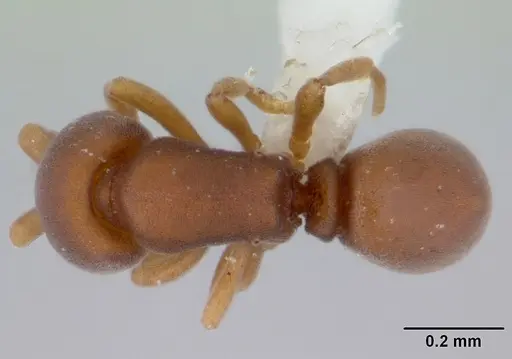
CASENT0653686
View on AntWeb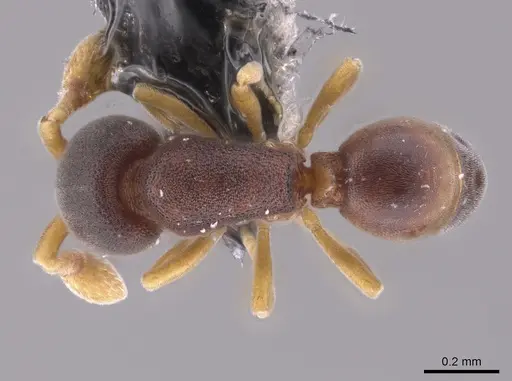
CBUMAGENT41815
View on AntWeb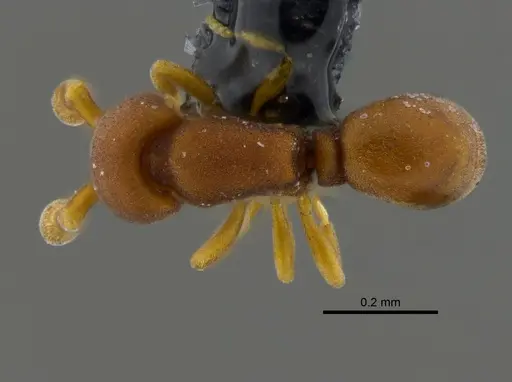
ECOFOG-IT14-1030-41
View on AntWeb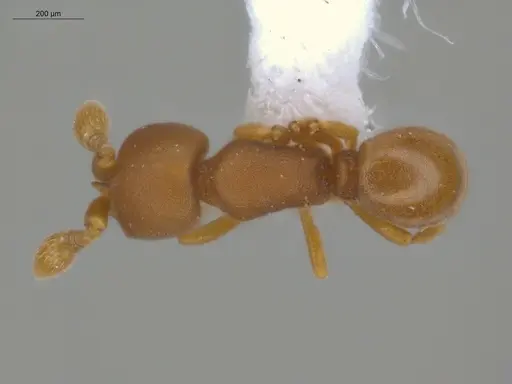
Literature
Loading...Loading products...