

Discothyrea crassicornis
- Scientific Name
- Discothyrea crassicornis
- Tribe
- Proceratiini
- Subfamily
- Proceratiinae
- Author
- Clark, 1926
- Distribution
- Found in 1 countries
Discothyrea crassicornis Overview
Discothyrea crassicornis is an ant species of the genus Discothyrea. It is primarily documented in 1 countries , including Australia. Detailed taxonomic data and occurrence records can be further explored via authoritative databases such as AntWeb or the Global Biodiversity Information Facility (GBIF).
Discothyrea crassicornis
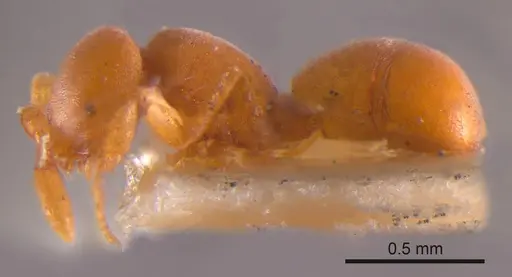
Discothyrea crassicornis is a tiny Australian ant measuring just 1.8mm in worker length [1]. The species has a reddish-testaceous body with yellow mandibles, antennae tips, and legs. Workers have distinctive thick,9-jointed antennae with a large club, small flattened eyes, and a coarsely punctate-reticulate sculpture giving the body a matte appearance. This species is known only from Western Australia, specifically the Darling Range and Dwellingup areas, where specimens have been collected under logs and in pitfall traps [2]. The genus Discothyrea belongs to the Proceratiinae subfamily, which includes some of the smallest ants in the world. These ants are rarely encountered due to their cryptic lifestyle and small size.
Quick Summary
- Difficulty: Unknown, limited data available
- Origin & Habitat: Western Australia (Darling Range, Dwellingup). Found under logs in forested areas [2][1].
- Colony Type: Unknown colony structure, only a few workers have ever been collected. Based on related Discothyrea species, likely single-queen colonies.
- Size & Growth:
- Queen: Undocumented, genus members typically 2-4mm
- Worker: 1.8mm [1]
- Colony: Unknown, likely small colonies based on genus patterns
- Growth: Unknown
- Development: Unknown, estimate 6-10 weeks based on related Proceratiinae (No direct development data exists for this species. Estimates based on genus-level patterns for similar tiny ants.)
- Antkeeping:
- Temperature: Unknown, likely ambient Australian conditions. Based on Western Australia habitat, room temperature (20-24°C) is likely suitable.
- Humidity: Likely requires moderate to high humidity given collection from under logs in forested areas. Keep nest substrate slightly moist.
- Diapause: Unknown for this species. Many Australian ants have reduced winter activity but true hibernation may not occur in their temperate-to-subtropical range.
- Nesting: Natural nesting occurs under logs and in leaf litter. In captivity, a small test tube setup or mini formicarium with tight chambers would work well. Their tiny size means narrow passages are essential.
- Behavior: Behavior is poorly documented. Based on genus patterns, these are likely cryptic, slow-moving ants that forage individually for small prey. Their small size and lack of potent stingers means they pose no danger to keepers. Escape prevention is critical given their tiny 1.8mm size, they can squeeze through remarkably small gaps.
- Common Issues: tiny size makes escape likely without fine mesh barriers, very limited data means care is based on genus assumptions rather than species-specific research, wild-caught colonies may be nearly impossible to find given their rarity, slow growth may frustrate keepers expecting visible progress, moisture requirements are unclear, risk of both drying out and flooding
Discovery and Rarity
Discothyrea crassicornis is one of the rarest Australian ants in the hobby. The species was originally described by Clark in 1926 from just two workers collected in Manjimup, Western Australia. Since then, only a single additional worker has been documented, caught in a pitfall trap at Dwellingup [2]. This means the species has been encountered only a handful of times in nearly a century of ant research. For antkeepers, this translates to an almost complete lack of captive husbandry information. What we know about keeping Discothyrea comes entirely from genus-level assumptions and limited observations of related species. If you obtain this species, you are essentially pioneering its captive care.
Identification and Appearance
Workers reach just 1.8mm in length, making them among the smaller ants you might encounter [1]. The body is a reddish-testaceous color, while the mandibles, antennae tips, and legs are distinctly yellow. The most striking feature is the extremely thick 9-jointed antennae with a pronounced club, the antennae are described as 'very thick' in the original description. The head is longer than broad, broader at the back than the front, with small flattened eyes placed slightly ahead of the midline. The entire body has a distinctive densely punctate-reticulate sculpture, giving it an opaque matte finish. Short whitish hairs and fine pubescence are present across the body, with the pubescence longest on the gaster (abdomen).
Housing and Escape Prevention
Given their tiny 1.8mm size, escape prevention is the most critical aspect of housing these ants. Standard test tube setups may work, but you must ensure the cotton is packed tightly and consider adding a fluon barrier to the rim. Any gap larger than a millimeter is a potential escape route. For nesting, provide small chambers scaled to their diminutive size, what would be a cozy tunnel for a Lasius colony would be a cavernous space for Discothyrea. A small acrylic nest or plaster formicarium with tight chambers works better than larger setups. Keep the nest in a quiet, low-traffic area as these are cryptic ants that prefer minimal disturbance.
Feeding and Diet
Diet for Discothyrea crassicornis must be inferred from genus behavior. Like other Proceratiinae, they are likely predatory on tiny arthropods such as springtails, mites, and small insects. Their small size means prey items should be appropriately sized, fruit flies, pinhead crickets, and small mealworms are likely too large. Live springtails or fruit fly pieces are probably more suitable. Sugar sources may be accepted but are not a primary food source for these tiny predators. Offer small protein items every few days and remove uneaten prey within 24 hours to prevent mold.
Temperature and Humidity
No specific temperature or humidity data exists for this species. The Western Australian habitat suggests they tolerate a range from cool to warm, roughly 18-26°C. Room temperature (around 22°C) is a safe starting point. For humidity, their collection from under logs suggests they prefer moist conditions, keep the nest substrate slightly damp but not waterlogged. A small water reservoir in the test tube setup maintains humidity. Avoid placing the nest near heating elements that could dry out the substrate quickly. [2]
Colony Development Expectations
Based on genus patterns, expect very slow colony growth. The first workers (nanitics) may take 6-10 weeks to develop from egg to adult at optimal temperature, but this is purely an estimate. Colonies will likely remain small, perhaps only a few dozen to perhaps a hundred workers at maturity. This slow growth, combined with the species' extreme rarity, makes Discothyrea crassicornis a species for patient, experienced antkeepers who understand that progress will be measured in months and years, not weeks. Do not expect the rapid growth seen in species like Lasius or Camponotus.
Frequently Asked Questions
How long does it take for Discothyrea crassicornis to produce first workers?
The egg-to-worker timeline is unconfirmed for this species. Based on related Proceratiinae, estimate 6-10 weeks at room temperature. This is a rough guess, actual development time is unknown.
Can I keep multiple queens together in one setup?
Colony structure is unconfirmed for this species. Combining unrelated queens is not recommended since no research documents whether they tolerate multi-queen arrangements.
What do Discothyrea crassicornis ants eat?
Based on genus patterns, they are likely predatory on tiny arthropods. Offer small live prey like springtails, fruit fly parts, or other micro-arthropods. Sugar water may be accepted occasionally but is not a primary food source.
Do Discothyrea crassicornis ants sting?
Their tiny 1.8mm size means any sting would be negligible to humans. They are not considered dangerous and pose no threat to keepers.
Are Discothyrea crassicornis good for beginners?
No. This species has almost no captive husbandry data, and their tiny size makes them challenging to house and feed. They are recommended only for experienced antkeepers comfortable with species that require inference-based care.
What temperature should I keep Discothyrea crassicornis at?
No specific data exists. Room temperature (around 20-24°C) is a safe starting point based on their Western Australian habitat. Avoid temperature extremes in either direction.
How big do Discothyrea crassicornis colonies get?
Colony size is unknown but likely small, probably under 100 workers at maturity based on genus patterns. Expect slow growth over many months.
Do they need hibernation or diapause?
Diapause requirements are unconfirmed. Western Australia has mild winters, so true hibernation may not be necessary. If kept in a temperature-controlled environment, maintaining stable room temperature year-round is likely fine.
Why are my Discothyrea crassicornis dying?
Without species-specific data, causes are speculative. Common issues include: escape through tiny gaps, prey items too large, substrate too dry or too wet, and stress from disturbance. Ensure excellent escape prevention and appropriately sized prey.
When should I move them to a formicarium?
Given their tiny size and likely small colony size, keeping them in a test tube setup long-term is perfectly acceptable. Only consider moving if the colony grows significantly and the test tube becomes crowded, but expect growth to be very slow.
References

This caresheet is licensed under CC BY-SA 4.0 .
ANTWEB1008163
View on AntWeb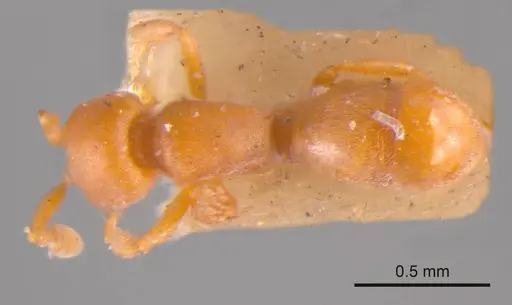
Literature
Loading...Loading products...