

Dinoponera nicinha
- Scientific Name
- Dinoponera nicinha
- Tribe
- Ponerini
- Subfamily
- Ponerinae
- Author
- Dias & Lattke, 2021
- Distribution
- Found in 1 countries
Dinoponera nicinha Overview
Dinoponera nicinha is an ant species of the genus Dinoponera. It is primarily documented in 1 countries , including Brazil. Detailed taxonomic data and occurrence records can be further explored via authoritative databases such as AntWeb or the Global Biodiversity Information Facility (GBIF).
Dinoponera nicinha
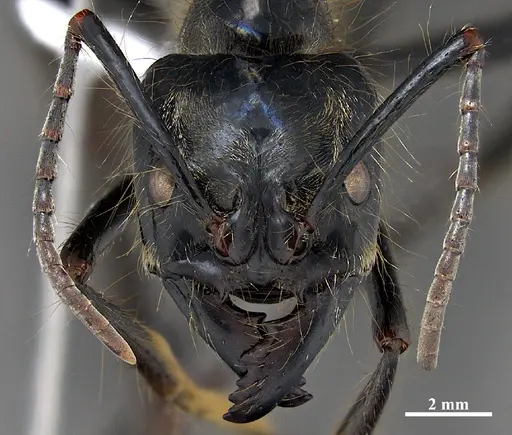
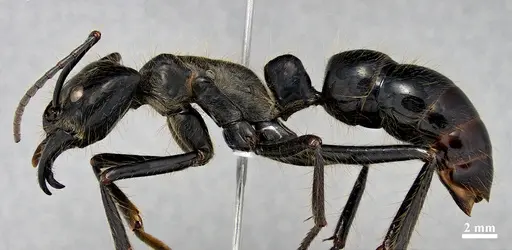
Dinoponera nicinha is a newly described giant ant species from the Brazilian Amazon basin, discovered and named in 2021. Workers are impressively large, measuring 28-32mm in total body length, making them one of the larger ant species in the region. They have a robust, dark brown to black body covered in golden hairs, with the abdominal segment showing a distinctive bluish iridescence. This species is only known from the Brazilian states of Amazonas and Rondônia, where it inhabits tropical forest environments with high rainfall and dense tree coverage [1]. The species was named in memory of Nicinha de Souza Guimarães, an environmental and human rights activist from Rondônia who was murdered in 2016 [1].
Quick Summary
- Difficulty: Medium
- Origin & Habitat: Brazil (Amazonas and Rondônia states), tropical rainforest environments with high rainfall and dense medium to large tree coverage, areas with maximum 6 months drought tolerance [1]
- Colony Type: Unconfirmed colony structure, this is a newly described species with limited biological studies. Based on genus patterns, likely single-queen colonies.
- Size & Growth:
- Queen: Likely 30mm+ based on worker size (workers are 28.86-32.51mm), estimated from genus
- Worker: 28.86-32.51mm [1]
- Colony: Unknown, no colony size data available for this species
- Growth: Unknown, no development studies available
- Development: Unknown, no direct measurements. Based on similar large Ponerinae, estimate 8-12 weeks at optimal temperature. (Estimated from genus-level data for large tropical ponerines. This is a rough estimate as species-specific data is not available.)
- Antkeeping:
- Temperature: Keep at 24-28°C, they come from tropical Amazon forest environments with year-round warmth [1]. A slight gradient allows them to choose their preferred temperature.
- Humidity: High humidity required, aim for 70-85%. These ants live in wet tropical forests with frequent rainfall. Keep the nest substrate consistently moist but not waterlogged.
- Diapause: Unlikely, as a tropical species from the Amazon basin, they probably do not require a winter rest period. However, slight seasonal slowing during dry periods may occur.
- Nesting: In captivity, they do well in spacious nests with moist substrate. Based on their forest floor habitat, they likely nest in soil or rotting wood. Y-tong (AAC) nests or large plaster nests with multiple chambers work well. They need room to move and forage.
- Behavior: Based on genus behavior, these are active ground-foraging ants, likely predatory on other invertebrates. They are large and robust, capable of defending themselves. They probably forage individually or in small groups on the forest floor. Escape prevention is important due to their size and strength, they can squeeze through moderately sized gaps but are not tiny escape artists. They are likely moderately aggressive when defending their nest.
- Common Issues: newly described species means limited care information, much is inferred from genus, lack of documented breeding in captivity makes colony establishment uncertain, large size requires spacious enclosures which can be expensive, high humidity needs can lead to mold problems if ventilation is poor, prey acceptance may be selective, may require live food initially
Housing and Nest Setup
Dinoponera nicinha requires spacious housing due to their large size. A Y-tong (AAC) nest with large chambers or a custom acrylic nest works well. The nest should have multiple connected chambers to allow the colony to expand. Because they come from forest floor environments, keep the nest substrate consistently moist, think damp earth, not soaking wet. A layer of moist coconut fiber or soil works as substrate. Provide an outworld area for foraging that is at least as large as the nest itself. Use a water moat or fluon barrier around the outworld to prevent escapes, these ants are strong and can climb smooth surfaces. [1]
Feeding and Diet
Based on genus behavior, Dinoponera nicinha is likely predatory, hunting insects and other small invertebrates on the forest floor. Offer a varied diet including live insects like crickets, mealworms, and roaches. Prey should be appropriately sized, these are large ants that can handle substantial prey. It is unknown if they accept sugar sources, but many Ponerinae do not strongly prefer nectar. Offer sugar water or honey occasionally, but do not rely on it as a primary food source. Feed protein prey 2-3 times per week, adjusting based on colony size and consumption.
Temperature and Humidity
Maintain temperatures between 24-28°C. These ants come from the Brazilian Amazon where temperatures are warm year-round. A heating cable on one side of the nest can create a temperature gradient, but ensure they can move to cooler areas if needed. Humidity should be high, 70-85% relative humidity. The nest substrate should feel damp to the touch. Mist the nest regularly and use a water reservoir in the outworld to help maintain humidity. Good ventilation is essential to prevent mold while maintaining moisture levels. [1]
Seasonal Care
As a tropical species from the Amazon basin, Dinoponera nicinha likely does not require hibernation. In their native habitat, temperatures remain warm year-round with seasonal rainfall patterns. You may observe reduced activity during the dry season in captivity, but this is not a true diapause. Maintain consistent temperature and humidity year-round. The species has been found in areas that experience up to 6 months of drought tolerance [1], so they can handle brief dry periods, but consistently dry conditions should be avoided.
Behavior and Handling
Dinoponera ants are ground-dwelling predators and can deliver a painful bite if threatened. They are not aggressive toward keepers but will defend their nest if disturbed. When working with them, move slowly and avoid cornering them. They are active foragers and will hunt prey in the outworld. Workers are large and robust, you may observe them carrying prey back to the nest. They likely establish defined foraging trails. Colonies are probably relatively slow-growing compared to many common ant species.
Frequently Asked Questions
How long does it take for Dinoponera nicinha to produce first workers?
The egg-to-worker timeline is unconfirmed for this newly described species. Based on similar large Ponerinae ants, estimate 8-12 weeks at optimal temperature (24-28°C). This is a rough estimate as species-specific development data does not exist yet.
Can I keep Dinoponera nicinha in a test tube?
No, test tubes are too small for this species. Adults reach nearly 30mm in length and require spacious housing. Use a Y-tong (AAC) nest with large chambers, a custom acrylic nest, or a naturalistic setup with ample floor space. The outworld should be proportionally large.
What do Dinoponera nicinha eat?
Based on genus behavior, they are predatory ants that hunt insects and other small invertebrates. Feed live prey like crickets, mealworms, and appropriately sized roaches. It is unknown if they accept sugar sources, offer honey or sugar water occasionally but do not rely on it as a primary food source.
Are Dinoponera nicinha good for beginners?
This species is not recommended for beginners. It was only described in 2021,so there is limited captive care information. They require high humidity, warm temperatures, and spacious housing. Additionally, they may be difficult to acquire as they are newly described and rarely available in the antkeeping hobby.
How big do Dinoponera nicinha colonies get?
Colony size is unknown for this species, no colony size data has been published. Based on the genus, colonies likely reach several hundred workers over several years. They are probably slower-growing than many common ant species.
Do Dinoponera nicinha need hibernation?
No, hibernation is not required. As a tropical species from the Brazilian Amazon, they are adapted to year-round warm temperatures. Maintain temperatures of 24-28°C consistently throughout the year.
Can I keep multiple Dinoponera nicinha queens together?
Colony structure is unconfirmed for this species. Based on genus patterns, they likely form single-queen colonies. Combining unrelated queens has not been documented and is not recommended. If you obtain multiple foundress queens, house them separately.
Why is my Dinoponera nicinha colony declining?
Several factors could cause decline: low humidity (they need 70-85%), temperatures outside 24-28°C, insufficient protein prey, or mold from poor ventilation. Also ensure they are not being disturbed frequently, these ants prefer stable, quiet environments. As this is a newly described species with limited care data, troubleshooting may require experimentation.
Where is Dinoponera nicinha found in the wild?
This species is only known from the Brazilian states of Amazonas and Rondônia, specifically around Manaus, Lábrea, Humaitá, Porto Velho, Ariquemes, and Ji-Paraná. They inhabit tropical forest environments with high rainfall and dense tree coverage [1].
References

This caresheet is licensed under CC BY-SA 4.0 .
DZUP549810
View on AntWeb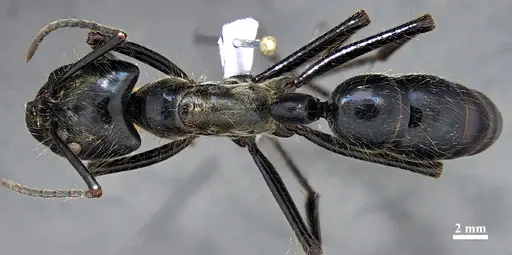
Literature
Loading...Loading products...