

Dilobocondyla rufida
- Scientific Name
- Dilobocondyla rufida
- Tribe
- Crematogastrini
- Subfamily
- Myrmicinae
- Author
- Chen <i>et al.</i>, 2019
- Distribution
- Found in 1 countries
Dilobocondyla rufida Overview
Dilobocondyla rufida is an ant species of the genus Dilobocondyla. It is primarily documented in 1 countries , including Viet Nam. Detailed taxonomic data and occurrence records can be further explored via authoritative databases such as AntWeb or the Global Biodiversity Information Facility (GBIF).
Dilobocondyla rufida
Dilobocondyla rufida is a small to medium-sized Myrmicine ant recently described from Guangxi, China in 2019. Workers measure around 5.3mm and queens reach approximately 7.9mm, making them moderately sized among tropical ants. The species gets its name from its striking bicolor appearance, the head, mesosoma, petiole, and postpetiole are jet black while the gaster (abdomen) is a distinctive reddish brown, creating a sharp contrast that makes them visually striking [1][2]. They belong to the 'bicolor' group within the genus Dilobocondyla, which contains species where the gaster is lighter than the front parts of the body [3][4]. This is a newly described species with limited documented information, meaning much of their biology in captivity remains to be observed and understood by keepers.
Quick Summary
- Difficulty: Unknown, estimated Medium
- Origin & Habitat: Guangxi, China, specifically Fulong in Fangchenggang at approximately 510m elevation. The type series was collected nesting in a small dead twig of Rhododendron henryi, indicating they are twig-nesting ants that prefer humid, shaded microhabitats in subtropical mountain forest areas [5][6].
- Colony Type: Single-queen colonies (monogyne) confirmed from the type series, one dealate queen was collected with the holotype worker from the same colony [6]. Colony structure beyond this is unconfirmed, as this is a newly described species with no published colony size data.
- Colony: Monogyne
- Size & Growth:
- Queen: 7.88mm (paratype gyne measurement) [7]
- Worker: 5.3mm (holotype worker measurement) [1]
- Colony: Unknown, no colony size data published [8]
- Growth: Unknown, no development data available
- Development: Unconfirmed, no direct observations. Based on typical Myrmicinae patterns from similar subtropical species, estimate 6-10 weeks at optimal temperature. (This is a newly described species (2019) with no published development data. Estimates are based on genus-level patterns and should be treated as starting points for observation.)
- Antkeeping:
- Temperature: Inferred: Based on their subtropical origin in Guangxi (around 21.82°N), they likely prefer warm conditions. Start around 22-26°C and observe colony activity. If workers cluster near heat, increase slightly, if they avoid heated areas, reduce temperature. Avoid temperatures below 18°C or above 30°C until their preferences are better understood.
- Humidity: Inferred: As twig-nesting ants from humid subtropical forest, they likely need moderate to high humidity. Keep nest substrate consistently moist but not waterlogged, with some slightly drier areas available. Target roughly 60-80% humidity, think damp forest floor conditions.
- Diapause: Unknown, no published data on overwintering requirements. Guangxi has mild winters, so they may not require a true diapause. Consider a cool period (15-18°C) during winter months rather than full hibernation, and observe colony behavior.
- Nesting: Natural nesting: Small dead twigs and branches [5]. Captive recommendations: Y-tong (AAC) nests or plaster nests with narrow chambers scaled to their size work well. Avoid large, open spaces, they prefer tight, enclosed spaces similar to their natural twig nests. Test tubes can work for founding colonies but may need to be replaced with more appropriate housing as the colony grows.
- Behavior: Temperament: Unknown, no documented observations of aggression or defensive behavior. Based on typical Myrmicinae patterns, they are likely defensive if provoked but not particularly aggressive toward keepers. Escape risk: Moderate, workers at 5.3mm are not tiny but can still squeeze through small gaps. Use standard escape prevention (Fluon on container edges, tight-fitting lids). Foraging: Unknown, no published diet or foraging observations. As Myrmicinae, they likely are omnivorous, accepting both sugar sources and protein, but this needs confirmation through keeper observation.
- Common Issues: lack of published care information means keepers must experiment to learn their preferences, newly described species (2019) has no established husbandry protocols in the antkeeping hobby, colony growth rate is unknown, making it difficult to assess whether development is normal, wild-caught colonies may have limited genetic diversity if only one population is known, temperature and humidity requirements are inferred, not confirmed, keepers should observe and adjust
Appearance and Identification
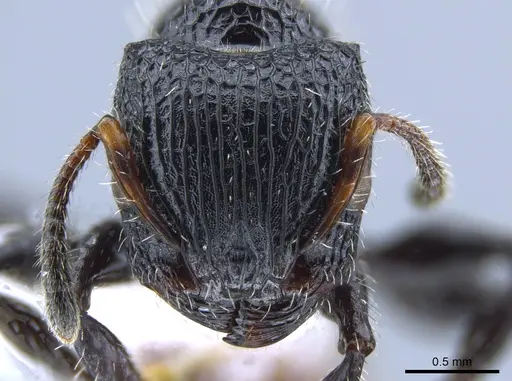
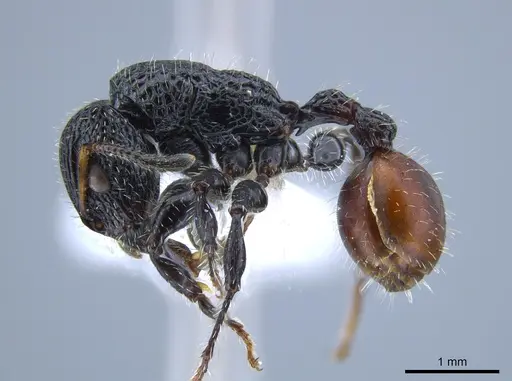
Dilobocondyla rufida workers are distinctive-looking ants with their sharp color contrast. The head, mesosoma (middle body section), petiole, and postpetiole are jet black, while the gaster (abdomen) is a reddish brown color, this is what the species name 'rufida' refers to, meaning 'reddish' [1][2]. Workers measure approximately 5.3mm, making them moderately sized among Myrmicine ants. They have a nearly rectangular head that is slightly longer than wide, with large convex eyes and 12-segmented antennae ending in a 3-segmented club [2][6]. The body is covered in abundant erect to suberect hairs, giving them a somewhat fuzzy appearance [9]. Queens are larger at about 7.9mm and have three ocelli (small eyes on top of the head) in addition to their regular compound eyes [10]. The species can be distinguished from related Dilobocondyla by its black mesosoma, petiole, and postpetiole combined with the reddish gaster, this places it in the 'bicolor' group within the genus [3][4].
Natural Habitat and Distribution
This species is currently known only from a single location in southern China, Fulong in Fangchenggang, Guangxi Province, at approximately 510 meters elevation [6]. The coordinates are around 21.82°N,107.95°E, placing them in a subtropical to tropical mountain forest environment. The type series was found nesting inside a small dead twig of Rhododendron henryi, a common mountain rhododendron species [5]. This indicates they are twig-nesting ants that prefer humid, shaded microhabitats within forest understories. The region experiences mild winters with minimal frost, though temperatures can drop during winter months. Their limited known distribution suggests they may have a narrow ecological niche or may simply be under-sampled, as many tropical ants have larger ranges than their type localities suggest.
Nesting Preferences
In their natural habitat, Dilobocondyla rufida nests in small dead twigs and branches, as evidenced by the type series collection from a Rhododendron twig [5]. This makes them part of a group of ants that prefer pre-formed cavities in wood rather than excavating their own nests in soil. For captive care, this translates to nests that provide tight, enclosed spaces scaled to their body size. Y-tong (acrylic) nests or plaster nests with narrow chambers work well, avoid large, open chambers that don't mimic their natural twig environment. Test tubes can work for founding colonies, but the colony will likely need to be moved to more appropriate housing as it grows. The nest should have areas of varying humidity, as twig-nesting ants often position themselves in different microclimates within their nests. Ensure good ventilation while maintaining humidity, stagnant air can lead to mold problems.
Feeding and Diet
No published information exists on the natural diet of Dilobocondyla rufida. As Myrmicinae ants, they likely are omnivorous, accepting both sugar sources (honey water, sugar water, nectar) and protein (insects, other small arthropods). However, this is an inference from related species rather than confirmed behavior for this specific species. Keepers should experiment with different food types and observe what the colony accepts and prefers. Start with standard ant foods: a constant sugar source (honey or sugar water) and protein offerings (fruit flies, small crickets, mealworms) offered a few times per week. Remove uneaten food after 24-48 hours to prevent mold. Since this is a newly kept species, keepers are essentially pioneering their husbandry and should document what foods are accepted to build knowledge for the antkeeping community.
Temperature and Seasonal Care
With their origin in subtropical southern China (around 21.82°N), Dilobocondyla rufida likely prefers warm, stable conditions. Based on their geographic origin, aim for temperatures in the 22-26°C range. Create a gentle temperature gradient within the setup so ants can choose their preferred microclimate, this is especially important given our limited knowledge of their exact preferences. Use a heating cable on one side of the nest if room temperature falls below 22°C, placing it on top of the nest to avoid drying out the substrate. Regarding winter care, no published data exists. The region experiences mild winters, so they may not require a true hibernation diapause. Consider providing a cooler period (15-18°C) during winter months rather than full hibernation, and observe whether the colony's activity decreases. If the colony remains active at room temperature year-round, they may not need special winter treatment.
Challenges and Considerations for Keepers
Dilobocondyla rufida presents unique challenges as a newly described species (2019) with virtually no established husbandry protocols in the antkeeping hobby. Unlike more commonly kept species, there are no accumulated keeper experiences to draw upon, meaning you are essentially pioneering their care. This requires patience, careful observation, and a willingness to experiment. Start with reasonable assumptions based on related species (subtropical, twig-nesting, omnivorous Myrmicinae) and adjust based on colony behavior. Monitor where workers position themselves in temperature and humidity gradients, they will seek out conditions they prefer. Colony growth rate is unknown, so don't be alarmed if development seems slow compared to better-studied species. Given their limited known distribution in the wild, consider whether wild collection is ethical or practical, and be aware that captive breeding may be the primary source for future antkeeping colonies.
Frequently Asked Questions
How long does it take for Dilobocondyla rufida to develop from egg to worker?
This is unconfirmed, no published development data exists for this species. Based on typical Myrmicinae patterns from similar subtropical species, estimate 6-10 weeks at optimal temperature (around 24-26°C). This is an educated guess, not a confirmed timeline. Keepers should document their observations to build the first dataset for this species.
What do Dilobocondyla rufida ants eat?
No published diet information exists for this species. As Myrmicinae, they likely accept both sugar sources and protein. Offer honey water or sugar water as a constant sugar source, and protein (fruit flies, small crickets, mealworms) 2-3 times per week. Experiment with different foods and observe preferences.
What temperature should I keep Dilobocondyla rufida at?
No confirmed data exists. Based on their subtropical origin in Guangxi, China, start around 22-26°C and observe colony behavior. Create a temperature gradient so workers can choose their preferred spot. Avoid temperatures below 18°C or above 30°C until their preferences are better understood.
What type of nest is best for Dilobocondyla rufida?
Based on their natural nesting in dead twigs, Y-tong (AAC) nests or plaster nests with narrow chambers work well. They prefer tight, enclosed spaces scaled to their size rather than large open chambers. Test tubes can work for founding colonies but may need upgrading as the colony grows.
Are Dilobocondyla rufida ants aggressive?
No published observations exist on their temperament. Based on typical Myrmicinae patterns, they are likely defensive if threatened but not particularly aggressive toward keepers. Their small size (5.3mm workers) means they are not likely to be bold attackers.
How big do Dilobocondyla rufida colonies get?
Unknown, no colony size data has been published. Related Dilobocondyla species may reach several hundred workers, but this is speculative for D. rufida. Keepers should expect moderate colony sizes based on typical twig-nesting Myrmicinae patterns.
Do Dilobocondyla rufida ants need hibernation?
Unknown, no published data on overwintering requirements. Their native region (Guangxi, China) has mild winters, so they may not require a true diapause. Consider a cool period (15-18°C) during winter rather than full hibernation, and observe whether the colony's activity decreases.
Can I keep multiple Dilobocondyla rufida queens together?
Not documented, only single-queen colonies have been observed (monogyne). Combining unrelated queens of this species has not been studied. Given the lack of data, it is not recommended to attempt multi-queen setups.
Do Dilobocondyla rufida ants sting?
No published information exists on whether they possess a functional stinger. As Myrmicinae, they have a stinger but most species are too small to penetrate human skin effectively. Based on their size (5.3mm workers), any sting would likely be mild if present at all.
Is Dilobocondyla rufida suitable for beginners?
This species is not recommended for beginners due to the complete lack of established husbandry information. This is a newly described species (2019) with no accumulated keeper experience. Beginners should start with species that have well-documented care requirements. Keeping D. rufida is best suited for experienced antkeepers who enjoy experimenting and documenting their observations.
References

This caresheet is licensed under CC BY-SA 4.0 .
CASENT0650920
View on AntWeb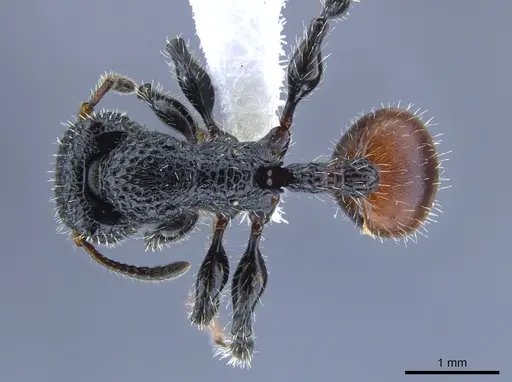
Literature
Loading...Loading products...