

Dilobocondyla gasteroreticulata
- Scientific Name
- Dilobocondyla gasteroreticulata
- Tribe
- Crematogastrini
- Subfamily
- Myrmicinae
- Author
- Bharti & Kumar, 2013
- Distribution
- Found in 2 countries
Dilobocondyla gasteroreticulata Overview
Dilobocondyla gasteroreticulata is an ant species of the genus Dilobocondyla. It is primarily documented in 2 countries , including India, Lao People's Democratic Republic. Detailed taxonomic data and occurrence records can be further explored via authoritative databases such as AntWeb or the Global Biodiversity Information Facility (GBIF).
Dilobocondyla gasteroreticulata
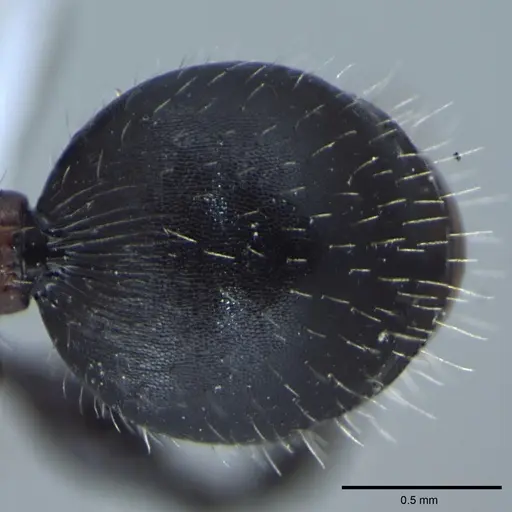
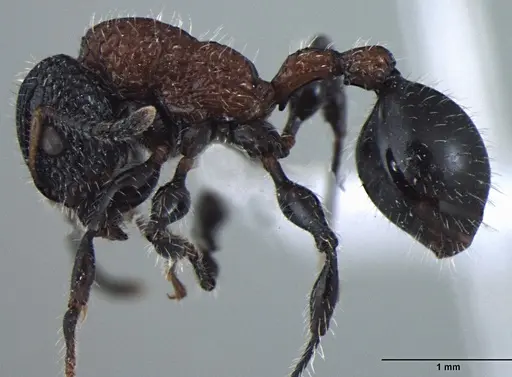
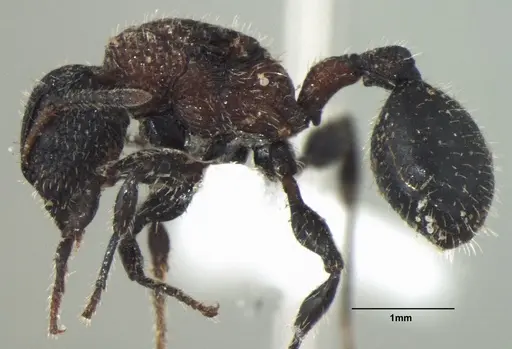
Dilobocondyla gasteroreticulata is a medium-sized myrmicine ant native to the Himalayan region of northern India. Workers measure 5.48-6.03 mm and have a distinctive appearance with a finely reticulated (net-like pattern) gaster that is opaque rather than smooth and shiny, this is the feature that gives the species its name [1]. Their body is mostly dark (blackish head and gaster) with castaneous mesosoma, and they have yellowish-brown antennae, trochanters, and foot segments. The legs are sculptured and subopaque, and the entire body is covered in abundant long whitish hairs [1]. These ants are arboreal, found nesting in trees like Sal and mango trees at elevations of 640-1000m in the foothills of the Himalayas [1][2]. This is a rare species that has only been recorded from a few locations in Uttarakhand, Himachal Pradesh, and Sikkim [3].
Quick Summary
- Difficulty: Unknown, likely Expert
- Origin & Habitat: Northern India (Himalayan foothills), recorded from Uttarakhand (Dehradun,640m), Himachal Pradesh (Baijnath,1000m), and Sikkim at elevations between 640-1000m. Found in semi-arid environments, arboreal nesting in trees (Sal tree, mango tree) [1][3][2].
- Colony Type: Colony structure is unconfirmed, no data on whether they are single-queen (monogyne) or multi-queen (polygyne)
- Size & Growth:
- Queen: 6.65 mm total length [1], estimated from single measured specimen
- Worker: 5.48-6.03 mm total length [1]
- Colony: Unknown, no colony size data available
- Growth: Unknown, no development data available
- Development: Unconfirmed, no direct development data for this species (Based on typical Myrmicinae patterns, expect 6-10 weeks at optimal temperature, but this is an estimate)
- Antkeeping:
- Temperature: Inferred: Based on Himalayan origin at 640-1000m elevation, aim for roughly 20-26°C with a gentle gradient. Adjust based on colony activity, they likely prefer moderate temperatures similar to other north Indian ants.
- Humidity: Inferred: Semi-arid habitat suggests moderate humidity needs. Keep nest substrate slightly moist but allow some drying between waterings. Avoid overly damp conditions.
- Diapause: Unknown, Himalayan origin suggests they may experience seasonal temperature drops, but specific diapause requirements have not been documented [2]
- Nesting: Arboreal species, in captivity they likely need vertical or semi-vertical nest setups that accommodate their tree-dwelling behavior. Y-tong (AAC) nests or plaster nests with climbing structures work well. Avoid purely horizontal soil nests.
- Behavior: Temperament is unconfirmed, no behavioral observations have been documented in scientific literature. Based on morphology (large eyes, slender antennae), they are likely active foragers. Escape risk is moderate given their 5-6mm size, standard barrier methods should suffice, but fine mesh is recommended as a precaution [1].
- Common Issues: this is a newly described and very rare species with almost no captive husbandry information, expect a steep learning curve, arboreal nature means they need vertical space and climbing structures, which differs from typical ground-nesting ant setups, no established feeding protocols, you will need to experiment with protein sources and sugar acceptance, hypothetical diapause requirements are unknown, improper temperature cycling may stress colonies, very limited availability, finding a colony to keep may be impossible outside of scientific collections
Species Discovery and Identification
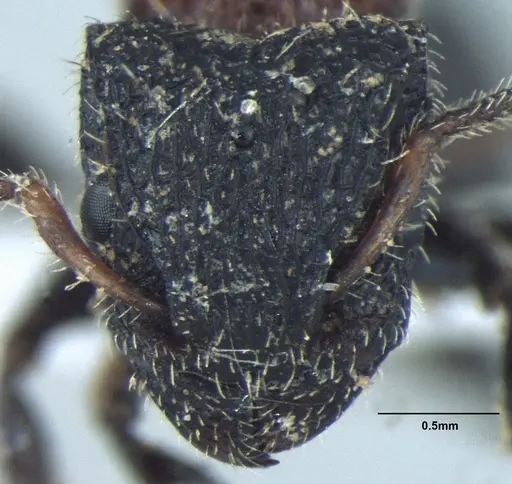
Dilobocondyla gasteroreticulata was formally described in 2013 by Himender Bharti and Rakesh Kumar from specimens collected in the Northwest Shivalik region of India [1]. The species name refers to its most distinctive feature, the gaster (the rear segment of the ant's body) has fine reticulations that make it appear opaque and net-like, unlike its close relative Dilobocondyla fouqueti which has a smooth and shiny gaster [1]. Other distinguishing features include sculptured (rather than shiny) legs, a head with dentate (toothed) posterior corners, and a distinctly triangular frontal area. The type specimens were collected from Sal trees and mango trees at elevations between 640-1000m, confirming this species is arboreal [1]. The species remains poorly known and has only been recorded from a handful of locations in three Indian states.
Natural Habitat and Distribution
This ant is endemic to northern India, specifically the Himalayan foothills region. Confirmed records come from Dehradun in Uttarakhand (640m elevation), Baijnath in Himachal Pradesh (1000m elevation), and Sikkim [3]. The species has been described as uncommon, intensive surveys of the Northwest Shivalik region only recorded it from two habitats [2]. They inhabit semi-arid environments and are arboreal, meaning they live in trees rather than in ground nests. The collection data shows specimens were found on Sal trees (Shorea robusta) and mango trees (Mangifera indica), suggesting they may nest in tree hollows or under bark [1][2]. The elevation range of 640-1000m places them in a subtropical to warm temperate zone in the Himalayan foothills.
Appearance and Morphology
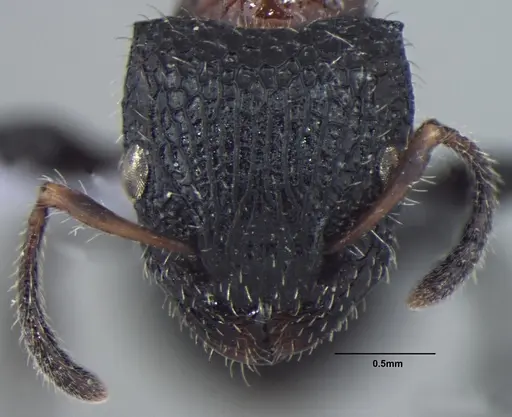
Workers of Dilobocondyla gasteroreticulata are medium-sized ants measuring 5.48-6.03 mm in total length [1]. Their most distinctive feature is the gaster, which is finely and densely reticulate (covered in a net-like pattern) and opaque, rather than smooth and shiny as in related species [1]. The head is roughly as long as broad, with a deeply emarginate (notched) posterior margin and dentate posterior corners. They have 12 strong rugae (ridges) between the frontal carinae at the level of the eyes. The body coloration is distinctive: the mesosoma, petiole, and postpetiole are castaneous (reddish-brown), while the head, gaster, and legs are blackish, with the scape, trochanter, and terminal tarsal segments yellowish-brown [1]. The entire body is covered in abundant long whitish hairs (pilosity). Queens are similar but slightly larger at 6.65 mm, with three ocelli on the head and a black postpetiole [1].
Housing and Nesting in Captivity
Since this is an arboreal species found in trees, captive housing should reflect their natural vertical nesting preferences. A Y-tong (AAC) nest or plaster nest with vertical orientation would be more appropriate than horizontal test tube setups. Include climbing structures like branches, cork, or artificial vines that allow them to move vertically. The nest should have chambers sized appropriately for their 5-6mm worker size. Since they come from semi-arid environments, avoid overly humid conditions, keep the nest substrate slightly moist but allow periods of drying. Ensure good ventilation to prevent mold while maintaining adequate humidity. Given their rarity and the lack of captive husbandry information, starting with a simple vertical setup and observing colony preferences will be important. Escape prevention should use standard barriers appropriate for medium-sized ants. [2]
Feeding and Nutrition
No specific dietary information exists for Dilobocondyla gasteroreticulata. As a myrmicine ant, they likely have a varied diet including protein sources (insects) and carbohydrates (honeydew, nectar). Based on related Dilobocondyla species and typical Myrmicinae behavior, they are probably omnivorous foragers. Start by offering protein sources like small insects (fruit flies, small crickets, mealworms) and sugar sources like honey water or sugar water. Since this species has not been kept in captivity before, you will need to experiment to determine their preferences. Observe feeding behavior and adjust offerings accordingly. Given their arboreal nature in nature, they may be more active foragers than ground-nesting species.
Temperature and Seasonal Care
Based on their collection locations in the Himalayan foothills at 640-1000m elevation, these ants experience moderate temperatures with seasonal variation. A target range of roughly 20-26°C is appropriate as a starting point, with the lower end (around 20-22°C) being safer initially. Use a heating cable on one side of the nest to create a gentle thermal gradient, allowing the ants to self-regulate by moving between warmer and cooler areas. Observe colony activity, if workers cluster near the heated area, you can slightly increase temperature, if they avoid it, reduce heat. The specific diapause (winter rest) requirements are unknown, but given the Himalayan origin, a cool period during winter months is likely beneficial. During winter, reducing temperature to around 15-18°C for 2-3 months may simulate natural seasonal conditions. [2]
Frequently Asked Questions
How long does it take for Dilobocondyla gasteroreticulata to develop from egg to worker?
The egg-to-worker development timeline has not been directly documented for this species. Based on typical Myrmicinae patterns, expect approximately 6-10 weeks at optimal temperature (around 24°C). However, this is an estimate, actual development time may vary and has not been scientifically confirmed for this rare species.
What size nest should I use for Dilobocondyla gasteroreticulata?
Use a nest with chambers sized for medium-sized ants (5-6mm workers). A Y-tong (AAC) nest or plaster formicarium with vertical orientation works well since this is an arboreal species. Include climbing structures like branches or cork to accommodate their tree-dwelling behavior.
Are Dilobocondyla gasteroreticulata ants good for beginners?
No. This species is not recommended for beginners. It is a newly described, very rare species with almost no captive husbandry information available. There are no established care protocols, and finding a colony may be impossible outside of scientific collections. This is a species for experienced antkeepers interested in working with poorly documented species.
Do Dilobocondyla gasteroreticulata ants sting?
Stinging behavior has not been documented for this species. As a Myrmicinae ant, they likely have a stinger, but it is typically too small to penetrate human skin effectively. Handle with standard antkeeping precautions.
What do Dilobocondyla gasteroreticulata ants eat?
Specific dietary preferences are unconfirmed. Based on related Myrmicinae ants, they likely accept protein sources (small insects like fruit flies, small crickets, mealworms) and sugar sources (honey water, sugar water). You will need to experiment to determine acceptance. Offer a variety and observe what the colony prefers.
What temperature do Dilobocondyla gasteroreticulata ants need?
Based on their Himalayan origin at 640-1000m elevation, aim for roughly 20-26°C. Start around 20-22°C and adjust based on colony activity. Use a heating cable on one side of the nest to create a gentle gradient. If workers cluster near heat, increase slightly, if they avoid it, reduce temperature.
How big do Dilobocondyla gasteroreticulata colonies get?
Maximum colony size is unknown, no colony size data has been documented in scientific literature. Related Dilobocondyla species typically form small to moderate colonies, but specific numbers for this species are unavailable.
Can I keep multiple Dilobocondyla gasteroreticulata queens together?
Colony structure (monogyne vs polygyne) has not been documented for this species. The safe approach is to keep a single queen per colony until more information becomes available. Combining unrelated queens is not recommended without evidence they can coexist.
Do Dilobocondyla gasteroreticulata ants need hibernation?
Specific diapause requirements are unknown. However, given their origin in the Himalayan foothills where seasonal temperature drops occur, a cool winter period is likely beneficial. Reduce temperatures to around 15-18°C for 2-3 months during winter to simulate natural seasonal conditions.
References

This caresheet is licensed under CC BY-SA 4.0 .
ANTWEB1008027
View on AntWeb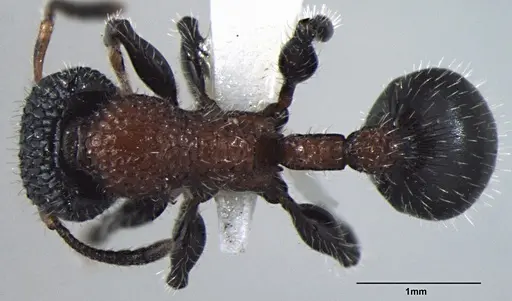
ANTWEB1008028
View on AntWeb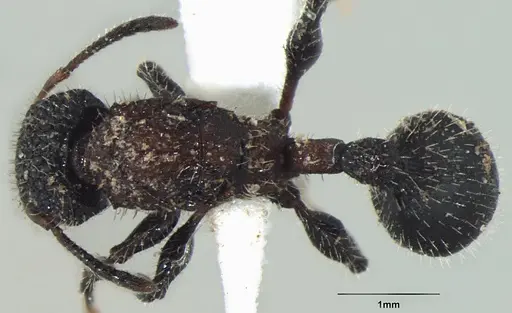
Literature
Loading...Loading products...