

Dilobocondyla borneensis
- Scientific Name
- Dilobocondyla borneensis
- Tribe
- Crematogastrini
- Subfamily
- Myrmicinae
- Author
- Wheeler, 1916
- Distribution
- Found in 1 countries
Dilobocondyla borneensis Overview
Dilobocondyla borneensis is an ant species of the genus Dilobocondyla. It is primarily documented in 1 countries , including Indonesia. Detailed taxonomic data and occurrence records can be further explored via authoritative databases such as AntWeb or the Global Biodiversity Information Facility (GBIF).
Dilobocondyla borneensis
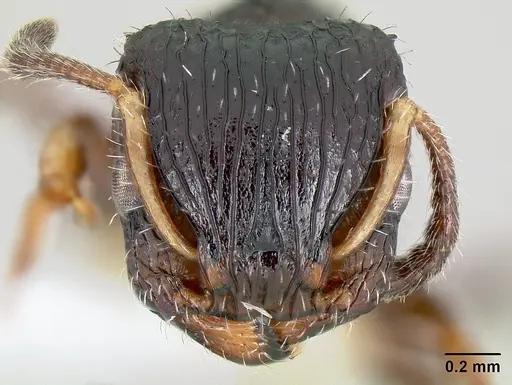
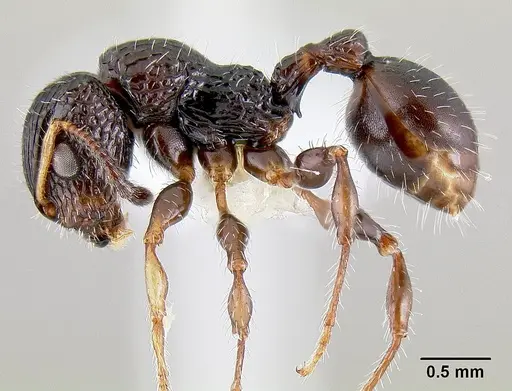
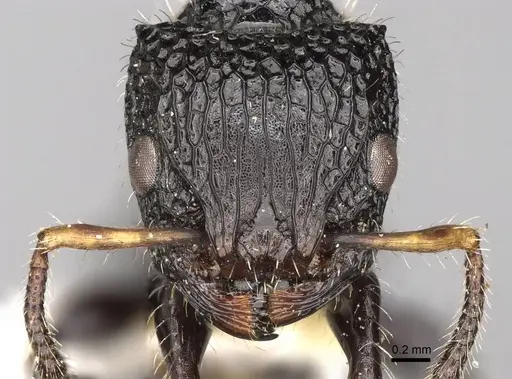
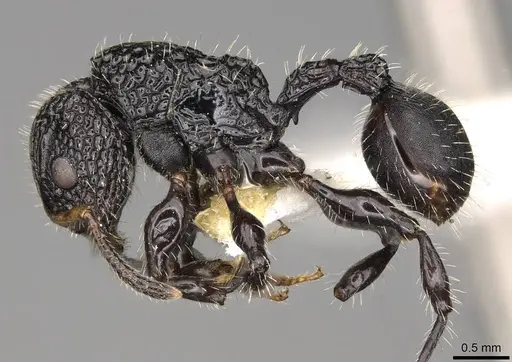
Dilobocondyla borneensis is a rare, small myrmicine ant endemic to Borneo and surrounding regions in the Indomalaya area. Workers are compact ants with distinctive body sculpture, found primarily in the forest canopy of lowland dipterocarp rainforests. This species was originally described by Wheeler in 1916 from Sarawak, Borneo, and remains poorly studied in both the wild and captivity. It belongs to the ant tribe Crematogastrini and is phylogenetically related to Secostruma. The species is known from very few specimens, suggesting it either has highly localized populations or specialized nesting habits that make it difficult to collect. [1][2]
Quick Summary
- Difficulty: Unknown, no captive breeding records exist
- Origin & Habitat: Borneo and surrounding regions in Southeast Asia. Found in the canopy of lowland dipterocarp rainforest, typically at elevations from sea level to mountain areas in Sarawak. [1][2]
- Colony Type: Unconfirmed, colony structure has not been documented in scientific literature
- Size & Growth:
- Queen: Unknown, queen has not been described in scientific literature
- Worker: Unknown, exact measurements not published, but genus members are typically 3-5mm [3]
- Colony: Unknown, only single individuals or small numbers collected in wild (1-5 per sample) [4]
- Growth: Unknown
- Development: Unknown, no development data exists for this species (No captive colonies have been documented. All information is inferred from limited field collections.)
- Antkeeping:
- Temperature: Likely 24-28°C based on lowland tropical rainforest habitat. No direct data available.
- Humidity: High humidity required, typical of Bornean rainforest canopy species (70-85%+)
- Diapause: Unlikely, being a tropical species from near the equator, they probably do not require a diapause period
- Nesting: Likely arboreal or in dead wood/rotting branches in trees. No direct nesting observations exist for this species. Based on canopy collection and related species, they probably nest in elevated locations in decaying wood.
- Behavior: Behavior is unstudied. Based on related Crematogastrini members, they are likely relatively docile and may have generalized foraging habits. No data on sting potency exists, but Myrmicinae ants typically have a functional stinger. Escape risk is moderate given their small size, standard containment practices recommended.
- Common Issues: no captive breeding records exist, this species may not be established in the antkeeping hobby, extremely rare in the wild with very low abundance numbers, finding colony queens is highly unlikely, canopy-dwelling species may have specialized habitat requirements difficult to replicate, no information on founding behavior or colony development timeline, diet preferences are completely unknown
Species Overview and Distribution
Dilobocondyla borneensis is one of the rarest ant species in the Borneo region, known only from a handful of specimens collected over the past century. The species was first described by William Morton Wheeler in 1916 from the Sarawak region of Malaysian Borneo. It is considered a Bornean endemic, meaning it is found nowhere else in the world. The type locality is Mount Bongo in Sarawak, and subsequent records have confirmed its presence in Brunei and Indonesian Borneo. [2][1]
This species has been collected exclusively in lowland dipterocarp forest canopies, suggesting it is strongly associated with the upper forest layers rather than the forest floor. The most recent collection data comes from a 2022 study in Brunei, where researchers used canopy knockdown methods to collect specimens from the forest canopy. This collection technique involves disturbing the canopy foliage to dislodge ants, which indicates the species lives high in the trees rather than on trunks or in ground-level nests. [1]
Taxonomy and Phylogenetic Position
Dilobocondyla borneensis belongs to the subfamily Myrmicinae, which contains the majority of ant species worldwide. Within Myrmicinae, it is placed in the tribe Crematogastrini, a diverse group that includes the genus Crematogaster and several other genera. Phylogenetic analyses using multiple nuclear gene fragments have confirmed its position within this tribe and have also revealed its closest relative: Secostruma, with which it shares a sister relationship supported by 100% bootstrap values in molecular analyses. [5][6]
The genus Dilobocondyla contains several species distributed across Asia and Australasia. D. borneensis was originally described as a distinct species in 1916,though it was later considered synonymous with D. braunsi by Bolton in 1982. However, subsequent taxonomic treatments have maintained it as a valid species. The genus is characterized by workers with distinctive head sculpture and a particular petiole (waist) structure that helps distinguish them from related genera. [2][7]
Field Collection and Abundance
This species is exceptionally rare in scientific collections. The 2020 study on rainforest conversion and ant communities found only 1-5 individuals across numerous sampling sites in various forest types. This extremely low abundance makes it one of the least commonly collected ant species in Borneo. The species appears to be highly localized or has very small colony sizes, as even intensive sampling efforts yield very few specimens. [4]
The canopy-dwelling habit explains part of this rarity, most ant collection methods focus on ground-level foraging, and many canopy species are simply missed by standard surveys. The canopy knockdown method used in the 2022 Brunei study is specifically designed to sample these arboreal species, and even then, D. borneensis appeared only rarely. This suggests the species either has naturally low colony populations or is highly selective about its nesting locations within the canopy. [1][4]
Captive Care Considerations
Dilobocondyla borneensis is not currently established in the antkeeping hobby, and no captive colonies are known to exist. This is primarily due to the species extreme rarity in the wild and the complete lack of information about its queen, colony structure, and basic biology. There are no documented cases of this species being kept successfully in captivity. [3]
For any keeper who might obtain this species, care recommendations must be entirely speculative. Based on its habitat (Bornean lowland rainforest canopy), it would likely require high humidity (70-85%), warm temperatures (24-28°C), and possibly arboreal-style nesting in dead wood or similar elevated structures. The diet is completely unknown but likely follows typical Myrmicinae patterns, a mix of carbohydrates (honeydew, nectar) and protein (small insects). Given the complete absence of captive data, this species cannot be recommended for any keeper at this time. [3]
Frequently Asked Questions
Can I keep Dilobocondyla borneensis as a pet ant?
No, this species is not established in the antkeeping hobby and no captive colonies exist. The species is extremely rare in the wild with only single individuals ever collected, making it essentially unavailable to keepers.
Where does Dilobocondyla borneensis live in the wild?
It is endemic to Borneo and surrounding regions in the Indomalaya area. It lives exclusively in the canopy of lowland dipterocarp rainforests, typically in Sarawak, Brunei, and Indonesian Borneo.
How big are Dilobocondyla borneensis ants?
The exact size has not been documented in scientific literature. Based on the genus, workers are likely in the 3-5mm range. The queen has never been described.
What do Dilobocondyla borneensis ants eat?
Unknown, their diet has never been studied. Based on related Crematogastrini species, they likely feed on honeydew from aphids and scale insects in the canopy, plus small insects for protein.
How do I set up a nest for Dilobocondyla borneensis?
No nest setup information exists. Based on their canopy-dwelling habit, they would likely need an arboreal-style setup with dead wood or similar material, high humidity, and warm temperatures. However, since no captive colonies exist, this is entirely speculative.
Do Dilobocondyla borneensis ants sting?
Likely yes, Myrmicinae ants typically have a functional stinger. However, given their very small size, any sting would likely be negligible to humans.
How many queens does a Dilobocondyla borneensis colony have?
Unknown, the colony structure (monogyne vs polygyne) has never been documented. No queen has ever been scientifically described.
Is Dilobocondyla borneensis endangered?
The conservation status has not been assessed. However, its extremely limited distribution (Borneo only) and rarity in collections suggest it could be vulnerable to habitat loss, especially given its canopy-dwelling habit in lowland forests that face deforestation pressure.
How long does it take for Dilobocondyla borneensis to develop from egg to worker?
Unknown, no development data exists for this species. No captive colonies have ever been documented.
Can I find Dilobocondyla borneensis queens for sale?
Extremely unlikely. This species has never been documented in the antkeeping hobby, and queens have never been scientifically described. No commercial source would exist.
References

This caresheet is licensed under CC BY-SA 4.0 .
CASENT0106130
View on AntWeb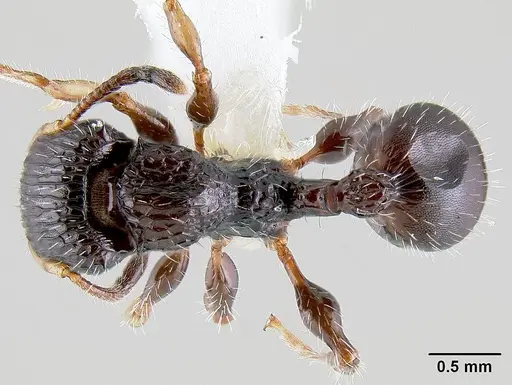
CASENT0914065
View on AntWeb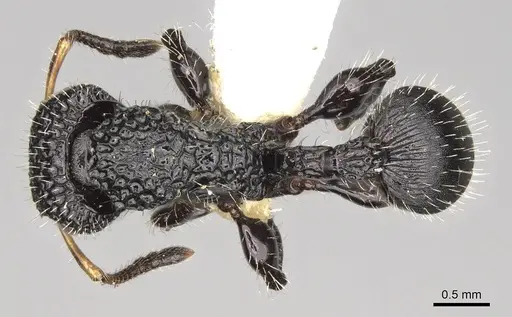
Literature
Loading...Loading products...