

Dicroaspis laevidens
- Scientific Name
- Dicroaspis laevidens
- Tribe
- Crematogastrini
- Subfamily
- Myrmicinae
- Author
- Santschi, 1919
- Distribution
- Found in 2 countries
Dicroaspis laevidens Overview
Dicroaspis laevidens is an ant species of the genus Dicroaspis. It is primarily documented in 2 countries , including Congo, Democratic Republic of the, Tanzania. Detailed taxonomic data and occurrence records can be further explored via authoritative databases such as AntWeb or the Global Biodiversity Information Facility (GBIF).
Dicroaspis laevidens
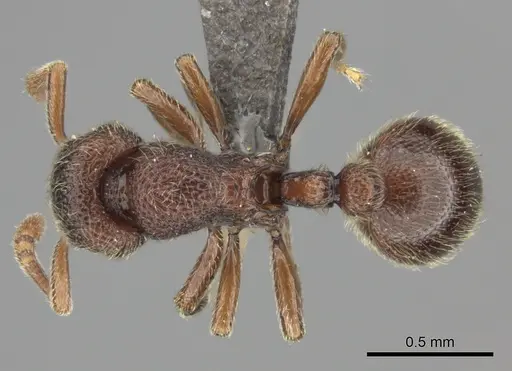
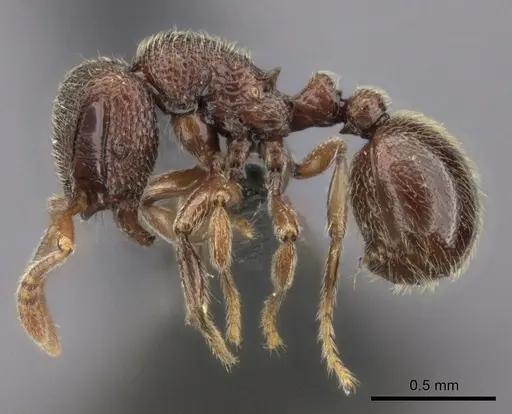
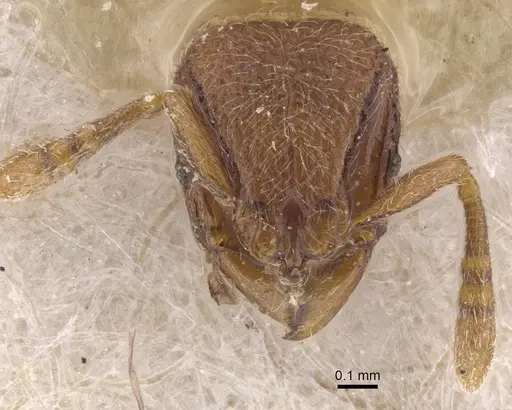
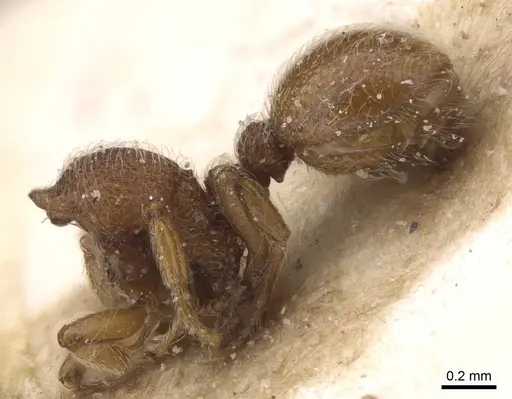
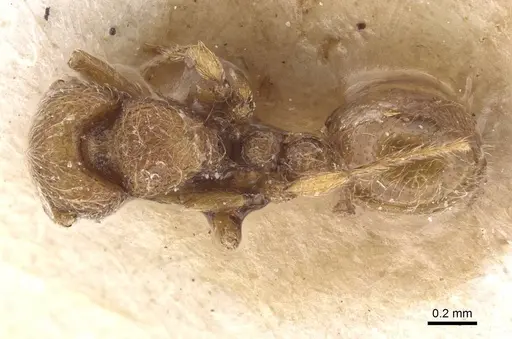
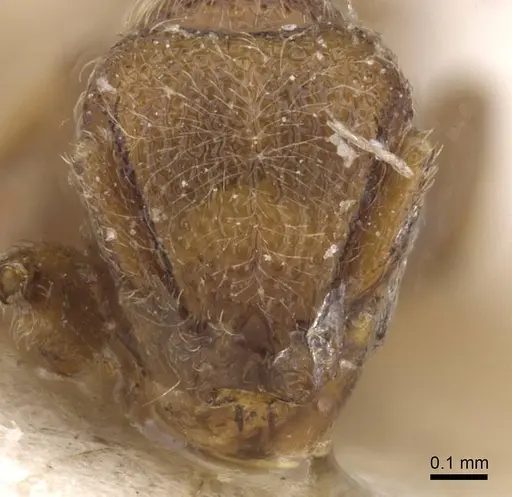
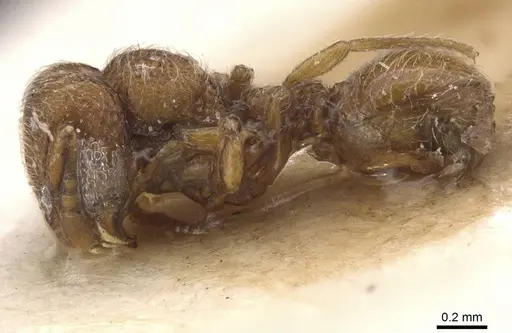
Dicroaspis laevidens is a tiny myrmicine ant measuring just 2.5-2.6mm in total length, found across the Afrotropical region including the Democratic Republic of Congo, Gabon, Tanzania, and Yemen [1][2]. Workers have a more heavily sculptured appearance compared to its close relative Dicroaspis cryptocera, with distinctive low rugae on the promesonotum that form reticular or foveolate spaces, and broad but shallow pits on the first gastral tergite. This species is known only from the worker caste, queens and males have never been described, making captive breeding from scratch essentially impossible for hobbyists. The genus Dicroaspis contains only two species and remains one of the most poorly studied ant groups in Africa.
Quick Summary
- Difficulty: Expert
- Origin & Habitat: Afrotropical region, Democratic Republic of Congo, Gabon, Tanzania, and Yemen. Found in montane forest habitats at elevations of 110m and 640m in Gabon [2]. The type locality is Yambuya in the DRC.
- Colony Type: Unknown, only worker caste has been described. Colony structure (single-queen or multi-queen) has not been documented in scientific literature.
- Size & Growth:
- Queen: Unknown, queens have never been described
- Worker: 2.5-2.6mm total length
- Colony: Unknown, no colony size data available
- Growth: Unknown
- Development: Unknown (No development data exists for this species. Related Crematogastrini species typically require 6-10 weeks for egg-to-worker development at optimal temperatures, but this is a rough estimate with low confidence.)
- Antkeeping:
- Temperature: Unknown, no thermal studies exist. Based on Afrotropical forest ant patterns, likely 22-28°C. Start at room temperature (22-25°C) and observe colony activity.
- Humidity: Unknown, no humidity data available. Based on Gabon montane forest habitat (110-640m elevation), likely requires moderate to high humidity (60-80%) with moist substrate.
- Diapause: Unknown, no seasonal data. Afrotropical ants from montane forests may have reduced activity during dry seasons but true hibernation is unlikely.
- Nesting: Unknown, no natural nesting observations documented. Most Myrmicinae in forest habitats nest in rotting wood, leaf litter, or soil. Given their tiny size, test tube setups with small chambers would be appropriate starting points.
- Behavior: Behavior is completely unstudied. Based on genus placement in Crematogastrini and tiny size, they likely forage in leaf litter and may be cryptic/surface-active. Escape prevention is critical, at 2.5mm, they can squeeze through standard test tube barriers. No data on aggression, sting capability, or foraging patterns exists.
- Common Issues: No documented captive colonies exist, this species has never been kept in captivity, Queens have never been described, making colony founding from wild-caught queens impossible, Tiny size creates extreme escape risk through standard barriers, Complete lack of biological data means all care is experimental, Wild-caught workers likely have short lifespans with no queen to sustain the colony
Why This Species Is Expert-Only
Dicroaspis laevidens is one of the least studied ant species in the world. No scientific paper has ever documented its colony structure, queen biology, founding behavior, diet, temperature preferences, or any aspect of its captive care. The worker caste was described in 1919,and aside from a few distribution records, essentially nothing has been published about its biology in over a century. This means every aspect of keeping them would be experimental guesswork with no foundation to build on. Additionally, queens have never been described, they may not even have been collected by researchers. Without queens, you cannot establish a colony. For these reasons, this species is strictly for advanced antkeepers with research interests who might obtain wild-caught workers for observation, not for anyone seeking a sustainable captive colony.
What We Know About Their Size and Shape
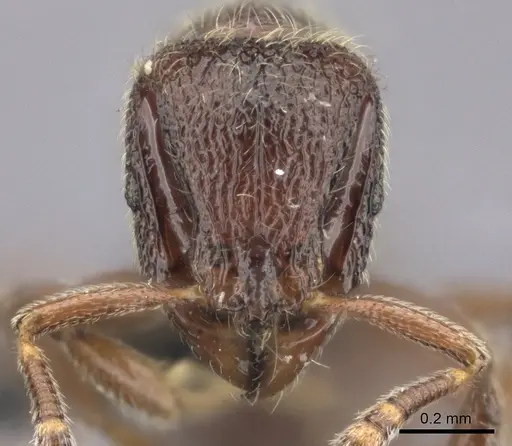
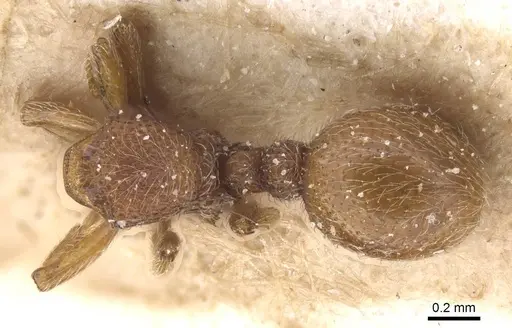
Workers measure just 2.5-2.6mm total length, making them among the smallest ants you could keep. Their head width is 0.62-0.64mm, and their scape (antenna segment) is only 0.44-0.46mm long. They have relatively small eyes with only 3 ommatidia in the longest row, this suggests they may not be highly visual foragers. The most distinctive features are their sculpture: heavily sculptured compared to related species, with low rugae (ridge-like structures) on the promesonotum that form reticular or foveolate (pitted) spaces, and broad shallow pits on the first gastral tergite (the upper surface of the first abdominal segment). This sculpturing is more pronounced than in Dicroaspis cryptocera, the only other species in the genus.
Where They Live in the Wild
Dicroaspis laevidens is found across the Afrotropical region in four countries: Democratic Republic of Congo, Gabon, Tanzania, and Yemen. In Gabon, they have been collected at Monts Doudou at elevations of 110m and 640m above sea level, using leaf litter transects and general collecting methods [2]. The type locality is Yambuya in the DRC, collected in November 1913. The elevation range in Gabon suggests they tolerate both lowland and montane forest conditions. However, no specific habitat details like nesting preferences, forest type, or associated species have been documented.
The Challenge of Keeping Unstudied Species
This species represents a fundamental challenge in antkeeping: how do you care for an ant whose basic biology is completely unknown? Without knowing whether they are monogyne or polygyne, claustral or semi-claustral, predatory or seed-eating, warm-adapted or cool-tolerant, every husbandry decision is pure speculation. For comparison, even the most obscure commonly-kept species have at least some basic biology documented. Here, we have zero data. If you obtain workers (which is itself uncertain since they've rarely been collected), you would need to experiment with feeding various foods, test different temperature and humidity ranges, and observe behavior, but without a queen, the colony cannot be sustained. This species is truly suitable only for professional researchers or extremely advanced hobbyists conducting original biological observation.
Frequently Asked Questions
Can I keep Dicroaspis laevidens in a test tube?
Test tubes could technically house workers, but this species has never been kept in captivity and no one knows if they survive such conditions. Their tiny 2.5mm size means standard test tube setups may work, but escape prevention would be critical. The bigger problem is that without documented queens, you cannot establish a sustainable colony.
How long do Dicroaspis laevidens workers live?
This has never been studied. Without a queen to lay eggs, any workers you might obtain would have limited lifespans, typically a few weeks to months for most Myrmicinae workers. Wild-caught workers are likely already aged.
What do Dicroaspis laevidens eat?
Diet is completely unknown. Based on their placement in the tribe Crematogastrini (which includes Crematogaster and related genera), they may be omnivorous or predatory, but this is pure speculation. No foraging observations or gut content studies exist.
Are Dicroaspis laevidens good for beginners?
Absolutely not. This is one of the most poorly documented ant species in the world. There is no captive care information, queens have never been described, and no one has ever successfully kept a colony. The difficulty rating is Expert, but even experts would be completely guessing at every aspect of care.
Do Dicroaspis laevidens queens exist?
Queens have never been described in scientific literature. The species is known only from worker specimens collected between 1913 and recent surveys. It's possible queens have not been collected, have not been recognized, or may not exist in the typical sense (some Myrmicinae have ergatoid replacement reproductives).
Where can I find Dicroaspis laevidens for sale?
This species is almost certainly not available in the antkeeping hobby. It has never been cultured in captivity, wild populations are poorly documented, and no commercial breeders would have access to queens that have never been described. This species exists in scientific collections only as rare worker specimens.
Do Dicroaspis laevidens sting?
Unknown. Most Myrmicinae have the ability to sting, but whether this species does, and whether the sting is painful to humans, has never been studied. Given their tiny 2.5mm size, any sting would likely be imperceptible to humans.
What temperature should I keep Dicroaspis laevidens at?
No specific temperature data exists. Based on their collection in Gabon at 110-640m elevation in montane forest, they likely prefer temperatures in the 22-28°C range. Starting at room temperature (22-25°C) would be a reasonable experimental baseline, but colony maintenance itself is not currently feasible.
How big do Dicroaspis laevidens colonies get?
Unknown, no colony size data has ever been published. Related Crematogastrini species range from dozens to thousands of workers, but without any field data on this specific species, colony size is entirely speculative.
Can I breed Dicroaspis laevidens in captivity?
Not currently possible. Queens have never been described or collected, so there is no way to establish a breeding colony. Even if workers were obtained, without a queen they cannot produce new brood. This species would require original scientific research to even attempt captive culture.
References

This caresheet is licensed under CC BY-SA 4.0 .
Literature
Loading...Loading products...