

Diacamma pallidum
- Scientific Name
- Diacamma pallidum
- Tribe
- Ponerini
- Subfamily
- Ponerinae
- Author
- Smith, 1858
- Distribution
- Found in 1 countries
Diacamma pallidum Overview
Diacamma pallidum is an ant species of the genus Diacamma. It is primarily documented in 1 countries , including Malaysia. Detailed taxonomic data and occurrence records can be further explored via authoritative databases such as AntWeb or the Global Biodiversity Information Facility (GBIF).
Diacamma pallidum
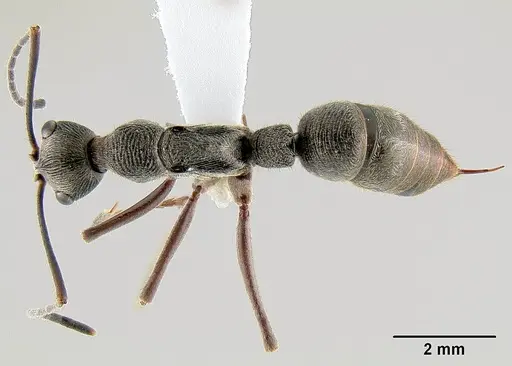
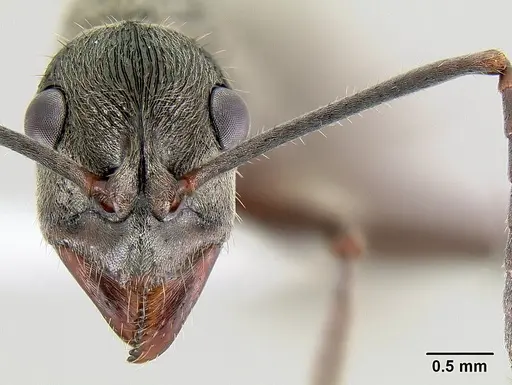
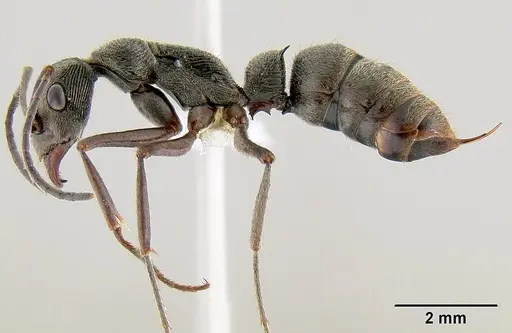
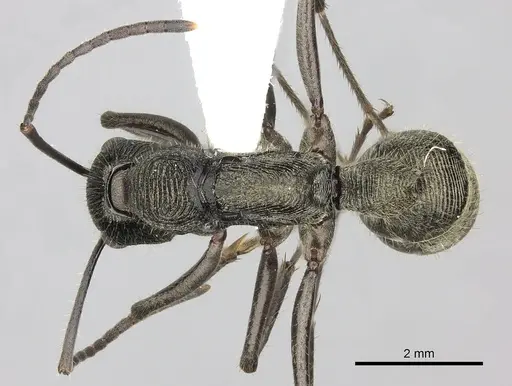
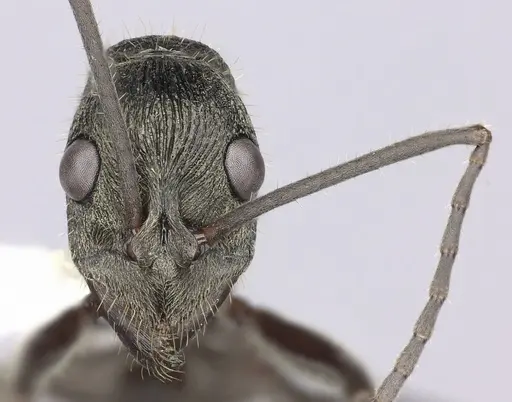
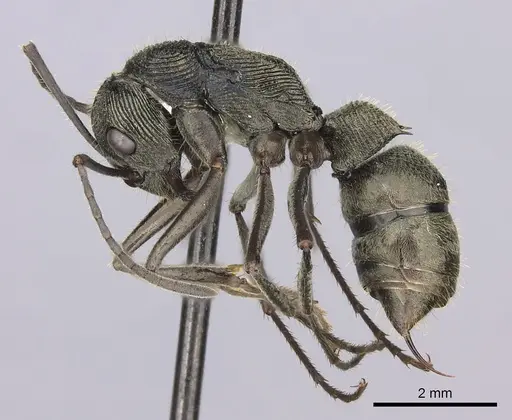
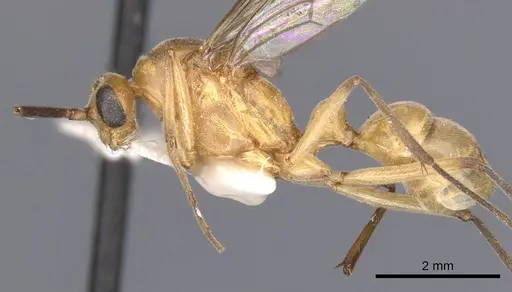
Diacamma pallidum is a small to medium-sized ant belonging to the subfamily Ponerinae. Workers are approximately 6-7mm with a generally pale to reddish-brown coloration. This species is native to the Indomalaya region, documented in Myanmar, Singapore, and southern China including Hainan Island [1][2]. The species was originally described from Myanmar (formerly Burma) in 1858 [3].
What makes D. pallidum truly fascinating is its unusual social structure, it is a queenless ant. Instead of a queen, colonies are headed by a gamergate, which is a mated worker that takes on the reproductive role. This is one of the most unusual systems in ant societies and creates a very different dynamic compared to typical ant keeping [4][5].
Quick Summary
- Difficulty: Medium
- Origin & Habitat: Native to the Indomalaya region including Myanmar, Singapore, and southern China (Hainan Island). Found in tropical to subtropical climates [3][2].
- Colony Type: Queenless colonies headed by a single gamergate (reproductive worker). All workers develop from eggs laid by the gamergate. When the gamergate dies, a young unmutilated worker will mate and replace her [4].
- Special: Gamergates
- Size & Growth:
- Queen: N/A, queenless species
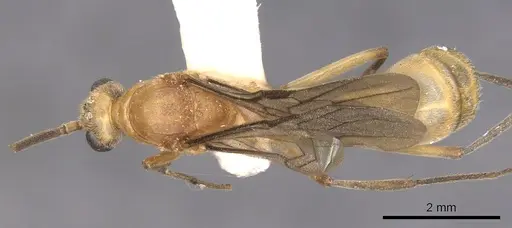
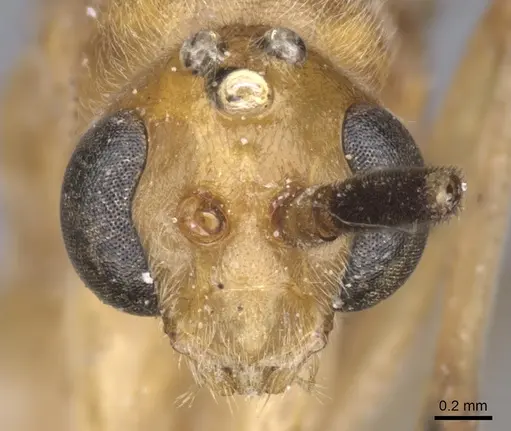
- Worker: Approximately 6-7mm (inferred from male size and genus patterns)
- Colony: Unknown for this specific species, likely moderate colony size typical of Diacamma genus
- Growth: Moderate, inferred from genus patterns
- Development: Unknown, no direct data available. Estimates based on related Diacamma species suggest 6-10 weeks at tropical temperatures. (Development timeline unconfirmed for this species. Related Diacamma species typically show moderate development speeds.)
- Antkeeping:
- Temperature: Keep at tropical temperatures, roughly 24-28°C. This species originates from warm climates and likely requires consistent warmth.
- Humidity: Requires moderate to high humidity, think damp tropical forest floor. Keep nest substrate consistently moist but not waterlogged.
- Diapause: Unknown, tropical species may have reduced activity in cooler months but likely does not require true hibernation. Monitor colony activity levels.
- Nesting: In nature, Diacamma typically nest in soil or under stones in forested areas. A naturalistic setup with moist substrate or a Y-tong/plaster nest works well. They prefer tight, enclosed spaces.
- Behavior: D. pallidum is a relatively calm species compared to many Ponerines. Workers are active foragers and likely predatory on small invertebrates. The most notable behavior is their unique reproductive system, the gamergate mutilates newly emerged workers by biting off their gemmae (small thoracic appendages), preventing them from mating. This happens unless the colony needs a replacement reproductive [4][5]. Workers are known to interfere with mating pairs, attacking and killing males during copulation [4]. Escape risk is moderate, use standard barriers.
- Common Issues: queenless colonies require special care, you must ensure the gamergate survives as colony survival depends on her, mutilation behavior may be disturbing to observe but is natural, the gamergate prevents workers from competing reproductively, tropical species may struggle if temperatures drop below room temperature, no established captive breeding protocols exist for this species, wild colonies are the primary source, limited information on exact care requirements makes this species more challenging than well-documented ants
Understanding the Queenless System
Diacamma pallidum is one of the few ant species that operates without a queen. Instead, a gamergate, a mated, reproductive worker, leads the colony and lays all the eggs. This is a fascinating system where workers compete for reproductive rights, but the dominant gamergate suppresses this by mutilating newly emerged workers [4][5].
Every worker emerges from its cocoon with small thoracic appendages called gemmae. These gemmae are required for mating. The gamergate bites off the gemmae of newly emerged workers unless the colony needs a replacement reproductive. This mutilation permanently prevents those workers from mating. If the gamergate dies, one of the unmutilated young workers will leave the nest to mate with a foreign male and become the new gamergate [4].
For antkeepers, this means you don't look for a queen, you look for a colony with a gamergate. The gamergate is typically larger and more active than regular workers, often remaining in the nest chamber. Understanding this system is crucial for successful keeping.
Mating Behavior and Reproduction
The mating behavior of D. pallidum is extraordinary and differs dramatically from most ants. Virgin workers leave the nest in the evening, approximately 10 days after emerging, to find mates. They release sex pheromones from their metatibial glands to attract males [4].
Unlike most ants that mate during nuptial flights, D. pallidum mates inside the natal nest. When a virgin worker begins copulating with a male, other workers attack the male, severing his wings, legs, and eventually his head. The male dies, but his abdomen remains attached to the worker for several hours to two days [4].
Copulation is extremely prolonged, lasting anywhere from 15 hours to 2 days [4][6]. This long duration is believed to function as mate guarding or to reduce the female's receptivity to other males. Sperm transfer happens quickly (within 2 minutes), but the spermatheca doesn't fill completely until about 22 hours after mating begins [4]. Females mate only once in their lifetime.
Housing and Nest Setup
For keeping D. pallidum, provide a naturalistic setup with moist substrate or a Y-tong/plaster nest that maintains humidity well. These are forest-floor ants that prefer enclosed, humid spaces. The nest should have tight chambers rather than large open areas.
Because this is a tropical species, maintain temperatures in the 24-28°C range. A heating cable on one side of the nest can create a temperature gradient. Keep the substrate consistently moist but avoid waterlogging, the nest should have some drier areas available for the ants to regulate their own humidity.
The outworld can be a simple foraging area where you offer food. Use standard escape prevention measures, while not extremely small, they can still escape through small gaps. Ensure the setup allows you to observe the colony without disturbing them too frequently, as stress can affect the gamergate's behavior.
Feeding and Nutrition
Diacamma pallidum is likely an omnivorous predator, typical of Ponerine ants. They probably hunt small invertebrates and also consume nectar and honeydew. In captivity, offer a varied diet including small live prey like fruit flies, pinhead crickets, and other small insects.
Protein is essential for brood development. Offer protein-rich foods several times per week. Sugar sources like honey water or sugar water can be offered occasionally, though Ponerines are less dependent on sugar than some other ants. Remove uneaten prey after 24-48 hours to prevent mold issues.
Observe your colony's preferences, some individuals may accept more varied diets than others. The gamergate typically receives priority access to food in the nest.
Colony Dynamics and Behavior
Watching a D. pallidum colony reveals fascinating social dynamics. The gamergate rarely leaves the nest and is attended by workers who feed her and tend to the brood. Workers forage for food, maintain the nest, and care for larvae and pupae.
One of the most interesting behaviors is worker policing. If workers attempt to lay eggs, other workers will eat those eggs (worker policing via egg-eating). The gamergate also uses aggression to maintain her dominance, this aggression regulates the colony's reproductive structure [5].
When the gamergate dies or is removed, watch for behavioral changes. Within 1-3 days, unmutilated workers will stop being mutilated, and one will eventually leave to mate and become the new gamergate [7]. This replacement process is remarkable and ensures colony survival.
Frequently Asked Questions
What is a gamergate and how does it differ from a queen?
A gamergate is a mated, reproductive worker that functions as the colony's egg-layer instead of a true queen. Unlike queens, gamergates were born as workers and only become reproductive after mating. In D. pallidum, the gamergate is the only reproductive female in the colony, all other workers are sterile due to gemmae mutilation [4][5].
How do I start a Diacamma pallidum colony?
You cannot start a colony from a single queen (since there isn't one). Instead, you need to acquire an established colony with a functioning gamergate. Wild colonies are the primary source. Look for colonies with visible workers and ensure the gamergate is present and active. A colony should have at least several dozen workers to ensure stability.
How long do Diacamma pallidum live?
The lifespan is not specifically documented, but ant colonies can live for many years. The gamergate may live for several years, while workers typically live for several months to a year. A healthy colony with a functioning gamergate can persist for a long time with proper care.
What happens if the gamergate dies?
If the gamergate dies, the colony faces a crisis, but there's a remarkable backup system. Unmutilated young workers in the colony will compete to become the new gamergate. One will leave the nest to mate with a foreign male, return as a newly mated reproductive, and assume the egg-laying role. This replacement process typically occurs within days of the gamergate's death [4][7].
Can I keep multiple Diacamma pallidum colonies together?
Not recommended. Each colony has its own unique colony odor, and introducing workers from different colonies will result in aggression. Only combine colonies during the gamergate replacement process if one colony has lost its gamergate and you want to introduce a potential replacement from another colony, and even then, this requires careful introduction.
Are Diacamma pallidum good for beginners?
This species is not ideal for complete beginners due to its unique queenless system and the need to understand gamergate biology. However, antkeepers with some experience who want something truly unusual will find it fascinating. The difficulty is moderate, not because the ants are difficult to keep, but because their unusual biology requires understanding and monitoring.
What temperature do Diacamma pallidum need?
Keep them warm at 24-28°C. This tropical species requires consistent warmth and will be less active if temperatures drop. Use a heating cable or heat mat on one side of the nest to maintain appropriate temperatures, especially in cooler climates or air-conditioned rooms.
How do I identify the gamergate?
The gamergate is typically larger than regular workers and spends most of her time in the nest chamber. She is attended by workers who feed her and groom her. Unlike regular workers, she should have intact gemmae (though these are small and hard to see). She is also more sedentary than foragers. Look for a larger, darker worker that workers consistently cluster around.
Do Diacamma pallidum need hibernation?
No, this is a tropical species and does not require hibernation. However, in cooler climates with seasonal temperature changes, they may become less active during winter months. Simply maintain normal temperatures year-round and avoid exposing them to cold drafts.
References

This caresheet is licensed under CC BY-SA 4.0 .
Literature
Loading...Loading products...