

Dacatria templaris
- Scientific Name
- Dacatria templaris
- Tribe
- Crematogastrini
- Subfamily
- Myrmicinae
- Author
- Rigato, 1994
- Distribution
- Found in 1 countries
Dacatria templaris Overview
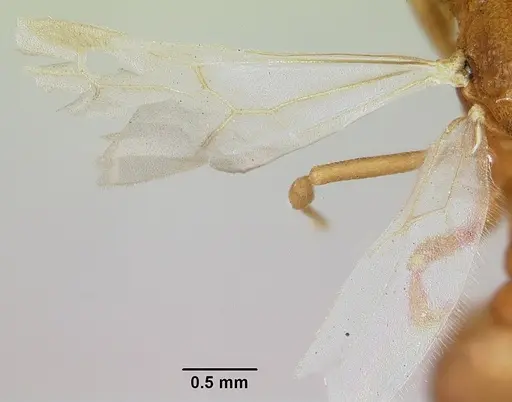
Dacatria templaris is an ant species of the genus Dacatria. It is primarily documented in 1 countries , including Viet Nam. Detailed taxonomic data and occurrence records can be further explored via authoritative databases such as AntWeb or the Global Biodiversity Information Facility (GBIF).
Dacatria templaris
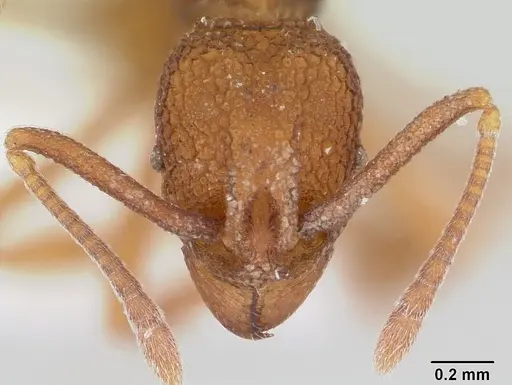
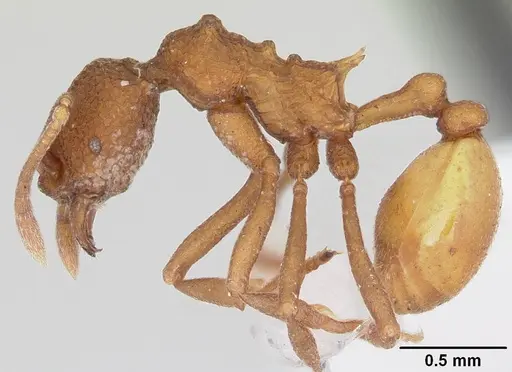
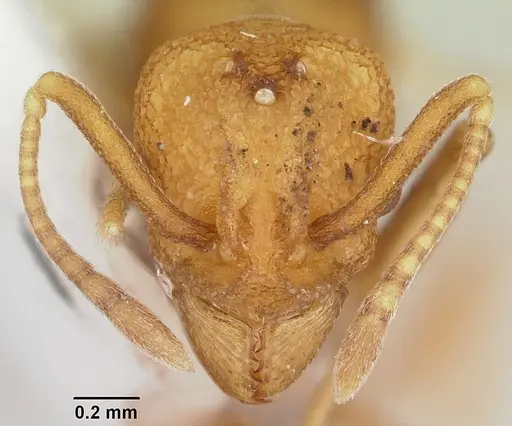
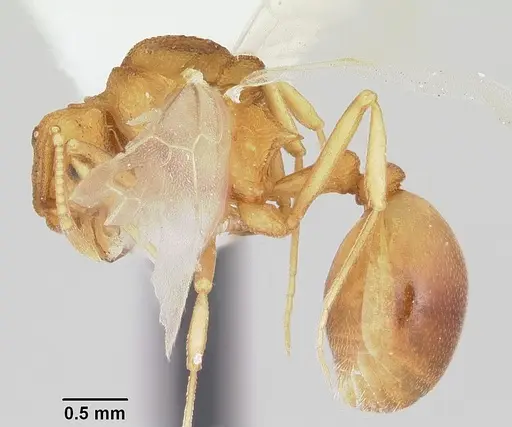
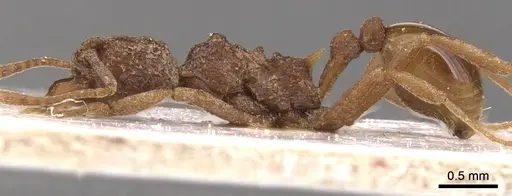
Dacatria templaris is a rare and cryptic ground-dwelling ant species and the only member of its genus. Workers are small at about 3.5mm, with a distinctive brick-red coloration and a dull, dirt-covered appearance that makes them remarkably well-camouflaged in their forest floor habitat [1]. This species is closely related to Proatta and is known from only a handful of collections across South Korea, China, and Vietnam, making it one of the more elusive ants in the hobby [2]. The workers have unusual morphological features including modified clypeus structures and distinctive humeral tubercles on the promesonotum that help distinguish them from similar ants [1].
Quick Summary
- Difficulty: Expert
- Origin & Habitat: This species inhabits well-developed forests in temperate to subtropical regions of East Asia, including South Korea, China, and Vietnam. It nests in leaf litter and underground, typically in humid forest floor environments at elevations around 500-1000 meters [1][3].
- Colony Type: Colony structure is unconfirmed. Only a single queen has been collected (not fully described), and colony size in the wild is unknown. Based on related Proatta species, expect small to moderate colony sizes.
- Size & Growth:
- Queen: Not fully described, a queen has been collected but not formally described in scientific literature [3]
- Worker: About 3.5mm total length (HL 0.86mm, HW 0.68mm) [3]
- Colony: Unknown, only a few collections have been made and colony size has not been documented [2]
- Growth: Unknown, no development data exists for this species
- Development: Unknown, no direct observations of development. Related Proatta species suggest 6-10 weeks at optimal temperature, but this is an estimate. (Development timeline has not been documented. Expect moderate growth based on related species in the Crematogastrini tribe.)
- Antkeeping:
- Temperature: Keep at room temperature around 20-24°C. This species comes from temperate to subtropical regions of East Asia, so moderate warmth is appropriate. A slight gradient allowing cooler areas around 18-20°C is recommended.
- Humidity: High humidity is essential, these ants live in forest floor litter and underground nests. Keep the nest substrate consistently moist but not waterlogged. Mist occasionally and provide a water source.
- Diapause: Likely required. Given its distribution in Korea and China where winters are cold, expect a winter rest period of 2-3 months at temperatures around 10-15°C. Reduce feeding and keep them in a cool location during this period.
- Nesting: Ground-dwelling species that nests in litter and underground. In captivity, a naturalistic setup with moist substrate (soil/peat mix) works well, or a Y-tong/plaster nest with chambers kept humid. They prefer tight, enclosed spaces similar to their natural underground nests.
- Behavior: Workers are highly cryptic and tend to freeze when disturbed, making them difficult to detect, this is a survival adaptation. They are ground-dwelling and likely forage slowly through leaf litter. Escape risk is moderate, at 3.5mm they are small but not tiny. Standard escape prevention with fine mesh is sufficient. Temperament is likely docile, similar to related Proatta species.
- Common Issues: extreme rarity makes obtaining a colony very difficult, they are rarely found in the hobby, no documented captive breeding success means care protocols are experimental, cryptic freezing behavior means workers may seem inactive or dead when they are simply hiding, ground-dwelling nature requires specific humidity control that can lead to mold issues if not managed, lack of published care information means keepers must adapt from related species
Discovery and Rarity
Dacatria templaris represents a fascinating case of a species that was only described in 1994 from a single worker collected in South Korea [3]. Since then, only a handful of collections have been made across its range in Korea, China, and Vietnam, making it one of the rarest ants in the Myrmicinae subfamily. The genus Dacatria contains only this single species, and its closest relative is Proatta [4]. This rarity means that captive colonies are essentially nonexistent in the antkeeping hobby, and anyone acquiring these ants would be pioneering their captive care.
Natural Habitat and Nesting
In the wild, Dacatria templaris inhabits well-developed forests with dense leaf litter. The species nests in the litter layer and underground, preferring humid microhabitats [1]. Collections have been made at elevations between 500-1000 meters in nearly subtropical environments with bamboo groves on southern mountain slopes, as well as in evergreen forests [3]. This ground-dwelling lifestyle means they are adapted to stable, humid conditions with limited temperature fluctuation. Their workers have a distinctive brick-red coloration and tend to become covered in dirt, providing excellent camouflage in the forest floor environment.
Identification and Morphology
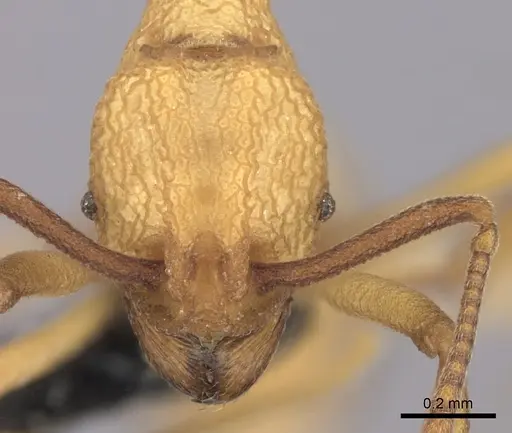
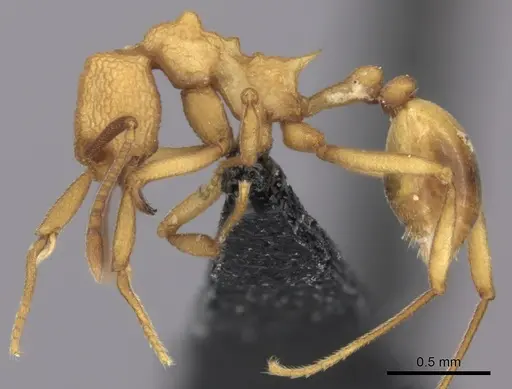
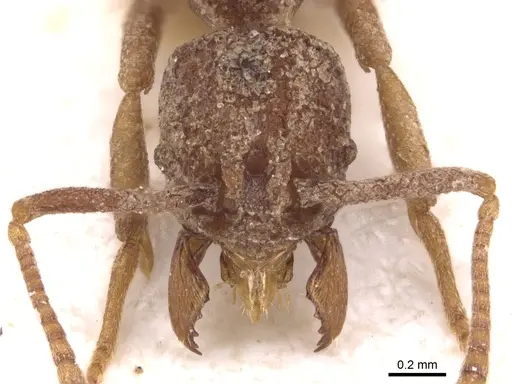
Workers of Dacatria templaris are distinctive and can be recognized by several unique features. They have a subrectangular head with a shallow central longitudinal furrow, and the lateral portion of the clypeus is modified into a distinct ridge or wall in front of the antennal insertion [1]. The promesonotum has a pair of rounded, low humeral tubercles, and the propodeal spines are long. The workers are monomorphic (all the same size) and measure approximately 3.5mm in total length. Their cryptic appearance and freezing behavior when disturbed make them extremely difficult to detect in the field, when their nests are exposed, the workers simply freeze motionless, blending in with the surrounding soil and litter.
Caring for Dacatria templaris in Captivity
Since this species has never been documented in captivity, all care recommendations are experimental and based on inference from related species and natural habitat. Provide a naturalistic setup with a deep layer of moist substrate (a mix of soil and peat works well) to allow for their natural underground nesting behavior. Maintain high humidity by keeping the substrate consistently moist but not waterlogged, and mist the setup occasionally. Room temperature around 20-24°C is appropriate for this temperate to subtropical species. Given their small size and ground-dwelling nature, escape prevention should include fine mesh barriers. Feed a typical ant diet of sugar water or honey and protein sources like small insects, but be aware that acceptance of various foods is completely unconfirmed for this species.
Seasonal Care and Winter Rest
Based on the natural distribution of Dacatria templaris in Korea and China, where winters are cold, this species almost certainly requires a winter rest period. During autumn, gradually reduce temperatures over 2-3 weeks to around 10-15°C and maintain this for 2-3 months through winter. Reduce feeding significantly during this period, the colony will be less active and consume less. In spring, slowly warm them back to room temperature and resume normal feeding. This diapause period is essential for the health of colonies from temperate regions and helps trigger proper reproductive cycles in spring.
Frequently Asked Questions
How rare is Dacatria templaris in the antkeeping hobby?
Extremely rare. This species is known from only a handful of collections in the wild and is essentially never seen in the antkeeping hobby. Obtaining a colony would require either finding them in the wild (difficult given their cryptic nature) or connecting with very specialized collectors.
What do Dacatria templaris ants eat?
Diet is unconfirmed for this species. Based on related Proatta species and typical Myrmicinae behavior, they likely accept sugar sources (honey, sugar water) and small protein sources (insects). Start with offering sugar water constantly and small insects twice weekly, but be prepared to experiment as acceptance has not been documented.
What temperature should I keep Dacatria templaris at?
Keep them at moderate room temperature around 20-24°C. This matches their natural habitat in temperate to subtropical East Asia. A slight temperature gradient allowing cooler areas around 18°C is beneficial so the ants can self-regulate.
Do Dacatria templaris ants need hibernation?
Yes, hibernation is likely required. Given their distribution in Korea and China with cold winters, expect to provide a winter rest period of 2-3 months at temperatures around 10-15°C. Reduce feeding and keep them cool from late autumn through winter.
What type of nest is best for Dacatria templaris?
A naturalistic setup with deep, moist substrate works best since they are ground-dwelling ants that nest in litter and underground. A Y-tong or plaster nest with consistently humid chambers is also appropriate. They prefer tight, enclosed spaces rather than open areas.
How big do Dacatria templaris colonies get?
Colony size is unknown as this species has rarely been observed in the wild. Based on related Proatta species, colonies likely reach several hundred workers at maximum. They are considered a small to moderate-sized ant species.
Do Dacatria templaris ants sting?
They have a simple stinger typical of Myrmicinae, but at 3.5mm they are too small to penetrate human skin. Their primary defense is cryptic freezing behavior rather than stinging. The stinger exists but is not a practical concern for keepers.
Can beginners keep Dacatria templaris?
No, this species is not suitable for beginners. They are extremely rare, no captive care information exists, and they require specific humidity conditions that can be challenging to maintain. This species is for expert antkeepers only.
References

This caresheet is licensed under CC BY-SA 4.0 .
CASENT0103119
View on AntWeb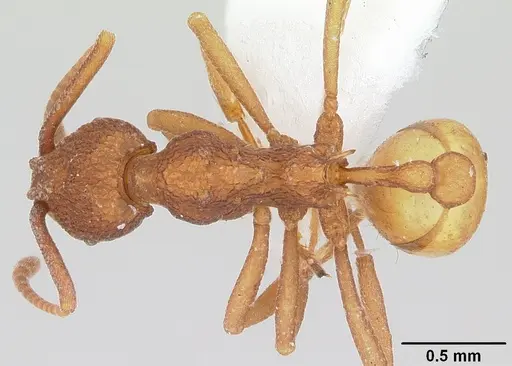
CASENT0103120
View on AntWeb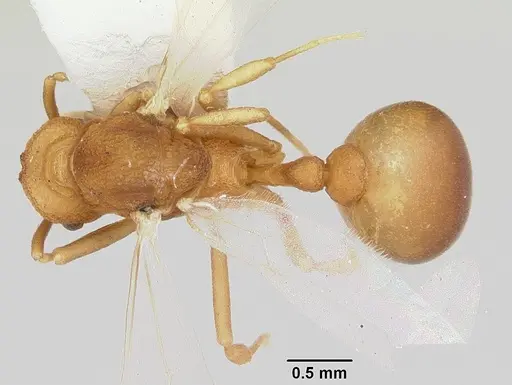
CASENT0235148
View on AntWeb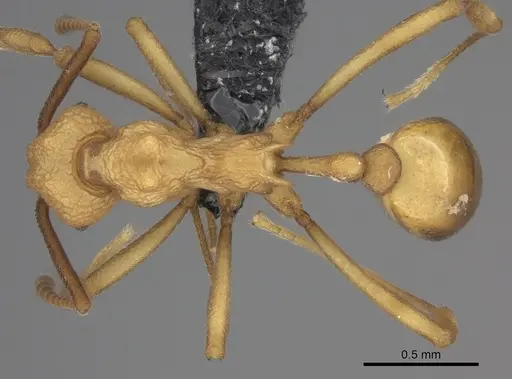
CASENT0904562
View on AntWeb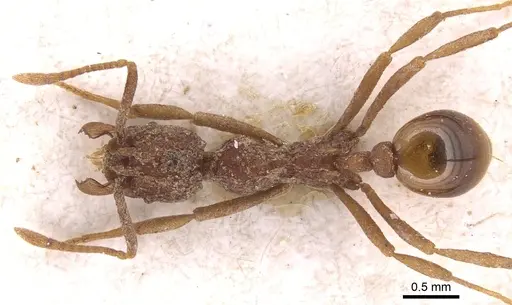
Literature
Loading...Loading products...