

Cylindromyrmex godmani
- Scientific Name
- Cylindromyrmex godmani
- Subfamily
- Dorylinae
- Author
- Forel, 1899
- Distribution
- Found in 1 countries
Cylindromyrmex godmani Overview
Cylindromyrmex godmani is an ant species of the genus Cylindromyrmex. It is primarily documented in 1 countries , including Costa Rica. Detailed taxonomic data and occurrence records can be further explored via authoritative databases such as AntWeb or the Global Biodiversity Information Facility (GBIF).
Cylindromyrmex godmani
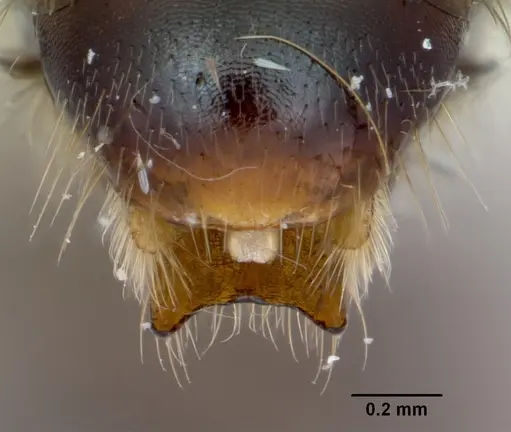
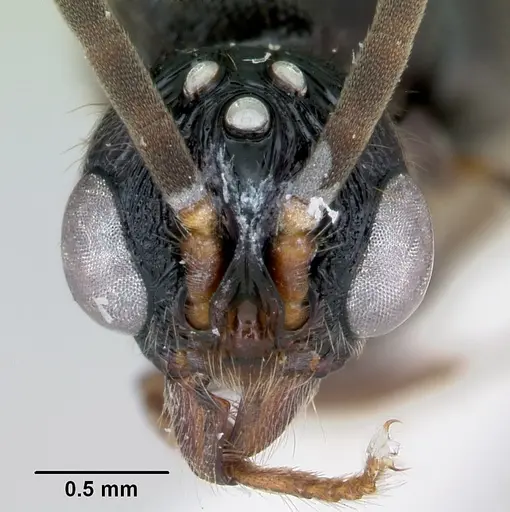
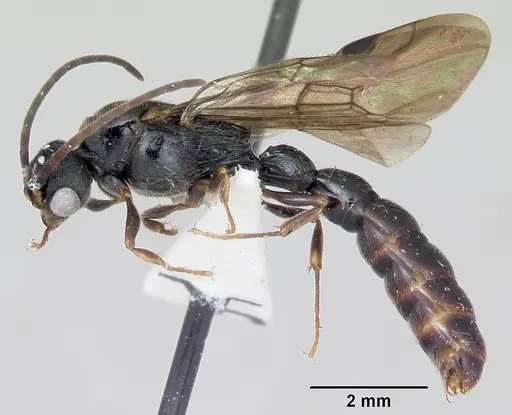
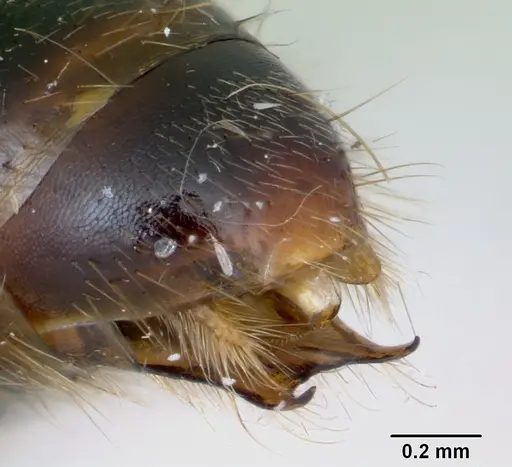
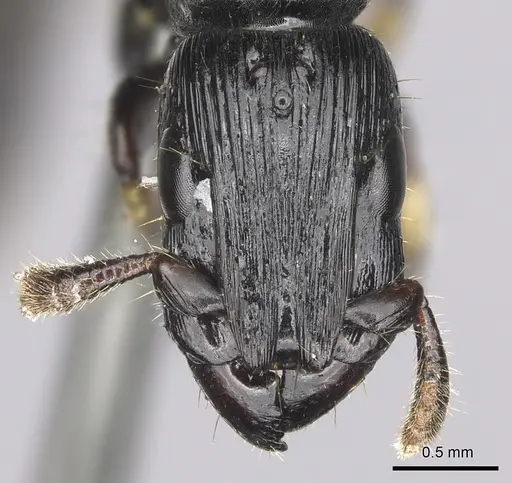
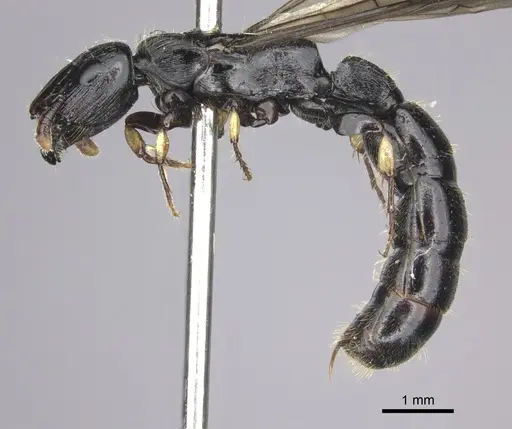
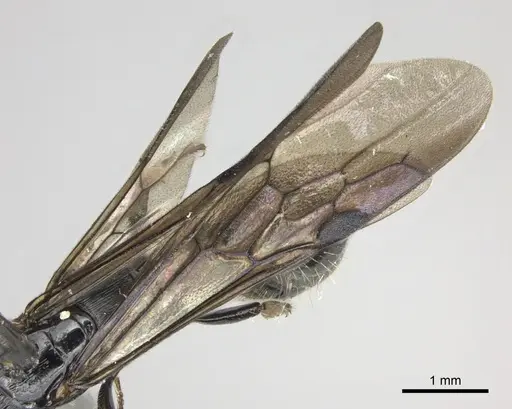
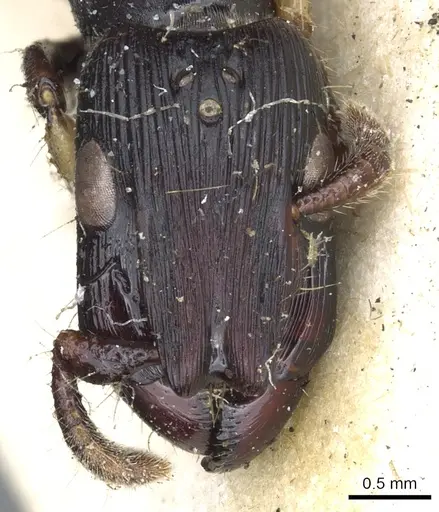
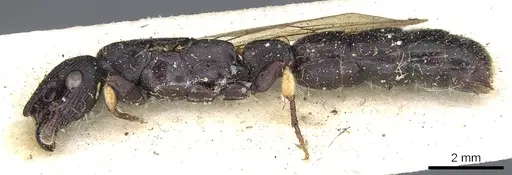
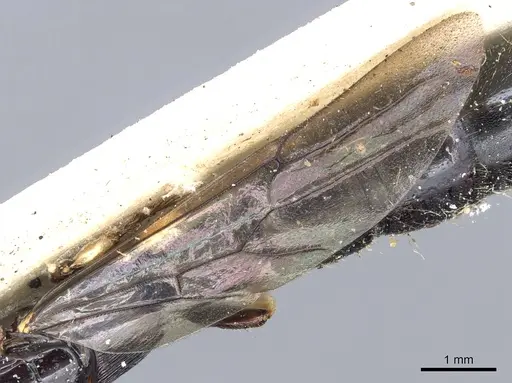
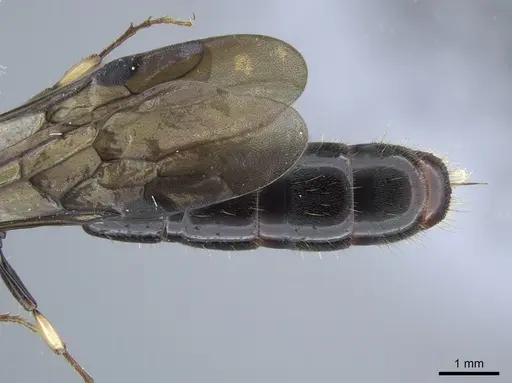
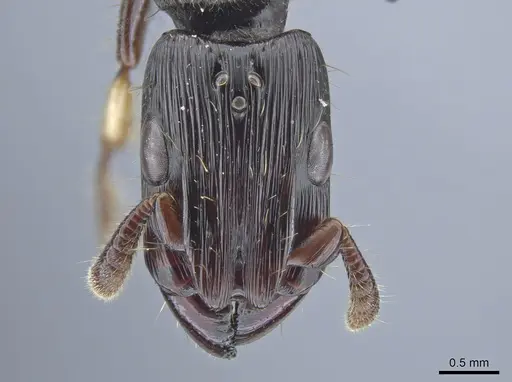
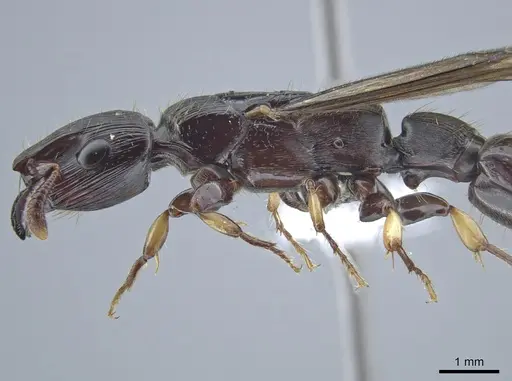
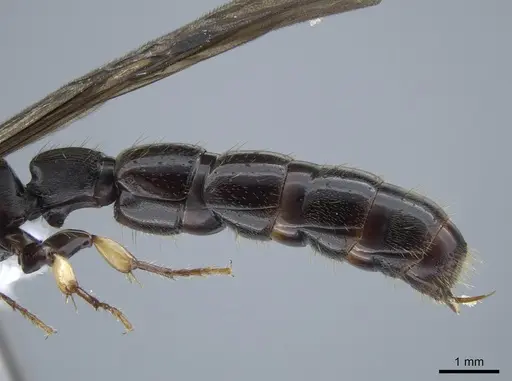
Cylindromyrmex godmani is a large, striking ant species and the largest in its genus. Queens measure 14.38mm, making them substantial compared to most tropical ants [1]. They have a distinctive appearance with a long, cylindrical abdomen, heavily striated head and thorax, and a unique notch on the pygidium (the terminal abdominal segment) that accommodates their sting [1]. The species is black and shining with reddish-brown antennae, mandibles, and femora, plus yellowish tibiae [2]. This ant is known from only a handful of specimens collected in Panama, Costa Rica, and Ecuador at elevations between 2000-3000 feet [2][1]. What makes C. godmani particularly mysterious is that despite being described in 1899,no workers have ever been collected with any queens, the entire natural history of this species remains unknown [3].
Quick Summary
- Difficulty: Expert
- Origin & Habitat: Panama, Costa Rica, and Ecuador in the Neotropical region. They have been collected at elevations of 2000-3000 feet in the Volcan de Chiriqui area of Panama [2]. The specific habitat type is unknown.
- Colony Type: Unknown, no workers have ever been collected with queens, so colony structure is completely unconfirmed [3].
- Size & Growth:
- Queen: 14.38mm (queen/gyne) [1]. Earlier measurement from Forel 1899 lists 12.5mm [2].
- Worker: Unknown, workers have never been collected [3].
- Colony: Unknown, no colony data exists [3].
- Growth: Unknown
- Development: Unknown, development has never been observed [3]. (No data exists on egg-to-worker development because workers have never been documented.)
- Antkeeping:
- Temperature: Unknown, no temperature data exists for this species. As a Neotropical species from mid-elevations, they likely prefer warm conditions but specific requirements are unconfirmed.
- Humidity: Unknown, no humidity data exists. Given the humid Neotropical origin, moderate to high humidity is probable but unconfirmed.
- Diapause: Unknown, no seasonal data exists [3].
- Nesting: Unknown, no natural nesting observations exist. As a Dorylinae species, they may nest in soil or rotting wood but this is entirely speculative [3].
- Behavior: Completely unknown. As a Dorylinae member, they likely have predatory tendencies similar to army ants, but this is unconfirmed. The large queen and documented sting apparatus suggest they can defend themselves [1]. Escape risk cannot be assessed without worker size data.
- Common Issues: no workers have ever been documented, this species may be extremely rare or have unusual ecology that makes finding workers difficult, care requirements are entirely unknown, there is no established husbandry information for this species, no captive colonies exist in the antkeeping hobby, attempting to keep this species would be entirely experimental, the queen may require specific conditions that are completely undocumented, without workers, the species cannot be maintained long-term in captivity
Why This Species Is Extremely Challenging
Cylindromyrmex godmani represents one of the most poorly documented ant species in existence. Despite being described in 1899,no workers have ever been collected with any queens [3]. This is extraordinarily rare, virtually every ant species known to science has had workers documented at some point. The complete absence of worker specimens means we know absolutely nothing about their diet, nesting preferences, colony size, development time, temperature needs, or any other aspect of their biology that would guide captive care. Attempting to keep this species would be entirely experimental with no established guidelines to follow. This is not a species for beginners or even experienced antkeepers, it represents the frontier of ant-keeping uncertainty.
Taxonomic Position and Relatives
Cylindromyrmex godmani belongs to the subfamily Dorylinae, which includes army ants and other specialized predatory ants [3]. Within the genus Cylindromyrmex, it is the largest species and is considered the basal (most primitive) member of the longiceps clade based on morphological analysis [1]. The genus Cylindromyrmex contains several similar species distributed throughout the Neotropics, but C. godmani remains the most poorly known. The species can be identified by the distance between frontal carinae (about 2/3 of head width instead of the typical 1/3) and by superficial gastric striae on the abdomen [1].
What We Know About the Queen
The queen of Cylindromyrmex godmani has been described in detail. She measures approximately 14.38mm in total length, making her the largest species in the genus [1]. The original description from 1899 measured 12.5mm [2]. She has a distinctive morphology including heavily striated head and thorax, a unique notch on the pygidium that accommodates the sting, and relatively short antennae with a large terminal club [1][2]. The queen is black and shining with reddish-brown antennae, mandibles, and femora, plus yellowish tibiae [2]. Males have been tentatively assigned to this species, measuring 10.1-10.7mm, but these associations are not confirmed since no workers exist to link them [1].
Distribution and Collection History
Cylindromyrmex godmani is known from a very limited geographic range in Central America: Panama, Costa Rica, and Ecuador [1][4]. The type specimen was collected from Volcan de Chiriqui in Panama at an elevation of 2000-3000 feet [2]. The species was long known only from the holotype queen until more specimens were discovered. The extreme rarity of this species, with no workers ever collected despite over 120 years of scientific attention, suggests either extremely low population densities, very specialized and cryptic ecology, or possibly some aspect of their biology that makes workers difficult to find.
Inferred Care Guidelines (Highly Speculative)
Since no direct care information exists, any recommendations would be based on inference from related Dorylinae species and the species' Neotropical origin. Dorylinae ants are typically predatory, so live prey would likely be necessary. As a species from mid-elevations in Central America, warm and humid conditions would probably be appropriate, but the exact parameters are unknown. Test tube setups would be the most logical starting point for a claustral queen (if she seals herself in), but even this is assumption-based. Without any documented success in captivity, any care advice would be purely speculative and likely to be wrong. This species is not recommended for captivity until more is learned about its biology in the wild. [3]
Frequently Asked Questions
Can I keep Cylindromyrmex godmani ants?
No, this species should not be attempted by antkeepers. No workers have ever been documented, meaning no captive colonies exist and no care information is available. There is no established husbandry for this species, making successful captivity essentially impossible.
How long does it take for Cylindromyrmex godmani eggs to become workers?
This is completely unknown. Workers have never been documented for this species, so no development timeline exists. Even basic questions like whether the queen is claustral (seals herself in) or semi-claustral (forages during founding) remain unanswered.
What do Cylindromyrmex godmani ants eat?
Unknown. As a Dorylinae member, they likely have predatory habits similar to army ants, but this is entirely speculative. No feeding observations exist.
Are Cylindromyrmex godmani dangerous?
The queen has a documented sting apparatus with a unique notch on the pygidium that facilitates sting movement [1]. However, no one has ever been stung by this species, so pain level and danger are completely unknown.
What temperature do Cylindromyrmex godmani need?
Unknown, no temperature data exists for this species. As a Neotropical species from mid-elevations in Panama, they probably prefer warm conditions, but specific requirements are unconfirmed.
Do Cylindromyrmex godmani need hibernation?
Unknown, no seasonal data exists. As a tropical species from Panama and Costa Rica, they likely do not require true hibernation, but this is unconfirmed.
How big do Cylindromyrmex godmani colonies get?
Unknown, no colony size data exists because workers have never been collected. Even the maximum colony size is completely unknown.
Can I keep multiple Cylindromyrmex godmani queens together?
Unknown, colony structure is completely unconfirmed. No data exists on whether they are monogyne (single queen) or polygyne (multiple queens).
Why have workers never been found for Cylindromyrmex godmani?
This remains a mystery. Possible explanations include extremely low population densities, very specialized or cryptic nesting habits, or perhaps workers are only produced under very specific conditions that rarely occur. The scientific community has not been able to document this species beyond the queen.
Is Cylindromyrmex godmani a good species for beginners?
Absolutely not. This is an expert-level species in terms of difficulty, but even experts would struggle since no care information exists. This species should not be attempted until more is learned about its biology.
References

This caresheet is licensed under CC BY-SA 4.0 .
CASENT0173073
View on AntWeb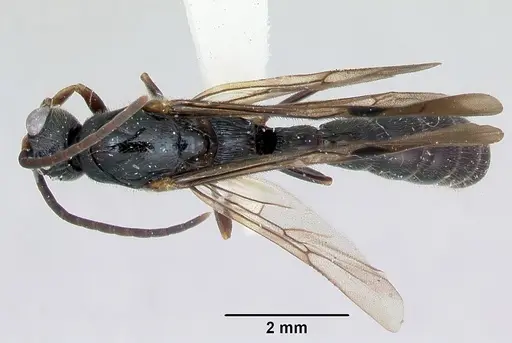
CASENT0249590
View on AntWeb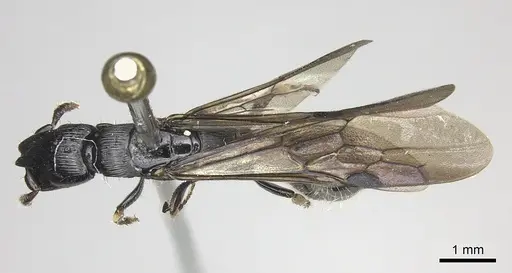
CASENT0903675
View on AntWeb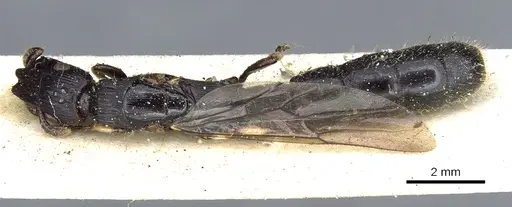
INB0003028533
View on AntWeb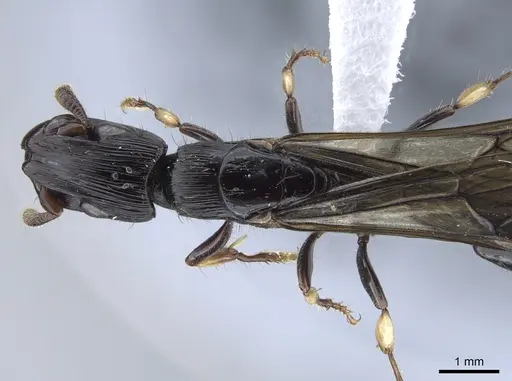
Literature
Loading...Loading products...