Cylindromyrmex boliviae - "Bolivian Cylindromyrmex Ant"
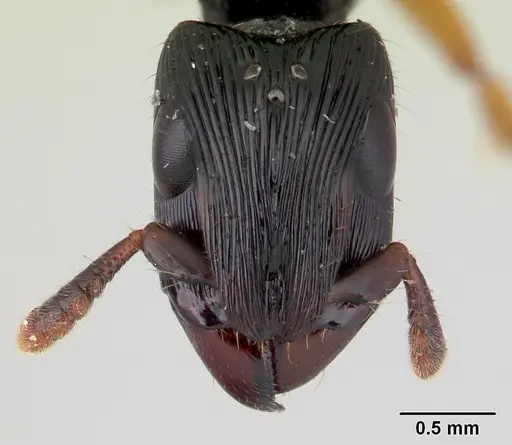
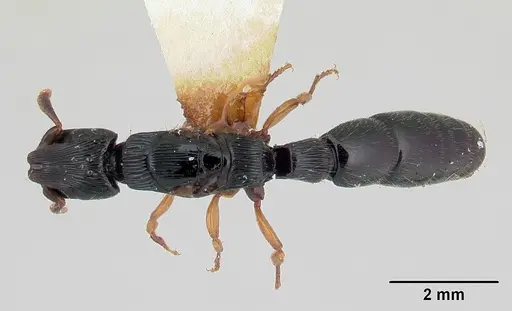
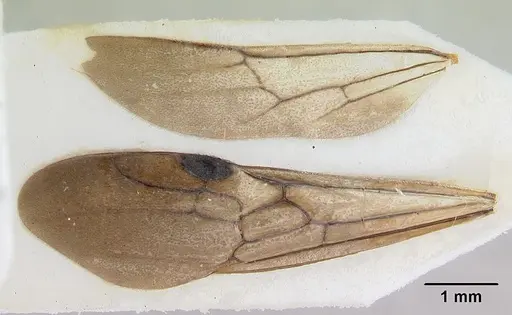
Cylindromyrmex boliviae is a fascinating ant species from the Neotropical region, belonging to the Dorylinae subfamily. These ants are notable for their rather cylindrical body shape and their unique predatory lifestyle, primarily targeting termites. Queens of this species are winged, exhibiting a black and shining body, with lighter mandibles, antennae, and legs. They have a head that is roughly as broad as it is long, featuring prominent ocelli and broadly convex compound eyes. Their mandibles are quite robust and convex, armed with 10-12 irregular denticles and a sharp apical tooth. A distinctive feature is the pygidium, or the last abdominal segment, which bears small denticles and 4-6 small teeth near the sting. While detailed information on their workers is less available, they are known to be monomorphic but can vary in size within the colony, generally being smaller than the queen but robust. This species is rarely encountered in the wild, making it a truly unique find for any ant enthusiast.
- Difficulty: Expert
- Origin & Habitat: Bolivia, Colombia, Peru, Venezuela (Neotropical Region) in Primarily found nesting in cavities within sound or decaying wood, under bark, or within hollow plant stems. They are also known to inhabit termite nests, acting as predators. These ants are typically found in arboreal or subterranean environments within their range..
- Colony Type: Monogyne, semi-claustral founding.
- Size & Growth:
- Queen: 9.64-10.28mm
- Worker: 6.0-9.0mm
- Colony: Small (hundreds). Slow growth.
- Antkeeping:
- Temperature: Due to their Neotropical origin, Cylindromyrmex boliviae likely thrive in warmer temperatures. A range between 24-28°C (75-82°F) is recommended to simulate their natural environment and support their metabolic processes and brood development..
- Humidity: Given their nesting habits in wood and association with termite nests in humid environments, high humidity is crucial. Maintain relative humidity levels between 70-90% within their nest and foraging areas. Proper ventilation is still necessary to prevent mold growth..
- Diapause: Not required. Not specified at Not specified.
- Nesting: These ants strongly prefer nesting within wood. An ideal setup would be an acrylic or natural wood nest with pre-drilled chambers, mimicking rotten logs or hollow stems. Ytong or plaster nests with a high humidity gradient could also work if wood is incorporated. Termite-inspired setups might also be suitable given their association with termite galleries in the wild..
- Behavior: Medium (towards prey, defensive if disturbed) aggressiveness.
- Common Issues: Difficulty sourcing specific prey (termites), Maintaining stable humidity in wood nests, Lack of specific captive care information, Colony stalling due to inadequate diet.
One of the most defining characteristics of Cylindromyrmex boliviae is their highly specialized diet. These ants are obligate predators of termites, a fact that presents a significant challenge for ant keepers. In the wild, they are observed actively pursuing and stinging termites, which are then brought back to the nest, often paralyzed but not immediately dead. Successfully maintaining a colony will require a consistent and reliable source of live termites, as they are unlikely to accept other insect prey or sugary foods commonly offered to other ant species. This makes them an expert-level species due to the dietary demands.
Their natural nesting preferences revolve around wood. Unlike many ant species that prefer soil or rock setups, Cylindromyrmex boliviae are lignicolous, meaning they inhabit decaying wood, hollow stems, or even the galleries of termite nests. This dictates the type of formicarium best suited for their long-term care. Keepers should aim to provide a nest structure that closely mimics these conditions, perhaps a hardwood setup or a custom-built nest with intricate tunnels and appropriate humidity levels to prevent the wood from drying out too quickly, which could stress the colony.
Colony founding for Cylindromyrmex boliviae queens is believed to be semi-claustral, meaning the queen likely needs to forage for food during the initial stages to raise her first batch of workers. This is typical for many predatory ant species that cannot rely solely on their fat reserves. Once established, these colonies tend to remain relatively small, typically reaching only around 100 individuals. Their slow growth rate and specialized diet mean that establishing a thriving colony requires immense patience and meticulous attention to their specific environmental and nutritional needs.
Observations of their foraging behavior indicate that Cylindromyrmex boliviae utilize mass recruitment to overwhelm their termite prey. This complex communication system allows workers to quickly gather at a food source, maximizing their efficiency in subduing and transporting termites back to the colony. While captive care might limit opportunities to observe large-scale foraging, providing a suitable outworld with ample space for exploration and hunting will encourage their natural behaviors. Understanding these nuances is key to appreciating and successfully keeping such a unique ant species.