

Cryptopone subterranea
- Scientific Name
- Cryptopone subterranea
- Tribe
- Ponerini
- Subfamily
- Ponerinae
- Author
- Bharti & Wachkoo, 2013
- Distribution
- Found in 1 countries
Cryptopone subterranea Overview
Cryptopone subterranea is an ant species of the genus Cryptopone. It is primarily documented in 1 countries , including India. Detailed taxonomic data and occurrence records can be further explored via authoritative databases such as AntWeb or the Global Biodiversity Information Facility (GBIF).
Cryptopone subterranea
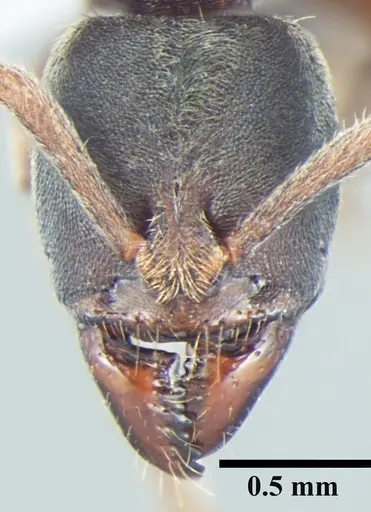
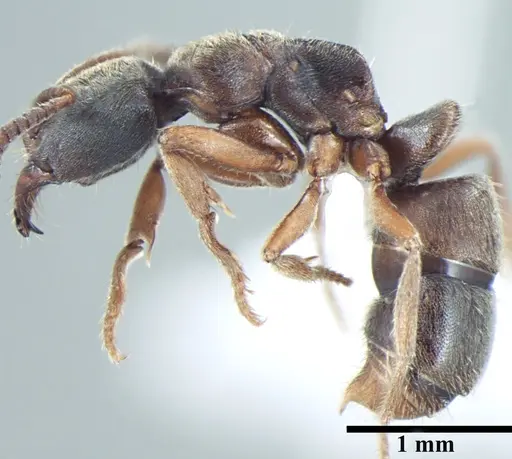
Cryptopone subterranea is a rare, newly described cryptobiotic ant species from the Shivalik range of the Northwest Himalayas in India. Workers are small at approximately 4.6-4.8mm total length, with a distinctive 9-toothed mandible that sets them apart from related species which typically have only 6 teeth. They have a dark brown body with a blackish head and red-brown legs, rudimentary eyes with only 5-6 facets, and a long sharp upcurved sting. This species is a hypogaeic specialist, meaning it lives almost entirely underground, and is only known from two specimens collected in Jammu & Kashmir and Himachal Pradesh at elevations of 420-700m. The species name literally means 'subterranean' reflecting its underground lifestyle.
Quick Summary
- Difficulty: Expert
- Origin & Habitat: Endemic to the Shivalik range of the Northwest Himalayas in India, specifically found in Himachal Pradesh and Jammu & Kashmir at 420-700m elevation [1]. In the wild, they inhabit shady lakeside forest fragments with loose moist soil, or nest under stones beneath trees [2]. This is a hypogaeic specialist predator ant that lives almost entirely underground.
- Colony Type: Unknown, only the worker caste has been described. No queens or males have been documented. Based on related hypogaeic Ponerine species, they likely have ergatoid (wingless) replacement queens, but this is unconfirmed.
- Size & Growth:
- Queen: Unknown, queen caste has not been described [2]
- Worker: 4.6-4.8mm total length (TL), head width 1.02-1.04mm [2]
- Colony: Unknown, only two worker specimens have ever been collected [2]
- Growth: Unknown, likely slow given subterranean lifestyle
- Development: Unknown, no development data exists for this species (No brood development has been documented. Related Ponerine ants typically take 6-12 weeks from egg to worker at optimal temperatures.)
- Antkeeping:
- Temperature: Likely 22-26°C based on Himalayan mid-elevation habitat. Start in this range and observe colony activity. Avoid temperatures above 30°C.
- Humidity: High humidity required, they inhabit loose moist soil in shady forest fragments. Keep substrate consistently damp but not waterlogged. Provide a gradient with a moist chamber and a slightly drier area.
- Diapause: Unknown, no seasonal data available. Himalayan species may require a mild winter rest period around 10-15°C for 2-3 months.
- Nesting: Naturalistic setup with moist soil or a Y-tong/plaster nest works best. They are hypogaeic specialists so they prefer dark, enclosed spaces. Avoid bright lighting. Provide deep substrate for tunneling.
- Behavior: This is a cryptic, subterranean predator. Workers are likely slow-moving and spend most of their time underground hunting for small prey. They have a functional sting and are predatory like other Ponerines. Escape risk is moderate, workers are around 4.8mm so standard barriers should work, but their small size means escape prevention should still be taken seriously. They are extremely rare in captivity and virtually nothing is known about their behavior in captive settings.
- Common Issues: extreme rarity makes obtaining colonies nearly impossible, no documented captive breeding success exists, slow growth and cryptic lifestyle make observation difficult, subterranean habitat needs are poorly understood for captive care, wild-caught colonies may have parasites or fail to adapt to captive conditions
Discovery and Rarity
Cryptopone subterranea was only described in 2013,making it one of the newest ant species documented. It is extraordinarily rare, during intensive surveys of the Shivalik range, researchers found only two specimens: one in Surinsar, Jammu & Kashmir at 700m elevation collected via soil core sampler, and another in Nagabari, Himachal Pradesh at 420m elevation found under a stone. This extreme rarity means virtually no captive colonies exist, and almost nothing is known about their biology beyond these two specimens. They are endemic to India and have never been found outside this limited geographic area. [2]
Identification and Morphology
This species can be identified by its distinctive 9-toothed mandible, which separates it from all other Cryptopone species in India (C. testacea and C. nicobarensis both have only 6 teeth). Workers measure 4.6-4.8mm total length with a head width of 1.02-1.04mm. They have rudimentary eyes with only 5-6 facets, indicating their subterranean lifestyle has caused significant eye reduction. The body is dark brown with a blackish head and red-brown legs. A long, sharp, upcurved sting is present. The propodeal spiracle is elongated and slit-like. Dense pubescence covers the body, with longer suberect hairs more conspicuous on the gaster. [2]
Natural Habitat and Ecology
In the wild, Cryptopone subterranea inhabits shady lakeside forest fragments with loose, moist soil, or areas under stones beneath trees at elevations between 420-700m. They are classified as hypogaeic specialists, meaning they live almost entirely underground and rarely venture to the surface. As a Ponerine ant, they are predatory, hunting small invertebrates in their subterranean tunnels. The loose, moist soil of their habitat provides ideal conditions for their cryptic lifestyle. This species has never been observed at the surface during daytime surveys, suggesting they are strictly nocturnal or always underground. [2]
Housing and Nesting
Given their hypogaeic nature, these ants need dark, humid conditions. A naturalistic setup with deep, moist soil (at least 5-8cm) allows them to create tunnel systems. Alternatively, a Y-tong or plaster nest with consistently moist chambers works well. Avoid bright lighting, keep the nest area dark or use red film for observation. The substrate should remain damp but not waterlogged, similar to the loose, moist soil of their natural habitat. Provide a water tube for drinking access. Because they are predatory, include a hunting area in the outworld where they can capture prey. [2]
Feeding and Diet
As a Ponerine ant, Cryptopone subterranea is predatory. Based on related species, they likely hunt small soil-dwelling invertebrates like springtails, mites, and tiny insects. In captivity, offer small live prey such as fruit fly adults, small crickets, or other appropriately-sized insects. They may accept pre-killed prey if moved near their tunnels. Feed protein-rich foods 2-3 times per week, removing uneaten prey after 24 hours. Sugar sources are unlikely to be accepted given their strict predatory nature, focus on protein. Always provide fresh water. [2]
Temperature and Seasonal Care
Based on their Himalayan mid-elevation habitat (420-700m), they likely prefer temperatures in the 22-26°C range. Avoid temperatures above 30°C. Since they come from a seasonal climate, a mild winter rest period may be beneficial, try 10-15°C for 2-3 months during winter months. However, no specific diapause requirements have been documented. Monitor colony activity: if workers become sluggish, slightly lower temperature, if they seem stressed or avoid certain areas, adjust accordingly. Their subterranean lifestyle suggests they prefer stable conditions without temperature fluctuations. [2]
Frequently Asked Questions
Is Cryptopone subterranea available for sale?
Extremely unlikely. This species was only described in 2013 and only two specimens have ever been found. No captive colonies are known to exist in the antkeeping hobby. You will not find this species for sale.
How do I identify Cryptopone subterranea?
Look for the distinctive 9-toothed mandible (most Cryptopone species have only 6 teeth), small worker size around 4.6-4.8mm, dark brown body with blackish head and red-brown legs, and rudimentary eyes with only 5-6 facets. They also have a long sharp upcurved sting.
Do Cryptopone subterranea ants sting?
Yes, they have a long, sharp, upcurved sting. As Ponerine ants, they are capable of stinging. However, given their tiny size and subterranean lifestyle, they are unlikely to encounter or sting keepers.
What do Cryptopone subterranea eat?
They are predatory Ponerine ants. Based on related species, they hunt small soil invertebrates. In captivity, offer small live prey like fruit flies, small crickets, or other tiny insects. Sugar sources are unlikely to be accepted.
Are Cryptopone subterranea good for beginners?
No. This is an expert-level species that is virtually impossible to obtain. No captive breeding success has been documented, and their exact care requirements are unknown. Even experienced antkeepers would struggle with this species.
How big do Cryptopone subterranea colonies get?
Unknown. Only two worker specimens have ever been collected. Colony size in the wild has not been documented. Based on related Cryptopone species, colonies are likely small, possibly under 100 workers.
Can I keep multiple queens together?
Unknown. The queen caste has never been described for this species. It is unknown whether they are single-queen or multi-queen colonies. Do not attempt to combine unrelated queens as no data exists on their social structure.
What temperature do Cryptopone subterranea need?
Based on their Himalayan habitat, aim for 22-26°C. Avoid temperatures above 30°C. A mild winter rest around 10-15°C for 2-3 months may be beneficial but is unconfirmed.
Why are they called 'subterranea'?
The species name 'subterranea' means 'subterranean' in Latin, named for their underground lifestyle. They are hypogaeic specialists that live almost entirely underground in loose, moist soil.
Where does Cryptopone subterranea live in the wild?
Only in the Shivalik range of the Northwest Himalayas in India, specifically in Himachal Pradesh and Jammu & Kashmir at elevations of 420-700m. They inhabit shady lakeside forest fragments with loose moist soil, or nest under stones beneath trees.
References

This caresheet is licensed under CC BY-SA 4.0 .
ANTWEB1008000
View on AntWeb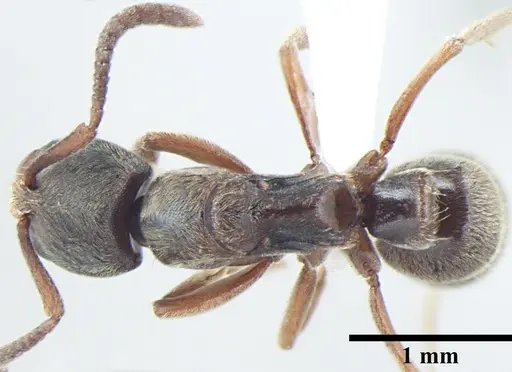
Literature
Loading...Loading products...