

Crematogaster teranishii
- Scientific Name
- Crematogaster teranishii
- Tribe
- Crematogastrini
- Subfamily
- Myrmicinae
- Author
- Santschi, 1930
- Distribution
- Found in 2 countries
Crematogaster teranishii Overview
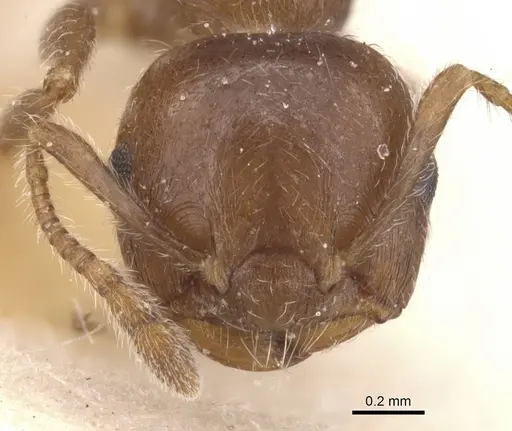
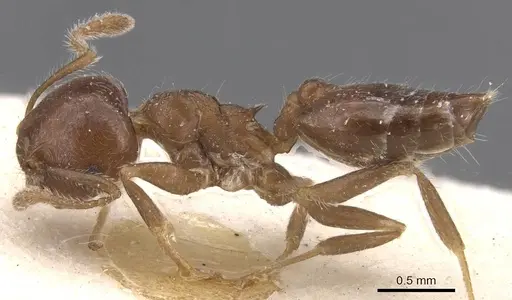
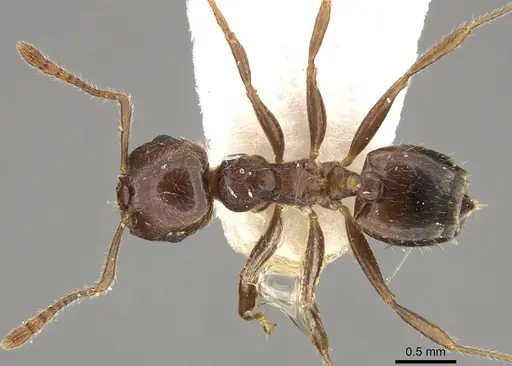
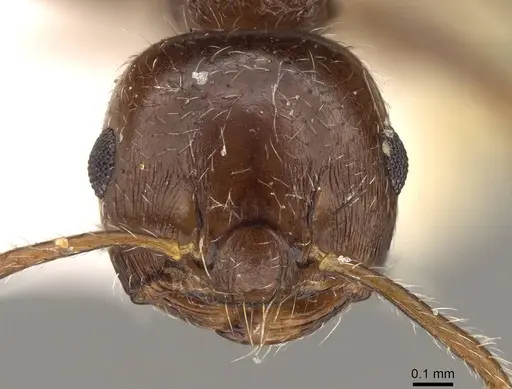
Crematogaster teranishii is an ant species of the genus Crematogaster. It is primarily documented in 2 countries , including Japan, Korea, Republic of. Detailed taxonomic data and occurrence records can be further explored via authoritative databases such as AntWeb or the Global Biodiversity Information Facility (GBIF).
Crematogaster teranishii
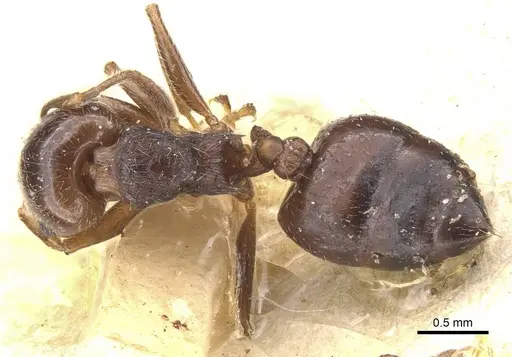
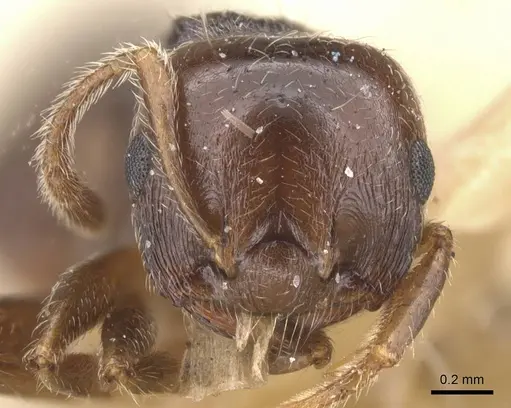
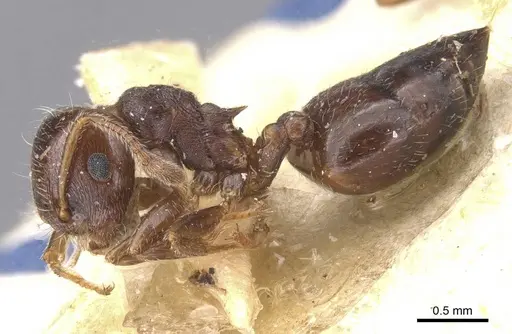
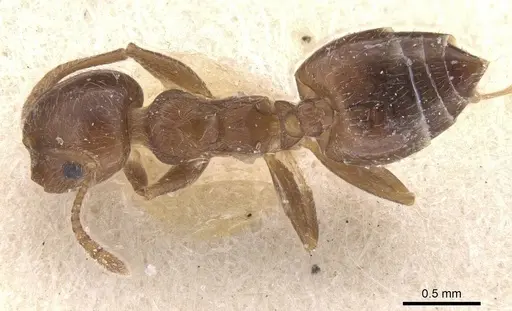
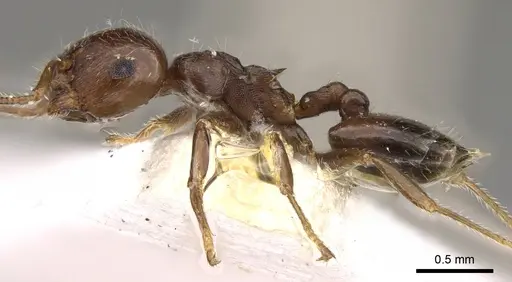
Crematogaster teranishii is a small arboreal ant native to Japan and Korea, commonly called the Teranishi acrobat ant. Workers measure 2.5-4mm with a brown to blackish-brown body. The genus name 'Crematogaster' comes from Greek meaning 'split belly, ' referring to their distinctive heart-shaped abdomen that they raise when disturbed, giving them their common name. These ants are arboreal nesters, making their homes inside hollow dead branches, dead grass stems, and bamboo cavities [1][2].
This species has a fascinating relationship with lycaenid butterflies, they are a facultative myrmecophilous partner, meaning they sometimes attend Arhopala japonica butterfly larvae in exchange for honeydew. They are aggressive defenders and efficiently exclude herbivores and parasitoids from their territory. They also regulate larval diapause through a unique mechanism where queens control whether their larvae enter winter dormancy, ensuring the colony's survival through Japan's cold winters [3].
Quick Summary
- Difficulty: Medium
- Origin & Habitat: Japan and Korean Peninsula. Found in forest edges, bushes, gardens, and tree trunks. Arboreal species that nests inside hollow dead branches, dead grass stems, and bamboo cavities [1][2][4].
- Colony Type: Single-queen (monogyne) colonies with claustral founding. Queens seal themselves in a chamber and raise the first workers alone using stored fat reserves [3].
- Colony: Monogyne
- Founding: Claustral
- Size & Growth:
- Queen: Estimated 5-7mm based on genus patterns
- Worker: 2.5-4mm [1][2]
- Colony: Estimated moderate-sized colonies (several hundred workers) based on genus patterns
- Growth: Moderate
- Development: 7-8 weeks (approximately 53-57 days) at 25°C with proper chilling [3] (Queens require a cold period (around 10°C for 90 days) to trigger proper reproduction. Without chilling, larvae enter diapause and development stalls. First workers (nanitics) emerge about 7-8 weeks after the queen begins laying eggs following the cold treatment [3].)
- Antkeeping:
- Temperature: Requires seasonal temperature variation. Queens need cold treatment at 10°C for about 90 days to stimulate reproduction, then warmth at 25°C for brood development. In summer, maintain around 22-26°C with a gradient. In winter, provide a hibernation period at 5-10°C for 2-3 months [3].
- Humidity: Moderate humidity (50-70%). As arboreal nesters, they prefer drier conditions than ground-nesting ants. Keep nest material slightly moist but allow drying between waterings. Avoid overly damp conditions that cause mold [1][4].
- Diapause: Yes, this species has a unique larval diapause mechanism. Queens regulate whether larvae enter diapause, which is induced by cold temperatures in autumn. Queens and larvae overwinter without workers in the founding chamber. Provide 2-3 months of cold hibernation at 5-10°C [3].
- Nesting: Arboreal nesters need vertical or elevated setups. Dead bamboo stems, hollow twigs, or a Y-tong (AAC) nest with narrow chambers work well. They do not need soil substrate, provide a dry outworld with occasional protein foods. Test tubes can work but may need modification to simulate their natural bamboo/branch cavities [1][2][4].
- Behavior: Aggressive and territorial toward other ant species. They will defend their territory vigorously and have been observed killing workers of competing species like Temnothorax congruus. When threatened, they raise their abdomen in a characteristic acrobat pose, this is a warning display. Workers are active foragers that patrol tree trunks and branches. They are moderate escape artists due to their small size, use fine mesh barriers [2].
- Common Issues: queen mortality during hibernation if not properly chilled, they NEED the cold period to trigger reproduction, larval diapause failure when kept warm continuously, without the cold treatment, larvae may not develop properly, escape through tiny gaps due to small 2.5-4mm worker size, use fine mesh and tight-fitting barriers, aggressive toward other ant species, keep them isolated from other ant colonies, mold issues from overwatering, arboreal ants prefer drier conditions than ground nesters
Nest Preferences and Housing
Crematogaster teranishii is an arboreal species that naturally nests inside hollow dead branches, dead grass stems, and bamboo cavities [1][2]. In captivity, you can simulate this with a Y-tong (acrylic) nest with narrow chambers, or by providing natural materials like dried bamboo sections or hollow twigs. They do not require soil substrate, a dry outworld works fine.
For the founding chamber, provide a test tube with a small chamber that the queen can seal herself into. Once workers emerge, you can transition them to a more naturalistic arboreal setup. Avoid overly humid conditions, these ants prefer drier, well-ventilated spaces typical of tree hollows. A small water tube for humidity is sufficient.
Escape prevention is important, their small size (2.5-4mm) means they can squeeze through standard barrier gaps. Use fine mesh (0.5mm or smaller) on any openings and apply fluon to tube rims and formicarium edges.
Feeding and Diet
In the wild, Crematogaster teranishii forages on tree trunks and branches, collecting honeydew from aphids and scale insects, and hunting small insects. They are aggressive predators that efficiently exclude herbivores from their territory.
In captivity, offer a varied diet: sugar water or honey as an energy source (always available), and protein sources like small crickets, mealworms, fruit flies, or other small insects. They are generalist feeders but prefer protein-rich foods. Feed protein 2-3 times per week, and keep sugar water available at all times.
As facultative myrmecophiles, they may attend lycaenid butterfly larvae in exchange for honeydew, you could experiment with offering small aphids or scale insects, but this is optional rather than required. [1][4]
Temperature and Seasonal Care
This species has a unique temperature requirement tied to its reproductive cycle. In the wild, nuptial flights occur in autumn (September-October in Japan), and queens must undergo a cold period to trigger proper reproduction [3].
For successful captive breeding: after the queen lays eggs in autumn/winter, expose her to 10°C for approximately 90 days. Then transfer to 25°C, she will begin laying eggs within about 8 days, and first workers will emerge 7-8 weeks later [3]. Without this cold treatment, larvae enter diapause and development stalls.
For established colonies: maintain summer temperatures of 22-26°C with a gentle gradient. In winter, provide 2-3 months of cold hibernation at 5-10°C. This mimics their natural cycle and is essential for colony health. Do not keep them warm year-round, this disrupts their biological rhythm and can cause reproductive failure.
Colony Founding and Development
Crematogaster teranishii exhibits claustral colony founding, the queen seals herself in a small chamber and raises the first workers alone, living entirely on her stored fat reserves [3]. This is typical of the genus.
After nuptial flights in September-October, mated queens find hollow branches or bamboo stems and seal themselves inside. They lay eggs that develop into larvae, but here is the unique part: the queen regulates whether her larvae enter diapause (a dormant state) through an unknown mechanism, possibly chemical substances, pheromones, or glandular secretions [3].
This ensures larvae survive winter without workers. In spring, after the cold period breaks diapause, development resumes and first workers emerge around June-July in Japan [3]. This makes the species well-adapted to temperate climates with cold winters.
For keepers: expect slow initial growth. The first workers (nanitics) will be smaller than mature workers and appear about 7-8 weeks after proper cold treatment and warming.
Behavior and Defense
These ants are aggressive and territorial. They actively defend their nesting sites and foraging territories against other ant species. In studies, they have been observed killing workers of competing species like Temnothorax congruus, and their presence alone causes other ant species to avoid nesting nearby [2].
Their common name 'acrobat ant' comes from their defensive behavior, when threatened, they raise their abdomen high above their head in a distinctive pose. This is a warning display, and they may also release alarm pheromones to recruit nestmates.
They are arboreal foragers that patrol tree trunks and branches. Workers are active and will explore their outworld thoroughly. While not large, their aggressive demeanor and numbers make them capable defenders.
Frequently Asked Questions
How long does it take for Crematogaster teranishii eggs to develop into workers?
With proper cold treatment (90 days at 10°C followed by 25°C), first workers emerge in approximately 7-8 weeks (53-57 days). Without the cold period, larvae enter diapause and development stalls [3].
Do Crematogaster teranishii ants need hibernation?
Yes, they require a cold period. This species has a unique larval diapause mechanism where queens regulate whether larvae enter dormancy. Provide 2-3 months of cold hibernation at 5-10°C in winter to maintain healthy colony cycles [3].
What do Crematogaster teranishii ants eat?
They are generalist feeders. Offer sugar water or honey constantly for energy, and protein sources like small crickets, mealworms, or fruit flies 2-3 times per week. They also collect honeydew in the wild [1].
Are Crematogaster teranishii good for beginners?
They are medium difficulty. The main challenge is providing proper seasonal temperature cycling, they need a cold hibernation period and the queen requires cold treatment to trigger reproduction. Their small size also requires good escape prevention. If you can manage seasonal care, they are rewarding.
What type of nest should I use for Crematogaster teranishii?
They are arboreal nesters. Use a Y-tong (AAC) nest with narrow chambers, or provide natural materials like dried bamboo sections or hollow twigs. They prefer drier conditions than ground-nesting ants. Test tubes work for founding but may need modification for established colonies [1][2].
Do Crematogaster teranishii ants sting?
They are small ants (2.5-4mm) and while they have a stinger, it is too small to penetrate human skin effectively. Their main defense is their aggressive behavior and the characteristic abdomen-raising display. They are not considered dangerous to humans.
How big do Crematogaster teranishii colonies get?
Based on genus patterns, they likely reach several hundred workers. They are not among the largest Crematogaster species but can form substantial colonies over time. Exact maximum size is not well-documented in research.
Can I keep multiple Crematogaster teranishii queens together?
No, this species is monogyne (single-queen). They do not form multi-queen colonies. If you find multiple queens, they will fight. Only keep one queen per colony.
Why are my Crematogaster teranishii larvae not developing?
This species regulates larval diapause, without a cold period, larvae may enter dormancy and not develop. Ensure your queen received 90 days at 10°C before warming to 25°C. Also check that you are providing adequate protein food once larvae hatch [3].
Are Crematogaster teranishii aggressive?
Yes, they are aggressive toward other ant species and will defend their territory vigorously. They have been observed killing workers of competing species. Keep them isolated from other ant colonies. They are not aggressive toward keepers but will defend if threatened.
When do Crematogaster teranishii have nuptial flights?
Nuptial flights occur in autumn, specifically September and October in Japan [3]. If you are keeping this species, mating season is in fall. Queens are typically collected immediately after nuptial flights in early October.
References

This caresheet is licensed under CC BY-SA 4.0 .
Literature
Loading...Loading products...