

Crematogaster sotobosque
- Scientific Name
- Crematogaster sotobosque
- Subgenus
- Orthocrema
- Tribe
- Crematogastrini
- Subfamily
- Myrmicinae
- Author
- Longino, 2003
- Distribution
- Found in 8 countries
Crematogaster sotobosque Overview
Crematogaster sotobosque is an ant species of the genus Crematogaster. It is primarily documented in 8 countries , including Brazil, Colombia, Costa Rica. Detailed taxonomic data and occurrence records can be further explored via authoritative databases such as AntWeb or the Global Biodiversity Information Facility (GBIF).
Crematogaster sotobosque
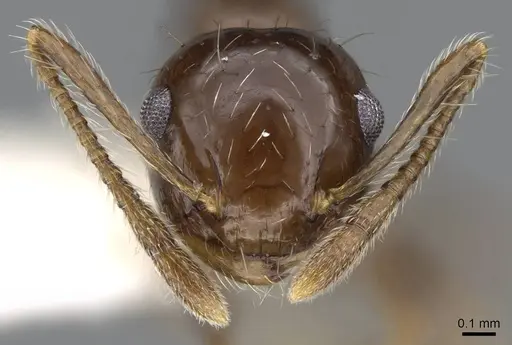
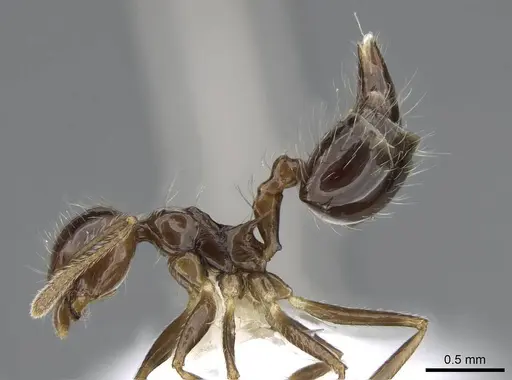
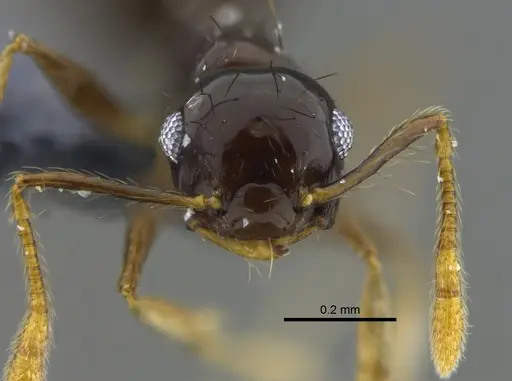
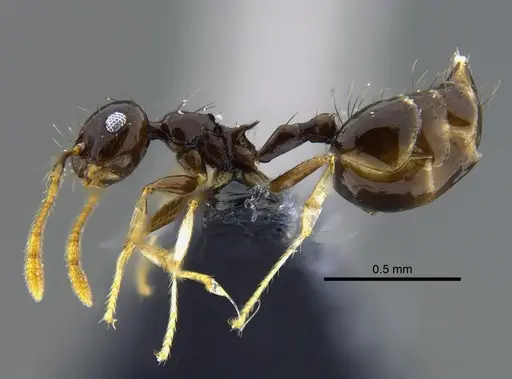
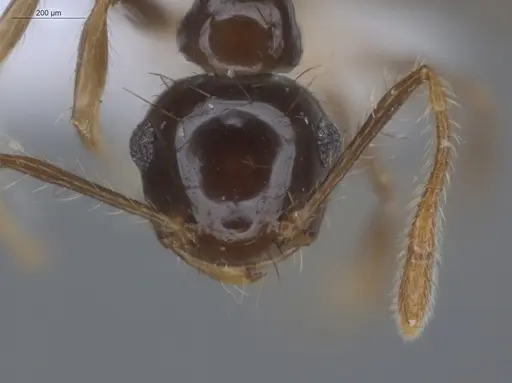
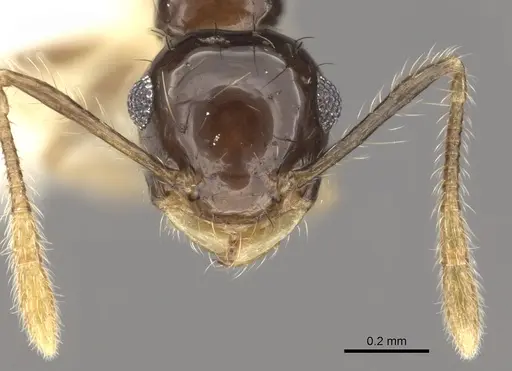
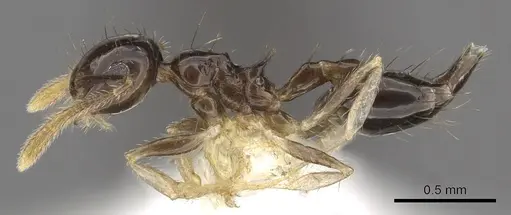
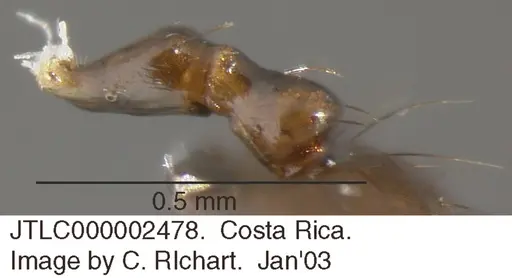
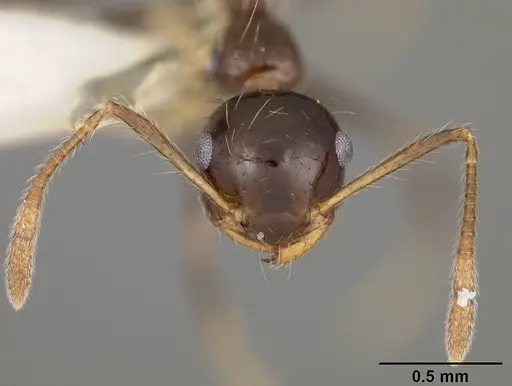
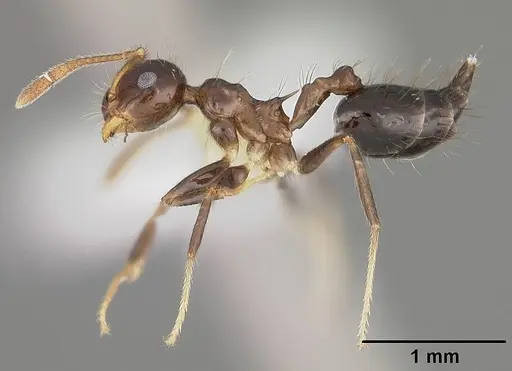
Crematogaster sotobosque is a small acrobat ant native to the Neotropics, ranging from Costa Rica through the Amazon basin to Peru. Workers measure 4-6mm and have a distinctive appearance: a smooth, highly polished brown body with contrasting yellow mandibles and antennal club, and amber-colored dorsal setae. The species gets its name from the Spanish word for 'forest understory, ' reflecting its preferred habitat of lowland and mid-montane wet forests [1][2]. Unlike many Crematogaster species that are arboreal, this species nests in leaf litter on the forest floor, building small carton shelters between dead leaves [1].
What makes C. sotobosque unusual is its diffuse nesting behavior and foraging patterns. Workers forage solitarily on low vegetation, thinly dispersed across the understory, primarily at night but also during the day in heavily shaded areas. Researchers have observed intriguing 'broodless worker bivouacs', worker aggregations in leaf litter that contain no brood or queens, suggesting complex colony organization spread across multiple small chambers rather than a single central nest [1]. This species has also been recorded in southern Arizona, representing the northern edge of its range [3].
Quick Summary
- Difficulty: Medium
- Origin & Habitat: Native to Neotropical forests from Costa Rica to Amazonian Brazil and Peru. Found in lowland and mid-montane mature wet forest habitats, specifically in leaf litter on the forest floor [1][2]. Also recorded in southern Arizona, USA [3].
- Colony Type: Colony structure is not fully documented. Observed with single dealate queens in leaf litter. The presence of broodless worker bivouacs suggests possible diffuse colony organization with multiple nest sites. Queen number and colony type require further study.
- Size & Growth:
- Queen: Approximately 5-7mm (estimated from genus patterns and measurements provided in species description)
- Worker: 4-6mm (HL 0.466-0.549,HW 0.501-0.595mm) [1]
- Colony: Unknown, likely moderate colonies based on genus patterns
- Growth: Moderate, estimated based on typical Crematogaster development
- Development: 6-10 weeks (estimated based on genus patterns for tropical Crematogaster species) (Development time is estimated, no specific study found for this species. Tropical Crematogaster typically develop faster than temperate species.)
- Antkeeping:
- Temperature: Keep at 22-26°C. This is a tropical forest species requiring warm, stable temperatures. A heating cable on one side of the nest creates a gentle gradient. Monitor colony activity, if workers cluster near heat, increase slightly, if they avoid heated areas, reduce temperature [1].
- Humidity: High humidity required, these are forest floor ants from wet habitats. Keep the nest substrate consistently moist but not waterlogged. Provide a water tube and mist occasionally. The substrate should feel damp to the touch with some drier areas for ants to self-regulate [1].
- Diapause: No, this is a tropical species that does not hibernate. Maintain warm temperatures year-round [1].
- Nesting: This species nests in leaf litter and builds small carton shelters. In captivity, a naturalistic setup works best, a layer of moist substrate (coco fiber, soil mix) with dead leaves, small pieces of wood, and bark fragments on top. A Y-tong nest or acrylic nest with moist plaster can also work, but provide plenty of leaf litter and small hiding spaces. Avoid tall, open spaces, they prefer tight, confined areas [1].
- Behavior: Workers are solitary foragers, thinly dispersed across vegetation rather than forming trails. They are primarily nocturnal but can be active during the day in shaded areas. They are attracted to sugar baits and protein sources like dead insects. Workers have a mildly irritant abdominal tip (typical of Crematogaster) but are not aggressive. Their small size means they can escape through tiny gaps, use fine mesh and tight-fitting lids. They are not strong climbers and rarely escape from smooth surfaces [1][2].
- Common Issues: escape prevention is critical, their small size allows them to squeeze through standard barriers, use fine mesh (0.5mm or smaller), high humidity needs can lead to mold if ventilation is poor, balance humidity with adequate airflow, solitary foraging means they may not find food quickly, place food directly in their foraging area, tropical species will not tolerate cool temperatures, keep above 20°C year-round, wild-caught colonies may carry parasites, quarantine and monitor new colonies
Nest Preferences and Housing
Crematogaster sotobosque is a leaf-litter nesting species that builds small carton shelters in the forest floor. In captivity, recreate this with a naturalistic setup: use a container with a 2-3cm layer of moist coco fiber or soil mix, then add dead leaves, small bark pieces, and twig fragments on top. This provides the damp substrate they need while giving them materials to build their characteristic carton structures. Alternatively, a Y-tong nest with narrow chambers and moist plaster works well. The key is providing tight, confined spaces rather than open areas, these ants feel secure in small crevices between leaves and debris. A water tube should be provided for drinking moisture, and the substrate should be kept consistently damp but never waterlogged [1].
Feeding and Diet
In the wild, workers forage solitarily on low vegetation and are attracted to sugar sources and protein. Longino observed them coming to sugar baits and dead mosquitoes in the field [1]. In captivity, offer a mix of sugar water or honey as a constant energy source, and protein foods like small insects (fruit flies, pinhead crickets, mealworms) 2-3 times per week. They are not aggressive foragers and may not quickly locate food placed far away, place prey directly in their foraging area. Their solitary foraging style means they don't form large recruitment trails, so don't expect the dramatic swarms you might see with other ant species. Remove uneaten prey after 24-48 hours to prevent mold [1].
Temperature and Seasonal Care
As a tropical species from lowland and mid-montane wet forests, C. sotobosque requires warm temperatures year-round. Keep the nest area at 22-26°C, with a slight gradient if possible (warmer on one side). A heating cable placed on top of the nest (never under it, as this can dry out the substrate) can maintain temperatures during cooler months. This species does not hibernate or enter diapause, maintaining consistent warmth is essential for brood development. Room temperature in most homes should be sufficient, but monitor during winter when heating may reduce ambient temperatures. Avoid temperatures below 20°C for extended periods [1].
Behavior and Colony Dynamics
This species has fascinating and unusual colony organization. Longino's field observations revealed 'broodless worker bivouacs', worker aggregations in leaf litter that contain no brood or sexuals, while the queen with brood was found in a separate location (a hollow stick a few centimeters away) [1]. This suggests a diffuse colony structure where different parts of the colony occupy multiple small spaces rather than one central nest. Workers forage solitarily and are thinly dispersed across vegetation, not forming the characteristic trails seen in many Crematogaster species. They are primarily nocturnal but can be active during the day in shaded forest understory. Their abdominal tip can be raised and secrete irritants (typical of acrobat ants), but they are not particularly aggressive toward keepers [1][2].
Escape Prevention
While not the smallest ants, C. sotobosque workers are small enough to escape through standard gaps. Use tight-fitting lids on any container, and apply fluon or similar barrier gel to the upper edges of formicaria. Fine mesh (0.5mm or smaller) should be used on any ventilation holes. They are not particularly strong climbers on smooth surfaces, but can squeeze through tiny gaps around lids, tubing connections, and between formicarium sections. Check all connections regularly and seal any gaps with silicone or tape. Because they nest in leaf litter, they may try to push through any cracks between the nest chamber and foraging area [1].
Frequently Asked Questions
Can I keep Crematogaster sotobosque in a test tube?
Test tubes can work for founding colonies, but this species prefers naturalistic setups with leaf litter and debris for building carton shelters. If using test tubes, provide a second chamber with moist substrate and leaf litter material. A better option is a naturalistic setup with a substrate layer and leaf litter on top of a small formicarium or test tube setup.
How long does it take for the first workers to hatch?
Exact development time is unknown for this species. Based on typical tropical Crematogaster patterns, expect 6-10 weeks from egg to first worker at optimal temperature (22-26°C). Nanitics (first workers) will be smaller than normal workers.
Do Crematogaster sotobosque ants sting?
Crematogaster ants have a abdominal tip that can raise and secrete irritating substances, but they are not considered dangerous to humans. They are not aggressive and will typically flee rather than attack. The secretion may cause mild skin irritation in sensitive individuals.
Are Crematogaster sotobosque good for beginners?
This species is rated as Medium difficulty. They require high humidity and warm temperatures (tropical), which is manageable. The main challenges are their small size (escape prevention), solitary foraging (may not quickly locate food), and the need for naturalistic housing with leaf litter. Not the easiest choice for a first ant, but achievable for those with some experience.
What do Crematogaster sotobosque eat?
They accept sugar sources (honey, sugar water) and protein (small insects like fruit flies, pinhead crickets, mealworms). In the wild, they are attracted to sugar baits and dead mosquitoes. Offer sugar water constantly and protein prey 2-3 times per week.
Do Crematogaster sotobosque need hibernation?
No. This is a tropical species from wet forests that does not hibernate. Keep them warm year-round at 22-26°C. Cool temperatures can slow or stop brood development and may harm the colony.
When should I move them to a formicarium?
Move to a larger setup when the colony reaches 20-30 workers or when the test tube becomes cramped. A naturalistic setup with leaf litter is ideal for this species. They don't need large spaces, tight, confined areas mimic their natural leaf-litter nests.
Why are my Crematogaster sotobosque dying?
Common causes include: too low temperature (keep above 20°C), too dry conditions (they need high humidity), mold from poor ventilation, or escape through small gaps. Also check for parasites. Review your temperature, humidity, and escape prevention setup.
Can I keep multiple queens together?
Colony structure is not well documented for this species. Combining unrelated queens has not been studied and is not recommended. If you obtain multiple foundresses, keep them in separate setups until you determine their social compatibility.
How big do colonies get?
Exact colony size is unknown for this species. Based on genus patterns, expect moderate-sized colonies of probably several hundred workers. They appear to have a diffuse colony structure with workers spread across multiple small nest sites.
What makes Crematogaster sotobosque different from other Crematogaster?
Unlike most Crematogaster species that are arboreal (live in trees), this species is ground-nesting in leaf litter. They also have unusually diffuse colony organization with broodless worker bivouacs, and they forage solitarily rather than in trails. Their smooth, polished body and amber dorsal setae help identify them [1][2].
References

This caresheet is licensed under CC BY-SA 4.0 .
CASENT0914644
View on AntWeb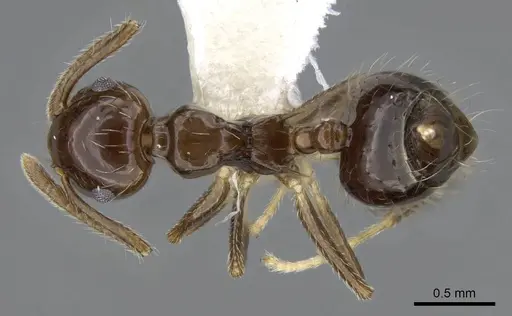
CBUMAGENT41931
View on AntWeb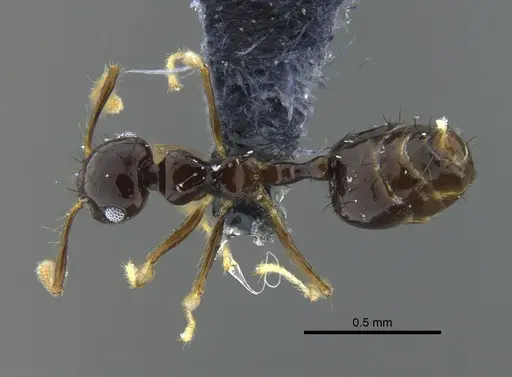
ECOFOG-IT14-0304-20
View on AntWeb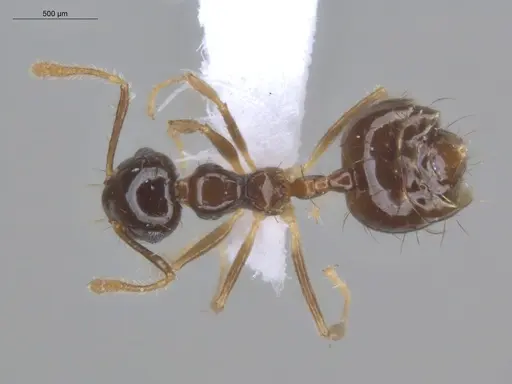
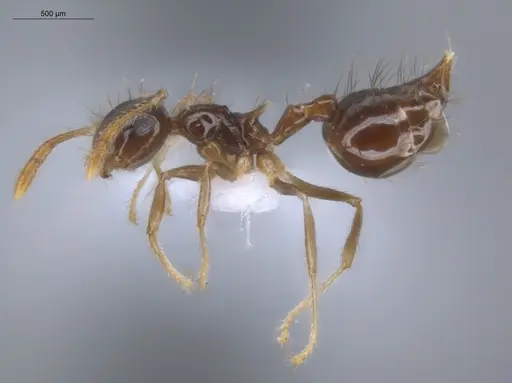
INBIOCRI001237410
View on AntWeb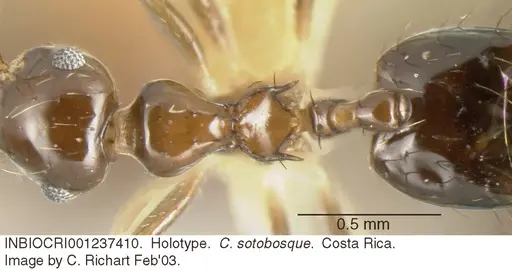
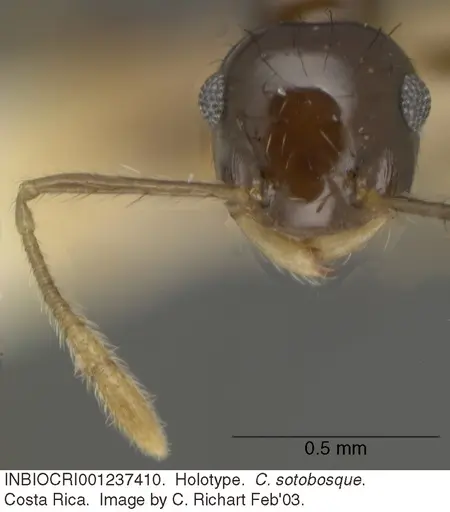
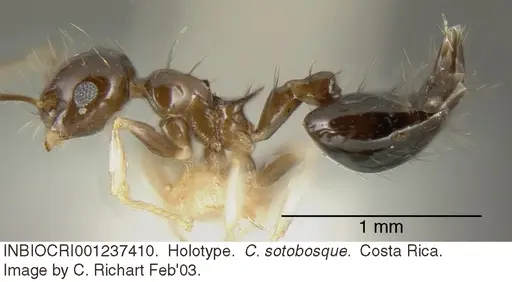
JTLC000001217
View on AntWeb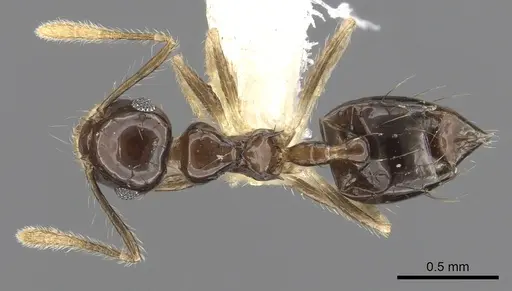
JTLC000002478
View on AntWeb
USNMENT00442062
View on AntWeb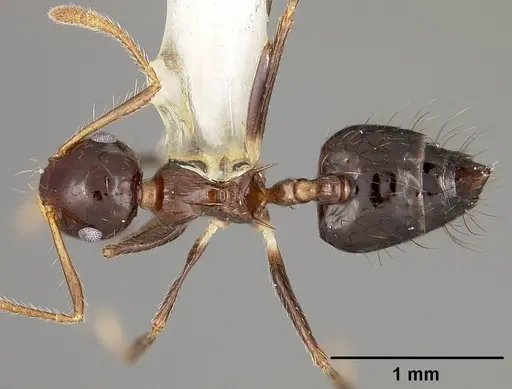
Literature
Loading...Loading products...