

Crematogaster sewardi
- Scientific Name
- Crematogaster sewardi
- Tribe
- Crematogastrini
- Subfamily
- Myrmicinae
- Author
- Forel, 1901
- Distribution
- Found in 3 countries
Crematogaster sewardi Overview
Crematogaster sewardi is an ant species of the genus Crematogaster. It is primarily documented in 3 countries , including Indonesia, Malaysia, Singapore. Detailed taxonomic data and occurrence records can be further explored via authoritative databases such as AntWeb or the Global Biodiversity Information Facility (GBIF).
Crematogaster sewardi
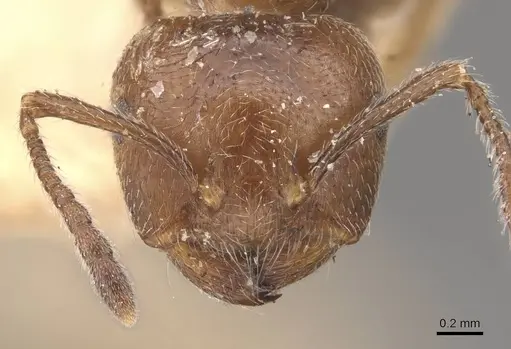
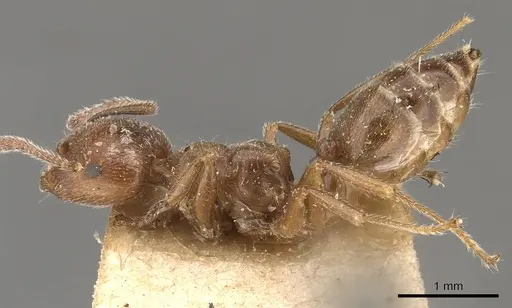
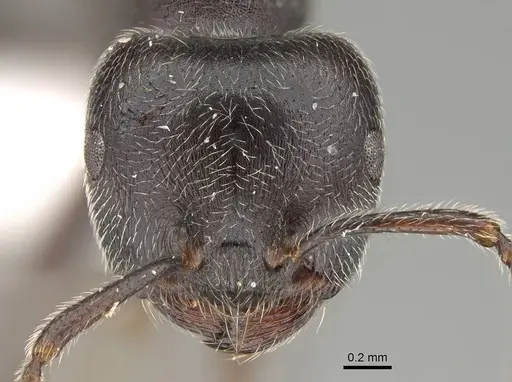
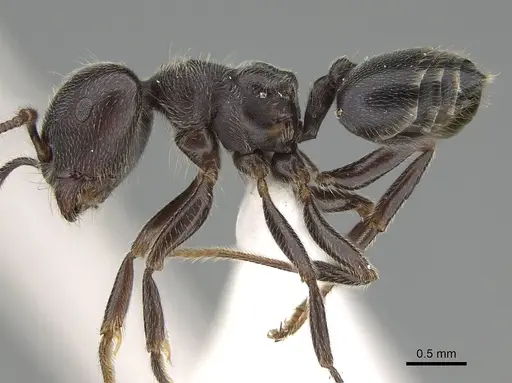
Crematogaster sewardi is a medium-sized ant belonging to the subgenus Physocrema, native to Southeast Asia. Workers measure 0.85-1.32mm and display pronounced size polymorphism, with larger workers having a distinctly raised propodeum relative to the promesonotum. The body is entirely black with sparse standing setae on the head and abundant setae on the promesonotum. This species lacks propodeal spines and has a four-segmented antennal club. It is widely distributed across Thailand, Malaysia, Indonesia (Kalimantan, Sumatra, Java, Bali, Lombok), Singapore, and Vietnam, making it the most wide-ranging species within the Physocrema subgenus [1][2].
This ant is one of the most dominant species found on tree trunks in Southeast Asian botanical gardens and plantations, often occurring on multiple tree species including durian and citrus trees [3][4]. It belongs to the C. difformis-subgroup and is closely related to C. ampullaris, with which it was frequently confused in scientific literature until taxonomic revision in 2009 [5][1]. The metapleural glands are enlarged and serve an antibiotic function, helping maintain colony hygiene [6].
Quick Summary
- Difficulty: Medium
- Origin & Habitat: Native to Southeast Asia including Thailand, Malaysia (Peninsula and Borneo), Indonesia (Kalimantan, Sumatra, Krakatau Island, Java, Bali, Lombok), Singapore, and Vietnam. Found in a variety of habitats from lowland forests to botanical gardens and fruit tree plantations [1][2].
- Colony Type: Colony structure is not well-documented in scientific literature. Based on genus patterns, likely monogyne (single queen) but this requires confirmation.
- Size & Growth:
- Queen: Unconfirmed, likely around 6-8mm based on genus patterns
- Worker: 0.85-1.32mm with pronounced size polymorphism [1][2]
- Colony: Estimated moderate-sized colonies based on tree-dwelling behavior and dominance patterns, likely several hundred workers
- Growth: Moderate, estimated based on tropical distribution
- Development: Estimated 6-8 weeks at tropical temperatures based on typical Crematogaster development patterns (Development time is estimated as direct measurements are not available for this species. Tropical species typically develop faster than temperate species.)
- Antkeeping:
- Temperature: Keep at 24-28°C. As a tropical Southeast Asian species, they prefer warm conditions. Room temperature (24-26°C) is suitable, with slight increases promoting activity.
- Humidity: Moderate to high humidity (60-80%). They are found in tropical environments and tree-dwelling habitats. Provide a moist nest substrate but avoid waterlogging.
- Diapause: No, being a tropical species, they do not require hibernation. Maintain consistent warm temperatures year-round.
- Nesting: Tree-dwelling species that nests in bark and woody substrates. In captivity, they do well in acrylic nests, Y-tong nests, or naturalistic setups with wood/branches. Provide vertical climbing structures and narrow chambers scaled to their medium size.
- Behavior: Crematogaster sewardi is an arboreal species commonly found on tree trunks and branches. They are active foragers and show typical Crematogaster behavior including raising their abdomen when disturbed (rear up threat display). Workers are polymorphic, with larger workers taking on defensive roles. They are not aggressive toward keepers but will defend their colony. Escape risk is moderate, use standard barrier methods (Fluon) but no special fine mesh required given their medium size.
- Common Issues: Limited biological data makes precise care recommendations challenging, some aspects are estimated from genus patterns, Tropical species requires consistent warmth year-round, temperature drops can stress colonies, Tree-dwelling nature requires vertical space and climbing structures, horizontal-only nests are suboptimal, Wild-caught colonies may carry parasites or diseases that can cause colony failure in captivity, Their dominance on tree trunks means they may be sensitive to disturbance, handle gently during transfers
Housing and Nest Setup
Crematogaster sewardi is a tree-dwelling (arboreal) ant that naturally nests in bark and woody substrates. In captivity, they do well in acrylic nests, Y-tong (AAC) nests, or naturalistic setups that include wood or bark pieces. Provide vertical climbing structures since they naturally spend time elevated on tree trunks. Acrylic nests with horizontal chambers work fine, but adding vertical branches or cork bark creates a more natural environment. The nest chambers should be scaled to their medium size, roughly 3-5mm passage width accommodates workers comfortably. A test tube setup works for founding colonies, but transfer to a proper nest once the colony reaches 20-30 workers. [3][4][1]
Feeding and Diet
Like other Crematogaster species, these ants are omnivorous and will accept a variety of foods. Offer sugar water or honey as a constant energy source. For protein, provide small insects such as fruit flies, small crickets, or mealworms. They are dominant on tree trunks in the wild, where they likely tend aphids or collect honeydew from scale insects, you can replicate this by offering occasional sweet secretions. Feed protein 2-3 times per week, and keep sugar water available at all times. Remove uneaten prey after 24-48 hours to prevent mold. Based on their dominance in fruit tree plantations, they likely have varied diets in the wild. [4][3]
Temperature and Humidity
As a tropical species from Southeast Asia, Crematogaster sewardi requires warm temperatures. Keep the nest area at 24-28°C for optimal colony development. Room temperature in most homes (24-26°C) is suitable. If your room is cooler, use a heating cable on one side of the nest to create a gentle gradient, place it on top of the nest, not underneath, to avoid excessive drying. Humidity should be moderate to high (60-80%). Mist the area occasionally or use a water tube in the nest to maintain moisture. The substrate should feel damp but never waterlogged. Being from humid tropical environments, they benefit from good humidity but also need some ventilation to prevent mold. [2][1]
Behavior and Temperament
These ants display typical Crematogaster behavior, they are active foragers and will readily explore their enclosure. When threatened, workers raise their abdomen in a characteristic defensive display (the 'gaster flag' behavior common to Crematogaster). They are not particularly aggressive toward keepers but will defend their colony vigorously if provoked. Workers are polymorphic, meaning different sizes perform different tasks, larger workers often serve as soldiers or defenders. They are arboreal by nature, so they will climb actively on any structures provided. Escape risk is moderate, they are not tiny ants, so standard barrier methods like Fluon on container rims work well. [1][2]
Colony Development
Colony development for Crematogaster sewardi follows typical patterns for the genus, though specific timelines are not documented. Based on related species and tropical distribution, expect 6-8 weeks from egg to first worker (nanitic) at optimal temperatures. Colonies likely grow to several hundred workers over time, given their dominance in natural habitats. The founding stage is unconfirmed, most Crematogaster species are claustral, meaning the queen seals herself in and raises the first brood without foraging. Founding colonies should be kept undisturbed in a dark, warm, humid location until the first workers emerge. Do not feed founding queens, they survive on stored fat reserves. [5]
Seasonal Care
As a tropical species, Crematogaster sewardi does not require hibernation or diapause. Maintain consistent temperatures year-round (24-28°C). They are found in environments with minimal seasonal temperature variation, so dramatic temperature changes can stress colonies. In winter, ensure heating continues if your room temperature drops. Humidity can be maintained at similar levels throughout the year. These ants are active year-round in the wild, so expect consistent activity in captivity if temperatures are maintained. Avoid placing the nest near air conditioning vents or drafty windows. [2][1]
Frequently Asked Questions
How long does it take for Crematogaster sewardi to produce first workers?
The exact timeline is not documented, but based on typical Crematogaster development and their tropical distribution, expect 6-8 weeks from egg to first worker at optimal temperatures (24-28°C).
What do Crematogaster sewardi ants eat?
They are omnivorous. Offer sugar water or honey constantly, and protein sources like small insects (fruit flies, small crickets, mealworms) 2-3 times per week. They likely collect honeydew in the wild.
Can I keep Crematogaster sewardi in a test tube?
Yes, test tubes work well for founding colonies. Once the colony reaches 20-30 workers, transfer to a proper nest (acrylic, Y-tong, or naturalistic) with vertical climbing structures.
Do Crematogaster sewardi ants sting?
They have the characteristic Crematogaster defense, raising the abdomen, but their sting is not significant to humans. They are not considered dangerous.
What temperature do Crematogaster sewardi need?
Keep them warm at 24-28°C. As a tropical Southeast Asian species, they prefer consistent warmth. Room temperature is usually suitable.
Are Crematogaster sewardi good for beginners?
They are rated as medium difficulty. While not as challenging as some species, limited biological data means some care aspects are estimated from genus patterns. Experienced antkeepers will have more success.
How big do Crematogaster sewardi colonies get?
Colony size is not well-documented, but based on their dominance in natural habitats and related species, colonies likely reach several hundred workers.
Do Crematogaster sewardi need hibernation?
No. As a tropical species, they do not require hibernation. Maintain warm temperatures year-round.
What makes Crematogaster sewardi different from other Crematogaster?
They belong to the Physocrema subgenus and are distinguished by their raised propodeum, black coloration, and distribution across Southeast Asia. They were often confused with C. difformis until 2009.
Why are my Crematogaster sewardi dying?
Common causes include: temperature stress (too cold), low humidity, disturbance during founding, or wild-caught colonies carrying parasites. Ensure warm, humid, and quiet conditions, especially for founding colonies.
When should I move my colony to a formicarium?
Transfer from test tube to a proper nest when the colony reaches approximately 20-30 workers. Provide vertical climbing structures regardless of nest type.
Can I keep multiple Crematogaster sewardi queens together?
Colony structure is not well-documented for this species. Combining unrelated queens has not been studied, it is not recommended based on typical Crematogaster behavior.
References

This caresheet is licensed under CC BY-SA 4.0 .
CASENT0908464
View on AntWeb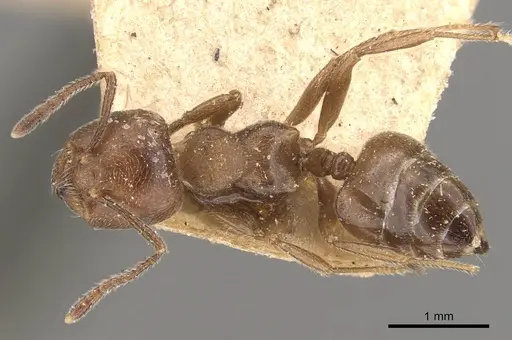
CASENT0919943
View on AntWeb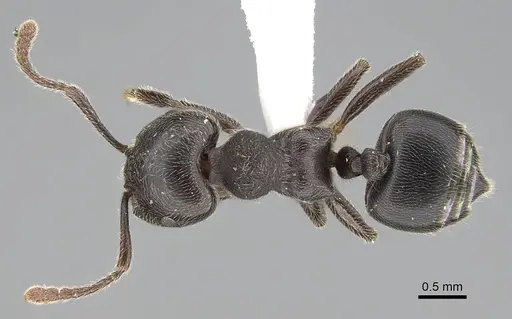
Literature
Loading...Loading products...