

Crematogaster rothneyi
- Scientific Name
- Crematogaster rothneyi
- Tribe
- Crematogastrini
- Subfamily
- Myrmicinae
- Author
- Mayr, 1879
- Distribution
- Found in 3 countries
Crematogaster rothneyi Overview
Crematogaster rothneyi is an ant species of the genus Crematogaster. It is primarily documented in 3 countries , including China, India, Sri Lanka. Detailed taxonomic data and occurrence records can be further explored via authoritative databases such as AntWeb or the Global Biodiversity Information Facility (GBIF).
Crematogaster rothneyi
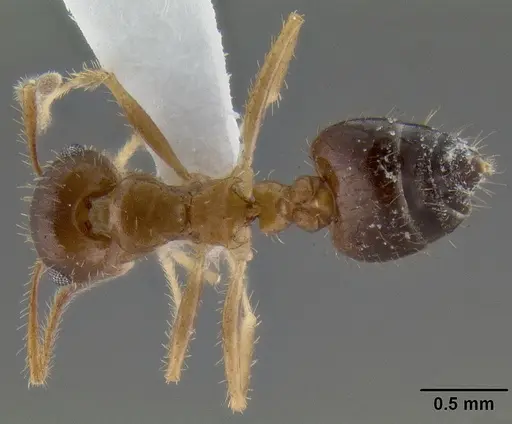
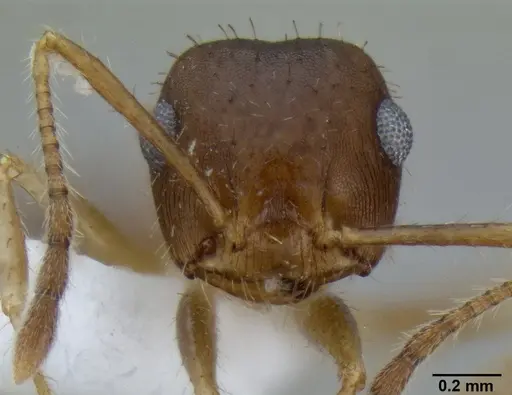
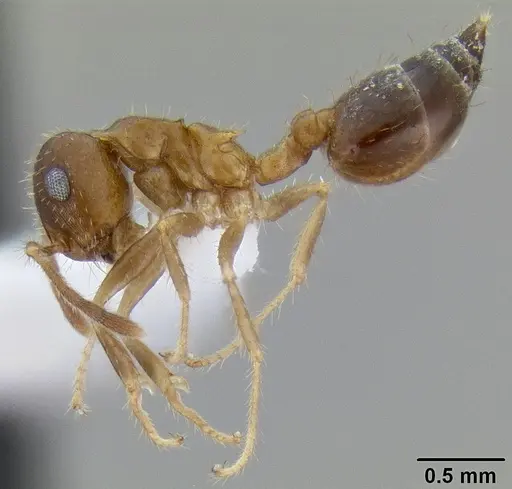
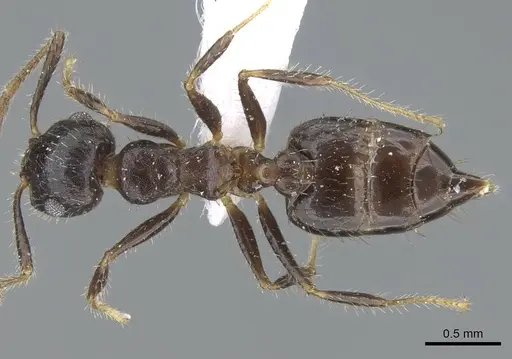
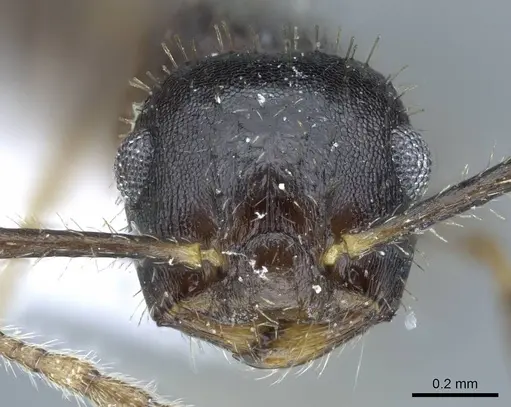
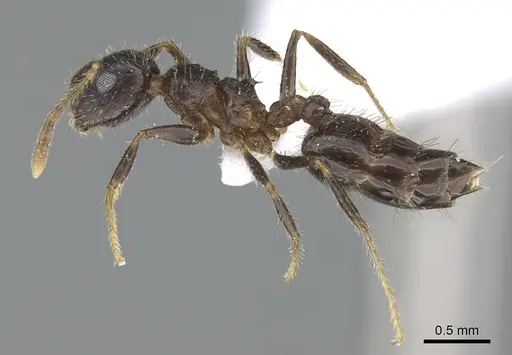
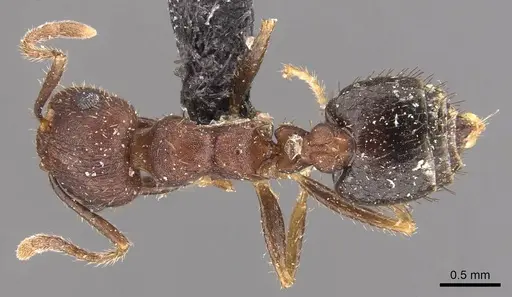
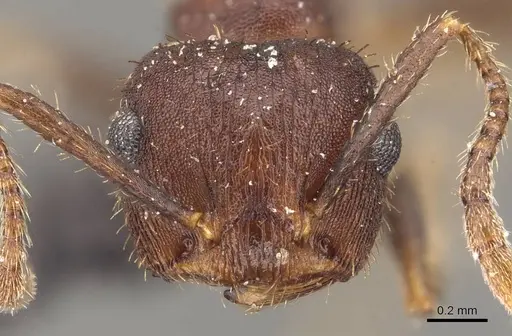
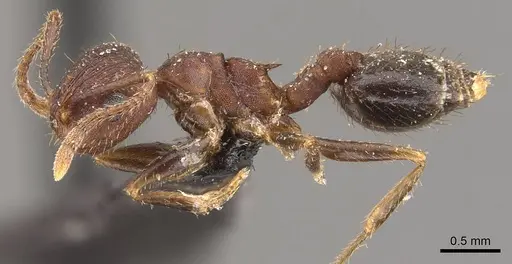
Crematogaster rothneyi is a small to medium-sized ant belonging to the Myrmicinae subfamily. Workers measure 3-3.5mm with polymorphic sizes, and have a distinctive appearance featuring a strongly sculpted body, deep metanotal groove, and a distinctly bilobed postpetiole that gives them their characteristic 'acrobat' appearance, they raise their abdomen when alarmed [1]. Their body is almost entirely yellow or brown, with yellowish antennae [1]. This species is one of the most widely distributed ants in Asia, ranging from South Asia (India, Pakistan, Bangladesh, Sri Lanka) through Southeast Asia (Myanmar, Thailand, Vietnam, Indonesia, Philippines) to southern China [1][2].
What makes C. rothneyi interesting is its arboreal lifestyle and habitat specialization. Unlike many common ants that thrive in disturbed areas, this species is a habitat specialist restricted to primary forest, researchers have found it occupies 22 regions in primary forest but is absent from secondary forest or rubber plantations [3]. They are diurnal foragers, active during the day, and are known for their characteristic defensive behavior where they raise their abdomen like an acrobat when threatened [4].
Quick Summary
- Difficulty: Medium
- Origin & Habitat: Native to South and Southeast Asia, found in India, Pakistan, Bangladesh, Sri Lanka, Myanmar, Thailand, Vietnam, Indonesia, Philippines, and southern China. This is an arboreal species that inhabits lowland forests, typically at altitudes up to 1200 meters [1][5]. They are habitat specialists restricted to primary forest areas.
- Colony Type: Colony structure is not well documented in scientific literature. Based on typical Crematogaster patterns, they are likely polygynous (multiple queens) with colonies potentially reaching several hundred workers. Ergatoid (wingless) replacement reproductives may be present.
- Colony: Polygyne
- Size & Growth:
- Queen: Estimated 6-8mm based on genus patterns (no direct measurement found)
- Worker: 3-3.5mm (polymorphic with moderate size variation) [1][6]
- Colony: Likely several hundred workers based on related species, estimated up to 500 workers
- Growth: Moderate, estimated based on typical Crematogaster development
- Development: Estimated 6-8 weeks at optimal temperature based on genus patterns (Development time inferred from related Crematogaster species. Temperature-dependent, warmer conditions accelerate development.)
- Antkeeping:
- Temperature: Keep at 24-28°C. This is a lowland tropical species from South and Southeast Asia, so they prefer warm conditions. A gentle gradient allowing workers to self-regulate is ideal.
- Humidity: Moderate to high humidity (60-80%). As an arboreal species from tropical forests, they need moisture but not saturation. Provide a water source and keep nest substrate slightly moist.
- Diapause: Unlikely, being a tropical species, they probably do not require hibernation. However, a slight reduction in temperature during winter months may slow activity naturally.
- Nesting: Arboreal nesting preferences, in captivity they do well in acrylic nests or Y-tong setups with multiple chambers. Provide materials they can tunnel through. They may accept test tube setups but prefer more complex structures. Avoid dry conditions.
- Behavior: Crematogaster rothneyi is a diurnal, arboreal forager known for its distinctive defensive behavior, when threatened, workers raise their abdomen high in the air, giving them the common name 'acrobat ants' [4]. They are moderately aggressive and will defend their nest vigorously. Workers are polymorphic, meaning different sizes perform different tasks within the colony. They are escape artists due to their small size, use fine mesh barriers and ensure any setup has no gaps. Foraging occurs during the day [7].
- Common Issues: escape prevention is critical, their small size means they can squeeze through tiny gaps, colonies may be difficult to establish from founding queens due to limited data on their founding behavior, habitat specialist, wild colonies may not adapt well to captive environments if collected from primary forest, polymorphic workers mean varying task efficiency during colony growth phases, tropical species may struggle if temperatures drop below 20°C
Housing and Nest Setup
Crematogaster rothneyi is an arboreal species, meaning they naturally nest in trees and elevated locations rather than underground. In captivity, they do well in acrylic formicariums or Y-tong nests with multiple connected chambers. The key is providing enough vertical space and branching structures that mimic their natural tree-dwelling habitat. Test tube setups can work for founding colonies but will need upgrading as the colony grows. Because they are small (3-3.5mm), ensure all connections and barriers are tight-fitting, these ants are excellent escape artists. Provide a water test tube as a hydration source and keep the nest substrate slightly moist. A small outworld for foraging allows them to hunt and collect food outside the nest chamber. [1]
Feeding and Diet
In the wild, Crematogaster rothneyi forages for honeydew, small insects, and other protein sources. As an arboreal ant, they are opportunistic feeders that will accept both sugar and protein foods. In captivity, offer sugar water or honey water as a constant energy source. For protein, provide small live prey like fruit flies, pinhead crickets, or mealworms. They are diurnal foragers, so offer food during daylight hours when they are most active. Remove uneaten prey after 24 hours to prevent mold. A varied diet helps promote healthy colony growth, experiment with different protein sources to see what they prefer. Given their small worker size, prey items should be appropriately sized.
Temperature and Seasonal Care
Being a lowland tropical species from South and Southeast Asia, C. rothneyi requires warm temperatures to thrive. Maintain nest temperatures between 24-28°C. A heating cable on one side of the nest creates a gentle gradient allowing workers to regulate their own temperature. They are found at altitudes up to 1200 meters [5], so they can tolerate slightly cooler conditions than pure lowland species, but they should never be kept below 20°C for extended periods. Unlike temperate ants, they do not require a true hibernation period. In winter, you may notice reduced activity and slower brood development, this is normal and you can slightly reduce feeding. They are diurnal [7], so provide a regular day-night cycle.
Behavior and Colony Dynamics
Crematogaster rothneyi gets its common name 'acrobat ant' from its distinctive defensive behavior, when threatened, workers raise their abdomen high in the air, making them appear to be doing a handstand [4]. This is a warning display and they may also release formic acid. Workers are polymorphic, meaning the colony contains different-sized workers that perform different tasks, larger workers may handle defense and larger prey while smaller workers tend to brood and foragers. The species is diurnal, with most foraging activity occurring during the day [7]. Colonies grow through a combination of queen reproduction and the emergence of new reproductive ants. The postpetiole (the segment between the waist and abdomen) is distinctly bilobed, which helps distinguish them from similar species [1].
Escape Prevention
Due to their very small worker size (3-3.5mm), excellent escape prevention is essential when keeping C. rothneyi. These ants can squeeze through the tiniest gaps that would stop larger ants. Use fine mesh barriers (at least 0.5mm mesh) on any ventilation holes. Ensure all connections between the nest and outworld are secure and have no gaps. Apply fluon or similar barrier products to the edges of any openings. Check your setup daily, especially during the first few weeks. A well-sealed setup prevents escapes and also helps maintain proper humidity levels. When upgrading nests, be especially careful during the transfer process as this is when escapes are most likely.
Field Collection Considerations
If you plan to collect this species from the wild, note that they are arboreal and found in primary forest habitats [3]. They are rarely encountered in the field despite their wide distribution [1]. Look for them in lowland forests at elevations up to 1200 meters. They are most easily found by beating vegetation or searching tree bark and branches. In India, they have been recorded in states including West Bengal, Maharashtra, Gujarat, Sikkim, Tamil Nadu, and Meghalaya [2]. In Pakistan, they are found in the Potohar Plateau region including Rawalpindi, Islamabad, and nearby areas [8][9]. When collecting, take only a small portion of the colony and leave the rest to ensure survival in the wild.
Frequently Asked Questions
How long does it take for Crematogaster rothneyi to produce first workers?
Based on typical Crematogaster development patterns, expect 6-8 weeks from egg to first worker at optimal temperature (24-28°C). This is an estimate as the specific development timeline for this species has not been directly studied. Warmer temperatures within the safe range can speed up development slightly.
Can I keep Crematogaster rothneyi in a test tube setup?
Yes, test tubes work for founding colonies, but you will need to upgrade to a more complex nest as the colony grows. They are arboreal ants that prefer more vertical space. Ensure excellent escape prevention due to their small size.
Do Crematogaster rothneyi ants sting?
Crematogaster ants have a stinger but it is small and rarely penetrates human skin. They are more known for their defensive behavior of raising their abdomen and releasing formic acid when threatened. The sting is mild if felt at all.
What do Crematogaster rothneyi eat?
They accept both sugar and protein foods. Offer sugar water or honey water as a constant energy source. For protein, provide small live prey like fruit flies, pinhead crickets, or small mealworms. They are diurnal foragers, so offer food during daylight hours.
Are Crematogaster rothneyi good for beginners?
This species is rated as Medium difficulty. While not the hardest ant to keep, their small size requires excellent escape prevention, and their specific temperature and humidity needs from a tropical habitat may require more attention than beginner-friendly temperate species. Experience with at least one other ant species is recommended.
How big do Crematogaster rothneyi colonies get?
Based on related species, colonies likely reach several hundred workers. The exact maximum is not documented in scientific literature. They are polygynous (multiple queens) which supports larger colony sizes.
Do Crematogaster rothneyi need hibernation?
No, being a tropical species from South and Southeast Asia, they do not require true hibernation. However, they may show reduced activity in cooler winter months, which is natural. You can slightly reduce feeding during this period.
Why is my Crematogaster rothneyi colony dying?
Common causes include: temperatures below 20°C (they are tropical), too dry conditions, poor escape prevention allowing escapes, or stress from collection. Ensure proper warmth (24-28°C), adequate humidity, and secure housing. Wild-caught colonies may also carry parasites that can affect captive survival.
When should I move my colony to a formicarium?
Move to a larger nest when the test tube becomes crowded or when you see significant brood piles accumulating. For C. rothneyi, this is typically around 30-50 workers. Ensure the new setup maintains appropriate humidity and has proper escape prevention.
References

This caresheet is licensed under CC BY-SA 4.0 .
Literature
Loading...Loading products...