

Crematogaster rifelna
- Scientific Name
- Crematogaster rifelna
- Tribe
- Crematogastrini
- Subfamily
- Myrmicinae
- Author
- Buren, 1968
- Distribution
- Found in 2 countries
Crematogaster rifelna Overview
Crematogaster rifelna is an ant species of the genus Crematogaster. It is primarily documented in 2 countries , including Mexico, United States of America. Detailed taxonomic data and occurrence records can be further explored via authoritative databases such as AntWeb or the Global Biodiversity Information Facility (GBIF).
Crematogaster rifelna
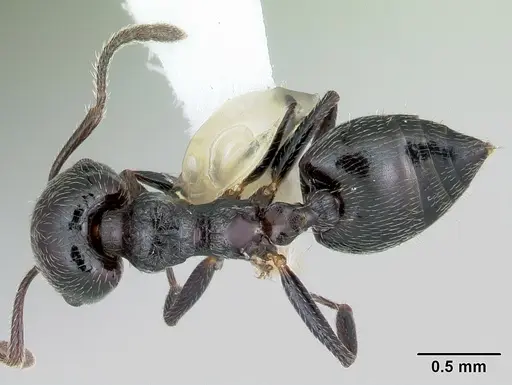
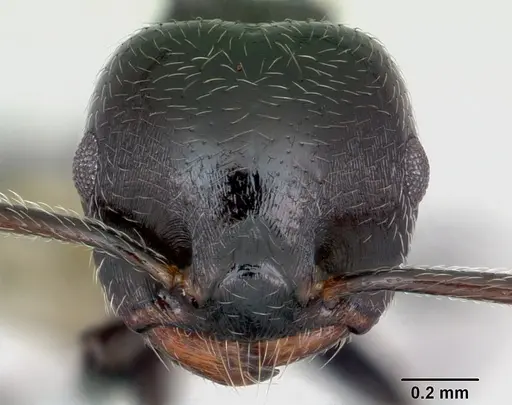
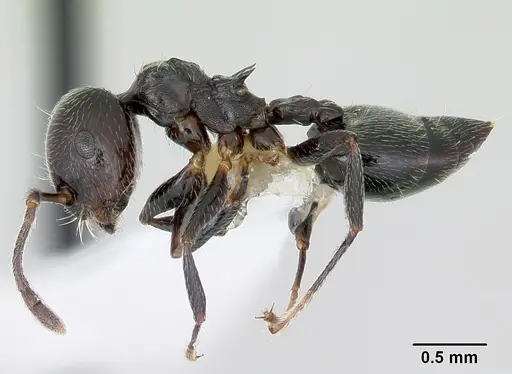
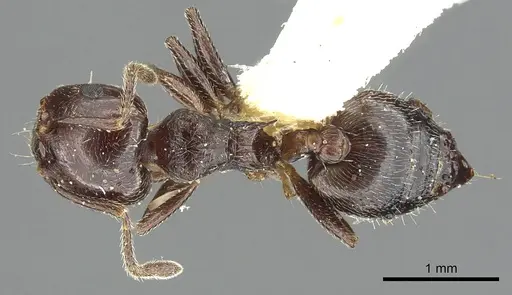
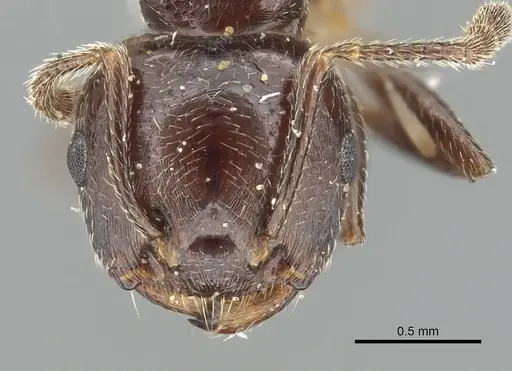
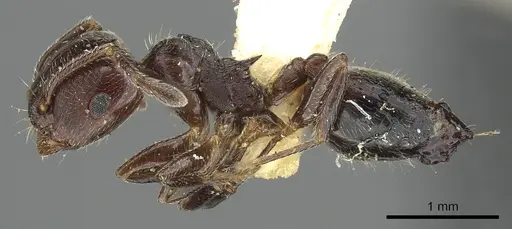
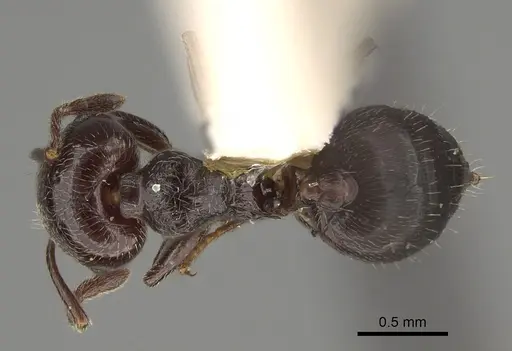
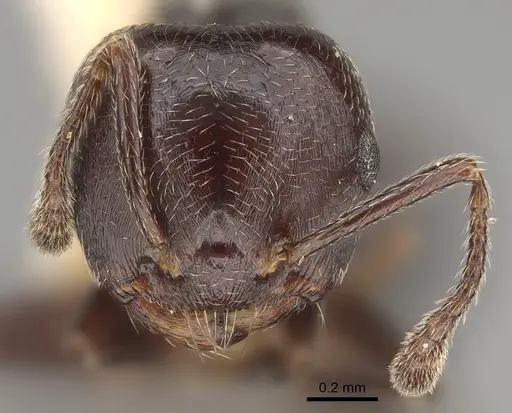
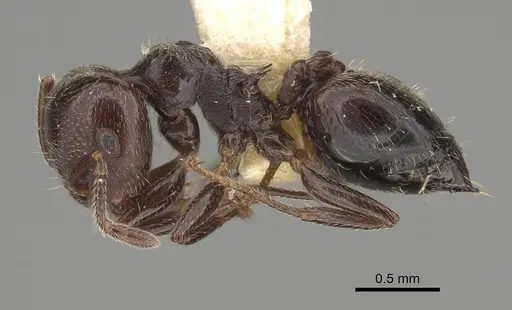
Crematogaster rifelna is a small, dark-colored arboreal ant native to southeastern Texas and eastern Mexico. Workers measure 3-3.6mm and have a distinctive median impression on the pronotum that, when viewed from above, makes the sharp mesonotal carina appear like a gun sight, a key identifying feature of this species [1][2]. The head is slightly broader than long with fine genal striae, and the body is covered in relatively long, appressed pubescence with erect hairs on the pronotal shoulders. Queens are significantly larger at around 7mm, and the species gets its name from the old German 'rifeln' meaning to furrow, referring to the distinctive pronotal sculpturing [1].
This species is arboreal, nesting in old cynipid oak galls, twigs, and small branches of oaks and various trees throughout its range from Victoria to Brownsville, Texas and into northeastern Mexico [1]. Like other Crematogaster ants, they can raise their abdomen over their head when disturbed, giving them the common name 'acrobat ants'. The colony structure appears to be single-queen based on typical genus patterns, though detailed colony studies are limited.
Quick Summary
- Difficulty: Medium
- Origin & Habitat: Southeastern Texas and eastern Mexico, from Victoria to Brownsville, Texas and into northeastern Mexico (San Luis Potosi, Tamaulipas). Found in arboreal habitats, specifically in old cynipid oak galls, twigs, and small branches of oaks and various trees [1][2].
- Colony Type: Single-queen (monogyne) colonies based on typical genus patterns. Colonies contain winged queens and males, with reproductive alates found in September [1].
- Colony: Monogyne
- Founding: Claustral
- Size & Growth:
- Queen: ~7mm [1]
- Worker: 3-3.6mm [1]
- Colony: Unknown, estimated moderate colony size based on genus patterns
- Growth: Moderate, based on typical Crematogaster development
- Development: Estimated 6-8 weeks at optimal temperature based on genus patterns (Development time inferred from related Crematogaster species, specific data for C. rifelna not available)
- Antkeeping:
- Temperature: Aim for 22-26°C, they are a warm-climate species from Texas and Mexico. A gentle gradient allowing them to self-regulate is ideal.
- Humidity: Moderate humidity around 50-70%. Their arboreal nesting in tree galls and twigs suggests they prefer conditions that aren't overly wet but have some moisture.
- Diapause: Likely not required, being from Texas/Mexico, they are adapted to mild winters rather than cold dormancy. However, a slight cool period during winter months may be beneficial.
- Nesting: Arboreal nesting, they naturally nest in old oak galls, twigs, and small branches. In captivity, they do well in cork bark setups, bamboo tubes, or small acrylic nests with narrow chambers. Avoid large, open spaces, scale the nest to their small worker size.
- Behavior: Generally peaceful but can be defensive when threatened. Like all Crematogaster, they can raise their abdomen over their head as a defensive display (giving them the acrobat name). Workers are active foragers, both in the nest and outworld. They are small (3-3.6mm) so escape prevention should be good, they can still fit through small gaps. They are arboreal so they do well with foraging opportunities in the outworld and multiple chambers for brood care.
- Common Issues: small size means escapes are possible through fine gaps, use tight-fitting lids and fine mesh barriers, arboreal nature means they need vertical space and climbing surfaces in the outworld, colonies may be slow to establish initially, patience is needed during founding, wild-caught colonies may carry parasites that can cause colony failure, test tube setups work but need to be scaled to their tiny size, avoid large water reservoirs that could flood the nest
Housing and Nest Setup
Crematogaster rifelna is an arboreal species that naturally nests in old oak galls, twigs, and small branches. In captivity, they do best in setups that mimic these conditions. Cork bark nests work exceptionally well since they simulate natural tree hollows. Small acrylic nests with narrow chambers scaled to their 3-3.6mm worker size are also suitable. Avoid large, open formicarium spaces, these tiny ants feel more secure in tight, enclosed spaces. The outworld should include vertical structures for climbing, as they naturally forage in trees and shrubs. Provide multiple chambers for brood development and food storage. Test tubes can work for founding colonies but consider moving established colonies to more naturalistic setups that match their arboreal lifestyle. [1]
Feeding and Diet
Crematogaster rifelna is an omnivorous species that will accept a variety of foods. In the wild, they likely forage for honeydew from aphids and scale insects, plus small insects and other protein sources. In captivity, offer sugar water or honey as a constant energy source. For protein, provide small insects like fruit flies, small crickets, or mealworm pieces. They are small ants, so prey items should be appropriately sized. Feed protein 2-3 times per week and keep sugar sources available at all times. Remove uneaten prey after 24-48 hours to prevent mold. Their small size means even tiny prey items are acceptable.
Temperature and Seasonal Care
Being from Texas and Mexico, Crematogaster rifelna prefers warm conditions. Keep the nest area at 22-26°C, with a slight gradient allowing workers to self-regulate. A heating cable on one side of the nest can help maintain warmth during cooler months. They don't require true hibernation like temperate species, but a slight reduction in temperature during winter months (down to around 18-20°C) may help simulate their natural seasonal cycle. Avoid temperatures below 15°C for extended periods. Maintain stable conditions, sudden temperature swings can stress colonies. [1]
Behavior and Defense
Like all Crematogaster species, C. rifelna can raise their abdomen over their head in a defensive display, this is how they earned the common name 'acrobat ants'. They are generally not aggressive toward keepers but will defend their nest if threatened. Workers are active foragers, readily exploring the outworld for food. Their small size (3-3.6mm) means they can squeeze through surprisingly small gaps, so excellent escape prevention is essential. Use tight-fitting lids, fluon barriers, and fine mesh on any ventilation. They are arboreal by nature, so they do well with climbing structures and vertical space in their enclosure. [1]
Colony Development
Colonies appear to have single queens (monogyne) based on typical genus patterns. Reproductives (winged queens and males) have been observed in September in Texas populations, suggesting nuptial flights occur late summer to early fall [1]. Founding queens are likely claustral, they seal themselves in a chamber and raise the first workers on stored body fat without foraging. First workers (nanitics) are typically smaller than mature workers. Growth rate is moderate, expect 6-10 months from founding to a colony of 50-100 workers under good conditions. Colonies likely reach several hundred workers at maturity based on related species patterns.
Frequently Asked Questions
How long does it take for Crematogaster rifelna to produce first workers?
Expect first workers (nanitics) to emerge around 6-8 weeks after the queen lays eggs, assuming optimal temperatures of 22-26°C. This is based on typical Crematogaster development patterns, as specific timing for C. rifelna has not been documented.
What size colony does Crematogaster rifelna reach?
Colony size is not well documented for this specific species, but based on related Crematogaster species, mature colonies likely reach several hundred workers. They are not among the largest Crematogaster species.
Do Crematogaster rifelna ants sting?
Crematogaster ants can bite and use their abdominal tip defensively, but their stingers are too small to penetrate human skin effectively. They are not considered dangerous to humans. The main concern is their ability to raise their abdomen in a defensive display when threatened.
Can I keep Crematogaster rifelna in a test tube setup?
Yes, test tubes work well for founding colonies. Use a small test tube with a tight-fitting cotton plug and a water reservoir sized appropriately, not too large, as these tiny ants can become trapped. Once the colony reaches 20-30 workers, consider moving to a more naturalistic cork bark or small acrylic nest that matches their arboreal nature.
What temperature do Crematogaster rifelna need?
Keep them warm at 22-26°C. Being from Texas and Mexico, they prefer temperatures in this range. A gentle gradient allowing self-regulation is ideal. Avoid temperatures below 15°C for extended periods.
Are Crematogaster rifelna good for beginners?
They are moderate difficulty, not the easiest but not challenging either. Their small size requires good escape prevention, and they need warm conditions. They are more specialized than common beginner species like Lasius or Camponotus, but can be kept by hobbyists with some antkeeping experience.
Do Crematogaster rifelna need hibernation?
Probably not, being from Texas and Mexico, they are adapted to mild winters rather than cold dormancy. A slight cool period in winter (around 18-20°C) may be beneficial but true hibernation is likely not required.
What do Crematogaster rifelna eat?
They are omnivorous. Offer sugar water or honey constantly for energy, plus small protein sources like fruit flies, small crickets, or mealworm pieces. Feed protein 2-3 times per week. Remove uneaten food after 24-48 hours.
When do Crematogaster rifelna have nuptial flights?
Based on specimens with winged reproductives found in late September in Texas, nuptial flights likely occur late summer to early fall (August-October). This timing allows new colonies to establish before winter.
Why are my Crematogaster rifelna escaping?
Their small size (3-3.6mm) means they can squeeze through tiny gaps. Use excellent escape prevention: tight-fitting lids, fluon barriers on container rims, and fine mesh (at least 0.5mm or smaller) on any ventilation. Check all potential entry points, they can fit through gaps you might not expect.
References

This caresheet is licensed under CC BY-SA 4.0 .
Literature
Loading...Loading products...