

Crematogaster ransonneti
- Scientific Name
- Crematogaster ransonneti
- Tribe
- Crematogastrini
- Subfamily
- Myrmicinae
- Author
- Mayr, 1868
- Distribution
- Found in 1 countries
Crematogaster ransonneti Overview
Crematogaster ransonneti is an ant species of the genus Crematogaster. It is primarily documented in 1 countries , including Sri Lanka. Detailed taxonomic data and occurrence records can be further explored via authoritative databases such as AntWeb or the Global Biodiversity Information Facility (GBIF).
Crematogaster ransonneti
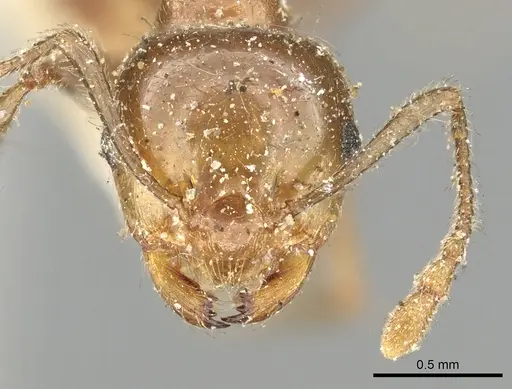
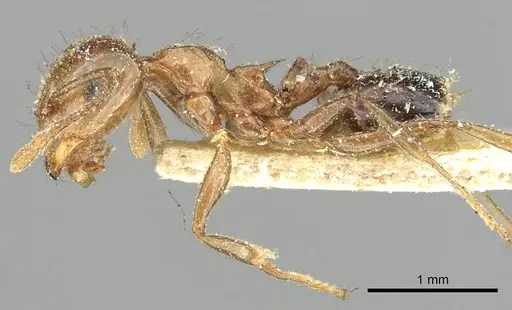
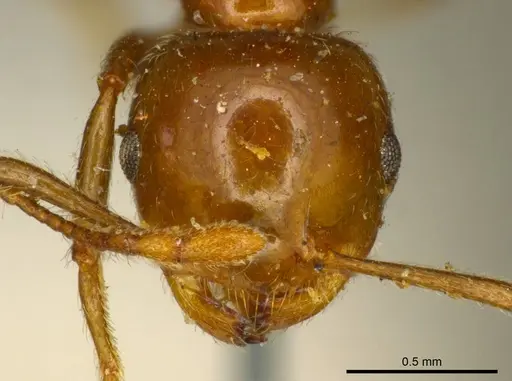
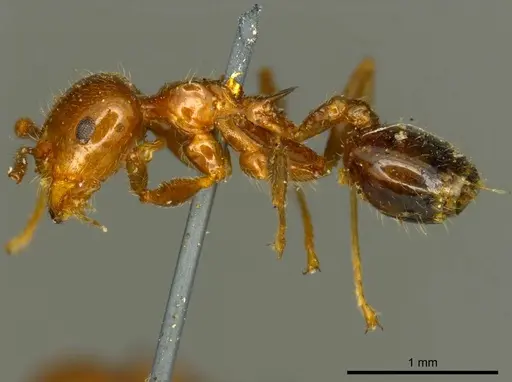
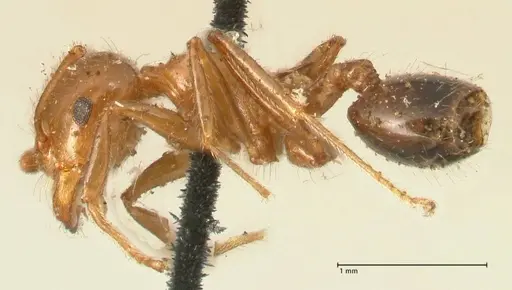
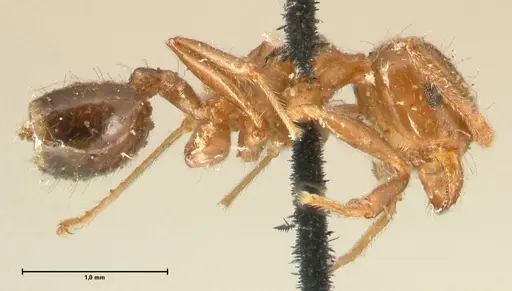
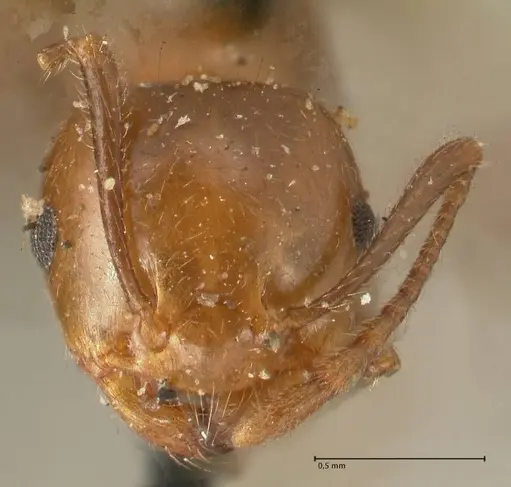
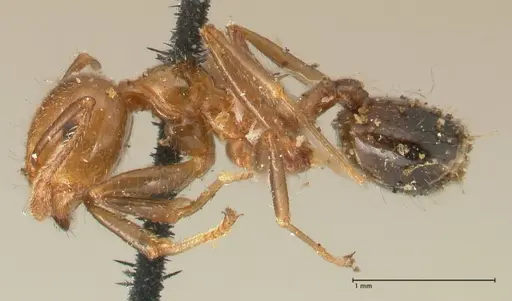
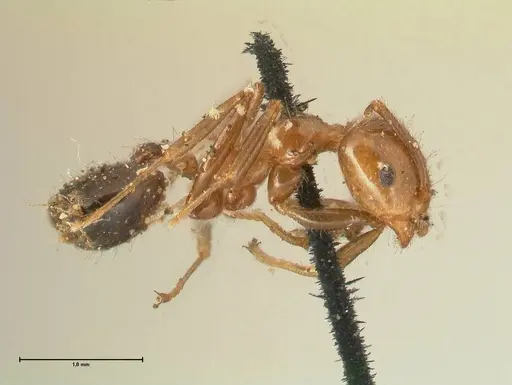
Crematogaster ransonneti is a small arboreal ant native to Sri Lanka and India, where it inhabits trees and forested areas across multiple states. Workers measure just under 1mm (HW 0.95-0.97mm), making them one of the smaller Crematogaster species. They are easily recognized by their smooth and shiny head and promesonotum, long propodeal spines, and distinctive diamond-shaped petiole that is wider than the postpetiole. Their reddish-brown coloring and three-segmented antennal club complete their identification. This species is considered uncommon in the wild, with most records coming from the monsoon and post-monsoon seasons in India [1][2]. Unlike some related species, C. ransonneti is not known to be aggressive or particularly territorial, fitting the typical docile temperament of the genus.
Quick Summary
- Difficulty: Medium
- Origin & Habitat: Native to Sri Lanka and India, found across multiple Indian states including Karnataka, Sikkim, West Bengal, Maharashtra, and Kerala. They are arboreal ants, nesting and foraging in trees in forested areas, gardens, and cultivated fields [2][3][1].
- Colony Type: Colony structure is unconfirmed. Based on typical Crematogaster patterns, they likely form single-queen colonies (monogyne), though this has not been directly documented for this species.
- Size & Growth:
- Queen: Not documented in primary research, estimated at 5-7mm based on genus patterns for similar-sized species
- Worker: 0.95-0.97mm (very small) [4]
- Colony: Unknown, likely under 500 workers based on similar small arboreal Crematogaster species
- Growth: Moderate, estimated based on tropical arboreal Crematogaster patterns
- Development: Estimated 6-8 weeks at optimal tropical temperatures based on genus patterns (Development time is estimated, not directly studied for this species. Tropical species typically develop faster than temperate ones.)
- Antkeeping:
- Temperature: Keep at 24-28°C, they come from warm tropical regions of India and Sri Lanka where temperatures stay consistently warm year-round. A heating cable on one side of the nest can create a gentle gradient if room temperature falls below this range.
- Humidity: Moderate to high humidity (60-80%). Their arboreal lifestyle and presence during monsoon seasons suggests they tolerate damp conditions. Keep the nest substrate moist but not waterlogged, with some drier areas available.
- Diapause: Unlikely, being a tropical species from India and Sri Lanka, they probably do not require a true hibernation period. However, they may show reduced activity during cooler months.
- Nesting: Arboreal by nature, they nest in trees and woody material. In captivity, they do well in Y-tong (AAC) nests, plaster nests, or naturalistic setups with wood pieces. Tight chambers scaled to their tiny size work best. Avoid large open spaces.
- Behavior: Generally docile and non-aggressive. As arboreal ants, they are skilled climbers and may escape if given the opportunity. Their small size (under 1mm) means they can squeeze through very small gaps, excellent escape prevention is essential. They are active foragers and will search for honeydew, small insects, and sugar sources. They may show the typical Crematogaster behavior of raising their gaster when disturbed as a warning display.
- Common Issues: escape prevention is critical due to their very small size, use fine mesh and tight-fitting barriers, colonies may be difficult to establish from founding queens due to limited availability, wild-caught colonies may have parasites or disease that can cause colony failure, slow growth can lead to impatience and overfeeding, which causes mold problems, their arboreal nature means they need climbing structures and may not use horizontal tunnels
Housing and Nest Setup
Crematogaster ransonneti is an arboreal species, so their captive setup should reflect their natural tree-dwelling lifestyle. Y-tong (AAC) nests work well because they provide tight chambers scaled to their tiny size. Plaster nests are another good option as they allow you to control humidity levels. Naturalistic setups with small wood pieces or cork bark can mimic their natural arboreal environment. Because workers are under 1mm in size, escape prevention must be excellent, use fine mesh on any ventilation holes and ensure all connections are sealed tightly. A small outworld with a shallow water source and feeding area completes the setup. [2][4]
Feeding and Diet
Like other Crematogaster species, C. ransonneti likely feeds on honeydew from aphids and scale insects in the wild, along with small insects and nectar. In captivity, offer sugar water or honey as a constant energy source. For protein, provide small live prey like fruit flies, pinhead crickets, or other tiny insects. They are small ants, so prey items should be appropriately sized. Their arboreal nature suggests they may prefer feeding at elevated locations in the nest. Remove uneaten prey after 24-48 hours to prevent mold. [1]
Temperature and Humidity
Being native to tropical India and Sri Lanka, these ants need warm conditions. Maintain temperatures between 24-28°C for optimal colony health and brood development. They can tolerate slightly higher temperatures but should be kept away from direct heat sources that could dry out the nest. Humidity should be moderate to high (60-80%), reflecting their presence during monsoon seasons in India. Keep the nest substrate consistently moist but avoid waterlogging. A shallow water dish in the outworld helps with hydration. Since they come from a tropical climate with minimal seasonal temperature variation, they do not require a hibernation period. [1]
Behavior and Colony Dynamics
Crematogaster ransonneti is a docile species that typically avoids confrontation. When threatened, they may display the typical Crematogaster gaster-raising behavior as a warning signal. They are active foragers and will send workers out to search for food sources. Their small size makes them excellent climbers, so include vertical structures in their enclosure. Colonies likely grow to a few hundred workers over time, though exact colony size is unknown. The species is considered uncommon in the wild, so establishing a captive breeding population is valuable for conservation. [2]
Acquisition and Establishment
This species is rarely available in the antkeeping hobby due to its limited distribution and uncommon status in the wild. If you obtain a founding queen, she will likely seal herself in a chamber (claustral founding) and raise her first workers alone on stored fat reserves. Be patient during the founding phase, it may take several weeks to months before the first nanitic workers emerge. Provide a quiet, dark location and avoid disturbing the queen during this critical period. Once the colony reaches 10-20 workers, you can begin offering small food items. [4]
Frequently Asked Questions
How long does it take for Crematogaster ransonneti to produce first workers?
The exact timeline is unconfirmed, but based on typical tropical Crematogaster development, expect first workers (nanitics) in about 6-8 weeks after the queen lays eggs, assuming optimal temperatures around 26°C.
What size colony does Crematogaster ransonneti reach?
Colony size is not documented in scientific literature. Based on similar small arboreal Crematogaster species, colonies likely reach a few hundred workers rather than the thousands seen in larger species.
Do Crematogaster ransonneti ants sting?
Crematogaster ants have a stinger but are too small to penetrate human skin effectively. They are docile and non-aggressive, more likely to flee than to use their stinger.
Can I keep multiple Crematogaster ransonneti queens together?
Colony structure is unconfirmed for this species. Based on typical Crematogaster patterns, they likely form single-queen colonies. Combining unrelated queens is not recommended without evidence they can coexist.
What temperature range is best for Crematogaster ransonneti?
Keep them at 24-28°C. They come from warm tropical regions of India and Sri Lanka where temperatures stay consistently warm year-round.
Are Crematogaster ransonneti good for beginners?
This species is rated Medium difficulty. Their small size and specific humidity requirements can be challenging. They are also uncommon in the hobby, making them harder to acquire. Beginners might find larger, more common species easier to start with.
Do Crematogaster ransonneti need hibernation?
No, they do not require hibernation. Being a tropical species from India and Sri Lanka, they are active year-round. They may show slightly reduced activity during cooler months but no special winter care is needed.
Why are my Crematogaster ransonneti escaping?
Their very small size (under 1mm) means they can squeeze through tiny gaps. Use fine mesh (at least 0.5mm), seal all connections, and check for any gaps in your setup regularly. Escape prevention is critical for this species.
What do Crematogaster ransonneti eat?
They likely feed on honeydew, small insects, and nectar in the wild. In captivity, offer sugar water or honey as a constant energy source, plus small live prey like fruit flies or tiny crickets for protein.
Is Crematogaster ransonneti aggressive?
No, they are generally docile and non-aggressive. They may display the typical Crematogaster warning behavior of raising their gaster when disturbed, but actual attacks are rare.
References

This caresheet is licensed under CC BY-SA 4.0 .
CASENT0902124
View on AntWeb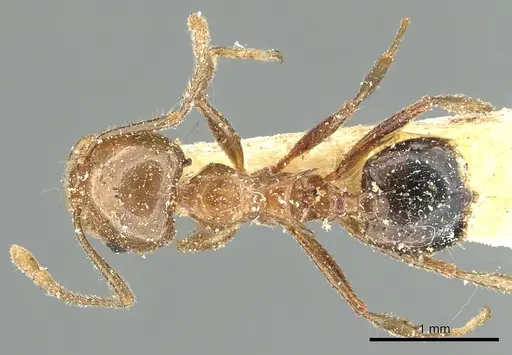
CASENT0919685
View on AntWeb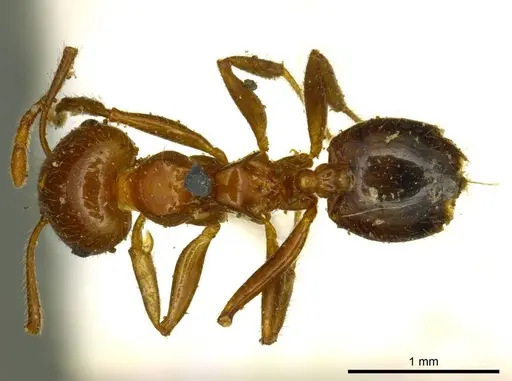
FOCOL1449
View on AntWeb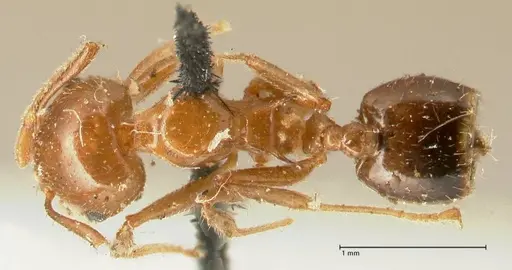
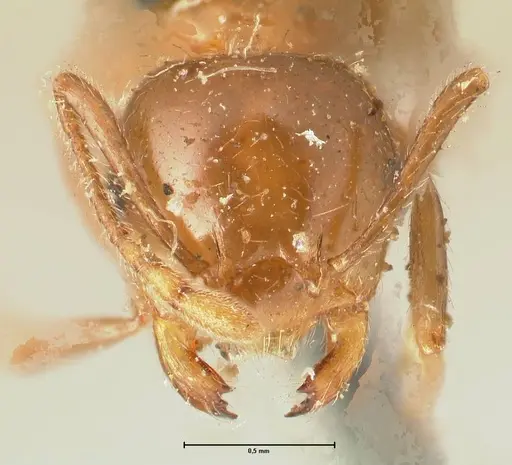
FOCOL1450
View on AntWeb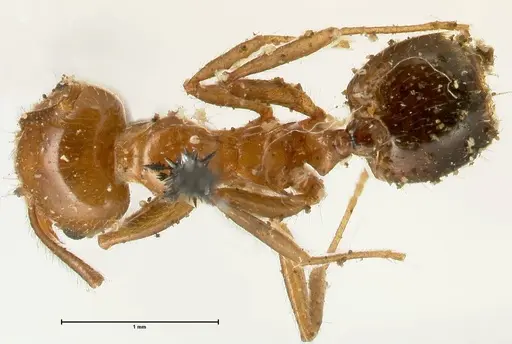
Literature
Loading...Loading products...