

Crematogaster oasium
- Scientific Name
- Crematogaster oasium
- Tribe
- Crematogastrini
- Subfamily
- Myrmicinae
- Author
- Santschi, 1911
- Distribution
- Found in 2 countries
Crematogaster oasium Overview
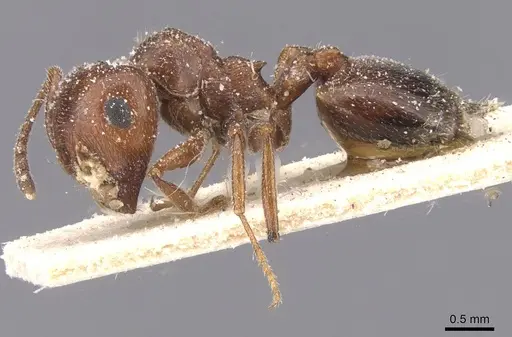
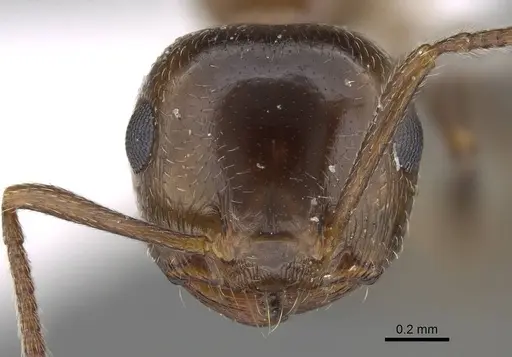
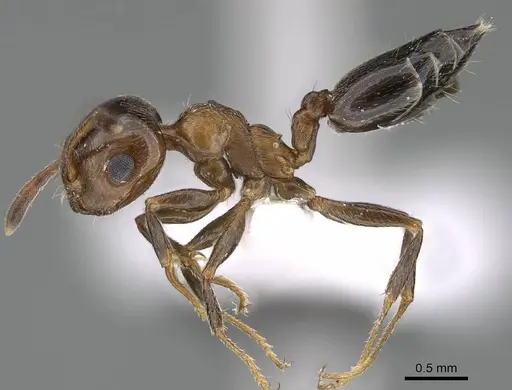
Crematogaster oasium is an ant species of the genus Crematogaster. It is primarily documented in 2 countries , including Libya, Tunisia. Detailed taxonomic data and occurrence records can be further explored via authoritative databases such as AntWeb or the Global Biodiversity Information Facility (GBIF).
Crematogaster oasium
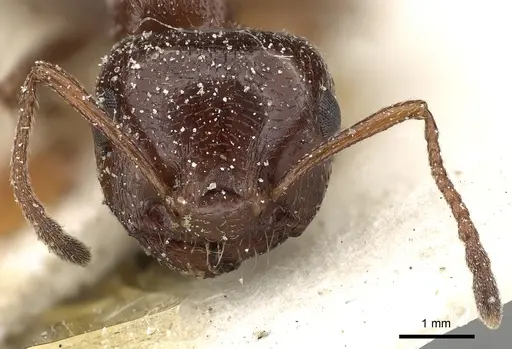
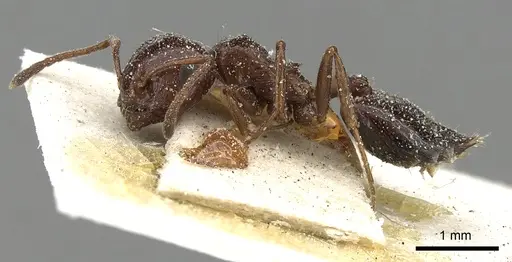
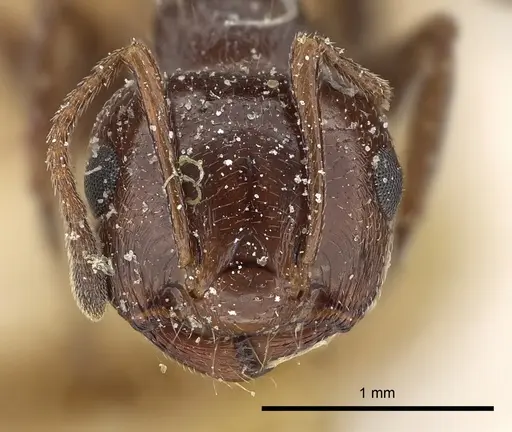
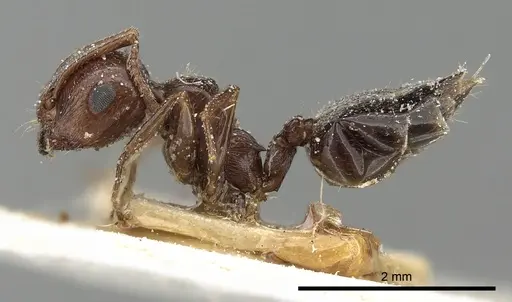
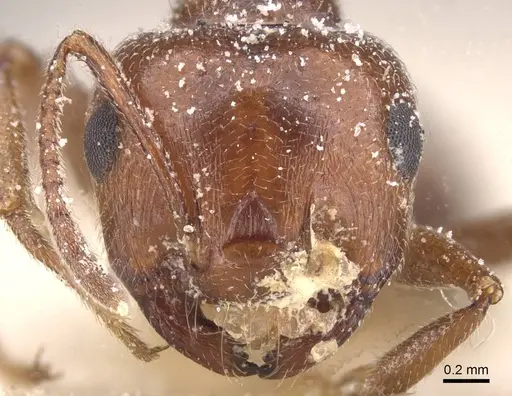
Crematogaster oasium is a small to medium-sized acrobat ant native to the Saharan region of northern Africa and the Arabian Peninsula. Workers are typically 3-5mm with a distinctive heart-shaped gaster that they raise when threatened, giving them their 'acrobat' name. They have a dark reddish-brown to black coloration with several pairs of erect hairs on the mesosoma and around 7 pairs on the first abdominal segment. This species is common and widespread across Tunisia, Algeria, Egypt, Libya, Saudi Arabia, Oman, and the UAE [1][2].
What makes C. oasium interesting is its adaptation to harsh Saharan conditions despite its name suggesting oasis habitat. Research shows it actually avoids true oases and instead dominates clayey areas with thorny Acacia trees between 400-1400m altitude. These ants are skilled honeydew collectors, tending to membracid bugs on Acacia trees, and their nests can survive flooding by escaping to trees with larvae [3].
Quick Summary
- Difficulty: Medium
- Origin & Habitat: Saharan region of northern Africa (Tunisia, Algeria, Egypt, Libya) and Arabian Peninsula (Saudi Arabia, Oman, UAE, Kuwait). Found in clayey areas with thorny Acacia trees at 400-1400m altitude, typically nesting at the base of woody plants [3][1].
- Colony Type: Monogyne (single queen) colonies, this is the typical structure for Crematogaster in the region. Colonies reach up to 3000 workers [3].
- Colony: Monogyne
- Founding: Claustral
- Size & Growth:
- Antkeeping:
- Temperature: Keep at 24-30°C, mimicking their warm Saharan habitat. A heating cable on one side of the nest creates a temperature gradient they can regulate themselves [3].
- Humidity: Low to moderate, these are desert-adapted ants. Keep nest substrate slightly moist but allow portions to dry between waterings. They tolerate dry conditions well but need a water source [3].
- Diapause: Unknown, no specific research on diapause requirements. Given their Saharan origin, they likely have reduced activity in winter months but may not require true hibernation if kept warm.
- Nesting: Soil nests at base of woody plants work best. In captivity, a Y-tong (AAC) nest or plaster nest with a small chamber for founding queens is suitable. They prefer nesting media with some clay content. Provide a shallow water reservoir and ensure the nest can accommodate their moderate colony size [3].
- Behavior: Crematogaster oasium is moderately active and arboreal-leaning. Workers forage on vegetation and trees, collecting honeydew from aphids and scale insects. When threatened, they raise their heart-shaped gaster (the 'acrobat' behavior) and may spray formic acid or bite. They are not particularly aggressive but will defend their colony. Escape prevention is important, use fluon on test tube rims and fine mesh on outworld openings as workers are small enough to escape through standard gaps [2].
- Common Issues: escape prevention is critical due to small worker size, use fine mesh barriers, colonies may struggle in overly humid conditions, these are desert-adapted ants, founding queens need contact with plant material or woody structures to initiate nesting, slow initial growth can lead to overfeeding, offer appropriate portions, test tube setups may be too small once colony reaches 50+ workers, monitor and upgrade as needed
Natural History and Habitat
Crematogaster oasium is a Saharan species that defies its name, despite being named 'oasium', it's actually rarely found in true oases like Beni-Abbès, Biskra, or Ouargla. Instead, it dominates clayey terrain with thorny Acacia trees at elevations between 400-1400m. The species is remarkably adapted to harsh conditions: it tolerates high soil salt content (found near sebkha salt flats) and can survive periodic flooding by escaping to trees with larvae. Nests are typically dug at the base of Acacia trunks, starting at around 15cm depth and extending to at least 70cm. The queen needs contact with a woody stump or plant base to establish her founding chamber, this requirement is shared with several European Crematogaster species [3].
The geographic range spans from Morocco east to Egypt in North Africa, with populations in Kuwait, Saudi Arabia, Oman, and the UAE. A subspecies C. oasium saharensis is recognized and is slightly lighter in color than the type from Tunisia [2][4].
Nest Preferences and Setup
In the wild, C. oasium nests in soil at the base of woody plants, primarily Acacia trees, but also Tamarix and Ziziphus. The nest typically begins at trunk contact and extends vertically into the ground. For captive care, a Y-tong (AAC) nest or plaster formicarium works well, as these provide the dark, somewhat humid environment ants prefer.
The founding chamber should be relatively small, about the size of a thimble. Once the colony grows beyond 20-30 workers, they need more space. Include a shallow water reservoir (like a cotton-filled test tube) for drinking water. These ants are not particularly demanding about humidity but do need the nest media to hold some moisture. A small outworld for foraging allows them to hunt and collect food. Because they're small, ensure all connections and barriers are escape-proof, a ring of fluon around the rim of test tubes is essential [3].
Feeding and Diet
In nature, C. oasium workers are active foragers that collect honeydew from membracid bugs (Cicadellids) living on Acacia trees, they literally lick these insects for their sugary secretions. They also hunt small insects and likely scavenge protein sources. In captivity, offer a varied diet: sugar water or honey as a constant energy source, and protein sources like small crickets, mealworms, or fruit flies twice weekly.
Because they're small ants, prey items should be appropriately sized, fruit flies, pinhead crickets, or small mealworm pieces work well. They tend to be more arboreal than ground-nesting ants, so placing food on a small platform or leaf cutting in the outworld mimics their natural foraging. Remove uneaten protein within 24-48 hours to prevent mold. A constant supply of clean water is essential [3].
Temperature and Seasonal Care
As a Saharan species, C. oasium prefers warm conditions, aim for 24-30°C in the nest area. A heating cable placed on one side of the nest creates a temperature gradient that lets ants regulate their own conditions by moving between warmer and cooler areas. This is especially important for brood development, which speeds up in warmth.
Winter care is somewhat uncertain since diapause requirements haven't been studied specifically. However, given their Saharan origin, they likely don't need true hibernation. If your room temperature drops below 18°C in winter, you might reduce feeding and let them slow down naturally, but maintaining 20-24°C year-round is probably safest. Watch for behavioral cues, if workers become sluggish and cluster together, they're indicating they'd like more warmth. Avoid temperatures below 15°C as this could be harmful [3].
Behavior and Defense
Crematogaster ants get their 'acrobat' name from their defensive posture, when threatened, workers raise their heart-shaped gaster over their head, ready to spray formic acid or bite. C. oasium is not particularly aggressive toward keepers but will defend vigorously if their nest is disturbed. The spray can irritate eyes and skin, so handle gently and avoid poking the nest.
Workers are moderately active and will explore their outworld regularly. They're good climbers and often forage on vegetation in the wild, so they may climb out of shallow outworlds if given the chance. This makes escape prevention critical, check that all connections are tight and use fluon on any surfaces they might climb. They're not colony-specific aggressive, so introducing them to established ant setups requires normal precautions [2].
Colony Growth and Development
Colonies can grow to around 3000 workers in the wild, though captive colonies typically remain smaller due to space constraints. The founding queen seals herself in a small chamber and raises her first workers (nanitics) alone, using stored fat reserves. These initial workers are typically smaller than mature workers.
Growth rate is moderate, expect 6-12 months from founding to a stable colony of 20-30 workers, then another year or two to reach 100+. The key to healthy growth is consistent feeding, warm temperatures, and avoiding disturbance during the founding stage. Once established, colonies are fairly resilient but grow slower than faster-growing genera like Lasius or Tapinoma. Regular feeding with protein and sugar sources, plus clean water, supports steady growth [3].
Frequently Asked Questions
How long does it take for Crematogaster oasium to produce first workers?
Expect first workers (nanitics) around 6-8 weeks after the queen lays eggs, assuming temperatures around 26-28°C. This is based on typical Crematogaster development, specific timing for this species hasn't been documented. The queen seals herself in and raises the first brood alone.
What do Crematogaster oasium ants eat?
They need a balanced diet of sugar and protein. Offer sugar water or honey constantly, and protein (small crickets, fruit flies, mealworms) 2-3 times per week. In the wild, they collect honeydew from membracid bugs on trees, so they're adapted to sugary secretions.
Do Crematogaster oasium ants sting?
They don't have a stinger like some ants, but they can bite and spray formic acid as a defense. The spray can irritate skin and eyes, so handle gently and avoid disturbing the nest. They're not aggressive toward keepers but will defend if threatened.
Are Crematogaster oasium good for beginners?
They're rated as medium difficulty. They're more sensitive to humidity than desert ants but more tolerant than tropical species. The main challenges are escape prevention (they're small) and providing appropriate warmth. If you can maintain warm temperatures and use good escape prevention, they're manageable for intermediate keepers.
What temperature do Crematogaster oasium need?
Keep nest temperatures between 24-30°C. A heating cable on one side of the nest creates a gradient they can use to regulate their own temperature. This warm range mimics their Saharan habitat and supports healthy brood development.
How big do Crematogaster oasium colonies get?
In the wild, colonies can reach up to 3000 workers. In captivity, most keepers see colonies of 100-500 workers before space becomes limiting. With proper care and upgrades, you could potentially reach larger sizes.
Do Crematogaster oasium need hibernation?
Diapause requirements are unconfirmed for this species. Given their Saharan origin, they likely don't need true hibernation. Maintaining 20-24°C year-round is probably safest. If your room gets cold in winter, you can reduce feeding and let them slow down naturally.
When should I move Crematogaster oasium to a formicarium?
Keep them in a test tube setup for the founding stage (first 30-50 workers). Once the colony reaches 40-60 workers and you're seeing regular foraging activity, you can transition to a formicarium. Make sure the formicarium has appropriately sized chambers and connections.
Why are my Crematogaster oasium escaping?
They're small ants that can squeeze through tiny gaps. Use fine mesh (at least 0.5mm) on all ventilation and outworld connections. Apply fluon to test tube rims and any surfaces they might climb. Check all connections between nest and outworld, even small gaps will be exploited.
Can I keep multiple Crematogaster oasium queens together?
This species is typically monogyne (single queen). Combining unrelated queens hasn't been documented and is not recommended. If you have multiple foundresses, keep them in separate setups until one establishes a colony.
References

This caresheet is licensed under CC BY-SA 4.0 .
CASENT0249820
View on AntWeb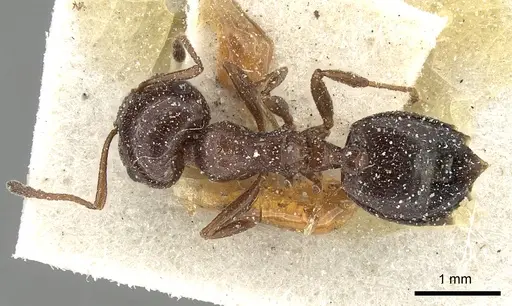
CASENT0249821
View on AntWeb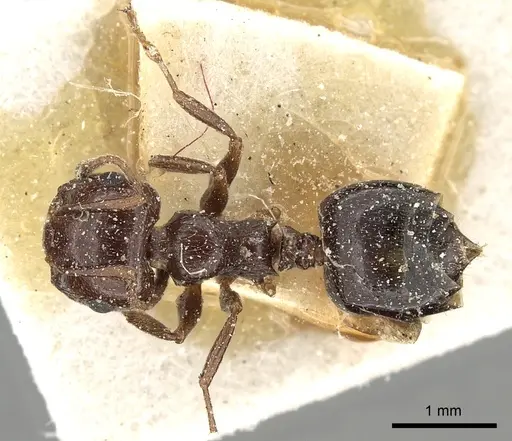
CASENT0912708
View on AntWeb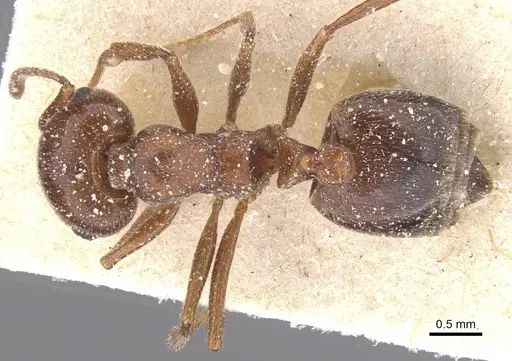
CASENT0922286
View on AntWeb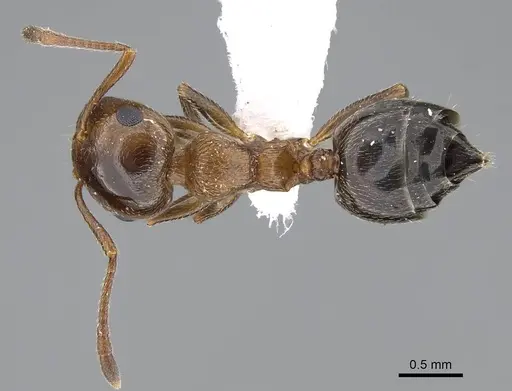
Literature
Loading...Loading products...