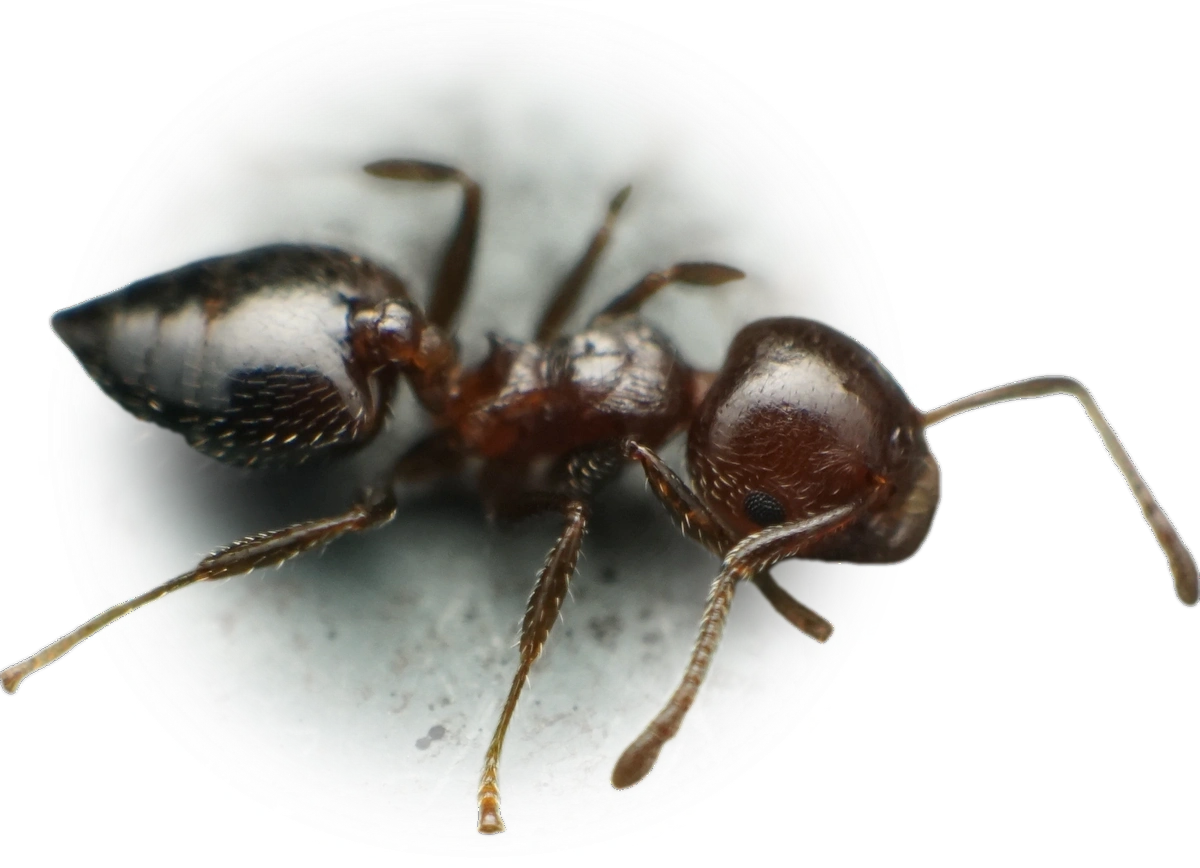

Crematogaster matsumurai
- Scientific Name
- Crematogaster matsumurai
- Tribe
- Crematogastrini
- Subfamily
- Myrmicinae
- Author
- Forel, 1901
- Distribution
- Found in 3 countries
Crematogaster matsumurai Overview
Crematogaster matsumurai is an ant species of the genus Crematogaster. It is primarily documented in 3 countries , including China, Japan, Korea. Detailed taxonomic data and occurrence records can be further explored via authoritative databases such as AntWeb or the Global Biodiversity Information Facility (GBIF).
Crematogaster matsumurai
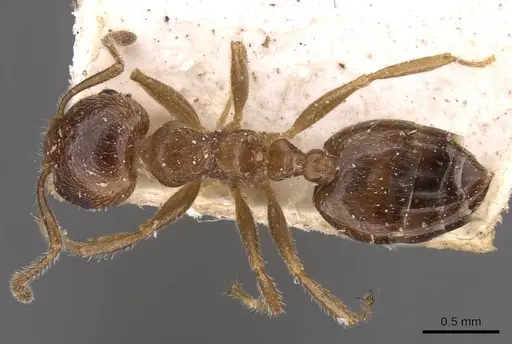
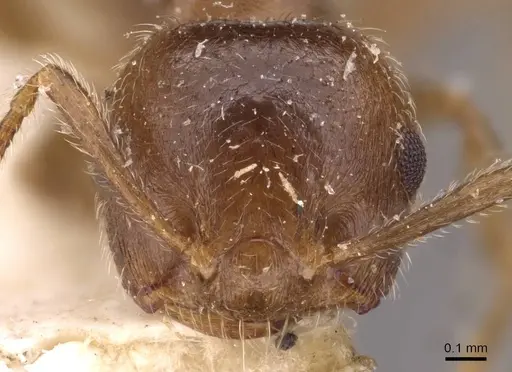
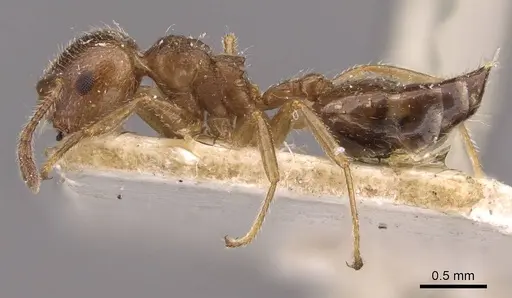
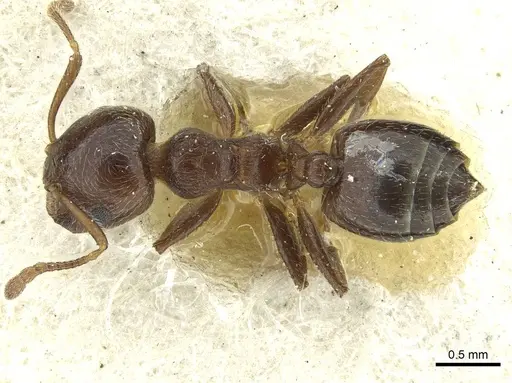
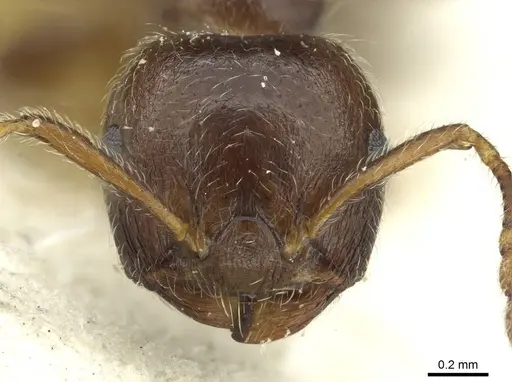
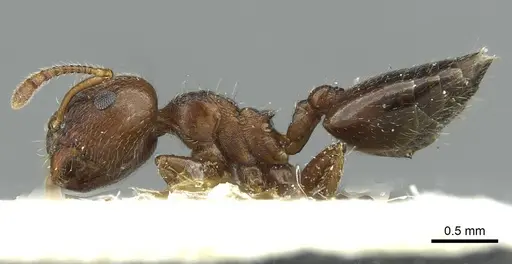
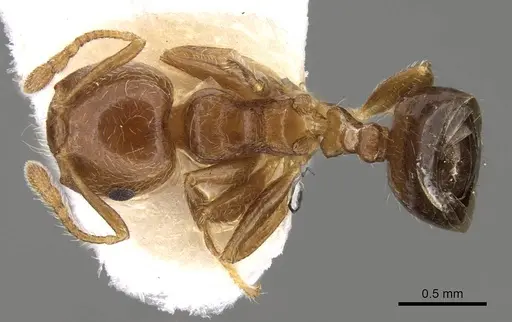
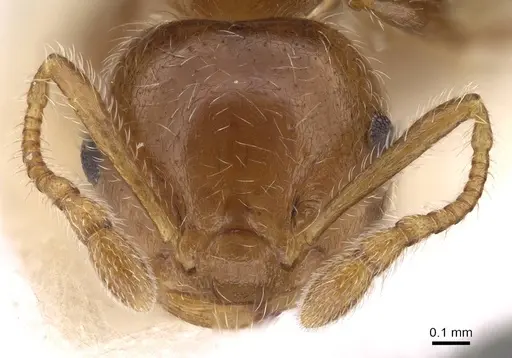
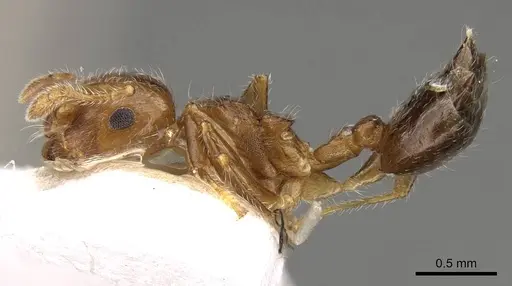
Crematogaster matsumurai is a small arboreal ant native to East Asia, found across Japan, the Korean Peninsula, and parts of China. Workers measure 2-3.5mm with a distinctive yellowish-brown to dark brown body, and they can be identified by their short, stout propodeal spines (the pointed projections on their back) [1][2]. Their 3-segmented antennal club and relatively smooth body surface also help distinguish them from other Japanese Crematogaster species. These ants are truly arboreal, they nest under bark and in rotting parts of trees, making their homes in decayed trunk sections rather than underground [3][4].
What makes C. matsumurai particularly interesting is their polydomous colony structure, they maintain multiple nest sites across several trees rather than a single central colony [4]. They are aggressive defenders of their territory and efficiently protect aphids from predators, making them valuable partners in arboreal ecosystems. Studies in Japanese parks found them nesting in nearly half of surveyed trees, making them one of the most common tree-dwelling ants in southern Japan [3]. Their diet centers on honeydew from aphids and plant nectar, but they are also effective predators of insect eggs and larvae [5][4].
Quick Summary
- Difficulty: Medium
- Origin & Habitat: Native to Japan, Korean Peninsula, and eastern China. Found in arboreal habitats, nests under bark and in rotting parts of trees, particularly favoring maple (Acer palmatum), cherry (Prunus), and bamboo (Phyllostachys) [3][4][6].
- Colony Type: Polydomous, colonies occupy multiple connected nest sites across several trees or in different parts of the same tree [4]. Colony structure is single-queen per colony but with multiple nest locations.
- Colony: Monogyne
- Founding: Claustral
- Size & Growth:
- Queen: Approximately 5-6mm (estimated from genus patterns, not directly measured for this species)
- Worker: 2-3.5mm [1][2]
- Colony: Colonies can be quite large with hundreds of workers across multiple nest sites, polydomous colonies are typically extensive [4]
- Growth: Moderate
- Development: 6-8 weeks (estimated based on typical Crematogaster development patterns) (Development time is inferred from genus-level data since species-specific measurements are not available. Warm temperatures accelerate development.)
- Antkeeping:
- Temperature: Keep nest area at 20-26°C. Foraging activity begins around 13°C, with peak activity from late spring through summer (May to September) [7]. A gentle temperature gradient allows ants to regulate their own conditions.
- Humidity: Moderate to high, these are forest-dwelling ants that prefer humid conditions. Keep nest substrate slightly moist but not waterlogged. Being arboreal, they tolerate somewhat drier conditions than ground-nesting species.
- Diapause: Yes, requires winter rest period. In their native range (Japan, Korea), they experience cold winters. Reduce temperature to 10-15°C for 2-3 months during winter, mimicking natural seasonal cycles.
- Nesting: Arboreal setup is essential. These ants do best in setups that mimic tree hollows, Y-tong nests, plaster nests with narrow chambers, or naturalistic setups with cork bark and rotting wood pieces. They prefer tight, enclosed spaces that simulate their natural under-bark nesting sites. Avoid fully horizontal setups as they prefer vertical or semi-vertical orientations.
- Behavior: Crematogaster matsumurai is an aggressive, territorial species that actively defends its foraging territories and aphid colonies [3]. They are efficient predators, particularly of insect eggs and small larvae, studies showed they caused 76% mortality in invasive beetle eggs within 2 days [5]. Workers are active foragers both on trees and on the ground, with peak activity from May through September [7]. They have a distinct habit of raising their abdomen when disturbed, giving them their 'acrobat ant' name. Escape prevention is important, while not the smallest ants, they are agile and can climb smooth surfaces. Use fluon on nest edges and ensure tight-fitting barriers.
- Common Issues: polydomous colonies can be difficult to contain, they may establish secondary nests in outworld areas if given the opportunity, arboreal nesting means they need vertical space and appropriate nest materials, standard horizontal test tube setups may not be ideal, their aggressive defense of aphids can make them difficult to keep with other ant species in multi-species setups, winter diapause is essential, keeping them warm year-round can weaken colonies over time, their small size (2-3.5mm) means they can escape through standard barrier gaps, fine mesh and proper sealing are necessary
Housing and Nest Setup
Crematogaster matsumurai requires an arboreal-focused setup that mimics their natural tree-nesting behavior. The best options are Y-tong (AAC) nests with narrow chambers, plaster nests that can retain some moisture, or naturalistic setups featuring cork bark sections and pieces of rotting wood. These ants nest under bark and in decayed tree parts in the wild, so your setup should replicate those conditions [3][4]. Vertical or semi-vertical nest orientations work better than fully horizontal ones. Since they are polydomous (maintaining multiple nest sites), you can provide several connected chambers or allow them to establish secondary nesting areas in the outworld. Use a hydration system that provides moderate humidity without saturating the nest, these arboreal ants prefer conditions that are damp but not wet. Escape prevention is important: apply fluon to barrier edges and ensure all connections are tight, as these small ants can squeeze through tiny gaps.
Feeding and Diet
In the wild, C. matsumurai feeds primarily on honeydew from aphids, plant nectar, and aphid secretions, these make up their main liquid food sources [3]. They are also active predators, particularly efficient at hunting insect eggs and small larvae. Studies showed they caused significant mortality to invasive beetle eggs (76% within 2 days) and 100% mortality of hatchlings [5]. For captive care, offer sugar water or honey as a constant energy source. For protein, provide small insects like fruit flies, pinhead crickets, or mealworm pieces. They readily accept both sweet liquids and protein prey. Feed protein 2-3 times per week, removing any uneaten prey after 24 hours. Their predatory efficiency makes them excellent pest control agents, they will actively hunt and consume small insects in their territory.
Temperature and Seasonal Care
Keep the nest area at 20-26°C for optimal colony health and development. These ants are native to temperate regions of Japan and Korea, where they experience distinct seasons. Foraging activity begins when temperatures reach approximately 13°C, with peak activity from May through late September [7]. During the active season (spring through fall), maintain warm conditions with a gentle gradient so workers can choose their preferred temperature. Winter diapause is essential for colony health. From late autumn through early spring (roughly November through March in the Northern Hemisphere), reduce temperatures to 10-15°C. This mimics their natural overwintering conditions and allows the colony to rest. Do not skip diapause, it is crucial for colony longevity and reproductive success. You can achieve this by moving the colony to a cool basement, garage, or refrigerator compartment during winter.
Behavior and Colony Dynamics
Crematogaster matsumurai exhibits fascinating polydomous colony structure, rather than a single central nest, colonies maintain multiple connected nest sites across different trees or tree sections [4]. This means your colony may attempt to expand into additional spaces, which is natural behavior. They are highly territorial and aggressive defenders of their resources, efficiently excluding other ant species and protecting their aphid 'herds' from predators [3]. When threatened, workers display their characteristic 'acrobat' behavior, raising their abdomen high as a warning display. They are primarily arboreal but will forage on the ground as well, giving them flexibility in foraging patterns [3]. Their aggressive nature means they are best kept as a single-species colony, they will readily attack and eliminate other ant species that enter their territory. This also means introducing new ants or merging colonies carries significant risk of aggression.
Growth and Development
Colony growth is moderate, with workers reaching 2-3.5mm in length [1][2]. The first workers (nanitics) will be smaller than mature workers, which is normal for claustral founding. Based on typical Crematogaster patterns, expect 6-8 weeks from egg to first worker at optimal temperatures. Colonies can grow quite large in the wild, studies found nests in nearly half of surveyed trees in Japanese parks, indicating substantial colony sizes [3]. As a polydomous species, your colony may naturally expand to occupy multiple connected spaces. Growth rate depends on temperature, feeding frequency, and colony stress levels. Faster growth occurs at warmer temperatures within their range (up to about 26°C) with consistent protein feeding. Be patient, moderate growth is healthier than rapid growth that stresses the colony.
Frequently Asked Questions
Can I keep Crematogaster matsumurai in a test tube setup?
Test tubes can work for founding colonies but are not ideal long-term. These are arboreal ants that naturally nest under bark and in rotting wood, so they do better in Y-tong nests, plaster nests, or naturalistic setups with cork bark and wood pieces. If using test tubes, provide multiple connected tubes to allow for their polydomous nature.
How long until first workers appear?
Expect 6-8 weeks from egg to first worker at optimal temperatures (20-26°C). This is an estimate based on typical Crematogaster development, as species-specific development times have not been documented. First workers (nanitics) will be smaller than mature workers.
Do Crematogaster matsumurai ants sting?
Crematogaster ants can bite and may use their acidopore (the tip of their abdomen) to spray formic acid, causing irritation. However, they are too small to penetrate human skin meaningfully. Their main defense is the characteristic 'acrobat' display where they raise their abdomen as a warning.
Are these ants good for beginners?
Medium difficulty, they are more challenging than ground-nesting species due to their arboreal nature and specific nesting requirements. They need an appropriate vertical or naturalistic setup, proper humidity, and winter diapause. If you can provide these conditions and understand their polydomous behavior, they are rewarding ants to keep.
Do they need hibernation?
Yes, winter diapause is essential. Reduce temperatures to 10-15°C for 2-3 months during winter (roughly November through March). This mimics their natural seasonal cycle in Japan and Korea and is crucial for colony health and longevity.
Can I keep multiple queens together?
Crematogaster matsumurai is monogyne (single queen per colony) but polydomous (multiple nest sites). Do not combine unrelated foundress queens as they will fight. If you acquire a wild colony, it will have one functional queen.
What do Crematogaster matsumurai eat?
They need a balanced diet of sugar (honey water or sugar water offered constantly) and protein (small insects like fruit flies, pinhead crickets, or mealworm pieces). In the wild they primarily feed on aphid honeydew and nectar, plus insect prey. Feed protein 2-3 times per week.
How big do colonies get?
Colonies can reach hundreds of workers across multiple nest sites. Studies in Japanese parks found them nesting in nearly half of surveyed trees, indicating large, established colonies [3]. Their polydomous nature means they naturally spread across connected spaces.
Why are my ants dying?
Common causes include: improper nesting setup (they need arboreal-style nests, not horizontal test tubes), incorrect humidity (too dry or too wet), missing winter diapause, or stress from disturbance. Check that your setup mimics their natural under-bark nesting and provides moderate humidity. Also ensure they receive proper winter rest.
When should I move them to a formicarium?
Move from test tubes to a proper nest when the colony reaches 20-30 workers or shows signs of outgrowing the tube. Provide a Y-tong, plaster, or naturalistic setup that allows for their polydomous tendencies. They do well with connected chambers to mimic their natural multiple-nest structure.
References

This caresheet is licensed under CC BY-SA 4.0 .
Literature
Loading...Loading products...