

Crematogaster masokely
- Scientific Name
- Crematogaster masokely
- Tribe
- Crematogastrini
- Subfamily
- Myrmicinae
- Author
- Blaimer, 2013
- Distribution
- Found in 1 countries
Crematogaster masokely Overview
Crematogaster masokely is an ant species of the genus Crematogaster. It is primarily documented in 1 countries , including Madagascar. Detailed taxonomic data and occurrence records can be further explored via authoritative databases such as AntWeb or the Global Biodiversity Information Facility (GBIF).
Crematogaster masokely
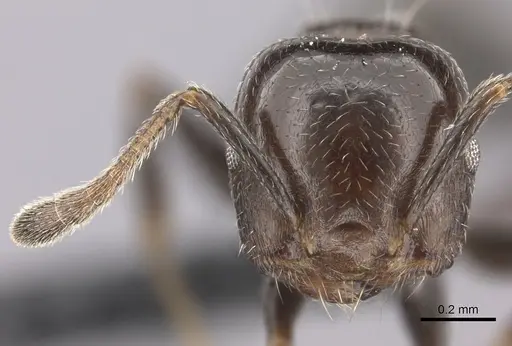
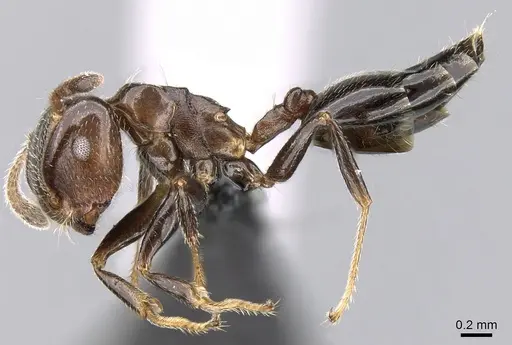
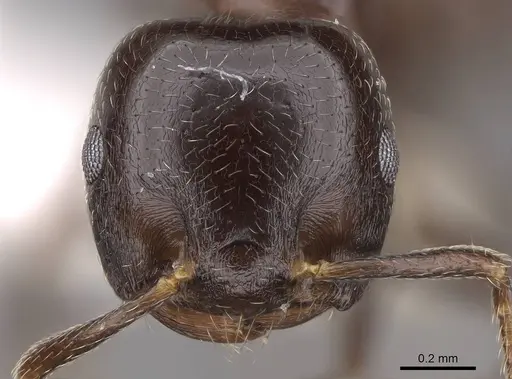
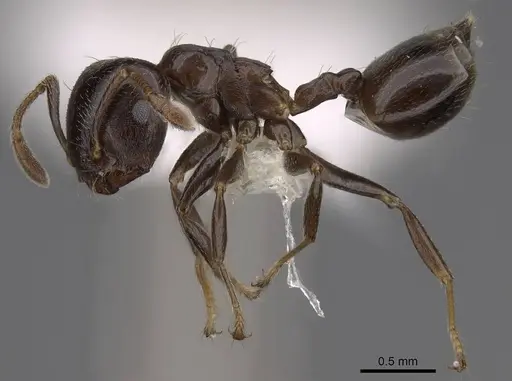
Crematogaster masokely is a tiny arboreal ant species endemic to Madagascar, named after its most distinctive feature, 'maso kely' means 'small eyes' in Malagasy. Workers measure just 0.72-0.91mm in head width, making them one of the smaller Crematogaster species you'll encounter [1]. They are medium to dark brown with a relatively smooth body, and can be identified by their notably small eyes, short antennae, and small denticles or tubercles on the mesonotum [1][2]. This species belongs to the Crematogaster degeeri-species-assemblage, a group of closely related ants found only in Madagascar [1].
This is one of the rarest ants in the hobby because it has never been collected in colony form, scientists have only found isolated workers in forest litter samples [1][2]. This means we know almost nothing about their actual care requirements in captivity. What we can tell you is that they come from the coastal littoral forests of eastern Madagascar, where conditions are warm and humid year-round [3]. If you're an experienced antkeeper looking for a true challenge, this species represents a genuine frontier, you'll be pioneering captive husbandry for an ant that has never been kept before.
Quick Summary
- Difficulty: Expert
- Origin & Habitat: Eastern Madagascar littoral (coastal forest) ecosystems at low elevation (around 20m). Found only in fragmented coastal forest patches, with one isolated population in the tsingy limestone formations of western Madagascar [1][2][3].
- Colony Type: Unknown, no colony collections have ever been made. Only worker specimens have been found, so we don't know if they are single-queen (monogyne) or multi-queen (polygyne) [1][2].
- Size & Growth:
- Queen: Unknown, only workers have been collected, no queens have been described [1][2].
- Worker: 0.72-0.91mm head width,0.74-0.95mm Weber's length [1].
- Colony: Unknown, no colony data exists [1][2].
- Growth: Unknown, no colony observations exist.
- Development: Unknown, this species has never been bred in captivity or observed in the wild [1][2]. (This is a completely unstudied species with zero captive or wild colony data.)
- Antkeeping:
- Temperature: Based on other Crematogaster species from Madagascar and their tropical habitat, aim for warm conditions around 24-28°C. Avoid temperatures below 20°C. Use a heating cable on one side of the nest to create a gradient.
- Humidity: Littoral forests are humid environments, keep nest substrate consistently moist but not waterlogged. Provide a water tube for drinking access. Mist the outworld occasionally. Target roughly 70-80% humidity.
- Diapause: Unknown, Madagascar is tropical with minimal seasonal temperature variation. Based on their origin, they likely do not require a true hibernation period, but may show reduced activity during cooler months.
- Nesting: Inferred preference for arboreal or cavity nesting based on genus patterns, they likely nest in hollow twigs, under bark, or in rotten wood in their forest habitat. A Y-tong (AAC) nest or plaster nest with small chambers works as a starting point. Avoid large, open spaces, they prefer tight, enclosed spaces.
- Behavior: Crematogaster ants are known for their distinctive heart-shaped gaster (abdomen) that they raise in a defensive display when threatened. They are generally fast-moving and active foragers. Based on related species, they likely form moderate-sized colonies and are omnivorous, collecting honeydew from aphids and small insects. Their small size (under 1mm) means escape prevention is critical, they can squeeze through tiny gaps. Expect them to be more nervous/defensive than larger ants.
- Common Issues: no captive husbandry information exists, you are pioneering care for this species, extremely small size makes escape prevention challenging, use fine mesh and tight-fitting barriers, no established feeding protocols, you will need to experiment with what they accept, unknown if they can adapt to captivity at all, wild-caught specimens may fail to establish, temperature and humidity requirements are educated guesses, not proven needs
Why This Species Is So Challenging
Crematogaster masokely represents a unique challenge in the antkeeping hobby: it has literally never been kept in captivity. Scientists have only collected a handful of worker specimens from forest floor samples in Madagascar, no one has ever found a queen, a colony, or even a nest [1][2]. This means every piece of care advice we can give you is an educated guess based on related Crematogaster species and what we know about Madagascar's littoral forest environment. You'll be a true pioneer, and success with this species would be a genuine scientific contribution. That said, this also means there's a real chance they simply cannot be kept in captivity, or that wild-caught queens (if you ever find one) may refuse to found a colony in artificial conditions. Only experienced antkeepers should attempt this species [1][2].
Housing and Nest Setup
Since we don't know their natural nesting preferences, you'll need to make informed guesses based on genus behavior. Crematogaster species typically nest in cavities, hollow twigs, under bark, in rotten wood, or in pre-formed chambers. A Y-tong (acrylic) nest with small, tight chambers would be a good starting point, as would a plaster nest that holds humidity well. The chambers should be appropriately scaled to their tiny worker size (under 1mm), so avoid large, open spaces. Provide a water tube connected to a cotton reservoir for drinking water, as hydration is critical. The outworld should be simple and easy to keep clean, these tiny ants are excellent escape artists, so use a test tube setup with a tight-fitting cotton plug and consider a fluon barrier on the rim.
Feeding and Diet
Crematogaster ants are generally omnivorous, feeding on honeydew, nectar, and small insects in the wild. For this species, you'll need to experiment since we've never documented what they accept. Start with standard antkeeping foods: a constant source of sugar water or honey diluted with water, offered on a tiny piece of cotton or directly in the outworld. For protein, offer very small prey items, fruit flies, pinhead crickets, or tiny mealworms are all appropriate-sized prey for ants this small. Live prey is likely important initially, especially for a founding queen. Remove any uneaten prey after 24-48 hours to prevent mold. Since they're from a tropical island, they may have specific dietary needs we don't yet understand, be prepared to try different foods.
Temperature and Environment
Madagascar's eastern littoral forests are warm and humid year-round, with temperatures typically in the mid-to-high 20s Celsius. Keep your colony setup at 24-28°C, using a heating cable on one side of the nest if your room temperature is below this range. Place the heating cable on TOP of the nest, not underneath, to avoid drying out the substrate. For humidity, aim for 70-80%, this is higher than many ant species need, but matches their coastal forest origin. The nest substrate should stay consistently moist but never waterlogged. A water tube provides drinking access, which is important since they can't rely on food moisture alone. Monitor your ants, if they cluster near the heat source, increase temperature slightly, if they avoid it, reduce heat.
Finding and Acquiring This Species
This is perhaps the biggest challenge: Crematogaster masokely is not available from any commercial ant supplier. The only way to obtain this species would be to collect it yourself in Madagascar, which requires travel permits and proper scientific collection permissions. The species is only known from a few locations in eastern Madagascar (Toamasina province and Ile St. Marie), plus one isolated western population in the Beanka tsingy [1][2][3]. If you do collect in the wild, look for workers in sifted leaf litter from littoral forests, that's how the type specimens were collected. Finding a queen would be extraordinarily lucky, as no one has documented their nuptial flight timing or queen behavior. This species is truly at the frontier of antkeeping, you're not buying a pet, you're potentially starting a captive breeding program for a species that has never been kept before [1].
Frequently Asked Questions
Can I buy Crematogaster masokely ants?
No. This species is not available from any commercial ant supplier. It has never been kept in captivity, and no colonies exist in the hobby. The only way to obtain this species would be to collect it yourself in Madagascar with proper permits [1][2].
How long does it take for Crematogaster masokely to go from egg to worker?
We don't know. This species has never been bred in captivity, and no one has ever documented its development timeline. Based on other small Crematogaster species, it might take 4-8 weeks at warm temperatures, but this is purely an estimate with no data to support it.
Do Crematogaster masokely ants sting?
Crematogaster ants can bite and may use their gaster in a defensive display, but they're too small to penetrate human skin. Their main defense is escaping, they're fast movers. The sting threat is minimal due to their tiny size.
What do Crematogaster masokely eat?
We don't know for certain, but based on genus patterns, they likely accept sugar sources (honey water, sugar water) and small protein prey (fruit flies, tiny insects). You'll need to experiment to see what they actually accept.
Are Crematogaster masokely good for beginners?
Absolutely not. This is an expert-level species because no captive husbandry information exists. You're pioneering care for an ant that has never been kept before. Only attempt this if you have extensive experience with difficult species and are prepared for the possibility of failure [1][2].
Do Crematogaster masokely need hibernation?
Probably not. Madagascar is tropical with minimal seasonal temperature variation. Based on their origin, they likely do not require a true hibernation period, though they may show reduced activity during cooler months.
How big do Crematogaster masokely colonies get?
Unknown. No colony collections have ever been made, so we have no data on maximum colony size. Based on related Crematogaster species, colonies might reach a few hundred to a few thousand workers, but this is purely speculative [1][2].
Can I keep multiple Crematogaster masokely queens together?
We don't know. No one has ever found a colony or documented queen behavior for this species. We don't even know if they are single-queen (monogyne) or multi-queen (polygyne) in the wild. Without any data, combining unrelated queens is not recommended [1][2].
What is the best nest type for Crematogaster masokely?
Based on genus patterns, a Y-tong (AAC) nest or plaster nest with small, tight chambers scaled to their tiny size (under 1mm workers) would be appropriate. They likely prefer enclosed spaces over open areas. This is an educated guess since we've never kept this species.
Why is Crematogaster masokely so rare?
This species has an extremely limited geographic range, it's only found in the fragmented littoral forests of eastern Madagascar and one small population in the west. They appear to be highly specialized to this specific habitat. Additionally, no one has ever found a colony or queen, suggesting they may be naturally rare or difficult to locate [1][2][3].
References

This caresheet is licensed under CC BY-SA 4.0 .
CASENT0068954
View on AntWeb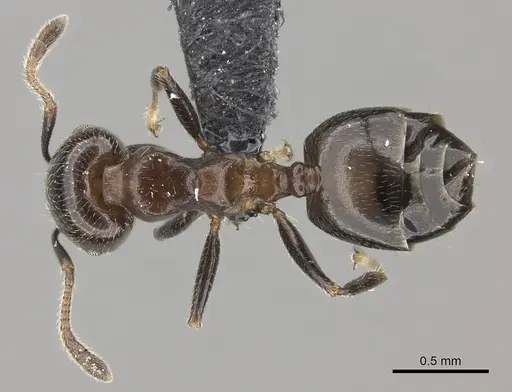
CASENT0922645
View on AntWeb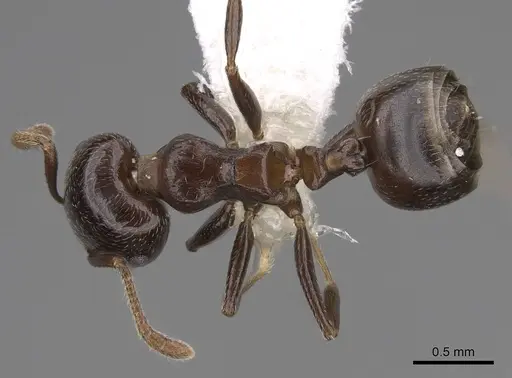
Literature
Loading...Loading products...