

Crematogaster macracantha
- Scientific Name
- Crematogaster macracantha
- Subgenus
- Orthocrema
- Tribe
- Crematogastrini
- Subfamily
- Myrmicinae
- Author
- Creighton, 1945
- Distribution
- Found in 2 countries
Crematogaster macracantha Overview
Crematogaster macracantha is an ant species of the genus Crematogaster. It is primarily documented in 2 countries , including Brunei Darussalam, Malaysia. Detailed taxonomic data and occurrence records can be further explored via authoritative databases such as AntWeb or the Global Biodiversity Information Facility (GBIF).
Crematogaster macracantha
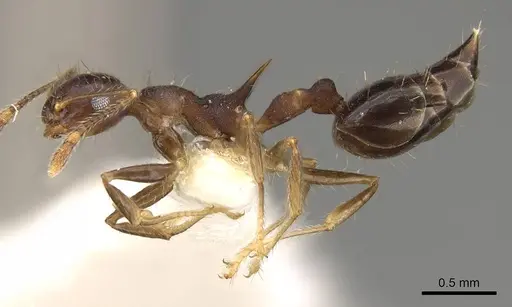
Crematogaster macracantha is a small ant species native to Borneo, belonging to the Orthocrema subgenus and the baduvi species group. Workers measure just 0.57-0.60mm in head width, making them quite tiny compared to many other Crematogaster species. They have a distinctive yellow-brown body with light yellow tips on their antennae, and their most striking feature is their remarkably long propodeal spines (0.50-0.59mm), significantly longer than other species in their group. These ants inhabit lowland dipterocarp forests in Borneo, where they nest on tree trunks. Their sculptured body surface and the long spines make them easily identifiable within their range.
Quick Summary
- Difficulty: Medium
- Origin & Habitat: Borneo (Malaysia: Sarawak, Sabah), Brunei, and Indonesia. Found in lowland dipterocarp forest, typically on tree trunks [1].
- Colony Type: Colony structure is unconfirmed. Many Crematogaster species are polygynous (multiple queens), but this has not been documented for C. macracantha specifically.
- Size & Growth:
- Queen: Undocumented, no queen measurements available
- Worker: 0.57-0.60mm head width,0.61-0.63mm head length [2]
- Colony: Unknown, no colony size data available
- Growth: Unknown, no development data available
- Development: Estimated 6-8 weeks based on typical Crematogaster patterns in tropical conditions (No direct development data exists for this species. Estimates based on genus-level patterns for tropical Orthocrema species.)
- Antkeeping:
- Temperature: Keep warm, around 24-28°C. As a tropical lowland forest species from Borneo, they prefer stable warm conditions [1].
- Humidity: High humidity required, think damp forest environment. Keep nest substrate consistently moist but not waterlogged. Lowland dipterocarp forests are humid environments.
- Diapause: Unlikely required. As a tropical species from Borneo, they do not experience cold winters that would trigger diapause.
- Nesting: Semi-arboreal, in nature they nest on tree trunks. In captivity, a Y-tong (AAC) nest or plaster nest works well. Provide climbing structures and ensure the nest has adequate humidity. Avoid completely dry setups.
- Behavior: Generally peaceful and non-aggressive, but will defend their nest if threatened. Workers are active foragers that can climb well, their arboreal nature means they're good climbers. They have a stinger but it's not particularly potent against humans. Escape prevention is important given their small size, use fine mesh barriers. They likely form trails to food sources like other Crematogaster species.
- Common Issues: small size means escapes are likely without fine mesh barriers, high humidity requirements can lead to mold if ventilation is poor, no documented colony structure means uncertainty about queen numbers, tropical species may not tolerate temperature drops below 20°C, limited information on this species makes care recommendations somewhat speculative
Natural History and Distribution
Crematogaster macracantha is endemic to Borneo, found in the Malaysian states of Sarawak and Sabah, as well as parts of Brunei and Indonesia. They inhabit lowland dipterocarp forests, which are characterized by tall trees and a humid, shaded understory. These ants are typically found on tree trunks, indicating a semi-arboreal or arboreal lifestyle. The species was first described by Creighton in 1945 from specimens collected on Mount Penrissen in Sarawak. More recent surveys have recorded them in various locations across Borneo, including the Brunei lowland forests. Their distinctive long propodeal spines set them apart from other members of the baduvi species group, making them relatively easy to identify under magnification. [2][1]
Identification and Morphology
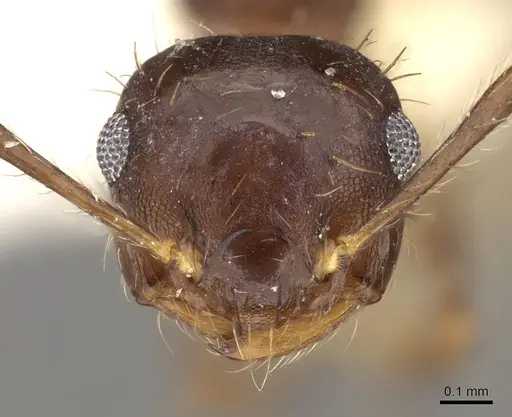
Workers of Crematogaster macracantha are small but distinctive. They measure approximately 0.57-0.60mm in head width and have a yellow-brown body coloration. The most notable feature is their extremely long propodeal spines, measuring 0.50-0.59mm, these are notably longer than in other Crematogaster species in the baduvi group, where spines typically reach only 0.15-0.22mm. Their body surface is sculptured (has texture/patterns), unlike the smoother surfaces of related species. The postpetiole (the segment after the petiole) is highly convex when viewed from the side, giving them a somewhat hunched appearance. The apical two segments of their antennae are light yellow, contrasting with the rest of their antennae which are yellow-brown. These identification features are visible under decent magnification (at least 10x). [2]
Nest Preferences and Housing
In their natural habitat, C. macracantha nests on tree trunks in lowland dipterocarp forests. This indicates they prefer humid, shaded environments with access to climbing surfaces. For captive care, a Y-tong (AAC) nest or plaster formicarium works well, as these materials can hold humidity while providing a dark, secure nesting area. Add some cork bark or other climbing structures in the outworld since they're arboreal and like to climb. Keep the nest substrate consistently moist, these ants come from humid forest environments. Avoid completely dry setups or those with poor humidity retention. The outworld should have some vertical space for climbing. Use tight-fitting lids and fine mesh for escape prevention, at only ~0.6mm worker size, they can squeeze through surprisingly small gaps. [1]
Feeding and Diet
While specific feeding data for C. macracantha is not documented, Crematogaster species are generally omnivorous with a preference for protein and sugar sources. In captivity, offer sugar water or honey water as a constant energy source. For protein, provide small insects like fruit flies, small mealworms, or other appropriately-sized prey. They likely tend aphids for honeydew in the wild, so offering sugar sources is important. Feed them every 2-3 days, removing uneaten prey after 24 hours. Fresh water should always be available. Since they're small ants, prey items should be appropriately sized, very small insects or pieces thereof.
Temperature and Seasonal Care
As a tropical lowland forest species from Borneo, C. macracantha requires warm conditions. Keep the nest area at 24-28°C, avoiding temperatures below 20°C. A small heating cable on one side of the nest can help maintain warmth, but avoid direct heat that could dry out the nest. They likely do not require diapause (winter rest) since Borneo has no true winter. However, slight seasonal variations in activity may occur, they might be slightly less active during the drier months. Room temperature within the recommended range is usually sufficient in most homes. Monitor colony behavior, if workers seem sluggish, consider warming the nest slightly. [1]
Behavior and Colony Dynamics
Crematogaster ants are known for their characteristic heart-shaped gaster (abdomen), which they can raise and curl over their body as a defensive posture. Workers of C. macracantha are active foragers and likely recruit nestmates to food sources through chemical trails, like other Crematogaster species. They are generally not aggressive toward keepers but will defend their nest if threatened. Their small size and arboreal nature mean they're excellent climbers, they'll readily climb on cork, plants, and other surfaces in their enclosure. Colonies likely grow over time but the exact maximum size is unknown. The colony structure (single queen vs. multiple queens) has not been documented for this species.
Frequently Asked Questions
How long does it take for Crematogaster macracantha to produce first workers?
The exact development time is unknown for this species. Based on typical Crematogaster patterns in tropical conditions, expect approximately 6-8 weeks from egg to worker. Patience is key, small tropical ants often develop faster than temperate species, but individual colonies may vary.
What size colony does Crematogaster macracantha reach?
Colony size is not documented in scientific literature. Related species in the baduvi group suggest moderate-sized colonies, but specific data for C. macracantha is not available.
Do Crematogaster macracantha ants sting?
Yes, Crematogaster ants have a stinger, but it's not particularly painful to humans. They're not aggressive and will typically flee or use defensive posturing rather than sting. However, they will defend their nest if directly threatened.
What temperature do Crematogaster macracantha ants need?
Keep them warm at 24-28°C. As a tropical lowland forest species from Borneo, they prefer stable warm conditions and may struggle below 20°C.
Are Crematogaster macracantha good for beginners?
This species is rated as Medium difficulty. While not aggressive, their small size requires good escape prevention, and their specific humidity and temperature needs require attention. They're not the best choice for a first ant, but are manageable for intermediate antkeepers willing to provide proper conditions.
Can I keep multiple Crematogaster macracantha queens together?
The colony structure of this species is unconfirmed. Many Crematogaster species are polygynous (multiple queens), but this has not been documented for C. macracantha specifically. It's best to start with a single queen until more information is available.
Do Crematogaster macracantha need hibernation?
No, hibernation is not required. As a tropical species from Borneo, they don't experience cold winters. They may have slight seasonal activity changes but no true diapause period.
What do Crematogaster macracantha ants eat?
Like other Crematogaster species, they're omnivorous. Offer sugar water or honey water constantly, and protein sources like small insects (fruit flies, small mealworms) every few days. They likely also consume honeydew in the wild.
When should I move Crematogaster macracantha to a formicarium?
Wait until the colony has at least 20-30 workers before moving to a formicarium. Initially, a test tube setup works well for founding colonies. Once established, transfer to a Y-tong or plaster nest that can maintain humidity.
Why is my Crematogaster macracantha colony dying?
Common causes include: temperature too low (below 20°C), humidity too low or too high (causing mold or drying), poor escape prevention allowing escapes, or inadequate food. Review each parameter and adjust accordingly. Limited available data on this species means troubleshooting may require experimentation.
References

This caresheet is licensed under CC BY-SA 4.0 .
CASENT0914302
View on AntWeb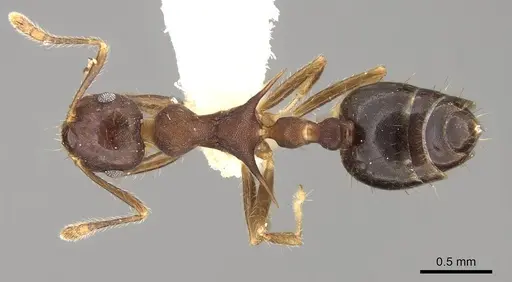
Literature
Loading...Loading products...