

Crematogaster lango
- Scientific Name
- Crematogaster lango
- Tribe
- Crematogastrini
- Subfamily
- Myrmicinae
- Author
- Weber, 1943
- Distribution
- Found in 2 countries
Crematogaster lango Overview
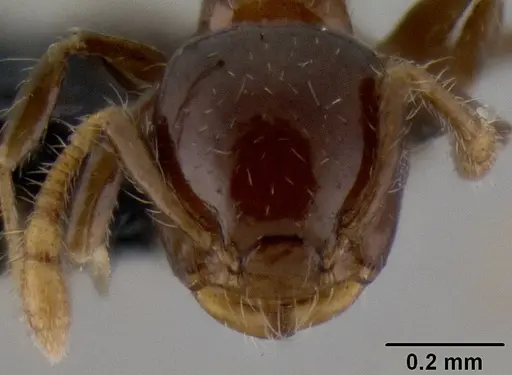
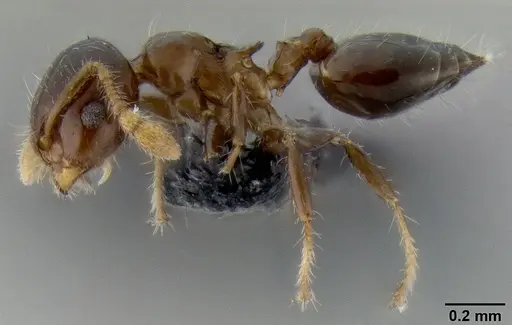
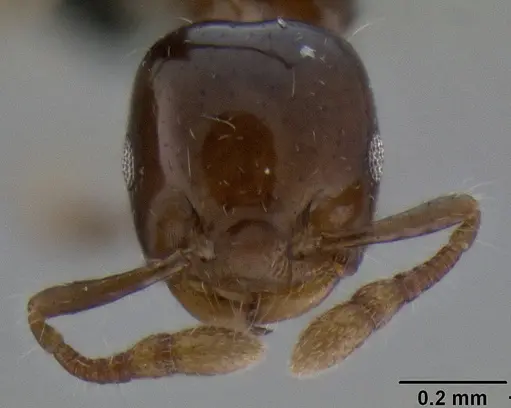
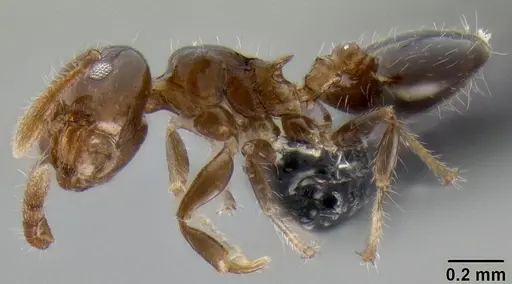
Crematogaster lango is an ant species of the genus Crematogaster. It is primarily documented in 2 countries , including Central African Republic, Gabon. Detailed taxonomic data and occurrence records can be further explored via authoritative databases such as AntWeb or the Global Biodiversity Information Facility (GBIF).
Crematogaster lango
Crematogaster lango is a small ant species belonging to the Atopogyne subgenus, found exclusively in the Central African Republic [1]. Like all Crematogaster species, they are known for their distinctive behavior of raising their heart-shaped abdomen over their head when threatened, which gives them the common name 'acrobat ants'. Workers are small and slender, typically measuring 2-4mm. The genus Crematogaster is one of the most widespread ant groups globally, with over 300 species. This particular species remains poorly studied in the scientific literature, so much of what we know about its care comes from general Crematogaster husbandry practices.
Quick Summary
- Difficulty: Medium
- Origin & Habitat: Central African Republic, found in tropical forest habitats [1]
- Colony Type: Unconfirmed, likely single-queen colonies like many Crematogaster species, but specific colony structure for C. lango has not been documented
- Size & Growth:
- Queen: Estimated 5-7mm based on genus typical sizes
- Worker: Estimated 2-4mm based on genus typical sizes
- Colony: Estimated several hundred workers based on genus patterns
- Growth: Moderate
- Development: Estimated 6-8 weeks at optimal temperature based on related species (Development time is estimated from genus-level data, specific timing for C. lango has not been documented)
- Antkeeping:
- Temperature: Keep around 22-26°C, typical for tropical Crematogaster species. A gentle gradient allowing them to self-regulate is ideal.
- Humidity: Moderate humidity around 50-70%. They prefer a slightly moist nest substrate but should not be waterlogged.
- Diapause: Unconfirmed, tropical species may not require formal hibernation but may slow down during cooler periods
- Nesting: In captivity, they do well in Y-tong nests, acrylic nests, or plaster nests with narrow chambers. They often prefer to nest in slightly elevated, protected spaces.
- Behavior: Crematogaster lango is generally not aggressive toward keepers but will defend their nest vigorously. They have a mild sting that is rarely felt by humans due to their small size. They are active foragers and will search for sugar sources and small prey. Escape prevention is important due to their small size, use fine mesh barriers. They communicate through chemical signals and may use tandem-running to recruit nestmates to food sources.
- Common Issues: small size makes escape prevention critical, use tight-fitting lids and fine mesh, limited species-specific information means keepers must rely on genus-level care guidelines, colonies may be slow to establish initially, patience is required, wild-caught colonies may carry parasites that can affect captive populations, overfeeding can lead to mold problems in nest areas
Housing and Nesting
Crematogaster lango can be housed in standard ant-keeping setups including test tubes for founding colonies, Y-tong nests, acrylic formicariums, or plaster nests. They prefer chambers that are appropriately scaled to their small size, narrow passages and compact spaces mimic their natural arboreal nesting sites. A small outworld for foraging allows them to search for food. Ensure excellent escape prevention as their small size allows them to squeeze through tiny gaps. Apply fluon or use fine mesh (0.5mm or smaller) on all openings.
Feeding and Diet
Like other Crematogaster species, C. lango likely accepts a varied diet including sugar sources (honey water, sugar water, ripe fruit) and protein sources (small insects like fruit flies, pinhead crickets, mealworms). They are opportunistic feeders and will readily collect honeydew if aphids are available. Feed small amounts of sugar water continuously and offer protein prey 2-3 times per week. Remove uneaten prey within 24-48 hours to prevent mold.
Temperature and Humidity
Maintain temperatures around 22-26°C for optimal colony health and development. A heating cable on one side of the nest can create a temperature gradient allowing the ants to self-regulate. Place the heating on top of the nest, not underneath, to avoid excessive drying. Humidity should be moderate, around 50-70%. The nest substrate should feel slightly damp but never waterlogged. Provide a water tube for drinking access.
Colony Development
Colony growth is moderate, expect the first workers (nanitics) to emerge around 6-8 weeks after founding at optimal temperature, though this is estimated from genus-level data. Initial colonies may grow slowly as the queen focuses energy on producing a small first brood. Once established, growth typically accelerates. A healthy established colony may eventually reach several hundred workers.
Behavior and Defense
When threatened, Crematogaster lango workers will raise their abdomen over their head in a characteristic 'acrobat' pose, this is how the genus got its common name. They may also release a foul-smelling chemical as a defensive response. Their sting is very mild due to their small size and rarely penetrates human skin. They are active foragers and will readily explore their outworld in search of food.
Frequently Asked Questions
How long does it take for Crematogaster lango to produce first workers?
Based on genus-level data, expect first workers (nanitics) around 6-8 weeks after the queen lays her first eggs, assuming temperatures around 24-26°C. This is an estimate as specific development time for C. lango has not been documented.
What do Crematogaster lango ants eat?
They accept sugar sources (honey water, sugar water, ripe fruit) and small protein prey (fruit flies, pinhead crickets, small mealworms). Offer sugar water continuously and protein prey 2-3 times per week.
Do Crematogaster lango ants sting?
They have a stinger but due to their very small size, the sting rarely penetrates human skin. Most keepers report feeling nothing more than a mild tingling if anything at all.
Can I keep Crematogaster lango in a test tube setup?
Yes, test tubes work well for founding colonies. Ensure the cotton is packed tightly and use a water reservoir large enough to last several weeks but not so large that it floods. Transfer to a proper nest once the colony reaches 20-30 workers.
Are Crematogaster lango ants good for beginners?
They are moderate difficulty, not the easiest but not challenging either. The main considerations are their small size requiring excellent escape prevention and the need for patience during the slow founding phase.
Do Crematogaster lango need hibernation?
This is unconfirmed for this specific species. As a tropical species from Central Africa, they likely do not require formal hibernation but may slow down during cooler periods. If your room temperature drops significantly in winter, a slight cooling period may be beneficial but is not mandatory.
How big do Crematogaster lango colonies get?
Based on genus patterns, established colonies likely reach several hundred workers. Exact maximum size for this species has not been documented.
Why are my Crematogaster lango escaping?
Their small size means they can squeeze through gaps that seem insignificant. Check all openings carefully, use fine mesh (0.5mm or smaller), apply fluon to barrier edges, and ensure lids fit tightly. Even small gaps that you can barely see are large enough for them to escape.
When should I move my colony to a formicarium?
Transfer from test tube to a proper nest when the colony reaches roughly 20-30 workers or when the test tube water reservoir is nearly depleted. Choose a nest with appropriately sized chambers, too large spaces can stress small colonies.
Can I keep multiple Crematogaster lango queens together?
This has not been documented for this specific species. Most Crematogaster are monogyne (single queen), and combining unrelated queens often leads to fighting. It is not recommended to attempt multi-queen setups without specific evidence that this species tolerates it.
References

This caresheet is licensed under CC BY-SA 4.0 .
CASENT0086553
View on AntWeb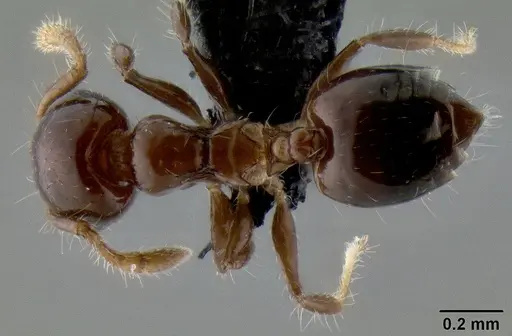
CASENT0090624
View on AntWeb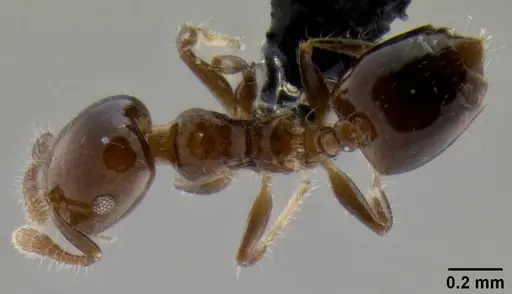
Literature
Loading...Loading products...