

Crematogaster foliocrypta
- Scientific Name
- Crematogaster foliocrypta
- Subgenus
- Orthocrema
- Tribe
- Crematogastrini
- Subfamily
- Myrmicinae
- Author
- Longino, 2003
- Distribution
- Found in 2 countries
Crematogaster foliocrypta Overview
Crematogaster foliocrypta is an ant species of the genus Crematogaster. It is primarily documented in 2 countries , including Costa Rica, Ecuador. Detailed taxonomic data and occurrence records can be further explored via authoritative databases such as AntWeb or the Global Biodiversity Information Facility (GBIF).
Crematogaster foliocrypta
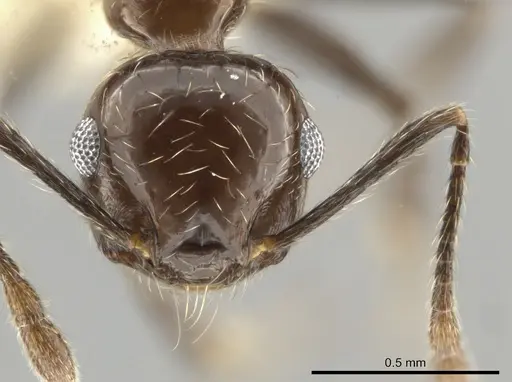
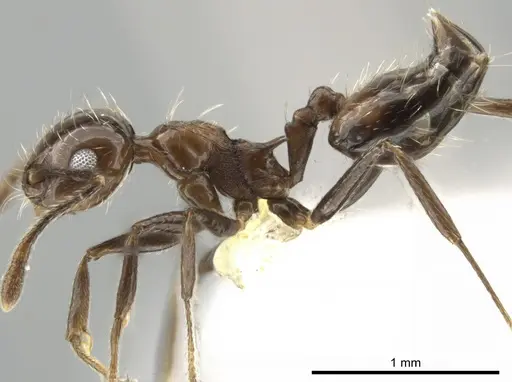
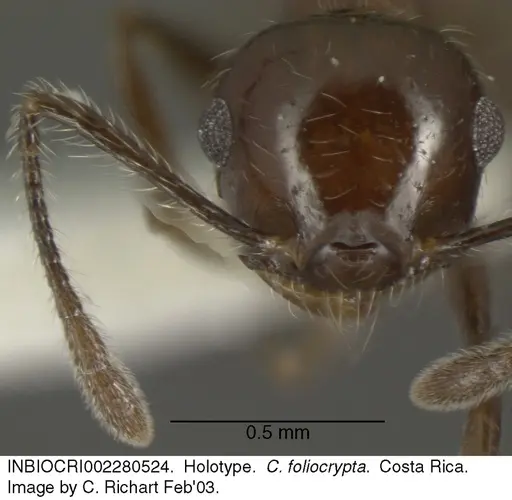
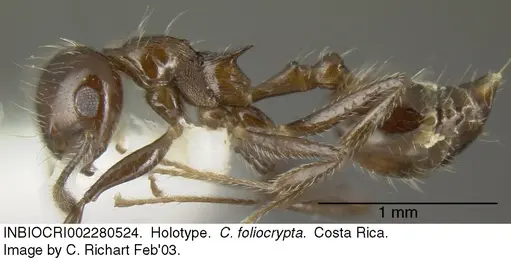
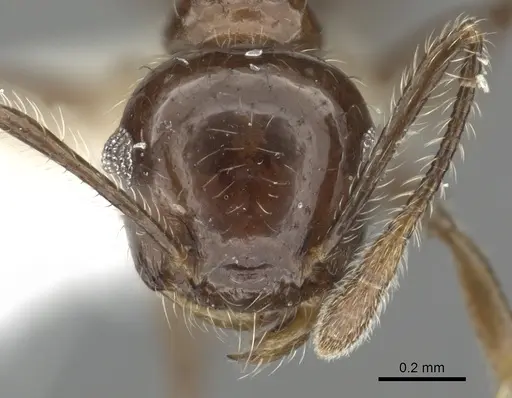
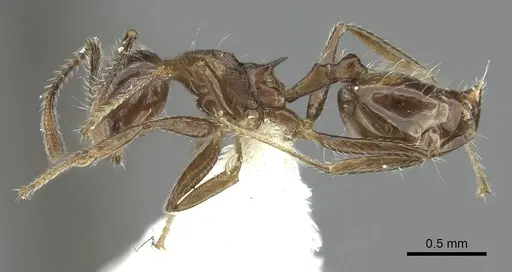
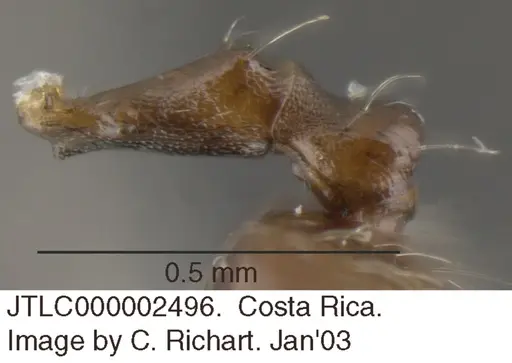
Crematogaster foliocrypta is a small arboreal ant species native to the Neotropical rainforests of Costa Rica and Ecuador. Workers are reddish-brown and monomorphic, measuring 0.6-0.7mm in head width [1]. This species is named for its remarkable nesting behavior, it constructs cryptic carton nests by pulling together two or more leaves of small saplings and sealing the edges with a papery material made from plant fibers, completely concealing the disk-like nest inside [1]. The species belongs to the limata complex and is distinguished from related species by having appressed rather than erect tibial pilosity [1]. This is an extremely rare species known from only a handful of collections in Braulio Carrillo National Park, Costa Rica, at approximately 500m elevation [1].
Quick Summary
- Difficulty: Expert
- Origin & Habitat: Found in Neotropical rainforests of Costa Rica and Ecuador at 500m elevation. This is an arboreal species that constructs cryptic carton nests between leaves of small saplings in lowland rainforest environments [1][2].
- Colony Type: Colony structure is unconfirmed. Known from only four collections, none of which contained adult queens or males, only workers and brood were found [1]. Based on typical Crematogaster patterns, colonies likely have a single queen (monogyne), but this is not confirmed for this species.
- Size & Growth:
- Queen: Unknown, no queens have been collected or described [1].
- Worker: Workers measure HL 0.563-0.654mm, HW 0.622-0.730mm, WL 0.692-0.786mm [1].
- Colony: Unknown, only small worker groups have been observed in the wild [1].
- Growth: Unknown, no development data exists for this species.
- Development: Unknown, no direct observations of colony development exist [1]. Based on typical Crematogaster patterns, expect 4-8 weeks at warm tropical temperatures, but this is an estimate. (No development data exists for this species. Estimates based on genus-level patterns for tropical arboreal Crematogaster.)
- Antkeeping:
- Temperature: This is a tropical lowland species. Keep at 24-28°C, which mimics its natural 500m elevation rainforest habitat in Costa Rica. A gentle temperature gradient is recommended [1].
- Humidity: High humidity is essential, these ants live in rainforest conditions. Maintain 70-85% humidity in the nest area. The arboreal carton nest construction suggests they prefer humid, shaded conditions [1].
- Diapause: Unknown, this is a tropical species from consistent lowland rainforest. It likely does not require a diapause period, but this is unconfirmed.
- Nesting: This is an arboreal species that naturally builds carton nests between leaves. In captivity, a naturalistic setup with live plants or a Y-tong/plaster nest with high humidity works well. The key is providing materials they can manipulate to construct their characteristic carton structures.
- Behavior: This is an arboreal, cryptic species. Workers forage in the canopy and are not commonly encountered. They construct distinctive carton nests between leaves, and in the wild, scale insects are often found inside the nests, this suggests they may tend homopterans for honeydew. Most nests also have spiders (Cotinusa genus) living in association with them [1]. Workers are small and likely quick-moving. Escape prevention is important due to their small size. Temperament is not well documented, but Crematogaster workers are typically defensive when threatened and may raise their abdomen in a defensive posture.
- Common Issues: this species is extremely rare in the hobby and may not be available commercially, no development or colony growth data exists, keepers must be prepared for uncertainty, humidity requirements are critical, dry conditions will likely cause colony failure, escape prevention is essential due to their tiny worker size, the arboreal carton-nesting behavior is unusual and requires specific setup considerations, no confirmed queen or colony founding information is available
Natural History and Nesting Behavior
Crematogaster foliocrypta is one of the most distinctive Crematogaster species due to its unique nesting behavior. In the wild, these ants construct flat, disk-like carton nests by pulling two or more leaves together and sealing the edges with a papery material made from plant fibers. This completely conceals the nest inside the leaf cluster, making it nearly invisible to predators and collectors alike [1]. The carton material is composed entirely of filamentous material molded into passageways, creating a complex internal structure [1]. This species has only been collected four times in history, all from Braulio Carrillo National Park in Costa Rica at approximately 500m elevation [1]. The species name 'foliocrypta' literally means 'leaf-hidden, ' referring to this cryptic nesting behavior [1]. A fascinating association has been documented between this species and spiders of the genus Cotinusa (family Salticidae). Most nests had these spiders living inside them, and researchers have suggested that the spiders' stridulatory organs may be related to communication with the ants [1]. Additionally, scale insects (homopterans) are often found on leaves inside the nests, suggesting these ants may tend these insects for honeydew, similar to many other Crematogaster species.
Housing and Nest Setup
Because this is an arboreal species that naturally builds carton nests between leaves, captive housing requires some creative thinking. A naturalistic setup with live potted plants works well, the ants will construct their characteristic carton nests between the leaves if given suitable materials. Alternatively, a Y-tong (acrylic) nest or plaster nest with high humidity can work, but you may not see the natural carton-building behavior in these setups. Provide materials like paper, cotton, or plant fibers that the ants can use to construct their nests. The nest should be kept humid but not waterlogged. Since this is a tropical species, avoid temperature drops below 22°C. A small water reservoir connected to the nest helps maintain humidity. Because workers are tiny (under 1mm), escape prevention must be excellent, use tight-fitting lids and fine mesh on any ventilation holes. The canopy-dwelling nature of this species means they may prefer vertical space and may not use horizontal foraging areas as much as ground-nesting ants. [1]
Feeding and Diet
Based on observations of scale insects inside their nests in the wild, Crematogaster foliocrypta likely feeds on honeydew produced by these homopterans, similar to other Crematogaster species [1]. In captivity, offer sugar water or honey water as a constant carbohydrate source. For protein, offer small insects like fruit flies, pinhead crickets, or other appropriately sized prey. Live prey is preferred since this is an active foraging species. Based on genus patterns, they likely accept a wide variety of foods including sugars, insects, and possibly seeds. Feed small amounts initially and observe what the colony accepts. Remove uneaten prey after 24-48 hours to prevent mold. The arboreal nature of this species suggests they may be more inclined to forage upward rather than on the ground, so place food accordingly.
Temperature and Humidity Requirements
This species comes from a tropical lowland rainforest environment in Costa Rica at 500m elevation, where temperatures are consistently warm and humidity is high [1]. Keep the nest at 24-28°C, which approximates their natural conditions. A slight temperature gradient allows the ants to regulate their own exposure to heat. For humidity, maintain 70-85% in the nest area, this is critical for this species. The carton nest construction behavior indicates they evolved in consistently humid conditions. Use a moisture reservoir connected to the nest and monitor condensation levels. Avoid dry air, air conditioning drafts, and heating elements that might dry out the nest. Room temperature in most homes may be too cold, consider using a gentle heating method if your room temperature is below 24°C. Place the heating element on top of the nest, not underneath, to avoid evaporating moisture.
Acquiring and Establishing a Colony
This is one of the most challenging species to keep because it is extremely rare in both the wild and the ant-keeping hobby. No colonies have ever been documented in captivity, and the species is known from only four collections in the scientific literature [1]. If you obtain a colony, it will likely be wild-caught since captive-bred colonies are essentially nonexistent. When establishing a wild-caught colony, provide the proper humidity and temperature conditions immediately. Expect high mortality during collection and transport, wild colonies are fragile. Do not expect to see the characteristic carton nest behavior in captivity unless you provide live plants or appropriate building materials. Be prepared for uncertainty, this species has never been kept in captivity before, so there are no established protocols. Monitor the colony closely and document your observations. Any successful captive breeding of this species would be a significant contribution to ant-keeping knowledge.
Frequently Asked Questions
How do I keep Crematogaster foliocrypta ants?
This is an expert-level species due to its rarity and specific requirements. Provide a naturalistic setup with live plants or a humid Y-tong/plaster nest. Keep at 24-28°C with 70-85% humidity. Offer sugar water and small insects. Escape prevention is critical due to their tiny size. This species has never been documented in captivity, so expect a learning curve.
What do Crematogaster foliocrypta ants eat?
Based on their association with scale insects in the wild, they likely feed on honeydew. In captivity, offer sugar water or honey water as a constant food source, plus small insects like fruit flies for protein. Remove uneaten prey after 24-48 hours.
How big do Crematogaster foliocrypta colonies get?
Unknown, this species has only been collected four times in history, and no large colonies have ever been documented [1]. Based on related species, they likely reach a few hundred workers, but this is an estimate.
Do Crematogaster foliocrypta ants sting?
Crematogaster ants can bite and may secrete formic acid as a defensive mechanism, but they are too small to cause meaningful pain to humans. Their primary defense is raising their abdomen in a threatening posture.
What temperature do Crematogaster foliocrypta ants need?
Keep them at 24-28°C, mimicking their natural tropical rainforest habitat in Costa Rica. This is a lowland tropical species that does not tolerate cool temperatures.
Are Crematogaster foliocrypta good for beginners?
No. This is an expert-level species due to its extreme rarity, lack of captive husbandry data, specific humidity requirements, and the fact that it has never been successfully kept in captivity. Beginners should start with more common, documented species.
Where is Crematogaster foliocrypta found?
This species is known only from Braulio Carrillo National Park in Costa Rica and parts of Ecuador, at approximately 500m elevation in tropical rainforest [1][2].
Can I keep multiple Crematogaster foliocrypta queens together?
Unknown, no queens have ever been collected or documented for this species [1]. Based on typical Crematogaster patterns, they likely have single-queen colonies, but this is unconfirmed.
How long does it take for Crematogaster foliocrypta to develop from egg to worker?
Unknown, no development data exists for this species. Based on typical Crematogaster patterns, expect 4-8 weeks at warm tropical temperatures, but this is purely an estimate.
References

This caresheet is licensed under CC BY-SA 4.0 .
CASENT0637847
View on AntWeb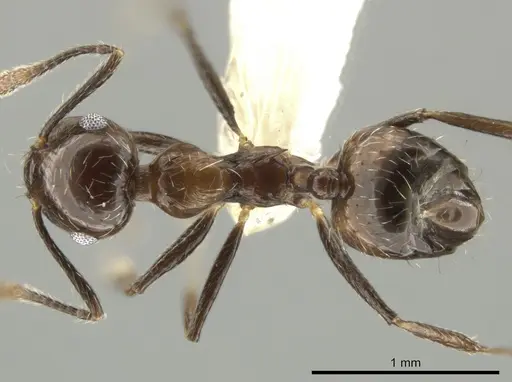
INBIOCRI002280524
View on AntWeb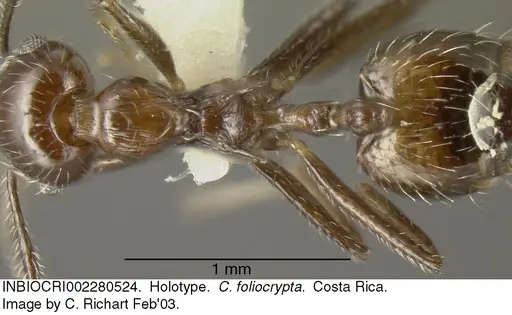
JTLC000001387
View on AntWeb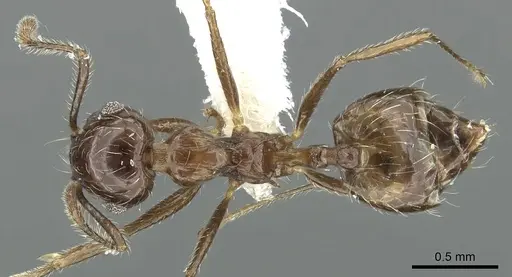
JTLC000002496
View on AntWeb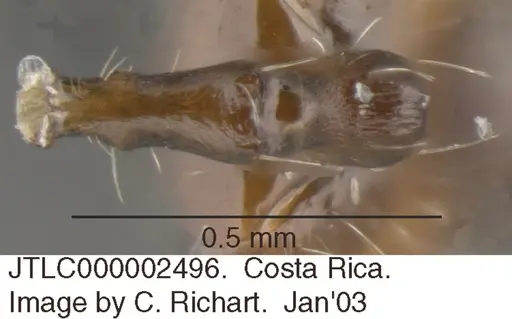
Literature
Loading...Loading products...