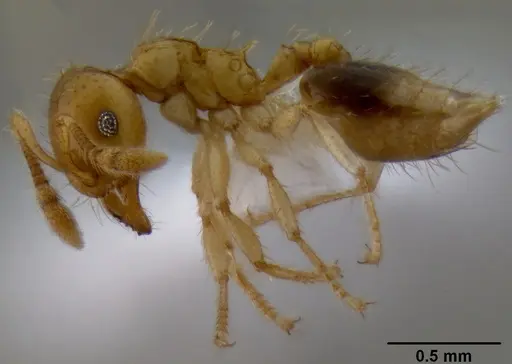
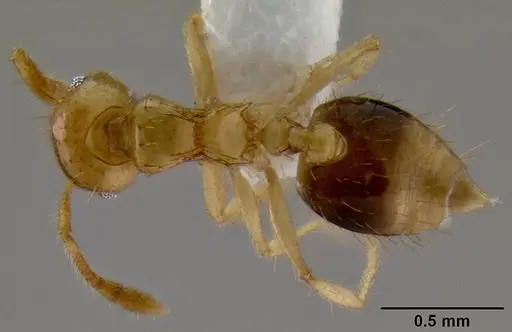
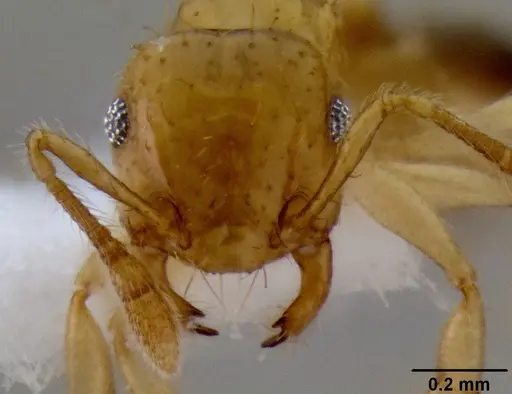
Crematogaster flavomicrops - "Yellow Micro-eyed Acrobat Ant"
Crematogaster flavomicrops is a fascinating small ant species known for its distinctive uniform yellow coloration and unusually tiny eyes, which typically have only 5-6 facets. Workers are monomorphic in size, meaning they don't have distinct size castes like majors or minors. Like other members of the Crematogaster genus, they possess a heart-shaped gaster (abdomen) which they famously raise over their heads when alarmed, earning them the nickname 'Acrobat Ants' or 'Cocktail Ants'. Their bodies are covered in abundant, short, stubble-like hairs, giving them a unique texture.
- Difficulty: Medium
- Origin & Habitat: Central and South America (Brazil, Colombia, Costa Rica, Ecuador, Venezuela) in Lowland to mid-montane wet forest habitats, typically found in sifted leaf litter, rotten wood, and likely arboreal nests within decaying timber..
- Colony Type: Monogyne (single queen) with potential for Oligogyne (multiple queens, often isolated within the nest), claustral (queen seals herself in a chamber to raise the first brood without foraging) founding.
- Size & Growth:
- Queen: 4-9mm
- Worker: 2-3.5mm
- Colony: Medium (thousands). Fast growth.
- Antkeeping:
- Temperature: Maintain a consistent temperature range of 25-28°C for optimal development. A heating mat placed on one side of the nest can create a thermal gradient..
- Humidity: High humidity is crucial for this wet forest species. Aim for 70-90% relative humidity within the nest. The outworld can be kept at a lower humidity..
- Diapause: Not required. Not specified at Not specified.
- Nesting: These ants thrive in naturalistic setups that mimic their rotten wood and leaf litter habitats. Nests made from cork, natural wood, or carefully designed acrylic/3D printed nests with good humidity retention are ideal..
- Behavior: Medium (towards handler, food or other ants) aggressiveness.
- Common Issues: Mold in natural nests (wood/cork), Humidity fluctuations leading to stress, Escape artists due to small size and active nature.
Crematogaster flavomicrops, like other 'Cocktail Ants', has a truly unique defense mechanism. When threatened or alarmed, these ants will raise their distinctive heart-shaped gaster high over their bodies, often pointing it in the direction of the perceived threat. This behavior is not just for show; they can extrude a defensive chemical from the tip of their gaster, effectively applying it topically to an aggressor. Observing this 'acrobat' display is one of the most captivating aspects of keeping this genus.
Originating from humid lowland to mid-montane wet forests, maintaining a stable, high humidity environment is paramount for a thriving Crematogaster flavomicrops colony. Failure to provide adequate moisture within their nest can lead to stress, brood loss, and a decline in colony health. It's advisable to use nest materials that naturally retain moisture, such as specific types of wood or substrate, and ensure regular hydration without creating stagnant or overly wet conditions that could foster mold.
While the workers of Crematogaster flavomicrops are monomorphic, meaning they don't have physically distinct major or minor castes, their petite size and active foraging habits make them a joy to observe. Their uniform yellow coloration and exceptionally small eyes are key identification features, setting them apart from other species in the diverse Crematogaster genus. Pay close attention to these subtle details, as they truly define this particular ant species.
The queen's size in Crematogaster flavomicrops can exhibit surprising variation, with some alates being notably smaller and others quite large, even within the same species complex. This natural variability might influence initial colony founding success or the pace of early colony growth. For antkeepers, this means not to be alarmed by slight size differences in wild-caught queens, as it's a known characteristic of this complex. Providing a peaceful, undisturbed founding environment remains the most important factor.
Frequently Asked Questions
What is the best type of formicarium for Crematogaster flavomicrops?
For these 'Acrobat Ants', a naturalistic setup with cork, decaying wood, or a specialized acrylic nest designed for high humidity is usually best. They love to chew and adapt to cavities, so a wood-based nest or a formicarium with a good hydration system that prevents drying out would be ideal.
Do Crematogaster flavomicrops workers sting?
Yes, Crematogaster species do possess a sting. However, it's notably blunt and spatulate, meaning they don't typically inject venom like a bee. Instead, they apply a defensive chemical topically by wiping it on an aggressor. While generally not harmful to humans beyond mild irritation, it's their unique 'cocktail' posture that's most famous.
What do Crematogaster flavomicrops eat?
These ants are omnivorous generalists. They'll readily accept sugar sources like honey, sugar water, or fruit, which provide essential carbohydrates. For protein, offer small insects such as flightless fruit flies, mealworms, or crickets. They are also known to tend homopterans (like aphids) for honeydew in the wild.
How large can a Crematogaster flavomicrops colony get?
While specific numbers for C. flavomicrops can be elusive, other Crematogaster species can form colonies ranging from thousands to tens of thousands of workers. Given their 'Fast' growth rate and prolific nature, you can expect your colony to reach several thousand workers under optimal conditions.
Do Crematogaster flavomicrops need to hibernate or go through diapause?
No, as a species originating from tropical lowland and mid-montane wet forests of Central and South America, Crematogaster flavomicrops does not require a hibernation or diapause period. Consistent warm temperatures and high humidity year-round are essential for their continuous development.
Are Crematogaster flavomicrops aggressive towards other ants or keepers?
They are generally considered medium to highly aggressive. In their natural habitat, many Crematogaster species are territorial and will actively defend their nests and foraging grounds against rival ant species. While they might raise their gaster at a curious keeper, they are not typically aggressive towards humans unless their nest is directly disturbed.
Why are they called 'Acrobat Ants' or 'Cocktail Ants'?
These common names stem from their unique defensive posture. When feeling threatened, Crematogaster ants will lift their heart-shaped gaster high over their head and thorax, giving them an 'acrobatic' appearance. This posture is also associated with their ability to excrete defensive chemicals from the tip of their gaster, as if 'toasting' with their abdomen, hence 'Cocktail Ant'.
Is Crematogaster flavomicrops a good species for beginners?
While captivating, their specific requirements for high humidity and consistent tropical temperatures might make them a 'Medium' difficulty species. Beginners who are prepared to closely monitor and maintain these environmental parameters, especially nest humidity, can certainly find success, but they are not as forgiving as more common beginner species like Lasius niger.
How can I tell the difference between a Crematogaster flavomicrops worker and queen?
The queen will be significantly larger than the workers (4-9mm vs. 2-3.5mm) and will have distinct wing scars on her thorax, even if she has shed her wings. Workers of C. flavomicrops are monomorphic and smaller, consistently yellow, and identifiable by their very small eyes.
What are the common issues to watch out for when keeping Crematogaster flavomicrops?
Keep a close eye on mold, especially in natural wood or cork nests, as their high humidity requirements can create favorable conditions for fungal growth. Fluctuations in humidity or temperature can also stress the colony. Due to their small size and active foraging, they can also be escape artists, so ensure your setup is escape-proof.