

Crematogaster dentinodis
- Scientific Name
- Crematogaster dentinodis
- Tribe
- Crematogastrini
- Subfamily
- Myrmicinae
- Author
- Forel, 1901
- Distribution
- Found in 2 countries
Crematogaster dentinodis Overview
Crematogaster dentinodis is an ant species of the genus Crematogaster. It is primarily documented in 2 countries , including Mexico, United States of America. Detailed taxonomic data and occurrence records can be further explored via authoritative databases such as AntWeb or the Global Biodiversity Information Facility (GBIF).
Crematogaster dentinodis
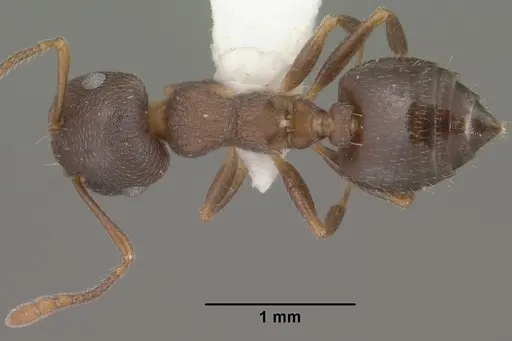
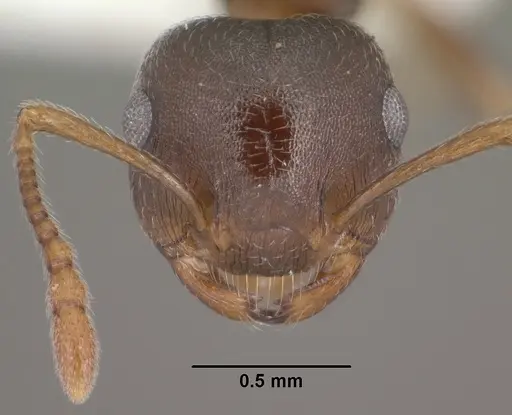
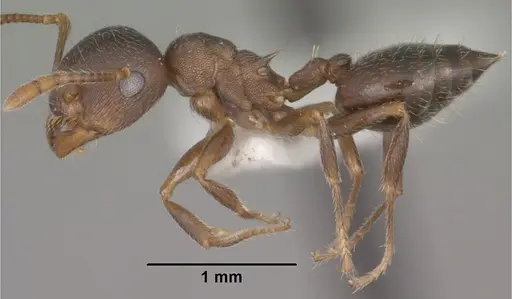
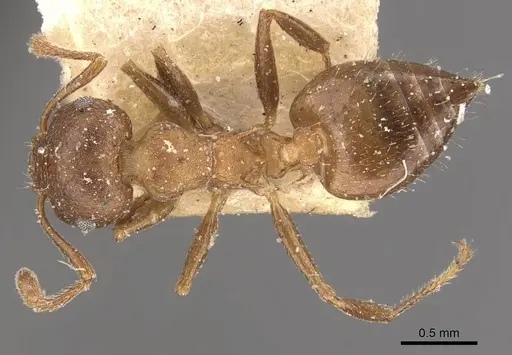
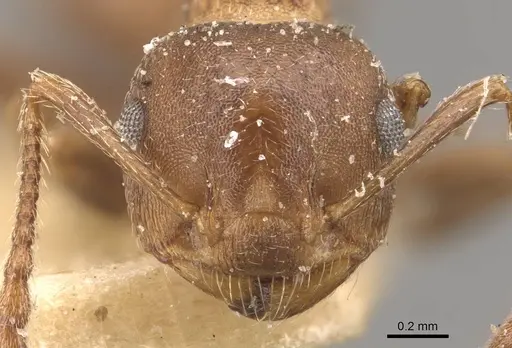
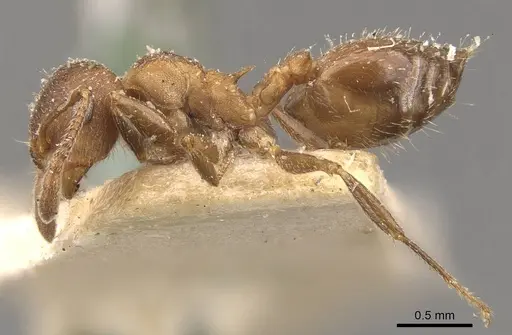
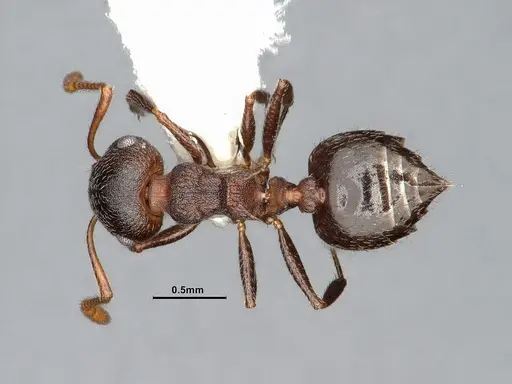
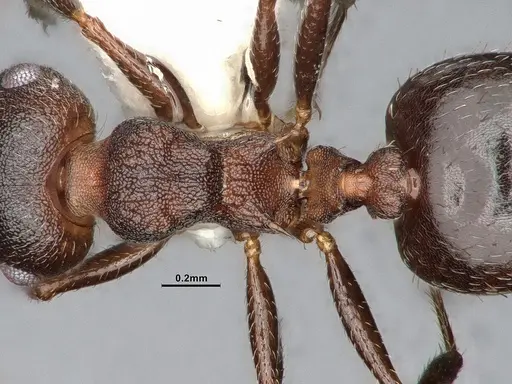
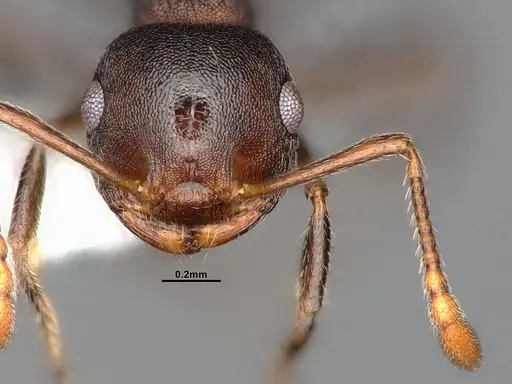
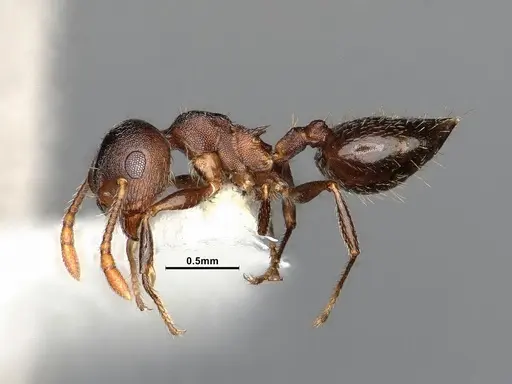
Crematogaster dentinodis is a small acrobat ant species native to the southwestern United States and Mexico. Workers measure 0.68-0.91mm in head width, making them a relatively small ant species [1]. They are easily identified by their tiny tooth on each corner of the petiole (the narrow waist segment) and their densely punctured upper body surface [1][2]. When disturbed, they raise their abdomen like an acrobat, which is how they got their common name.
These ants inhabit desert scrub, grasslands, and arid forest habitats across Arizona, New Mexico, and Mexico [1][2]. They nest in soil, typically under stones, but can also be found in stumps, logs, or hollow twigs [1][3]. This species shows a strong preference for wild, natural areas, studies show they are 571% more common in wildlands than in urban environments [4].
Quick Summary
- Difficulty: Medium
- Origin & Habitat: Southwestern United States (Arizona, New Mexico) and Mexico. Found in desert scrub, grasslands, and arid forest habitats [1][2]. Nests under stones in open grasslands, chaparral, grass and mesquite areas, or among shrubs in succulent desert [3][1].
- Colony Type: Colony structure is not well documented in scientific literature. Based on typical Crematogaster patterns, likely single-queen colonies, but this requires confirmation for this specific species.
- Size & Growth:
- Queen: Queens approximately 1.54mm HL,1.75mm HW [1]. Signal if estimated, based on limited queen measurement data.
- Worker: Workers 0.68-0.91mm HW [1]. Small species.
- Colony: Colony size is unconfirmed. Based on similar Crematogaster species, likely reaches several hundred workers.
- Growth: Growth rate is unconfirmed. Crematogaster species typically develop from egg to worker in 4-8 weeks at optimal temperature.
- Development: Estimated 5-8 weeks based on typical Crematogaster genus development patterns [1]. (Development timeline is not directly studied for this species. Estimates based on genus-level data.)
- Antkeeping:
- Temperature: Keep at room temperature, roughly 20-26°C. This species naturally occurs in warm desert regions, so they tolerate higher temperatures well. A heating cable on one side of the nest can create a gradient if your room runs cool [1].
- Humidity: Moderate humidity. They naturally nest under stones in arid to semi-arid habitats, so they prefer drier conditions than many tropical ants. Allow the nest to dry out partially between waterings. Provide a water tube but avoid saturating the substrate [1][3].
- Diapause: Likely requires a winter rest period (diapause). Given their range through Arizona and Mexico, they probably experience cooler winter temperatures and may benefit from a reduced-temperature period around 10-15°C for 2-3 months. However, this is inferred from habitat and not directly documented.
- Nesting: They naturally nest under stones in soil. In captivity, a Y-tong (AAC) nest or plaster nest works well. Provide a layer of substrate they can burrow into, and place a flat stone or ceramic tile on top to mimic their natural stone-cover preference. They also accept hollow twigs or wood fragments [1].
- Behavior: Crematogaster dentinodis is generally calm but will raise its gaster and may emit a defensive secretion when threatened. They are not particularly aggressive toward keepers but will defend their nest vigorously. Workers are active foragers, both on the ground and sometimes on vegetation. Their small size (under 1mm) means they can escape through tiny gaps, use fine mesh and tight-fitting lids for escape prevention [1][2].
- Common Issues: escape prevention is critical, their tiny size means they squeeze through standard barrier gaps, colonies may fail if kept too humid, they prefer drier conditions matching their desert habitat, slow colony growth can frustrate beginners, they develop moderately compared to faster species, wild-caught colonies may have parasites that are difficult to detect, difficulty finding queen, they nest under stones making queen location challenging
Housing and Nest Setup
Crematogaster dentinodis naturally nests under stones in soil, so recreate these conditions in captivity. A Y-tong (acrylic) nest with a thin layer of soil or plaster works well. Place a flat stone or heavy ceramic tile on top of the outworld area, this mimics the stones they nest under in the wild and gives them security. They also accept naturalistic setups with soil and stones. Because they are small (workers under 1mm), ensure all connections and barriers are tight. A test tube setup can work for founding colonies, but transfer to a more spacious nest once the colony reaches 20-30 workers. [1][3]
Feeding and Diet
Crematogaster dentinodis is an omnivorous forager. They likely collect honeydew from aphids and scale insects in the wild, along with small insects and nectar. In captivity, offer a constant sugar source like sugar water, honey, or diluted maple syrup. For protein, provide small insects like fruit flies, pinhead crickets, or mealworm pieces. They are small, so prey items should be appropriately sized. Feed protein 2-3 times per week and keep sugar available constantly. Remove uneaten prey after 24-48 hours to prevent mold.
Temperature and Seasonal Care
This species comes from warm desert regions (Arizona, New Mexico, Mexico), so they prefer temperatures in the low-to-mid 20s Celsius. Room temperature (20-24°C) is typically suitable. They can tolerate higher temperatures up to 30°C or more, which mimics their natural hot desert environment. If your room runs cool, a small heating cable on one side of the nest can help. Regarding winter rest: based on their geographic range, they likely experience cooler winter temperatures and would benefit from a 2-3 month diapause period at 10-15°C. This is an inference rather than a documented requirement, observe your colony's behavior and adjust accordingly. [1][2]
Behavior and Handling
Crematogaster dentinodis gets its common name 'acrobat ant' from its defensive behavior, when threatened, workers raise their abdomen over their head like an acrobat balancing. They may also release a defensive chemical. This species is not particularly aggressive toward keepers but will protect their nest. They are active foragers and workers will readily explore the outworld searching for food. Their small size (under 1mm for workers) makes them excellent climbers and potential escape artists. Always use fine mesh barriers and check for tiny gaps around any connections. They are not known to sting, though some Crematogaster species can deliver a mild sting if handled roughly. [1][2]
Colony Establishment
Establishing a colony of Crematogaster dentinodis can be challenging because they nest under stones in the wild, making queen location difficult. If you find a founding queen, she is likely claustral (seals herself in a chamber and raises the first brood alone on stored body fat), though this is inferred from genus patterns rather than documented for this species. The founding chamber should be dark and secure. Once workers emerge (nanitics, which are smaller than normal workers), the colony can be fed small amounts of sugar water and tiny prey. Growth is typically moderate, expect several months before the colony reaches 50 workers.
Frequently Asked Questions
How long does it take for Crematogaster dentinodis to produce first workers?
The exact timeline is not documented, but based on typical Crematogaster development, expect 5-8 weeks from egg to first worker at warm temperatures (around 24-26°C). This is an estimate based on genus patterns, not species-specific data.
What size colony does Crematogaster dentinodis reach?
Colony size is not well documented for this species. Based on similar Crematogaster species, they likely reach several hundred workers. They are not among the largest Crematogaster species.
Do Crematogaster dentinodis ants sting?
Crematogaster ants can deliver a mild sting, but this species is small and not considered dangerous to humans. Their primary defense is raising their abdomen and emitting defensive chemicals. They are not aggressive toward keepers.
Can I keep Crematogaster dentinodis in a test tube?
Test tubes work for founding colonies, but transfer to a more spacious nest once the colony reaches 20-30 workers. They naturally nest under stones in soil, so a Y-tong or plaster nest with some substrate works better for established colonies.
What temperature do Crematogaster dentinodis need?
Keep them at room temperature, roughly 20-26°C. They naturally inhabit warm desert regions and can tolerate temperatures into the 30s°C. A gradient with a heating cable on one side is ideal if your room runs cool.
Do Crematogaster dentinodis need hibernation?
Likely yes, based on their range through Arizona and Mexico where winter temperatures drop. A 2-3 month period at 10-15°C is probably beneficial, though this is inferred rather than directly documented.
Are Crematogaster dentinodis good for beginners?
This species is rated as Medium difficulty. They are small and require careful escape prevention. Their humidity requirements are specific (drier than tropical species). They are not as commonly kept as some other Crematogaster species, so less information is available for care guidance.
What do Crematogaster dentinodis eat?
They are omnivorous. Offer sugar water, honey, or maple syrup as a constant sugar source. For protein, provide small insects like fruit flies, pinhead crickets, or mealworm pieces. They are small, so size prey appropriately.
Why are my Crematogaster dentinodis escaping?
Their tiny size (workers under 1mm) means they can squeeze through very small gaps. Use fine mesh (at least 0.5mm or smaller), check all connections, and ensure lid seals are tight. Even standard ant barriers may not stop them.
Where does Crematogaster dentinodis live in the wild?
They live in the southwestern United States (Arizona, New Mexico) and Mexico. They nest under stones in desert scrub, grasslands, and arid forest habitats. They prefer wild, natural areas and are rare in urban environments [4].
References

This caresheet is licensed under CC BY-SA 4.0 .
Literature
Loading...Loading products...