

Crematogaster cornigera
- Scientific Name
- Crematogaster cornigera
- Tribe
- Crematogastrini
- Subfamily
- Myrmicinae
- Author
- Forel, 1902
- Distribution
- Found in 1 countries
Crematogaster cornigera Overview
Crematogaster cornigera is an ant species of the genus Crematogaster. It is primarily documented in 1 countries , including Australia. Detailed taxonomic data and occurrence records can be further explored via authoritative databases such as AntWeb or the Global Biodiversity Information Facility (GBIF).
Crematogaster cornigera
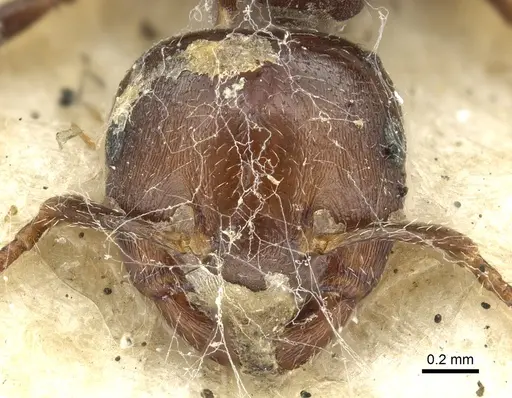
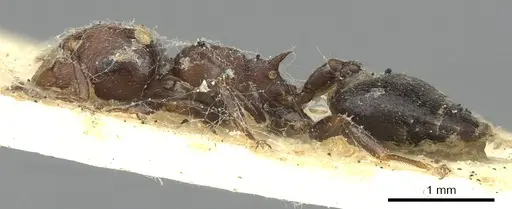
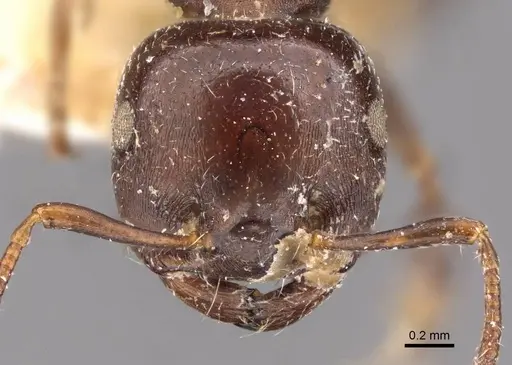
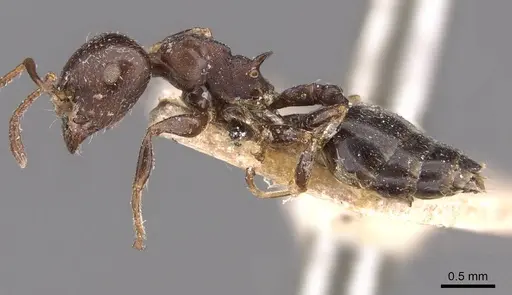
Crematogaster cornigera is a small to medium-sized ant native to Australia, specifically found in Queensland and extending across to the Kimberley region in Western Australia. Workers are smooth-bodied with notably reduced propodeal spines that appear as dull protuberances rather than prominent spines [1]. These ants are often observed trailing along the trunks of smooth-barked eucalypt trees in southern parts of their range [1]. The genus Crematogaster is known for their distinctive heart-shaped abdomen that they raise like a stinger when threatened, making them memorable for antkeepers. This species represents the typical Crematogaster morphology with a somewhat glossy appearance and relatively compact body form.
Quick Summary
- Difficulty: Medium
- Origin & Habitat: Native to Australia, found in Queensland (Mackay area) and extending through the Kimberley region to southwestern Australia [1][2]. They inhabit eucalypt forests and are commonly found foraging on tree trunks in smooth-barked areas.
- Colony Type: Colony structure is unconfirmed for this specific species. Most Crematogaster species are monogyne (single queen) but some can be polygyne. Further research needed.
- Founding: Claustral
- Size & Growth:
- Queen: Estimated 6-8mm based on genus patterns
- Worker: Estimated 3-5mm based on genus patterns
- Colony: Estimated several hundred workers based on typical Crematogaster colony sizes
- Growth: Moderate, based on genus patterns
- Development: Estimated 6-8 weeks at optimal temperature based on related Crematogaster species (Development time is inferred from genus-level data as species-specific measurements are unavailable)
- Antkeeping:
- Temperature: Keep at 22-26°C. Australian species from Queensland and Kimberley regions prefer warm conditions. A gentle temperature gradient allows workers to regulate their preferred spot.
- Humidity: Moderate humidity around 50-60%. These ants naturally occur in Australian forests which experience seasonal variation. Provide a water tube and allow the nest area to dry slightly between rehydrations.
- Diapause: Not typically required for Australian tropical/subtropical species. However, a slight cool period (15-18°C) during winter months may benefit colonies if mimicking natural seasons.
- Nesting: Y-tong (AAC) nests work well for this species. Their smooth body and reduced spines mean they can navigate narrow passages. Provide a formicarium with chambers appropriately sized for their worker size. They often prefer to nest in pre-made tunnels rather than excavating.
- Behavior: Crematogaster cornigera workers are active foragers that trail along tree trunks in search of honeydew and small insects. When disturbed, they raise their abdomen in a defensive display, this is characteristic of the genus. They are not particularly aggressive but will defend their nest vigorously. Workers are medium-sized and relatively fast-moving. Escape prevention should be moderate, their small size means they can slip through small gaps, but they are not as prone to escaping as tiny species like Pheidole.
- Common Issues: queen mortality during founding is common, claustral queens may fail if not given proper darkness and quiet during the founding phase, overheating is a risk, Australian ants are adapted to warmth but not extreme heat, keep away from direct sunlight, mold can develop if the nest is kept too wet, allow drying periods between waterings, colonies may stagnate if fed too much protein, balance sugar and protein offerings, wild-caught colonies may carry parasites that can decimate the colony in captivity
Nest Preferences
Crematogaster cornigera naturally nests in pre-existing cavities, often in wood or under bark on eucalypt trees. In captivity, Y-tong (AAC) nests provide the smooth tunnels they prefer. Their reduced propodeal spines mean they navigate narrow passages easily, so you can use chambers scaled to their worker size without worry of spines catching. Acrylic nests also work well, especially those with smooth walls. Avoid nests with rough or sandy textures that could damage their smooth bodies. A small outworld connected to the nest allows workers to forage and trail, they naturally move along surfaces looking for food. [1]
Feeding and Diet
Crematogaster cornigera is omnivorous like most Crematogaster species. They readily accept sugar sources including honey water, sugar water, and honeydew fromaphids if available. For protein, offer small insects like fruit flies, small mealworms, or cricket pieces. They are active foragers so food should be offered 2-3 times per week for growing colonies. Remove uneaten protein after 24 hours to prevent mold. Sugar water should always be available, a cotton wick in a test tube works well. Workers will often store honeydew in their social stomach to share with larvae and other workers.
Temperature and Care
These Australian ants prefer warm conditions in the 22-26°C range. Queensland and Kimberley regions experience warm temperatures year-round, so avoid keeping them cool. A heating cable on one side of the nest creates a temperature gradient that workers will use to regulate their body temperature. Place the heating element on top of the nest, not underneath, to prevent excessive drying. Room temperature within this range is acceptable. Avoid temperatures above 30°C as this can stress the colony. During winter, a slight reduction to 18-22°C mimics their natural seasonal cycle, though diapause is not strictly required.
Behavior and Temperament
Workers of Crematogaster cornigera are active foragers, often seen moving along tree trunks in search of food, this trailing behavior is commonly observed in southern parts of their range [1]. When threatened, they display the characteristic Crematogaster defense: raising their heart-shaped abdomen toward the intruder. They may release a small amount of formic acid but are not considered dangerously aggressive. Workers communicate through chemical trails, so they will quickly discover and exploit food sources. They are not particularly timid and will venture into the outworld during daylight hours. Their smooth body and reduced spines make them less likely to get stuck in test tube setups compared to spiny species.
Colony Founding
Based on genus patterns, Crematogaster cornigera queens are likely claustral, the queen seals herself in a small chamber and lives entirely on stored fat reserves until her first workers (nanitics) emerge. Provide the founding queen with a dark, quiet test tube setup with a water reservoir. Do not disturb her during this period, checking too frequently can cause her to abandon or consume her brood. The founding chamber should be just large enough for her to move around. First workers typically appear within 6-8 weeks under warm conditions. After nanitics emerge, the colony can be transitioned to a proper formicarium if desired.
Growth and Development
Colony growth follows typical Crematogaster patterns. The queen lays eggs after mating, and these develop through larval and pupal stages before emerging as workers. Early-stage colonies grow slowly as the first few workers must tend to all brood. Once the colony reaches 20-30 workers, growth accelerates as more foragers can gather food. Maximum colony size likely reaches several hundred workers based on related species. Growth rate depends heavily on temperature and feeding, warmer conditions and consistent protein intake speed development. Mature colonies may produce alates (reproductives) annually if the colony is well-established.
Frequently Asked Questions
How long does it take for Crematogaster cornigera to produce first workers?
Expect first workers (nanitics) around 6-8 weeks after the queen lays eggs, assuming temperatures around 24-26°C. This is based on genus patterns since species-specific development data is unavailable.
Can I keep Crematogaster cornigera in a test tube setup?
Yes, test tubes work well for founding colonies. Use a test tube with a water reservoir and cotton plug, kept dark and quiet. Once the colony reaches 30+ workers, consider moving to a proper formicarium.
What do Crematogaster cornigera ants eat?
They are omnivorous. Offer sugar water or honey constantly, and protein (small insects like fruit flies or mealworms) 2-3 times per week. They will also collect honeydew if aphids are available.
Do Crematogaster cornigera ants sting?
They do not have a painful sting like some ants, but they may release formic acid when threatened. Their characteristic defensive behavior is raising the abdomen, which is more of a warning display than an actual attack.
What temperature do Crematogaster cornigera need?
Keep them warm at 22-26°C. Australian ants from Queensland prefer these temperatures. Avoid temperatures below 18°C or above 30°C.
Are Crematogaster cornigera good for beginners?
They are moderate difficulty, easier than some tropical species but not as forgiving as common temperate ants. Their specific temperature needs and the challenge of founding claustrally make them suitable for keepers with some experience.
How big do Crematogaster cornigera colonies get?
Based on genus patterns, colonies likely reach several hundred workers. This is a medium-sized colony for a Crematogaster species.
Do Crematogaster cornigera need hibernation?
Not typically required. As an Australian tropical/subtropical species, they do not need a true diapause. A slight temperature reduction in winter (to around 18-20°C) may be beneficial but is not mandatory.
When should I move my colony to a formicarium?
Move to a formicarium once the colony has 20-30 workers and the test tube is becoming crowded. Y-tong nests work particularly well for this species due to their smooth body shape.
Why is my Crematogaster cornigera queen not laying eggs?
Possible causes include: temperatures too low (below 20°C), disturbance during founding, insufficient nutrition before founding, or the queen may have been unmated. Ensure proper warmth, minimal disturbance, and that the founding setup is appropriate.
References

This caresheet is licensed under CC BY-SA 4.0 .
CASENT0902133
View on AntWeb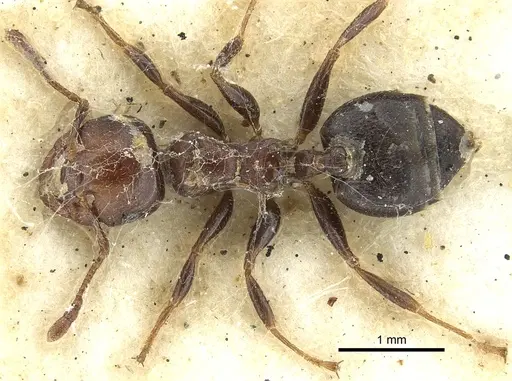
CASENT0908597
View on AntWeb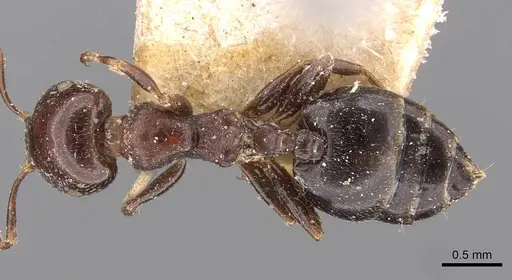
Literature
Loading...Loading products...