

Crematogaster binghamii
- Scientific Name
- Crematogaster binghamii
- Subgenus
- Orthocrema
- Tribe
- Crematogastrini
- Subfamily
- Myrmicinae
- Author
- Forel, 1904
- Distribution
- Found in 1 countries
Crematogaster binghamii Overview
Crematogaster binghamii is an ant species of the genus Crematogaster. It is primarily documented in 1 countries , including India. Detailed taxonomic data and occurrence records can be further explored via authoritative databases such as AntWeb or the Global Biodiversity Information Facility (GBIF).
Crematogaster binghamii
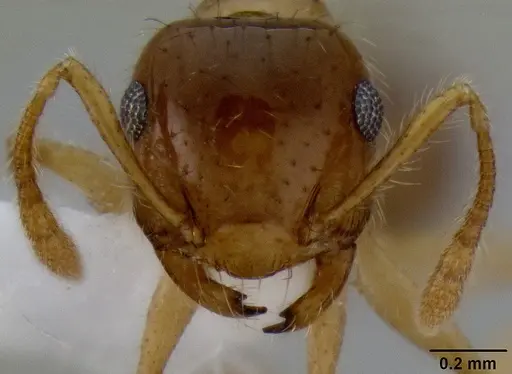
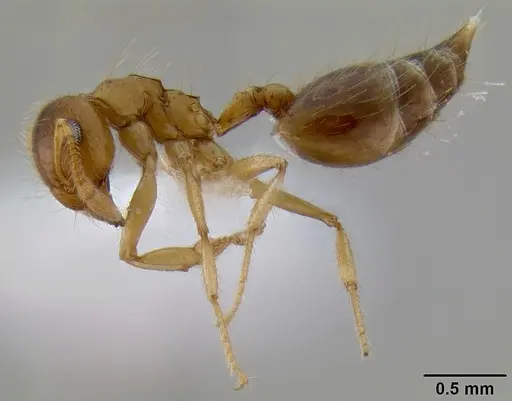
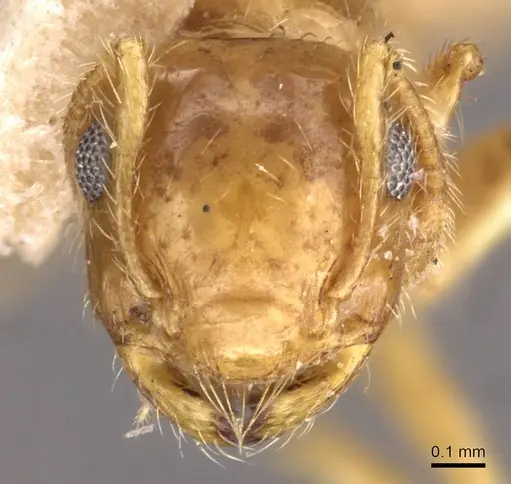
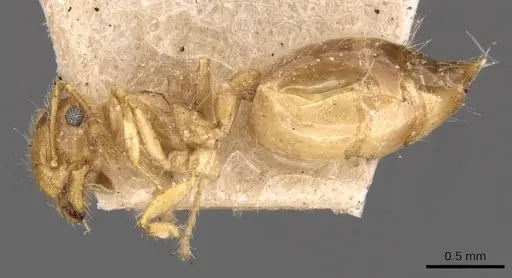
Crematogaster binghamii is a tiny yellow ant belonging to the subgenus Orthocrema, known for their distinctive heart-shaped abdomen that they can raise like a scorpion when threatened. Workers measure just 0.52-0.57mm in head width, making them one of the smaller ant species you'll encounter [1]. They are distinguished by their undeveloped or very short propodeal spines, barely visible bumps where other ants would have spines [1]. This species is a habitat specialist found exclusively in primary forest environments across the Himalayan region and Southeast Asia, from India and Nepal through Thailand and Vietnam to southern China [1][2].
What makes C. binghamii particularly interesting is how little we know about them despite their relatively wide distribution. They represent a species where the biology remains largely undocumented in scientific literature, making them both a mystery and an opportunity for keepers who want to observe and document behavior that may not be well-known. As members of the Orthocrema clade, they share characteristics with other acrobat ants but have their own unique traits [3].
Quick Summary
- Difficulty: Medium
- Origin & Habitat: Native to the Himalayan region and Southeast Asia, found in primary forest habitats at elevations between 1000-1800 meters [4][5]. Recorded from India (Sikkim, Arunachal Pradesh, Himachal Pradesh, Jammu & Kashmir, Uttarakhand, West Bengal), Nepal, Bangladesh, Thailand, Vietnam, and recently documented in Hainan, China [6][5][7]. This is a habitat specialist restricted to primary forest, they are not found in secondary forest or rubber plantations [2].
- Colony Type: Colony structure is unconfirmed. Based on typical Crematogaster patterns, likely monogyne (single queen) but multi-queen colonies have been documented in related species.
- Size & Growth:
- Queen: Undocumented for this species, related Orthocrema species typically have queens around 5-7mm
- Worker: 0.52-0.57mm head width (workers are tiny) [1]
- Colony: Unknown, no colony size data exists for this species
- Growth: Unknown, no development data exists for this species
- Development: Unconfirmed, no direct observations. Based on typical Myrmicinae patterns at similar latitudes, estimate 6-10 weeks at optimal temperature. (This is entirely estimated, no species-specific data exists. Related tropical Crematogaster species typically develop in 4-8 weeks.)
- Antkeeping:
- Temperature: Keep at room temperature, roughly 20-26°C. Based on their Himalayan and tropical distribution, they likely tolerate a range from cool (around 18°C) to warm (up to 28°C). Start with moderate room temperature and observe colony activity.
- Humidity: Maintain moderate to high humidity, these ants come from forested Himalayan environments with regular moisture. Keep the nest substrate consistently moist but not waterlogged, with some drier areas available.
- Diapause: Unknown, no data on overwintering requirements. Given their altitudinal range (up to 1800m), they likely experience cooler winters in nature. Consider providing a cool period around 15-18°C for 2-3 months during winter.
- Nesting: No specific nesting data exists. Based on their habitat and related species, they likely nest in rotting wood, under bark, or in soil in shaded forest areas. A naturalistic setup with moist substrate or a Y-tong/plaster nest works well.
- Behavior: Temperament is not documented but Crematogaster ants are generally defensive, they will raise their abdomen and may release formic acid when threatened. They are small but active foragers. Escape prevention is critical due to their tiny size, they can squeeze through remarkably small gaps. Use fine mesh and tight-fitting lids.
- Common Issues: tiny size makes escape prevention critical, they squeeze through the smallest gaps, no species-specific care data exists, keepers are essentially pioneering captive husbandry, slow growth is likely given limited data on related species, habitat specialist may be sensitive to environmental changes, wild-caught colonies may have parasites given limited documentation
Housing and Nest Setup
Because of their tiny size, C. binghamii requires careful housing that prevents escape while maintaining appropriate humidity. A Y-tong (acrylic) nest or plaster nest works well, these allow you to control moisture levels while providing dark chambers that simulate their natural underground nesting sites. The chambers should be appropriately scaled to their small size, standard test tubes can work for founding colonies but monitor water levels carefully as these tiny ants can become trapped in water reservoirs. For a naturalistic setup, use a terrarium with moist soil and rotting wood pieces, which mimics their primary forest habitat. Regardless of setup, ensure excellent escape prevention, these ants will find and exploit any gap, no matter how small. Fine mesh on all ventilation holes is essential. [2]
Feeding and Diet
No specific dietary studies exist for C. binghamii, but like other Crematogaster species, they likely have an omnivorous diet. In captivity, offer a varied diet including sugar sources (honey water, sugar water) and protein (small insects like fruit flies, pinhead crickets, mealworms). Crematogaster ants are known to tend aphids for honeydew in nature, so sugar sources are likely well-accepted. Feed small amounts of protein 2-3 times per week, removing any uneaten prey after 24 hours. Always provide a sugar source, a drop of honey water or sugar water every few days works well. Start with small prey items appropriate to their tiny worker size.
Temperature and Seasonal Care
This species occupies a wide altitudinal range (1000-1800m) across various climates, suggesting moderate temperature tolerance. Keep them at room temperature, ideally between 20-26°C. They likely tolerate cooler temperatures better than many tropical species given their Himalayan distribution. For winter, consider providing a cool period around 15-18°C for 2-3 months, this mimics natural seasonal changes and may encourage healthier colony cycles. However, since no specific diapause data exists, observe your colony's behavior and adjust accordingly. If workers become less active and cluster together in cooler areas of the nest, a slight cooling period is likely beneficial. [4]
Behavior and Handling
Crematogaster ants get their common name 'acrobat ants' from their ability to raise their abdomen over their head like a scorpion when threatened, this is a defensive display. While C. binghamii is too small to sting humans effectively, they may release formic acid as a defensive chemical. They are generally active foragers and will explore their outworld readily. Because of their tiny size, they are excellent climbers and will explore vertical surfaces easily. When observing them, you'll notice their characteristic heart-shaped gaster held high when they feel threatened. Handle with care during transfers, their small size makes them fragile and their escape ability is exceptional.
Colony Establishment
Since nothing is known about the founding behavior of C. binghamii, keepers will need to apply what works for related Crematogaster species. Likely claustral founding means the queen seals herself in a chamber and raises her first workers without foraging, she survives on stored fat reserves. Provide a founding chamber with moderate moisture and keep her in darkness with minimal disturbance. First workers (nanitics) will typically be smaller than mature workers. Growth rate is unknown but likely moderate, expect several months before you see significant colony development. Be patient and avoid overfeeding during the founding stage.
Frequently Asked Questions
How long does it take for Crematogaster binghamii to produce first workers?
The egg-to-worker timeline is unconfirmed for this species since no scientific observations exist. Based on typical Myrmicinae development patterns, estimate 6-10 weeks at optimal temperature (around 22-26°C). Related tropical Crematogaster species often develop faster (4-8 weeks), while temperate species take longer. Your actual timeline may vary, be patient during the founding stage.
What do Crematogaster binghamii ants eat?
No species-specific feeding studies exist, but like other Crematogaster ants, they are omnivorous. Offer sugar sources (honey water, sugar water) regularly and protein (small insects like fruit flies, pinhead crickets, small mealworms) 2-3 times per week. They likely accept honeydew in nature, so sugar should be well-received. Remove uneaten prey within 24 hours.
Are Crematogaster binghamii ants difficult to keep?
Difficulty is likely Medium, they are not documented well enough to call them easy, but they don't appear to have extreme requirements. The main challenges are their tiny size (escape prevention is critical), lack of species-specific care data, and potentially slow growth. If you have experience with small Myrmicinae ants, you should be able to keep this species successfully.
Do Crematogaster binghamii ants sting?
They are too small to effectively sting humans, their stinger is present but cannot penetrate human skin. However, they may release formic acid as a defensive chemical when threatened. Their main defense is raising their characteristic heart-shaped abdomen in an acrobat-like display to appear larger to predators.
Can I keep multiple Crematogaster binghamii queens together?
Colony structure is unconfirmed for this species. While some Crematogaster can be polygynous (multiple queens), combining unrelated queens is risky and often leads to fighting. Unless you have specific evidence that this species accepts multiple queens, it's best to keep one queen per colony. If you capture a wild colony, it likely has a single reproductive queen.
What temperature range is best for Crematogaster binghamii?
Keep them at moderate room temperature, ideally 20-26°C. Their wide altitudinal range (1000-1800m) suggests they tolerate cooler conditions better than strict tropical species. A range of 18-28°C is likely acceptable. Start around 22-24°C and adjust based on colony activity. Avoid extreme temperatures in either direction.
Do Crematogaster binghamii need hibernation?
Diapause requirements are unconfirmed. However, given their Himalayan distribution with elevations up to 1800m, they likely experience seasonal temperature drops. Consider providing a cool period (around 15-18°C) for 2-3 months during winter. Monitor colony activity, if workers become less active and cluster together, a cool period is likely beneficial.
Why are my Crematogaster binghamii escaping?
Their tiny size makes them exceptional escape artists. They can squeeze through remarkably small gaps. Use fine mesh (at least 0.5mm or smaller) on all ventilation holes, ensure lids fit tightly, and consider using barrier products like fluon on container rims. Check for gaps around any tubing connections. Escape prevention must be excellent with this species.
Where is Crematogaster binghamii found in the wild?
This species is native to the Himalayan region and Southeast Asia, specifically found in India (Sikkim, Arunachal Pradesh, Himachal Pradesh, Jammu & Kashmir, Uttarakhand, West Bengal), Nepal, Bangladesh, Thailand, Vietnam, and recently documented in Hainan, China. They are habitat specialists restricted to primary forest environments, they are not found in secondary forest or rubber plantations [2][6].
References

This caresheet is licensed under CC BY-SA 4.0 .
CASENT0193689
View on AntWeb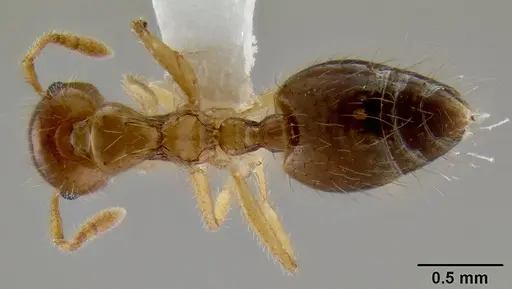
CASENT0908366
View on AntWeb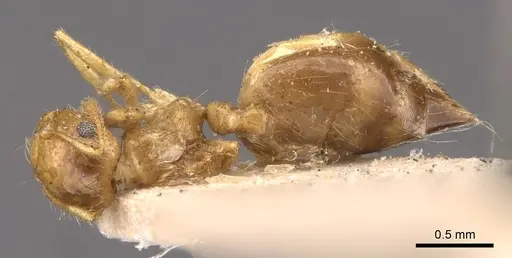
Literature
Loading...Loading products...