

Crematogaster arata
- Scientific Name
- Crematogaster arata
- Subgenus
- Orthocrema
- Tribe
- Crematogastrini
- Subfamily
- Myrmicinae
- Author
- Emery, 1906
- Distribution
- Found in 3 countries
Crematogaster arata Overview
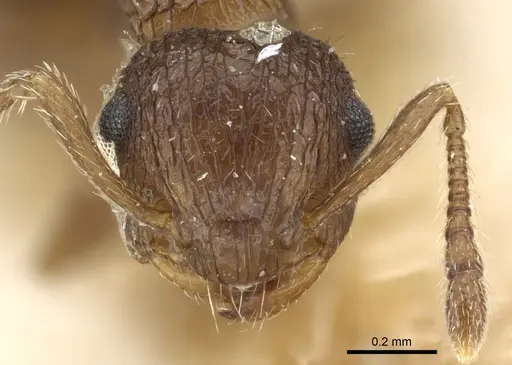
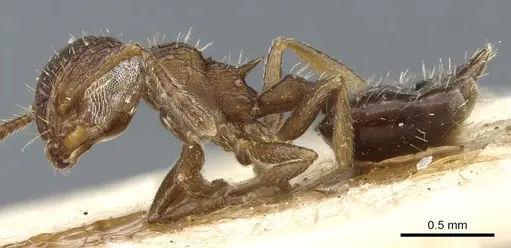
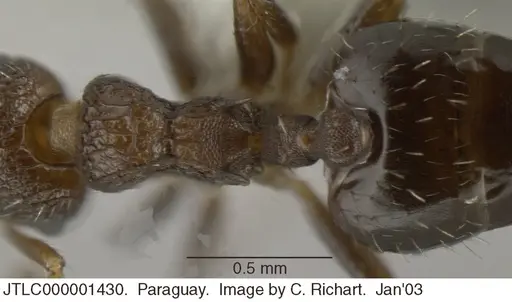
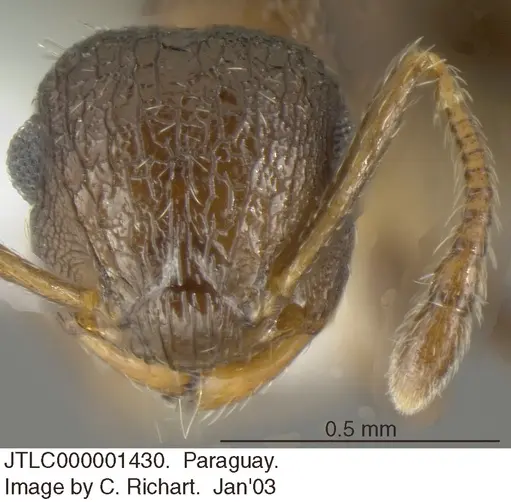
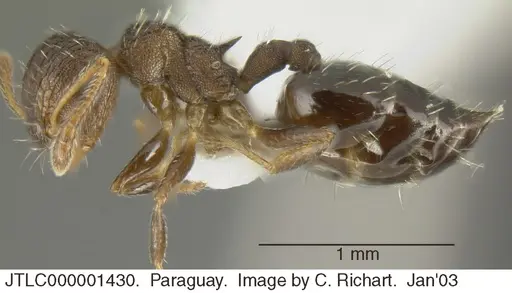
Crematogaster arata is an ant species of the genus Crematogaster. It is primarily documented in 3 countries , including Argentina, Brazil, Paraguay. Detailed taxonomic data and occurrence records can be further explored via authoritative databases such as AntWeb or the Global Biodiversity Information Facility (GBIF).
Crematogaster arata
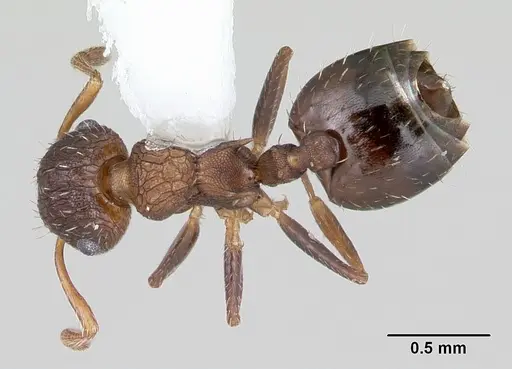
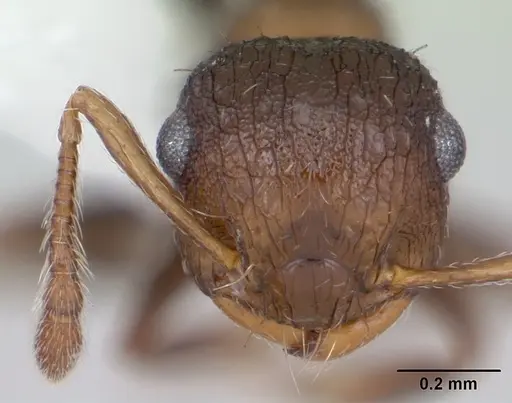
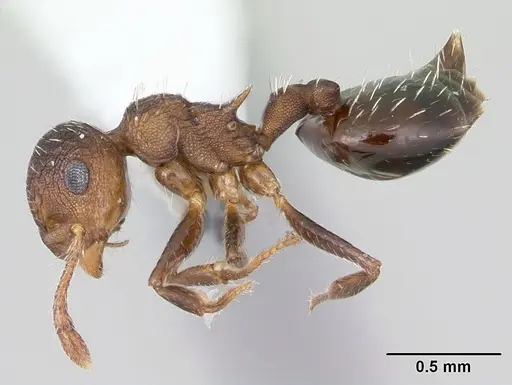
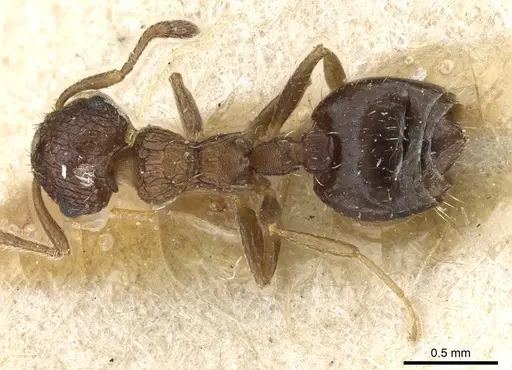
Crematogaster arata is a small to medium-sized ant species native to the Neotropical region, found across Argentina, Brazil, and Paraguay [1]. Workers are typically 3-5mm in length with the characteristic Crematogaster heart-shaped gaster that they raise as a defensive display when threatened. They belong to the subfamily Myrmicinae and have been classified in the Orthocrema and Neocrema subgenera historically [1]. This species is part of the Generalized Myrmicinae functional group, indicating they are adaptable foragers with moderate aggression [2].
These ants are arboreal by nature, Crematogaster as a genus readily nests in trees and elevated locations rather than in soil [3]. In their natural habitat across the Argentine Mesopotamia and Brazilian Atlantic Forest regions, they colonize forest edges and areas with regenerating vegetation, where they can be found at frequencies above 5% in well-established ant communities [3][2]. Their distribution spans the subtropical forests of Misiones province in Argentina through to the Brazilian savanna and Atlantic Forest fragments.
Quick Summary
- Difficulty: Medium
- Origin & Habitat: Neotropical region, Argentina (Misiones), Brazil (Mato Grosso do Sul, Atlantic Forest), and Paraguay. Found in subtropical forest edges, regenerating areas, and arboreal habitats [3][2][4].
- Colony Type: Colony structure is unconfirmed for this specific species. Most Crematogaster species are monogyne (single queen) but some can be polygyne. Based on genus patterns, expect single-queen colonies with moderate worker counts.
- Colony: Monogyne
- Founding: Claustral
- Size & Growth:
- Queen: Estimated 6-8mm based on genus Crematogaster patterns
- Worker: Estimated 3-5mm based on genus patterns
- Colony: Estimated several hundred workers based on related species
- Growth: Moderate
- Development: Estimated 6-8 weeks at optimal temperature based on typical Myrmicinae development (Development time is inferred from genus patterns, direct observations for C. arata are unavailable)
- Antkeeping:
- Temperature: Keep at 24-28°C. As a Neotropical species from subtropical Argentina and Brazil, they prefer warm conditions. A heating cable on one side of the nest creates a suitable gradient.
- Humidity: Moderate to high humidity around 60-80%. Their arboreal nature means they prefer somewhat humid conditions but not waterlogged. Keep the nest substrate moist but allow some drying between waterings.
- Diapause: No diapause required. Being from subtropical South America, they do not experience harsh winters. Keep colony active year-round with stable temperatures.
- Nesting: Arboreal species, they prefer nests in wood, hollow branches, or cork bark. Y-tong nests, cork setups, or wooden formicaria work well. Provide vertical or elevated nesting options. Avoid fully soil-based nests.
- Behavior: Crematogaster arata has a defensive behavior typical of the genus, they raise their heart-shaped gaster when threatened and can release a foul-smelling secretion. They are active foragers and will search for food both on the ground and in vegetation. Workers are moderately aggressive when defending the colony. Escape prevention should be moderate as they are not extremely small but are active climbers. Use standard barrier methods like fluon on smooth surfaces.
- Common Issues: tropical species requires consistent warmth, cold drafts can stress or kill colonies, arboreal nesting means they may not accept test tube setups, provide wood/cork based nests, can be defensive and may spray secretions when disturbed, handle gently during nest inspections, may be difficult to establish from queen, limited data on founding behavior for this specific species, moderate humidity needs mean both drying out and flooding can be problematic
Nest Preferences and Housing
Crematogaster arata is an arboreal species, meaning they naturally nest in elevated locations like trees, hollow branches, and under bark. In captivity, they do best with nests that mimic these conditions. Cork bark nests, wooden formicaria, or Y-tong (acrylic) nests with wood inserts work well. Avoid fully soil-based test tube setups, while they may accept them initially, arboreal species often prefer to nest in wood or cork.
Provide a formicarium connected to an outworld with vertical climbing surfaces. They like to explore upward, so include branches, mesh, or other structures they can walk on. The nest chamber should be dark and secure, cover the viewing sides of acrylic nests to reduce stress. Because they are arboreal, they do better with some elevation in their setup rather than entirely flat layouts.
Humidity control is important, keep the nest material (wood or cork) moist but not dripping wet. A water reservoir or regular misting works, but ensure good ventilation to prevent mold buildup. [3]
Feeding and Diet
Crematogaster arata is an omnivorous forager, like most Crematogaster species. They will readily accept sugar sources (honey water, sugar water, ripe fruit) and protein sources (insects, small crickets, mealworms). In the wild, they forage for honeydew from aphids and scale insects, as well as small arthropods.
Feed them a varied diet: offer sugar water or honey diluted 1:4 with water as a constant food source, and provide protein (small insects like fruit flies, pinhead crickets, or mealworms) 2-3 times per week. Remove uneaten prey after 24-48 hours to prevent mold. They are active foragers, so ensure food is reachable in the outworld.
Because they are arboreal, they may prefer to forage on elevated surfaces, place food on branches or platforms rather than just on the floor of the outworld. Observe your colony's preferences and adjust feeding locations accordingly.
Temperature and Seasonal Care
As a Neotropical species from subtropical Argentina and Brazil, Crematogaster arata requires warm conditions year-round. Keep the nest area at 24-28°C (75-82°F). Temperatures below 20°C can slow their metabolism and development, while temperatures above 32°C may stress the colony.
Use a heating cable or heating mat on one side of the nest to create a temperature gradient, allowing workers to regulate their own temperature by moving between warmer and cooler areas. Place the heating element on top of the nest rather than underneath to avoid excessive drying.
No diapause or hibernation is required, this species comes from a region without harsh winters. Keep them active year-round with consistent temperatures. Avoid placing the colony near air conditioning vents, windows with cold drafts, or other temperature fluctuations. Stable, warm conditions will promote healthy colony growth.
Behavior and Temperament
Crematogaster arata has the characteristic defensive behavior common to the genus. When threatened, workers raise their distinctive heart-shaped gaster upward in a defensive posture and may release a foul-smelling or irritating secretion. This is a deterrent rather than a serious threat to humans, but it means you should handle nest inspections gently to avoid stressing the ants.
They are active foragers and will search for food both on the ground and on elevated surfaces. Workers communicate through chemical trails, you may see them establishing foraging paths to food sources. They are moderately aggressive in defense but not particularly territorial outside their nest area.
Escape risk is moderate, while not among the smallest ants, they are active climbers. Use standard barrier methods like fluon on smooth surfaces, ensure container lids fit tightly, and monitor for any escapes during feeding. They are not known for supercolony formation or extreme aggression toward humans. [2]
Colony Founding and Development
Direct observations of colony founding for Crematogaster arata are not documented in available literature. Based on typical Crematogaster behavior, the queen likely seals herself in a small chamber (claustral founding) and raises the first workers alone using stored fat reserves. The first workers (nanitics) are typically smaller than normal workers.
Colony growth is moderate, expect the first workers to emerge 6-8 weeks after the queen lays eggs, assuming optimal temperature (around 26°C). Growth rate depends on feeding frequency and temperature stability. Mature colonies may reach several hundred workers based on related species in the genus.
If you are establishing a colony from a wild-caught queen, provide her with a small, dark, humid chamber (like a test tube with a small cavity or a mini cork nest) and keep her at stable warm temperatures. Do not disturb her during the founding period, stress can cause her to abandon or eat her eggs.
Frequently Asked Questions
How long does it take for Crematogaster arata to get their first workers?
Based on typical Crematogaster development, expect first workers (nanitics) to emerge in 6-8 weeks after egg-laying, assuming optimal temperature around 26°C. This is an estimate based on genus patterns, as specific development data for C. arata is not available.
What do Crematogaster arata ants eat?
They are omnivorous. Offer sugar sources like honey water or sugar water (diluted 1:4) as a constant food source, and provide protein like small insects (fruit flies, pinhead crickets, mealworms) 2-3 times per week. They will also scavenge and forage for sweet secretions.
Do Crematogaster arata ants need hibernation?
No, they do not require hibernation. Being from subtropical South America (Argentina, Brazil, Paraguay), they experience year-round warm conditions. Keep them active at 24-28°C year-round without a cold period.
What type of nest is best for Crematogaster arata?
Arboreal species do best with wood-based or cork nests rather than soil test tubes. Y-tong (acrylic) nests with wood inserts, cork bark nests, or wooden formicaria are ideal. They prefer elevated, dark nesting chambers.
Do Crematogaster arata ants sting?
They do not have a painful sting, but they can release a foul-smelling defensive secretion when threatened. The genus is known for raising their heart-shaped gaster as a defensive display rather than aggressive stinging.
Are Crematogaster arata good for beginners?
They are rated as medium difficulty. They require warm temperatures year-round and prefer arboreal-style nests, which may be slightly more specialized than basic soil setups. They are rewarding once established, but require attention to heating and humidity.
How big do Crematogaster arata colonies get?
Based on related species, colonies likely reach several hundred workers at maturity. Exact colony size for this specific species is not documented, but genus members typically form moderate-sized colonies.
Can I keep multiple Crematogaster arata queens together?
Colony structure is unconfirmed for this specific species. Most Crematogaster are monogyne (single queen), but some can be polygynous. It is generally not recommended to combine unrelated foundress queens, as fighting may occur.
Why is my Crematogaster arata colony declining?
Common causes include: temperatures below 20°C (they need warmth), too dry or too wet conditions, mold from overwatering, stress from excessive disturbance, or poor nutrition. Check that temperatures are stable at 24-28°C and that humidity is moderate.
Where is Crematogaster arata found in the wild?
They are native to the Neotropical region: Argentina (Misiones province), Brazil (Mato Grosso do Sul, Atlantic Forest), and Paraguay. They inhabit subtropical forest edges and regenerating areas, typically nesting in trees or elevated locations.
References

This caresheet is licensed under CC BY-SA 4.0 .
Literature
Loading...Loading products...