

Colobostruma nancyae
- Scientific Name
- Colobostruma nancyae
- Tribe
- Attini
- Subfamily
- Myrmicinae
- Author
- Brown, 1965
- Distribution
- Found in 1 countries
Colobostruma nancyae Overview
Colobostruma nancyae is an ant species of the genus Colobostruma. It is primarily documented in 1 countries , including Australia. Detailed taxonomic data and occurrence records can be further explored via authoritative databases such as AntWeb or the Global Biodiversity Information Facility (GBIF).
Colobostruma nancyae
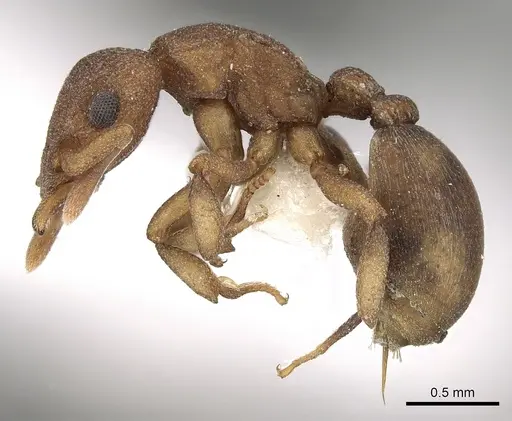
Colobostruma nancyae is a tiny Australian ant in the fungus-growing tribe Attini. Workers measure just 2.9-3.7mm with a distinctive yellow-brown coloration, the head being slightly darker than the rest of the body. The species is immediately recognizable by its unusually low, rounded mesosoma (the middle body section) and greatly reduced propodeal declivity, these morphological features make it unlike any other Colobostruma species. This ant is restricted to south-western Australia, specifically dry sclerophyll and heath habitats [1].
What makes C. nancyae interesting is that it's part of the Attini tribe, the fungus-growing ants. However, unlike the famous leafcutter ants (Atta), Colobostruma species are thought to be primitive fungus growers that likely cultivate fungus on small pieces of organic debris rather than actively cutting leaves. Their unique body shape with the low, rounded profile is thought to be an adaptation to their specific nesting microhabitat.
Quick Summary
- Difficulty: Medium
- Origin & Habitat: South-western Australia, dry sclerophyll forest and heath habitats [1]. Found as far north as Moore River, with a wider distribution than its relative C. papulata in the South-West Botanical Province [2].
- Colony Type: Colony structure is unconfirmed. No data on whether they are single-queen (monogyne) or multi-queen (polygyne).
- Size & Growth:
- Queen: Unknown, queen has not been described in scientific literature
- Worker: 2.9-3.7mm
- Colony: Unknown, no colony size data available
- Growth: Unknown, no development studies exist
- Development: Unknown, no direct measurements available. Based on typical Attini patterns, estimate 6-10 weeks at warm temperatures, but this is a rough guess. (Development timeline has not been studied. Attini tribe members typically develop in 6-10 weeks but this varies significantly by species.)
- Antkeeping:
- Temperature: Likely prefers warm conditions based on Australian origin. Start around 22-26°C and observe colony activity. Adjust based on behavior, if workers are active and foraging, temperature is likely suitable.
- Humidity: Dry sclerophyll and heath habitats suggest they prefer drier conditions than many Australian ants. Keep nest substrate moderately dry to slightly moist, allow some drying between waterings. Avoid constant saturation.
- Diapause: Unknown, no studies on overwintering requirements. Southwestern Australia has mild winters, so they may not require a true hibernation but may reduce activity in cooler months.
- Nesting: In the wild they likely nest in soil or under stones in dry sclerophyll areas. In captivity, a small test tube setup or Y-tong nest with tight chambers scaled to their tiny 3mm size works well. Avoid large, open spaces.
- Behavior: These are tiny, docile ants that are not aggressive and unlikely to sting. They are slow-moving and somewhat cryptic. Workers forage individually for small food items. Because of their very small size (under 4mm), escape prevention must be excellent, they can squeeze through tiny gaps. They are fungus growers but likely feed on small organic particles and micro-arthropods rather than large prey.
- Common Issues: tiny size means escapes are likely without fine mesh barriers and tight-fitting lids, no colony size data makes it hard to predict growth expectations, development timeline is unknown so keepers may not know if something is wrong, humidity requirements are unclear, may die if kept too wet in typical test tube setup, no queen description means wild-caught founding queens may be misidentified
Housing and Nest Setup
Because Colobostruma nancyae workers are only 2.9-3.7mm, they require appropriately scaled housing. A small test tube setup works well for founding colonies, use a test tube with a tight cotton plug and ensure the water reservoir is not too large to avoid flooding tiny chambers. For established colonies, a Y-tong (acrylic) nest with narrow chambers or a small plaster nest works better than larger formicarium setups designed for bigger ants. The nest chambers should be small and tight-fitting, these tiny ants can get lost in overly large spaces. Use fine mesh for any ventilation holes as they can squeeze through surprisingly small gaps. A small outworld area for foraging completes the setup.
Feeding and Diet
As members of the Attini tribe, these ants cultivate fungus for food, but they are considered primitive fungus growers. In captivity, offer small protein sources like tiny fruit flies, small mealworms, or other micro-arthropods. Springtails are an excellent choice given their small size. You can also offer a small amount of honey or sugar water, though acceptance varies. Remove any uneaten food after 24-48 hours to prevent mold. Feed small amounts twice weekly for established colonies, adjusting based on how quickly food is consumed. The key is offering appropriately sized prey, these tiny ants cannot tackle large insects.
Temperature and Seasonal Care
Colobostruma nancyae comes from southwestern Australia where temperatures are mild to warm. Aim for a temperature range of 22-26°C in the nest area. A heating cable on one side of the nest can create a gentle gradient, allowing ants to choose their preferred temperature. During Australian winter (June-August), temperatures in their native range drop but rarely freeze. You may observe reduced activity in cooler months, this is normal. Do not overheat, temperatures above 30°C are likely harmful. Room temperature within the 22-26°C range is often suitable without additional heating. [1][2]
Handling and Observation
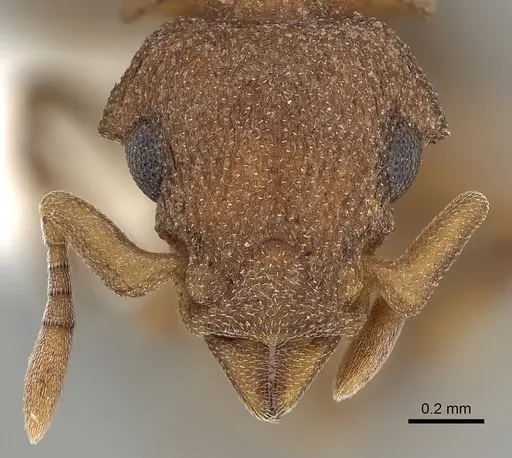
These tiny ants are docile and slow-moving, making them interesting to observe but challenging to handle. They do not possess a painful sting and are not aggressive toward keepers. However, their small size makes them difficult to work with during colony transfers or maintenance. When moving colonies, use soft brushes rather than forceps to avoid injuring the ants. Observation is best done with magnification, their distinctive low, rounded mesosoma is visible under good lighting. Their six-segmented antennae with the characteristic elbow and lobe are also notable features.
Frequently Asked Questions
How long does it take for Colobostruma nancyae to produce first workers?
The development timeline is unknown, no studies have measured egg-to-worker time for this species. Based on typical Attini patterns, expect 6-10 weeks at warm temperatures (around 24-26°C), but this is a rough estimate.
What do Colobostruma nancyae ants eat?
They are primitive fungus growers in the Attini tribe. In captivity, offer small protein sources like fruit flies, tiny mealworms, or springtails. Small amounts of honey or sugar water may be accepted. Feed appropriately sized prey twice weekly.
Can I keep Colobostruma nancyae in a test tube?
Yes, a test tube setup works well for founding colonies. Use a small test tube with a tight-fitting cotton plug and appropriate water reservoir. Ensure escape prevention is excellent, these tiny ants can squeeze through very small gaps.
Are Colobostruma nancyae good for beginners?
They are rated as Medium difficulty. While docile and small, the lack of available information on their care requirements makes them challenging. They require excellent escape prevention due to their tiny size. If you're experienced with small Myrmicinae ants, they can be rewarding.
How big do Colobostruma nancyae colonies get?
Colony size is unknown, no scientific data exists on maximum colony size. Based on their tiny worker size (2.9-3.7mm) and related species, colonies are likely small, possibly under 100 workers at maturity.
What temperature do Colobostruma nancyae need?
Keep nest temperature around 22-26°C based on their Australian origin. A gentle gradient allowing them to choose their preferred temperature is ideal. Room temperature within this range is often suitable.
Do Colobostruma nancyae need hibernation?
Diapause requirements are unknown. Their native southwestern Australia has mild winters, so they likely do not require true hibernation but may reduce activity in cooler months.
Why are my Colobostruma nancyae escaping?
Their tiny 2.9-3.7mm size means they can escape through remarkably small gaps. Use fine mesh (at least 0.5mm), tight-fitting lids, and barrier tape (fluon) on edges. Check all connection points between nest and outworld.
Is Colobostruma nancyae a fungus-growing ant?
Yes, they belong to the Attini tribe, which are the fungus-growing ants. However, they are considered primitive fungus growers that likely cultivate fungus on small organic debris rather than actively cutting leaves like leafcutter ants.
References

This caresheet is licensed under CC BY-SA 4.0 .
CASENT0280689
View on AntWeb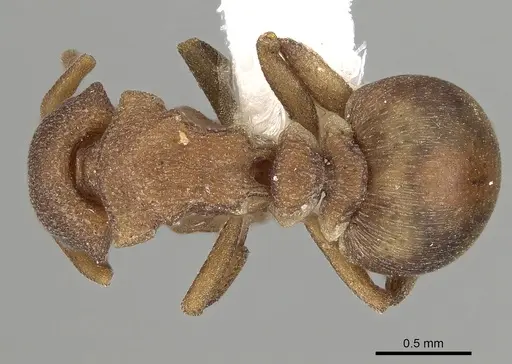
Literature
Loading...Loading products...