

Colobostruma foliacea
- Scientific Name
- Colobostruma foliacea
- Tribe
- Attini
- Subfamily
- Myrmicinae
- Author
- Emery, 1897
- Distribution
- Found in 2 countries
Colobostruma foliacea Overview
Colobostruma foliacea is an ant species of the genus Colobostruma. It is primarily documented in 2 countries , including Papua New Guinea, Solomon Islands. Detailed taxonomic data and occurrence records can be further explored via authoritative databases such as AntWeb or the Global Biodiversity Information Facility (GBIF).
Colobostruma foliacea
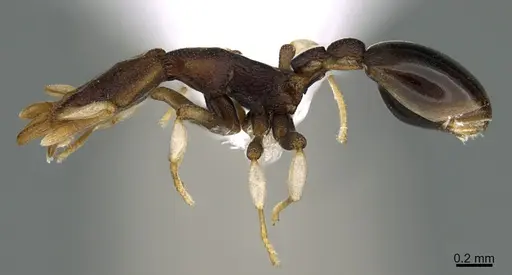
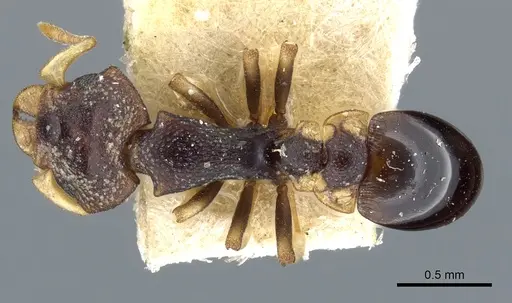
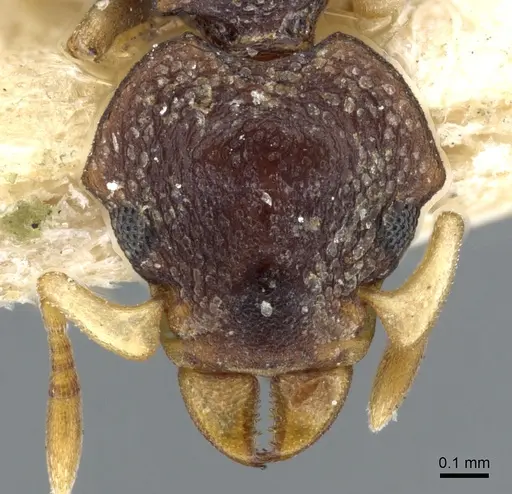
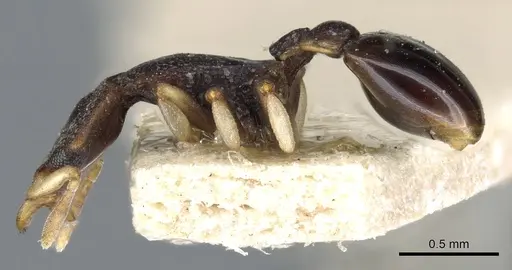
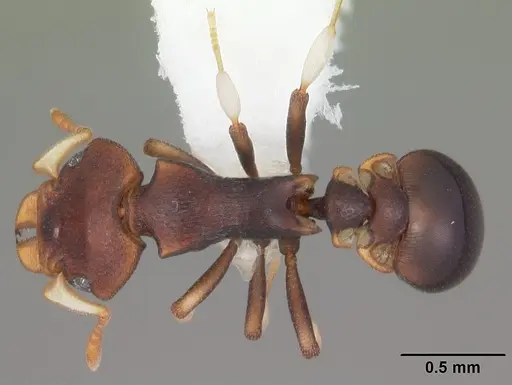
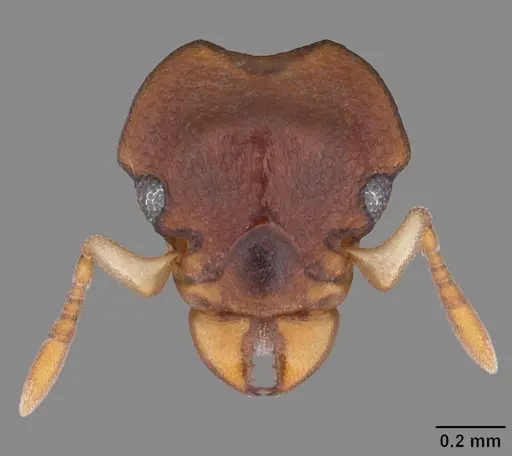
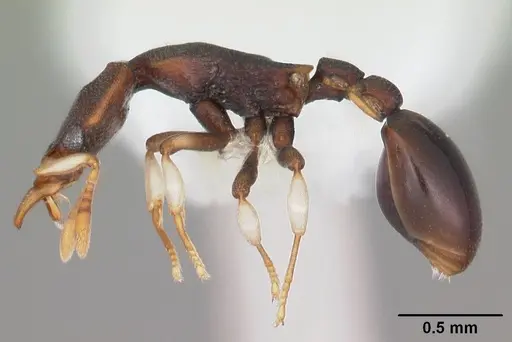
Colobostruma foliacea is a small, cryptic ant species native to the Solomon Islands archipelago. Workers are tiny at just 2-3mm, with a distinctive flattened head and specialized mandibles used for capturing small prey. The genus Colobostruma belongs to the subfamily Dorylinae (formerly Cerapachyinae) and is closely related to the well-known 'spiny ants' in genus Cerapachys. These ants are predatory, using their mandibles to capture micro-arthropods in the leaf litter and rotting wood of tropical forests. This species was first recorded from the Solomon Islands in 2000,with specimens collected from Guadalcanal [1]. They remain one of the less-studied ants in the hobby, with limited documented information on their captive care.
Quick Summary
- Difficulty: Unknown, limited data
- Origin & Habitat: Solomon Islands (Guadalcanal), tropical forest habitats in leaf litter and rotting wood
- Colony Type: Likely monogyne (single queen) based on genus patterns, colony size appears small (likely under 100 workers)
- Size & Growth:
- Queen: Estimated 4-5mm based on genus patterns
- Worker: 2-3mm [1]
- Colony: Likely under 100 workers based on similar litter-dwelling ants
- Growth: Unknown, likely slow to moderate
- Development: Estimated 6-10 weeks based on related Dorylinae patterns (No direct data available, estimate based on genus-level patterns for small tropical ants)
- Antkeeping:
- Temperature: Aim for 24-28°C (warm tropical conditions). A heating cable on one side of the nest creates a gentle gradient.
- Humidity: Keep substrate consistently moist but not waterlogged. These forest-floor ants prefer damp conditions with some drier areas for workers to regulate their own humidity.
- Diapause: Unlikely, Solomon Islands are tropical with minimal seasonal temperature variation
- Nesting: Naturalistic setup with moist substrate (soil/peat mix) works best. They nest in small chambers within rotting wood or dense leaf litter. A Y-tong or plaster nest with tight chambers scaled to their tiny size is appropriate.
- Behavior: These are cryptic, slow-moving ants that spend most of their time foraging in the substrate. They are predatory on small micro-arthropods like springtails, mites, and tiny insects. Workers are non-aggressive and rarely leave the nest area. Escape risk is moderate due to their small size, use fine mesh barriers. They do not have a functional stinger and pose no danger to keepers.
- Common Issues: very limited species-specific care information makes proper husbandry uncertain, slow growth and small colony sizes may frustrate keepers expecting rapid development, wild-caught colonies may have parasites that are difficult to treat, tiny size requires excellent escape prevention with fine mesh, predatory diet means they need constant access to live micro-prey
Housing and Nest Setup
Colobostruma foliacea is a tiny, cryptic species that thrives in naturalistic setups mimicking its forest-floor habitat. Use a moist substrate mixture of soil and peat (or coco fiber) at roughly 2:1 ratio, it should hold moisture well without becoming waterlogged. A layer of leaf litter on top helps maintain humidity and provides foraging opportunities. Since these ants are only 2-3mm, they need tight-fitting enclosures with fine mesh barriers. A small formicarium with narrow chambers (3-5mm wide) or a test tube setup with a dirt chamber works well. Avoid tall, open spaces, they prefer to stay hidden in substrate. Some keepers successfull keep them in simple plastic containers with moist cotton as a water source, though this requires careful monitoring to prevent flooding.
Feeding and Diet
Based on genus relationships with Cerapachys and other Dorylinae ants, Colobostruma foliacea is predatory on small micro-arthropods. Their primary food should be live springtails, these are ideal size and provide constant nutrition. Other accepted prey includes tiny isopods, booklice (psocids), and fruit fly larvae. Feed small prey items (2-3mm or smaller) every 2-3 days. Remove any uneaten prey after 24 hours to prevent mold. Sugar sources are unlikely to be accepted, these are strict predators unlike sugar-feeding ants. Some keepers report success with very tiny pieces of mealworm or cricket, but live prey should form the foundation of their diet. Do not overfeed, small portions prevent mold issues in their moist environment.
Temperature and Humidity
As a tropical species from the Solomon Islands, these ants need warm, humid conditions. Maintain temperatures between 24-28°C in the nest area. A small heating cable placed on one side of the nest creates a gentle thermal gradient that allows ants to regulate their own temperature. Avoid temperatures below 22°C or above 30°C. Humidity should be high, the substrate should feel consistently moist but not soggy. A thin film of water condensation on the sides of a test tube or formicarium is ideal. Mist the enclosure lightly every few days, or use a water reservoir connected to the nest to maintain steady humidity. Good ventilation is essential to prevent mold, but avoid direct airflow that dries the substrate.
Behavior and Colony Dynamics
Colobostruma foliacea is a cryptic, slow-moving species that spends most of its time foraging in the substrate rather than out in the open. Colonies are small, likely containing fewer than 100 workers at maturity. Queens are not aggressive and colonies tend to be peaceful. Workers are non-stinging and pose no danger to keepers. These ants do not form visible trails or raid other colonies, they are solitary foragers hunting individually through leaf litter. Colony growth appears to be slow, with queens producing relatively few workers over time. There is no documented information on nuptial flights or mating behavior for this specific species. The cryptic nature of these ants means you may not see them frequently, this is normal and not a sign of problems.
Frequently Asked Questions
How long does it take for Colobostruma foliacea to produce first workers?
There is no specific data for this species. Based on related Dorylinae patterns, expect 6-10 weeks from egg to first worker at optimal temperature (24-28°C). Growth is likely slow, so patience is required.
What do Colobostruma foliacea ants eat?
They are predatory on small micro-arthropods. Feed live springtails as a primary food source. Other acceptable prey includes tiny isopods, booklice, and fruit fly larvae. Remove uneaten prey after 24 hours.
Can I keep Colobostruma foliacea in a test tube?
Yes, a test tube setup with a moist cotton chamber works well for these tiny ants. Use a small diameter tube (10-12mm) and ensure the cotton stays damp but not flooded. Cover the opening with fine mesh to prevent escapes.
Do Colobostruma foliacea ants need hibernation?
No, they come from tropical Solomon Islands and do not require hibernation. Keep them at warm tropical temperatures (24-28°C) year-round.
Are Colobostruma foliacea good for beginners?
This species is not well-suited for beginners due to limited documented care information and their specialized predatory diet. They are best suited for experienced antkeepers who can provide live micro-prey and maintain proper humidity levels.
How big do Colobostruma foliacea colonies get?
Based on similar litter-dwelling ants, colonies likely reach only 50-100 workers at maturity. They are a small, cryptic species rather than a fast-growing one.
Why are my Colobostruma foliacea not foraging in the open?
This is normal behavior, they are cryptic substrate foragers that prefer to stay hidden. They may only emerge briefly to capture prey before returning to their chambers. This does not indicate a problem.
What temperature should I keep Colobostruma foliacea at?
Keep nest temperatures between 24-28°C. A heating cable on one side of the nest creates a gradient. Avoid temperatures below 22°C or above 30°C.
Can I keep multiple queens of Colobostruma foliacea together?
This has not been documented for this species. Based on genus patterns, they are likely single-queen (monogyne) colonies. Combining unrelated queens is not recommended without evidence they can coexist.
References

This caresheet is licensed under CC BY-SA 4.0 .
Literature
Loading...Loading products...