
Colobopsis obliqua shows a May to July flight window. Peak activity occurs in June, with nuptial flights distributed across 3 months.

Colobopsis obliqua
- Scientific Name
- Colobopsis obliqua
- Tribe
- Camponotini
- Subfamily
- Formicinae
- Author
- Smith, 1930
- Common Name
- Oblique Gate-keeper Ant
- Distribution
- Found in 1 countries
- Nuptial Flight
- from May to July, peaking in June
AI Identifiable
try →
Colobopsis obliqua Overview
Colobopsis obliqua (commonly known as the Oblique Gate-keeper Ant) is an ant species of the genus Colobopsis. It is primarily documented in 1 countries , including United States of America. Detailed taxonomic data and occurrence records can be further explored via authoritative databases such as AntWeb or the Global Biodiversity Information Facility (GBIF).
The nuptial flight of Colobopsis obliqua is a significant biological event, typically occurring from May to July, peaking in June. During this time, winged queens and males leave the nest to mate and establish new colonies.
Colobopsis obliqua - "Oblique Gate-keeper Ant"
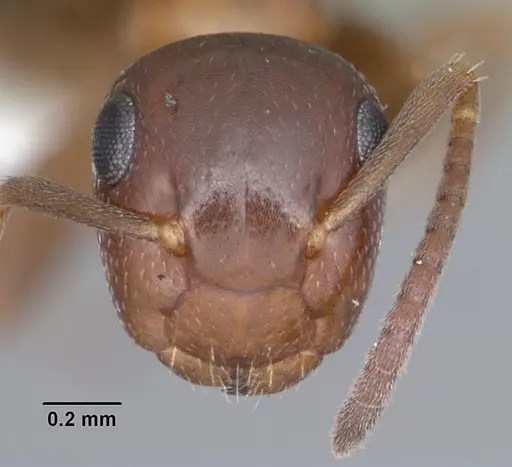
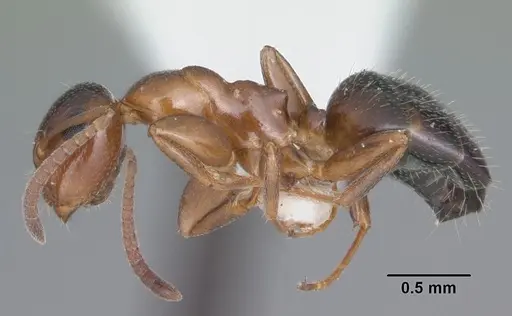
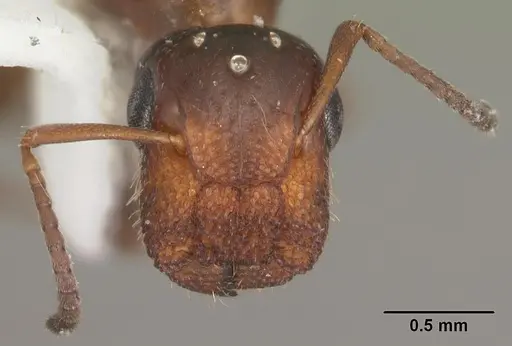
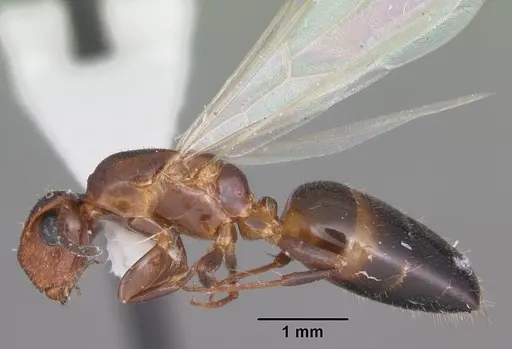
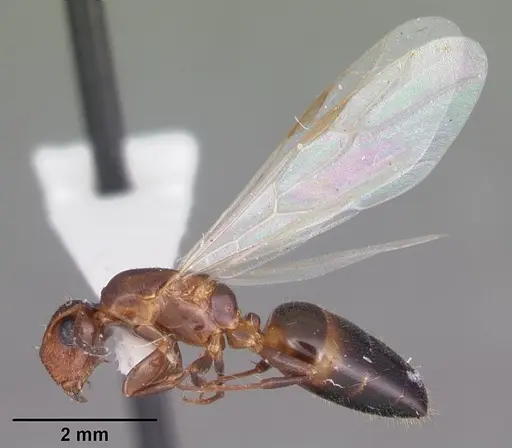
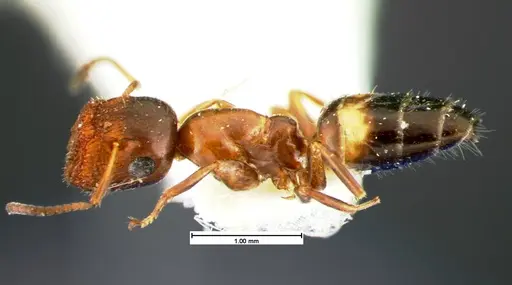
Colobopsis obliqua is a small, distinctive ant native to the southeastern United States and Bahamas. What makes these ants immediately recognizable is their unique truncated head, the front of the head is flattened into a cork-like disc that gives them their common name 'cork-headed ants.' Majors measure just 3.5-4mm, making them the smallest Colobopsis species in Mississippi [1]. Their coloring is striking: the truncated area ranges from reddish-brown to yellowish-red, while the rest of the body is reddish-brown with the gaster varying from dark reddish-brown to brownish-black [1].
These ants are forest specialists that nest in hollow twigs, vines, and branches rather than in soil or houses [2][3]. They are nonground-foraging, meaning they hunt and gather food in vegetation rather than on the forest floor [4]. This specialized lifestyle makes them rarely encountered even in their native range, and they are unlikely to show up in homes due to their preference for natural forest habitats [1].
Quick Summary
- Difficulty: Medium
- Origin & Habitat: Southeastern United States (Alabama, Florida, Louisiana, Mississippi, North Carolina, South Carolina, Texas) and Bahamas. Found in various forest habitats, nesting in hollow twigs, vines, and branches [2][3].
- Colony Type: Colony structure is unconfirmed. Based on genus patterns, likely single-queen colonies with claustral founding.
- Founding: Claustral
- Size & Growth:
- Queen: Similar range to C. impressa, estimated 6-8mm [2]. Signal: estimated based on genus patterns.
- Worker: Major workers 3.5-4mm, minor workers similar range to C. impressa [1][2].
- Colony: Unknown, likely small colonies based on nesting in twigs. Signal: estimated.
- Growth: Moderate, based on typical Camponotus development patterns. Signal: estimated.
- Development: 6-10 weeks, based on typical Camponotus genus patterns at optimal temperature. Signal: inferred from genus. (Development time is estimated based on related Camponotus species. Actual timing may vary.)
- Antkeeping:
- Temperature: Keep at room temperature, roughly 20-24°C. No specific thermal studies exist for this species, but related forest-dwelling Colobopsis species prefer moderate temperatures. A gentle gradient allows ants to regulate their body temperature [2].
- Humidity: Moderate humidity around 50-70%. These forest ants prefer conditions that match their natural habitat in hollow twigs and vines, not too wet, not too dry. Mist the outworld occasionally and provide a water tube.
- Diapause: Likely, temperate species probably requires a winter rest period. Based on related species, expect reduced activity in winter months. More research needed on specific diapause requirements.
- Nesting: These ants naturally nest in hollow twigs, vines, and small branches [2][3]. In captivity, they do well in small formicariums or acrylic nests with narrow chambers that mimic their natural twig nesting sites. Avoid large, open spaces, they prefer tight, enclosed spaces. Test tubes can work for founding colonies, but transfer to a more naturalistic setup once the colony grows.
- Behavior: Colobopsis obliqua is a docile, non-aggressive species that avoids confrontation. As nonground-foraging ants, they will search for food in vegetation and along branches rather than on the ground. They have the typical cork-headed ant defense, the truncated head can be used to plug nest entrances like a cork. Escape risk is moderate due to their small size, use standard barrier precautions. They are rarely aggressive and unlikely to sting.
- Common Issues: small colony size means slow growth, beginners may lose patience and overfeed, causing mold, nonground-foraging behavior means food must be placed elevated in the outworld, not on the substrate, specialized nesting requirements, they need tight, enclosed spaces scaled to their tiny size, wild-caught colonies may be difficult to find due to their rare, specialized habitat, diapause requirements are not well studied, improper winter conditions may stress colonies
Nuptial Flight Activity Analysis 94 observations
Flight Activity by Hour 94 observations
Colobopsis obliqua nuptial flight activity peaks around 23:00 during the night. Activity is spread across a 24-hour window (00:00–23:00). A secondary activity peak occurs around 21:00. Times may be influenced by human observation patterns.
Housing and Nest Setup
Colobopsis obliqua requires housing that mimics their natural twig-nesting habitat. These ants are much smaller than typical carpenter ants and need appropriately scaled accommodations. Small acrylic nests, Y-tong style colonies, or test tube setups work well for founding colonies. The key is providing tight chambers and narrow passages, these ants are not suited to large, open formicarium spaces. Naturalistic setups with small twigs or vines can work beautifully if you can maintain proper humidity within them. Avoid standard carpenter ant formicariums that are designed for larger species, the chambers will be too big and the ants may feel exposed and stressed. [2][3][1]
Feeding and Diet
As nonground-foraging ants, Colobopsis obliqua searches for food in vegetation and along surfaces rather than on the ground. Offer protein sources like small insects (fruit flies, pinhead crickets, small mealworms) placed on elevated surfaces or in the upper portion of the outworld. Sugar water, honey, or diluted jam can be offered on a cotton swab or small dish elevated above the substrate. These ants are likely omnivorous like other Colobopsis species, feeding on honeydew from aphids and scale insects in addition to small insects. Feed every 2-3 days and remove uneaten food promptly to prevent mold. Because they forage elevated rather than on the ground, place food where they can easily find it on branches or elevated platforms. [4]
Temperature and Seasonal Care
Keep Colobopsis obliqua at moderate room temperatures, ideally around 20-24°C. No specific thermal tolerance studies exist for this species, but their distribution across the southeastern US and Bahamas suggests they prefer warm temperate to subtropical conditions. A temperature gradient allows the colony to self-regulate, place a heating cable on one side of the nest if your room runs cool. During winter, expect reduced activity as the colony enters a rest period. The specific diapause requirements are not well documented, but related temperate Colobopsis species typically slow down in winter. If keeping them in an unheated room, monitor for signs of stress during cold months. [2][1]
Behavior and Defense
These ants are among the more docile species in the ant-keeping hobby. Their primary defense mechanism is the unique truncated head, majors can use this cork-like disc to plug nest entrances when threatened, much like a bottle cork seals a bottle. This behavior gives them their 'cork-headed ant' common name. Workers are not aggressive and rarely attempt to sting. When disturbed, they are more likely to retreat deeper into their nest rather than engage in confrontation. Their small size and peaceful temperament make them suitable for observation but less exciting for those wanting aggressive display ants. They are best observed going about their business in a naturalistic setup. [1][2]
Finding and Collecting
Colobopsis obliqua is rarely encountered even in its native range due to its specialized habitat requirements [3]. Unlike carpenter ants that nest in wood or houses, these ants exclusively use hollow twigs, vines, and small branches. Look for them in mature forests, particularly in areas with dense understory vegetation. They have been found nesting in vines of Berchemia scandens (Alabama supplejack) and in hickory nut husks [1]. The best way to find them is by carefully examining fallen twigs and branches in forested areas. They are not household pests and will not show up in kitchens or around homes [1]. If you're in their range (southeastern US), forest sampling with appropriate permits may yield specimens.
Frequently Asked Questions
Is Colobopsis obliqua good for beginners?
Moderate difficulty, these ants are not ideal for complete beginners because they have specific nesting requirements (need tight, twig-sized chambers) and are rarely available in the ant trade. Their small size and docile nature make them interesting to keep once you have some experience with basic ant care.
How long does it take for Colobopsis obliqua to produce first workers?
Based on typical Camponotus development patterns, expect 6-10 weeks from egg to first worker at optimal temperature (around 22-24°C). This is an estimate since specific development timing has not been documented for this species.
What do Colobopsis obliqua ants eat?
They are omnivorous. Offer small protein sources like fruit flies, small crickets, or mealworms, plus sugar sources like honey water or sugar water. Place food elevated since they are nonground-foragers.
Can I keep multiple queens together?
Colony structure is not well documented for this species. It is not recommended to combine unrelated queens as aggressive interactions may occur. Single-queen colonies are standard for most Colobopsis species.
What temperature do Colobopsis obliqua need?
Keep them at room temperature, roughly 20-24°C. No specific studies exist, but this range matches their southeastern US distribution and related species requirements.
Do they need hibernation?
Likely yes, as a temperate species, they probably require a winter rest period with reduced temperatures (10-15°C) for several months. More research is needed on specific requirements.
Where does Colobopsis obliqua live?
They are found in the southeastern United States (Alabama, Florida, Louisiana, Mississippi, North Carolina, South Carolina, Texas) and the Bahamas. They nest exclusively in hollow twigs, vines, and small branches in forest habitats.
Why are they called cork-headed ants?
Their common name comes from the unique truncated (flattened) head shape. The front of the head is modified into a cork-like disc that majors can use to plug nest entrances, similar to how a cork seals a bottle.
Are they invasive or dangerous?
No, they are native to the southeastern US and Bahamas, not invasive. They are docile, non-aggressive ants that pose no danger to humans or structures. They are not household pests.
References

This caresheet is licensed under CC BY-SA 4.0 .
CASENT0103722
View on AntWeb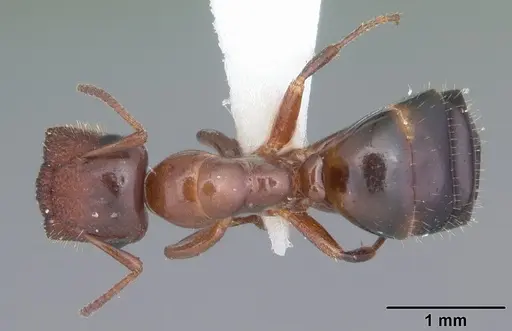
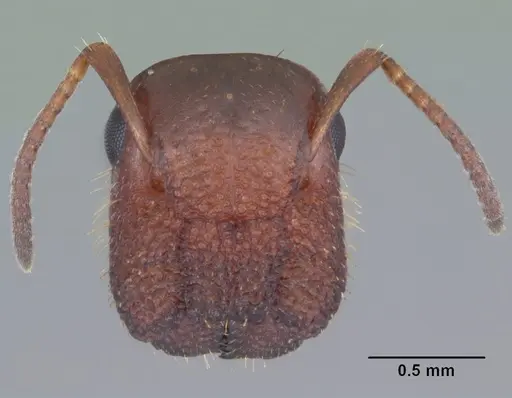
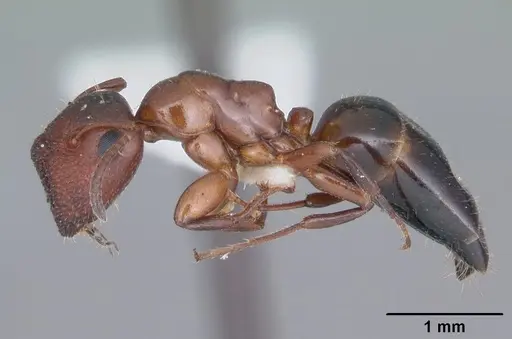
CASENT0103723
View on AntWeb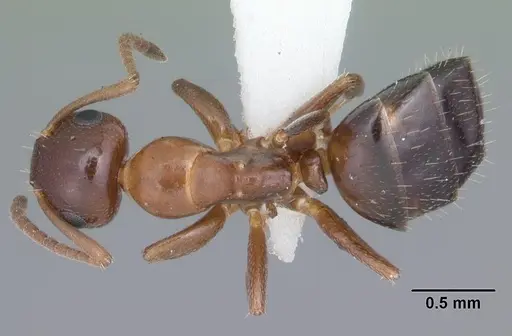
CASENT0103725
View on AntWeb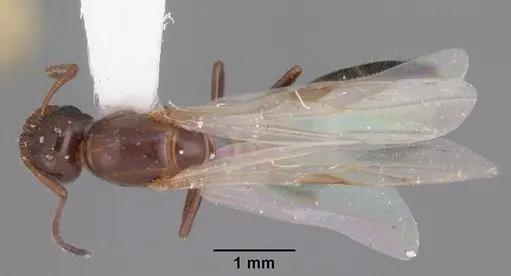
CASENT0105585
View on AntWeb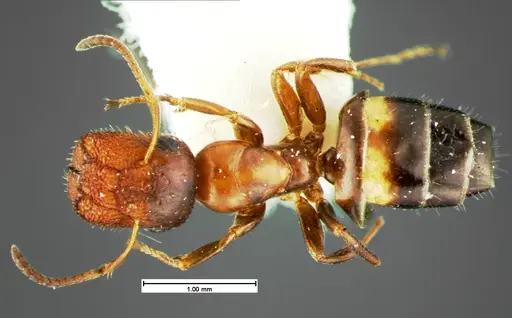
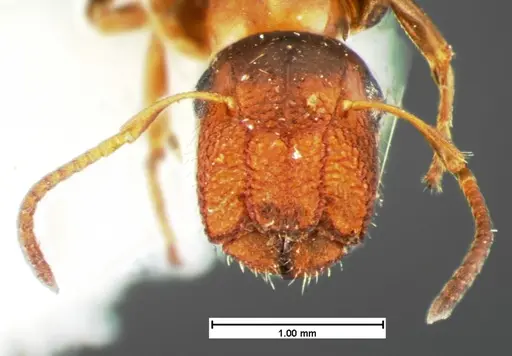
CASENT0923511
View on AntWeb
Literature
Loading...Loading products...