

Colobopsis loa
- Scientific Name
- Colobopsis loa
- Tribe
- Camponotini
- Subfamily
- Formicinae
- Author
- Mann, 1919
- Distribution
- Found in 1 countries
Colobopsis loa Overview
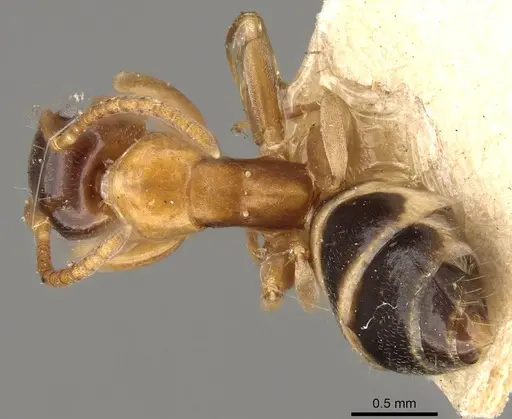
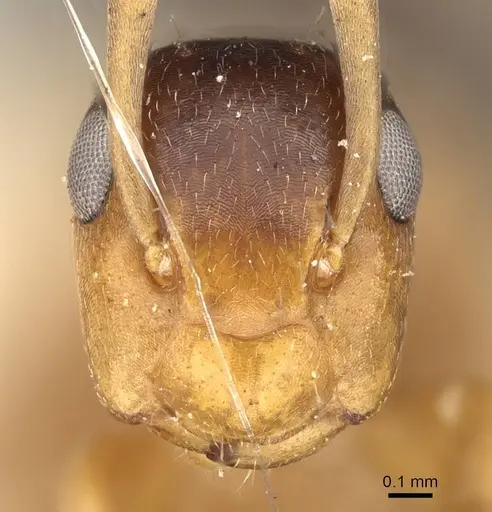
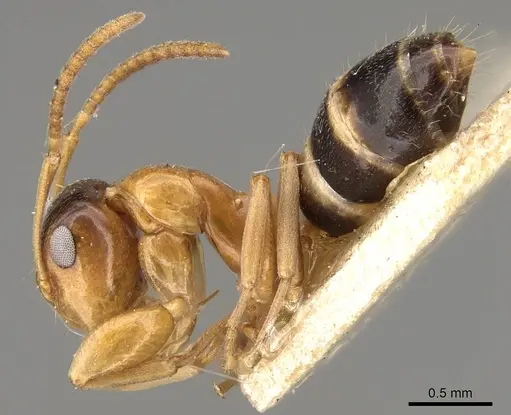
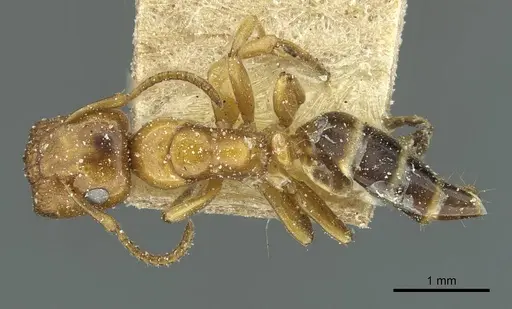
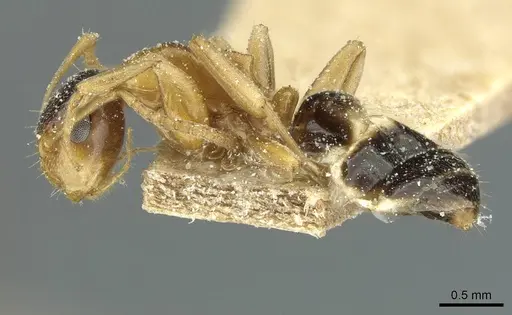
Colobopsis loa is an ant species of the genus Colobopsis. It is primarily documented in 1 countries , including Solomon Islands. Detailed taxonomic data and occurrence records can be further explored via authoritative databases such as AntWeb or the Global Biodiversity Information Facility (GBIF).
Colobopsis loa
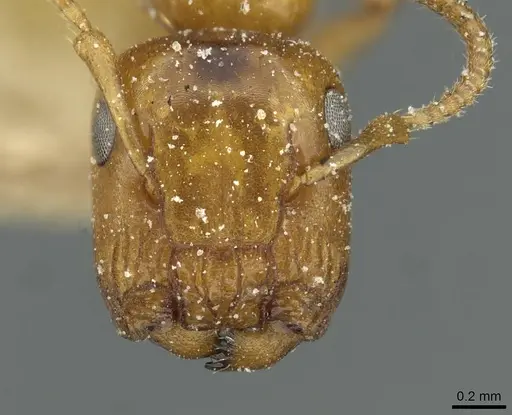
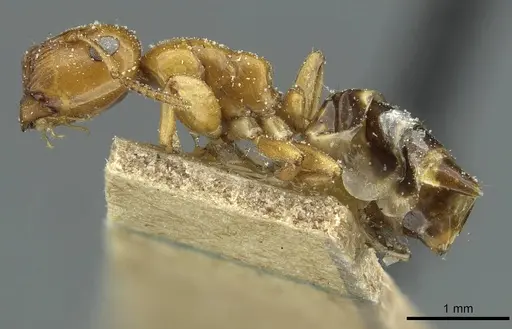
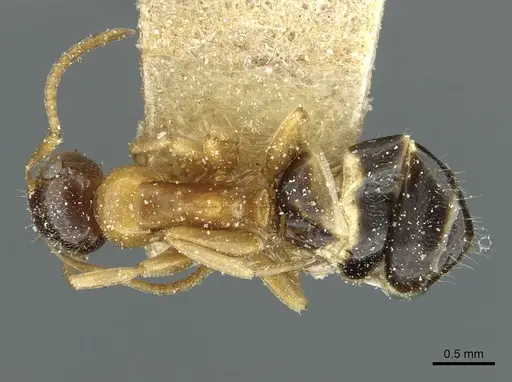
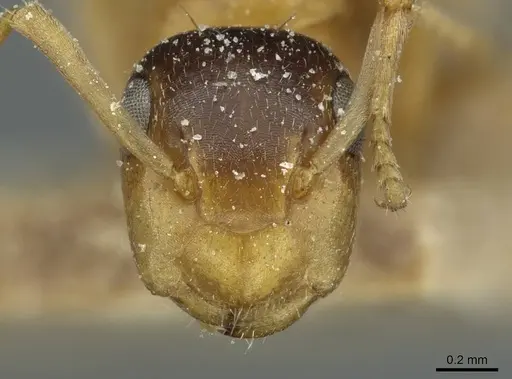
Colobopsis loa is a tropical ant species native to the Solomon Islands archipelago in the South Pacific. Workers come in two sizes: majors (soldiers) measure around 6-7mm with enlarged heads used for nest defense, while minors are smaller at 4-5mm. The species was originally described as Colobopsis loa in 1919 and reclassified to Colobopsis in 2016. Like all Colobopsis species, they have a distinctive behavior where soldier workers use their specially shaped heads as living corks to seal nest entrances from intruders. This species is found across multiple islands in the Solomon Islands group, including Makira (San Cristobal), Guadalcanal, Malaita, and the Santa Cruz Islands.
Quick Summary
- Difficulty: Medium
- Origin & Habitat: Solomon Islands, tropical Pacific archipelago with humid rainforest environments. Found on islands including Makira, Guadalcanal, Malaita, Santa Anna, Three Sisters, Ugi, and the Santa Cruz Islands [1][2].
- Colony Type: Likely monogyne (single queen) based on typical Colobopsis and Camponotus patterns. Colonies likely reach several hundred workers at maturity.
- Colony: Monogyne
- Founding: Claustral
- Size & Growth:
- Queen: Approximately 7-9mm (estimated from related Colobopsis species)
- Worker: Minors: 4-5mm, Majors: 6-7mm [2]
- Colony: Likely several hundred workers based on genus patterns
- Growth: Moderate, typical for tropical Formicinae
- Development: Estimated 6-8 weeks at tropical temperatures (25-28°C) based on related Camponotus species (Development likely faster than temperate species due to tropical origin)
- Antkeeping:
- Temperature: Keep at 24-28°C, these are tropical ants from warm, humid islands. A slight temperature gradient allows workers to regulate their conditions.
- Humidity: High humidity required, think humid tropical forest. Keep nest substrate consistently moist but not waterlogged. Provide a water source.
- Diapause: No, being from tropical Solomon Islands, they do not require hibernation. Keep warm year-round.
- Nesting: In the wild, they likely nest in rotting wood, hollow stems, or under bark in humid forest settings. Y-tong (AAC) nests or naturalistic setups with wood pieces work well in captivity.
- Behavior: Colobopsis loa is generally calm and not aggressive toward keepers. The most notable behavior is their cork-blocking defense, major workers position themselves at nest entrances with their enlarged heads facing outward to block access. They are not known to sting and pose no danger to keepers. Escape risk is moderate due to their active foraging nature.
- Common Issues: tropical species needs consistent warmth, cold temperatures below 20°C can slow or stop brood development, high humidity is essential, dry conditions will cause colony decline, slow founding phase, claustral queens may take months to produce first workers, patience is required, wild-caught colonies may carry parasites or pathogens from their native range
Nest Preferences and Housing
Colobopsis loa originates from humid tropical forests in the Solomon Islands, where they typically nest in rotting wood, hollow bamboo stems, or under loose bark. In captivity, they adapt well to Y-tong (acrylic aerated concrete) nests or naturalistic setups that provide darkness and humidity. The key is maintaining consistently moist substrate without flooding, these ants come from environments where rainfall is frequent and humidity remains high. A water test tube should always be available. Because majors serve as living corks, they don't need elaborate escape barriers beyond standard formicarium security, but any gaps should be sealed since minor workers can squeeze through small openings. [1][2]
Feeding and Diet
Like most Formicinae ants, Colobopsis loa is omnivorous and will accept a variety of foods. In captivity, offer sugar sources such as honey water or sugar water regularly, these ants have a sweet tooth like other Camponotini. For protein, provide small insects like fruit flies, small crickets, or mealworms. Given their tropical origin, they may be more active year-round than temperate species, so maintain consistent feeding schedules. Remove uneaten prey after 24-48 hours to prevent mold. A varied diet helps ensure colony health and supports brood production.
Temperature and Seasonal Care
Being from the Solomon Islands near the equator, Colobopsis loa requires warm conditions year-round. Keep the nest area at 24-28°C (75-82°F) for optimal brood development. Temperatures below 20°C can significantly slow or halt brood development, and prolonged cold exposure may be fatal. No hibernation or winter rest is required, these are true tropical ants. If your room temperature falls below this range, use a heating cable or mat on one side of the nest to create a gentle gradient. Place heating on top of the nest, not underneath, to avoid excessive drying. Monitor condensation levels as you adjust temperature. [1]
Colony Founding and Development
Queens are claustral, meaning they seal themselves in a small chamber and raise their first brood without leaving to forage. The queen relies on stored fat reserves and wing muscles to produce eggs and feed larvae until the first workers (nanitics) emerge. This founding phase can take 6-8 weeks or longer depending on temperature. Once nanitics arrive, the colony typically grows steadily if conditions are suitable. Major workers (soldiers) with enlarged heads develop as the colony reaches several dozen workers, these specialists defend the nest entrance. Be patient during founding, disturbing the queen or moving the nest during this critical period often leads to colony failure.
Behavior and Defense
The most distinctive behavior of Colobopsis species is their cork-blocking defense. Major workers have enlarged, bottle-shaped heads that perfectly fit nest entrances. When threatened, a major positions itself head-first in the entrance, using its specialized morphology to create a living barrier against intruders. This behavior is fascinating to observe and represents an elegant evolutionary solution to nest defense. Beyond this, the species is relatively docile and does not pose any sting risk to keepers. Workers are active foragers but generally calm when the nest is not disturbed. [2]
Frequently Asked Questions
How long does it take for Colobopsis loa to produce first workers?
Expect 6-8 weeks from egg to first worker at optimal temperatures (24-28°C). The claustral queen seals herself in and raises the first brood alone, so patience is essential during founding.
What temperature do Colobopsis loa need?
Keep them at 24-28°C (75-82°F). These tropical ants from the Solomon Islands need consistent warmth year-round with no hibernation requirement.
Can I keep multiple queens together?
Not recommended. Like most Colobopsis and Camponotus species, they are likely monogyne (single queen). Combining unrelated queens typically results in fighting.
What do Colobopsis loa eat?
They are omnivorous. Offer sugar water or honey regularly for energy, and small insects like fruit flies or mealworms for protein. A varied diet supports healthy colony growth.
Are Colobopsis loa good for beginners?
They are moderate difficulty. The main challenges are maintaining high humidity and warm temperatures year-round. Their calm temperament and fascinating cork-blocking behavior make them rewarding for keepers willing to meet their tropical requirements.
How big do Colobopsis loa colonies get?
Based on genus patterns, colonies likely reach several hundred workers at maturity. The presence of major workers (soldiers) typically appears once the colony reaches several dozen workers.
Do they need hibernation?
No. Being from tropical Solomon Islands near the equator, they do not require any winter rest period. Keep them warm and active year-round.
What type of nest should I use?
Y-tong (AAC) nests or naturalistic setups with rotting wood work well. The key is maintaining high humidity within the nest while providing a water source.
Why do the workers have big heads?
Major workers (soldiers) have enlarged heads specifically for their cork-blocking defense behavior. They position themselves at nest entrances to block intruders using their specially shaped heads as living corks.
References

This caresheet is licensed under CC BY-SA 4.0 .
Literature
Loading...Loading products...