

Colobopsis kadi
- Scientific Name
- Colobopsis kadi
- Tribe
- Camponotini
- Subfamily
- Formicinae
- Author
- Mann, 1921
- Distribution
- Found in 1 countries
Colobopsis kadi Overview
Colobopsis kadi is an ant species of the genus Colobopsis. It is primarily documented in 1 countries , including Fiji. Detailed taxonomic data and occurrence records can be further explored via authoritative databases such as AntWeb or the Global Biodiversity Information Facility (GBIF).
Colobopsis kadi
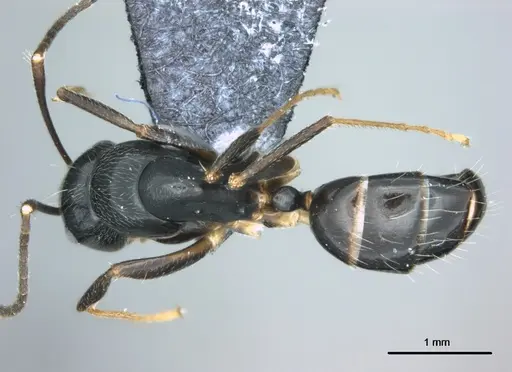
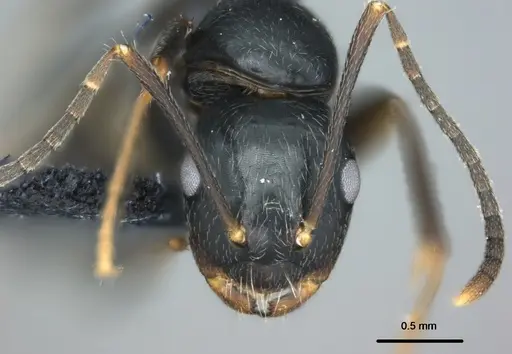
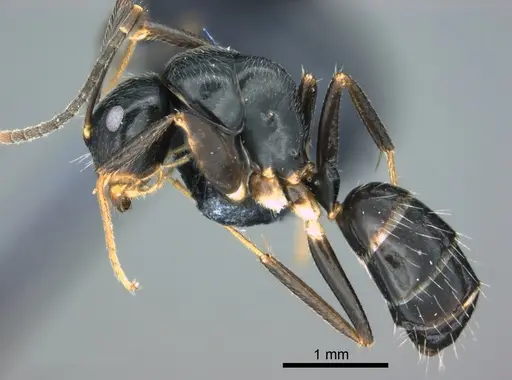
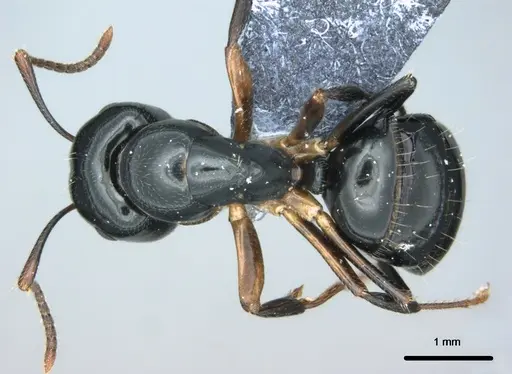
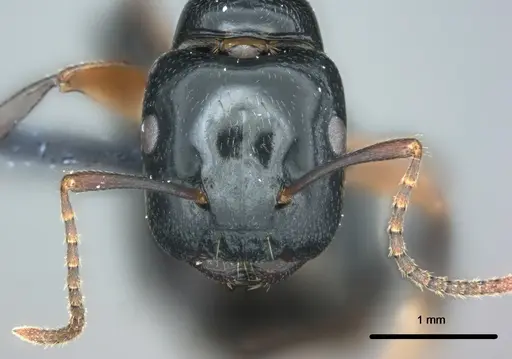
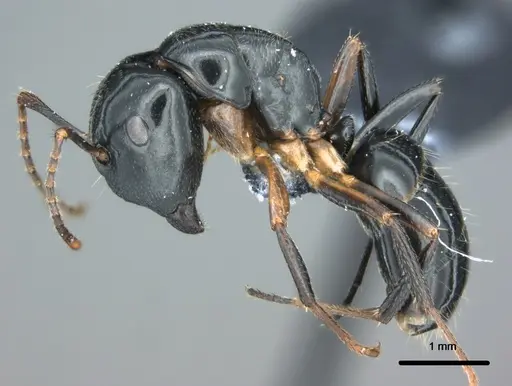
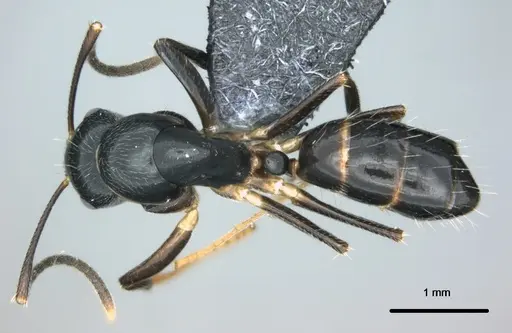
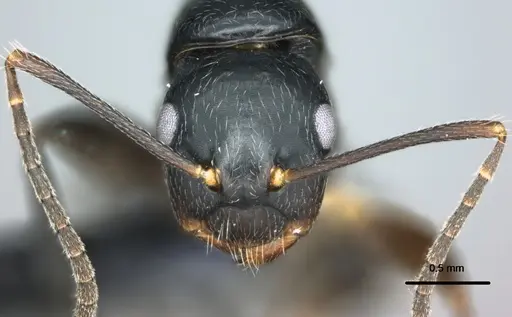
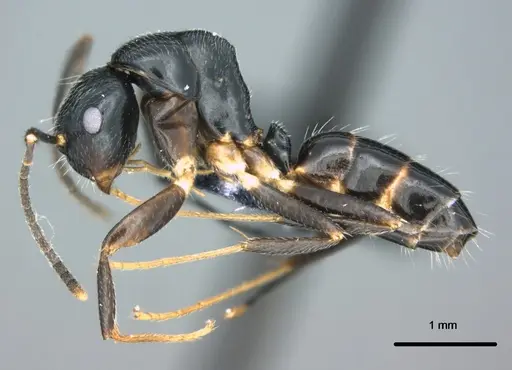
Colobopsis kadi is a small to medium-sized ant endemic to the Fiji Islands. Minor workers are relatively small with evenly rounded head corners and distinctive pale yellow trochanters contrasting with darker brown tibiae. Major workers are smaller than the related C. schmeltzi, with weak and poorly defined carinae on the cheeks and clypeus. The species shows considerable variation in leg color and size among individuals and populations across different Fijian islands [1]. These ants are most often collected nesting in dead wood and foraging on vegetation, though they are also found on the ground and in litter samples [1].
Quick Summary
- Difficulty: Medium
- Origin & Habitat: Endemic to Fiji Islands, found on Vanua Levu, Viti Levu, Gau, Taveuni, Ovalau, and Kabara. This is a tropical island species that nests in dead wood and forages on vegetation [1][2].
- Colony Type: Likely monogyne (single queen) based on typical Colobopsis patterns. Colony structure has not been directly studied for this species.
- Colony: Monogyne
- Founding: Claustral
- Size & Growth:
- Queen: Estimated 7-9mm based on related Colobopsis and former Camponotus species
- Worker: Minor workers: 3-5mm, Major workers: 5-7mm [1]
- Colony: Estimated 500-2000 workers based on similar tropical arboreal ants
- Growth: Moderate, typical for tropical Formicinae
- Development: Estimated 6-8 weeks at optimal tropical temperatures (25-28°C), based on typical Camponotini development (Development time is inferred from related Camponotus species, direct measurements for C. kadi are not available)
- Antkeeping:
- Temperature: Keep at 24-28°C. As a tropical species from Fiji, they need warm, stable temperatures year-round. A heating cable on one side of the nest can create a gentle gradient
- Humidity: Moderate to high humidity (60-80%). They naturally nest in dead wood in a humid tropical environment. Keep the nest substrate moist but not waterlogged, with some drier areas available
- Diapause: No, as a tropical species from Fiji, they do not require hibernation. Maintain consistent temperatures year-round
- Nesting: In captivity, they do well in Y-tong (AAC) nests, plaster nests, or naturalistic setups with dead wood/cor pieces. They prefer tight chambers scaled to their size. Avoid dry, arid setups, they need moisture-retaining nests
- Behavior: These ants are generally calm and not aggressive. Like other Formicinae, they can bite and spray formic acid as a defense, but their bite is mild for humans. Workers forage on vegetation and can be active climbers. Minor workers are small enough that escape prevention should be taken seriously, use fine mesh barriers. They are moderately active and will explore their outworld regularly
- Common Issues: tropical species requires year-round warmth, cold temperatures below 20°C can slow or stop brood development, small worker size means escape prevention must be good, they can squeeze through standard test tube cotton if not careful, nesting in dead wood means they prefer humid conditions, dry nests can cause colony decline, as an endemic Fiji species, wild-caught colonies may be difficult to obtain and may have parasites, moderate growth rate means colonies take time to establish, patience is required
Housing and Nest Setup
Colobopsis kadi does well in several nest types that mimic their natural preference for dead wood. Y-tong (AAC) nests work excellently, the acrylic chambers hold humidity well and allow you to observe the colony. Plaster nests are another good option, as they retain moisture and provide the dark, enclosed spaces these ants prefer. For a naturalistic approach, use corkbark or dead wood pieces as nest material. Regardless of nest type, ensure the chambers are appropriately sized, tight passages help these ants feel secure. The outworld can be a simple plastic container with a textured floor for traction. Because they are tropical and naturally arboreal, include some climbing structures like twigs or fake plants.
Feeding and Diet
Like other Colobopsis and former Camponotus species, C. kadi is omnivorous with a preference for protein sources. Offer small insects like fruit flies, pinhead crickets, or mealworms twice weekly. They will also accept sugar sources, a small drop of honey or sugar water can be offered occasionally. In the wild, they forage on vegetation and likely tend aphids for honeydew, so consider offering a small honey/water mixture. Remove uneaten prey after 24-48 hours to prevent mold. Feed them in the evening when they are most active.
Temperature and Seasonal Care
As a tropical species from Fiji, these ants need warm conditions year-round. Maintain temperatures between 24-28°C for optimal brood development. A small heating cable placed on one side of the nest creates a temperature gradient that allows the ants to choose their preferred zone. Room temperature around 24°C is often sufficient, but you may need supplemental heating in cooler climates. Unlike temperate species, they do not require diapause or hibernation. Sudden temperature drops below 20°C can stress the colony and slow or stop brood development. Monitor colony activity, if workers cluster near the heated area, the temperature is appropriate.
Humidity and Water
Keep the nest substrate consistently moist but never waterlogged. The substrate should feel damp to the touch. Because they naturally nest in dead wood in humid tropical forests, they need higher humidity than desert ants. A water tube attached to the nest provides a constant moisture source. Check the nest every few days, if the substrate begins drying out or condensation disappears, add water. However, avoid creating standing water, as this can drown the colony. Some drier areas within the nest allow the ants to regulate their own humidity preferences.
Behavior and Colony Dynamics
Colobopsis kadi is a relatively calm species that does not exhibit aggressive swarming. Workers are moderately active, foraging both on the ground and on vegetation. Like all Formicinae, they can bite and spray formic acid as a defense, but the bite is mild for humans and the spray rarely reaches skin. The colony will establish a clear foraging pattern once settled. Major workers (soldiers) may appear as the colony grows and serve defensive roles. The colony will expand gradually, expect moderate growth rather than explosive population increases. Queens are likely claustral founders that seal themselves in a chamber and raise the first brood alone on stored fat reserves.
Frequently Asked Questions
How long does it take for Colobopsis kadi to produce first workers?
Based on related Camponotus species, expect first workers (nanitics) in about 6-8 weeks at optimal temperatures of 25-28°C. This timeline is an estimate since specific development data for C. kadi is not available. Cooler temperatures will slow development significantly.
What temperature do Colobopsis kadi ants need?
Keep them at 24-28°C year-round. As a tropical Fiji species, they need consistent warmth and do not tolerate cool temperatures. A heating cable on part of the nest can help maintain optimal temperatures.
Can I keep multiple Colobopsis kadi queens together?
This is not recommended. While colony structure has not been directly studied, Colobopsis species are typically monogyne (single queen). Combining unrelated queens in captivity often leads to fighting and colony failure.
What do Colobopsis kadi ants eat?
They are omnivorous. Offer small insects (fruit flies, pinhead crickets, mealworms) twice weekly as protein. They will occasionally accept sugar sources like honey water. In the wild, they forage on vegetation and likely collect honeydew.
Do Colobopsis kadi need hibernation?
No. As a tropical species endemic to Fiji, they do not require hibernation or diapause. Maintain warm temperatures year-round to keep the colony active and growing.
How big do Colobopsis kadi colonies get?
Based on similar tropical arboreal ants, colonies likely reach 500-2000 workers. Growth is moderate, expect several months to a year to establish a healthy colony with multiple workers.
Are Colobopsis kadi good for beginners?
This species is rated as Medium difficulty. They require warm, humid conditions year-round and are less forgiving of temperature swings than temperate species. However, they are not aggressive and are relatively easy to feed. They are better suited for keepers with some experience maintaining tropical ant species.
When should I move Colobopsis kadi to a formicarium?
Keep new colonies in a test tube setup until they have 20-30 workers. Once the colony outgrows the test tube or you see workers clustering near the water reservoir, it's time to move to a proper nest (Y-tong, plaster, or naturalistic).
Why are my Colobopsis kadi dying?
Common causes include: temperatures below 20°C (tropical species are cold-sensitive), dry nest conditions (they need humidity), poor escape prevention (minor workers are small), or stress from disturbance. Check temperature and humidity first, then review your setup.
References

This caresheet is licensed under CC BY-SA 4.0 .
Literature
Loading...Loading products...